REVIEW · JERUSALEM
Private Walking Tour in Jerusalem’s Old City
Book on Viator →Operated by Orna Simchi · Bookable on Viator
Jerusalem’s Old City can feel like a maze. This private walk turns the confusion into clear stories across faiths, streets, and stone. You’ll move through the four quarters and the sites tied to Judaism, Christianity, and Islam, with a licensed guide who explains what you’re seeing and why it matters today.
I particularly like how Orna, a Ministry of Tourism–certified guide, ties details to real people—wall builders, clerics, merchants, and families you meet along the way. I also like the pacing: about six hours on foot that still feels manageable because each stop has a reason, not just a checklist.
One consideration: this is a Holy Sites route with strict dress and security rules, and Temple Mount access depends on the day. If the Temple Mount is closed (common on Fridays, Saturdays, and holidays), you’ll get a viewpoint instead.
In This Review
- Key points before you go
- Why this Old City tour works (and how to use it)
- Starting at Jaffa Gate: where the Old City begins to make sense
- Armenian Quarter and James Cathedral courtyard: community walls of their own
- Jewish Quarter: Cardo, Sephardic synagogues, and the stories behind names
- Western Wall: what it is, how it was built, and what it is not
- Temple Mount: sacred ground, careful rules, and how to stay flexible
- Muslim Quarter and the spice store: small stops that feel real
- Via Dolorosa stations toward the Church of the Holy Sepulchre
- Church of the Holy Sepulchre: where belief becomes architecture
- Christian Quarter: locked-in stories, a ceramics stop, and time for a break
- Our Lady of Peace rooftop finish: the Crimean War story and wide views
- How much it costs, and why it can still be good value
- Who this tour is best for
- Should you book Orna’s Private Walking Tour of Jerusalem’s Old City?
- FAQ
- What’s the meeting point and where does the tour end?
- How long is the tour?
- Is this a private tour?
- What’s the group size?
- Are entry fees included?
- What’s included in the price and what’s not?
- What should I wear for the Western Wall and Church of the Holy Sepulchre?
- What are the Temple Mount dress rules and restrictions?
- Is Temple Mount always visited?
- Is the tour available on Fridays?
Key points before you go
- Licensed guide with 10+ years experience across ages and backgrounds, Orna Simchi
- Entry fees included so you’re not doing surprise math at ticket windows
- Real walk-through focus: walls, Cardo, synagogues, Temple Mount viewpoints, and Holy Sepulchre
- Temple Mount rules you must follow, with skirt help if you don’t have the right cover
- A special finish at Our Lady of Peace, including a roof panorama over multiple quarters
- Private tour for up to 8, so the questions and interests stay yours
Why this Old City tour works (and how to use it)
This is not a fast “see everything” sprint. It’s a structured walk that helps you build a mental map of Jerusalem’s Old City—Jaffa Gate, the quarters, the Temple Mount area, the Church of the Holy Sepulchre complex—then connects those places to the three monotheistic religions. That structure matters because Jerusalem can look confusing if you’re just chasing landmarks.
Orna’s background is a big part of the value. She’s a licensed guide certified through Israel’s Ministry of Tourism, and she’s spent more than 10 years guiding people from different cultures and religious backgrounds. On a place like this, the skill isn’t just facts—it’s choosing what to say, how to say it, and when to slow down so you actually understand what you’re looking at.
The “private” part also changes everything. For a group of up to eight, it’s easier to ask practical questions—why this wall looks this way, what an area is called, what a symbol means—without the tour getting rushed. And because the plan is designed as a walking route through dense streets, having your own time block helps you avoid a lot of stress.
One practical note: the route includes sacred spaces with dress requirements and security checks, plus weather-friendly walking. Bring a hat, water, and comfortable shoes. You’ll thank yourself halfway through.
You can also read our reviews of more walking tours in Jerusalem

Starting at Jaffa Gate: where the Old City begins to make sense
Most Old City visits start at a church or a viewpoint. This one starts at Jaffa Gate, and that’s smart, because gates are where Jerusalem shows its logic. You begin with the Old City walls—who built them, when, and why the gate matters. You also learn how names and stories stick to stone over centuries.
Then the tour moves into the kind of detail that helps everything else click. You’ll hear why the Jaffa Gate is called that, its significance, and what the gate area looked like in the past. You’ll also get pointers on “evidence” you can actually look for on site. That’s the difference between seeing a photo and really understanding the place.
There are also tomb stories tied to the area. Even if you don’t know Jerusalem’s history yet, a guided walkthrough makes the gate area feel like a historical hub rather than just an entrance.
What to watch for: the Old City walls and gates can involve uneven surfaces and tight spaces. Wear shoes you can handle on stone.
Armenian Quarter and James Cathedral courtyard: community walls of their own
Next you step into the Armenian Quarter, where Jerusalem’s religious geography becomes visible at street level. The stop centers on the courtyard of James Cathedral, and the focus is not only religious—it’s political and cultural too.
You’ll learn why Armenians were given their own quarter, who James is in this context, and how the quarter’s boundaries were physically protected by a wall. There’s also a story about the Armenian Patriarch raising funds for renovations of the cathedral, which brings the site into the present rather than treating it like a museum.
This stop is short, but it’s efficient. It gives you one quarter of the city with a clear “why,” which makes the later transitions between quarters feel less like random hopping.
Jewish Quarter: Cardo, Sephardic synagogues, and the stories behind names
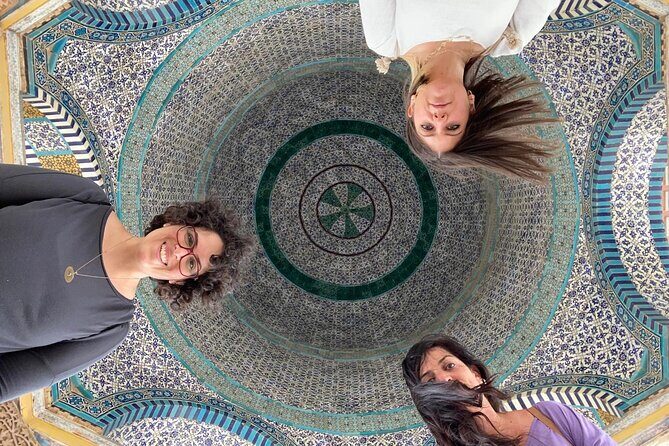
In the Jewish Quarter, you’ll get a strong “spine” of Jerusalem’s old streets and synagogue life. The tour includes four Sephardic synagogues, plus time to understand who built them, when, and how they connect to people and events tied to a besieged Jerusalem.
One of the most interesting parts here is the link between synagogue history and a man associated with saving Jewish life when Jerusalem was under siege. Orna explains how those connections live on in names and architecture, so you’re not just looking at buildings—you’re learning how the community preserved identity through hard times.
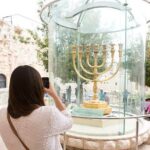
You’ll also walk the Cardo, Jerusalem’s famous central street, and learn its story in a way that makes the stone feel functional. It’s easier to understand Jerusalem when you see where people walked, traded, and gathered.
Then there’s a storyline connecting Hurva Synagogue and European Jews who came to Jerusalem to wait for the return of the Jewish Messiah. That’s a heavy theme, but the value is practical: you start to recognize how pilgrimage, hope, and history overlap in the Old City’s layout.
A day-to-day note: on Fridays, the four Sephardic synagogues are replaced with another synagogue. The route still stays focused on synagogue history, just with a swap.
Western Wall: what it is, how it was built, and what it is not
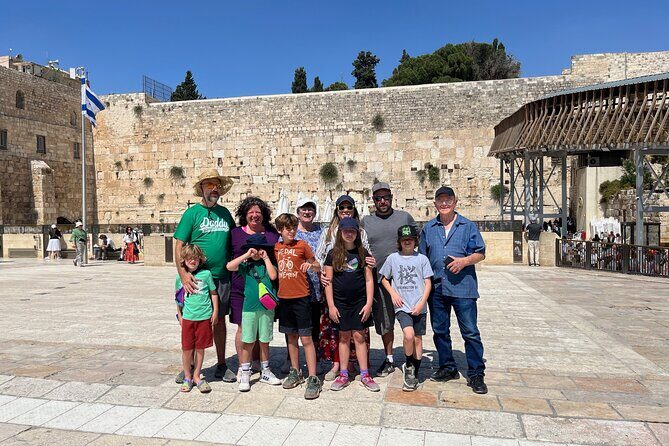
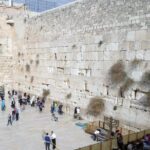
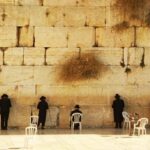
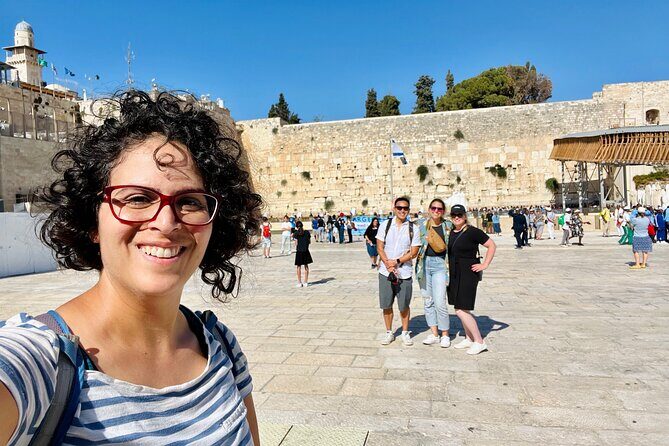
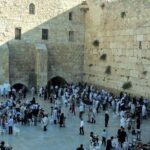
At the Western Wall, you visit what many people think of immediately as the holiest Jewish site. But the tour also helps you fine-tune your understanding: you’ll learn how it was built, by whom, and why this is not simply the single most holy place for Jews.
That nuance matters. Jerusalem has overlapping sacred areas, and “the holiest” depends on religious definitions and historical control. If you only hear one line of explanation here, you miss the real lesson: holiness in Jerusalem is complicated, and your guide helps you avoid oversimplified narratives.
This stop is relatively brief, which is a good thing—especially once you’ve already built context in the Jewish Quarter.
You can also read our reviews of more city tours in Jerusalem



Temple Mount: sacred ground, careful rules, and how to stay flexible
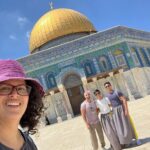
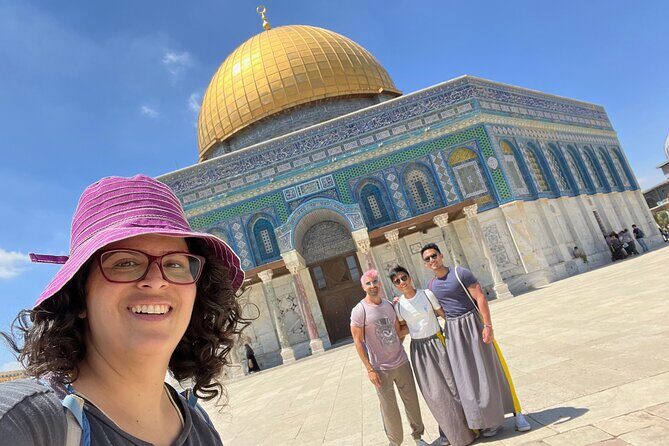
Then you move to Temple Mount, a site considered sacred in Judaism and Islam. This is where the tour’s balance really shows, because it doesn’t treat Temple Mount as a single-religion storyline. It’s presented as a shared holy location with different claims and historical layers.
You’ll learn why and how the mountain became sanctified across monotheistic faiths, and you’ll hear about the long stretch after the destruction of the Second Temple in 70 AD—when Jews didn’t have control of the area until 1967, following the Six Day War. That historical timeline helps you understand why modern access and religious practice can be politically and emotionally charged.
There’s also time for specifics about archaeology, including references to illegal excavations and a “sifting project” designed to save archaeological finds through processing of Temple Mount soil. That’s a key point for anyone who’s curious whether what you see today is shaped by deliberate preservation or by conflict-driven changes.
Orna also covers messianic beliefs tied to the idea of building a Third Temple, and she notes that Muslim graves have been found in the holiest place for Jews. These are sensitive topics, but the guided framing helps you understand why different groups interpret the same physical place differently.
Important reality check: Temple Mount is closed for visitors every Friday, Saturday, and during various Muslim and Jewish holidays. When that happens, you’ll get a viewpoint overlooking the Temple Mount instead. This keeps the tour moving without leaving you disappointed.
Dress and security rules are strict. For Temple Mount you should expect:
- Men: pants under the knees, T-shirt
- Women: long skirt or pants (not skinny), long sleeves shirt, no cleavage
- Don’t bring holy books or sacred objects, any kind of weapon (including Lederman), laptops/tablets/iPads, alcohol, or musical instruments
- If you don’t have a cover, workers there provide a skirt
Muslim Quarter and the spice store: small stops that feel real
In the Muslim Quarter, you’ll learn who built the quarter and why, then you’ll take a short break at a local spice store to try unique Arab sweet delights. After that, you’ll walk through the Arab market.
This part works because it’s not only about religion. You get a sensory sense of everyday life in the Old City—smells, shops, and the kind of ordinary trading that keeps Jerusalem functioning even when big holy sites dominate the headlines.
The market is also a reminder that the Old City isn’t frozen in time. It changes block by block, and that’s exactly what a guided walk helps you notice.
Via Dolorosa stations toward the Church of the Holy Sepulchre
Next comes the Way of the Cross (Via Dolorosa). You’ll walk some of the stations on the way to the Church of the Holy Sepulchre, a key Christian site tied to Jesus’ crucifixion and burial.
This stop is 20 minutes on the route—enough time to understand the significance without letting it turn into a long crowd-wait experience. You’ll also learn how the Via Dolorosa connects physically to the Church complex, so the route doesn’t feel like random stopping points.
If you like walking with a story in your head, this is where it starts to click fastest.
Church of the Holy Sepulchre: where belief becomes architecture
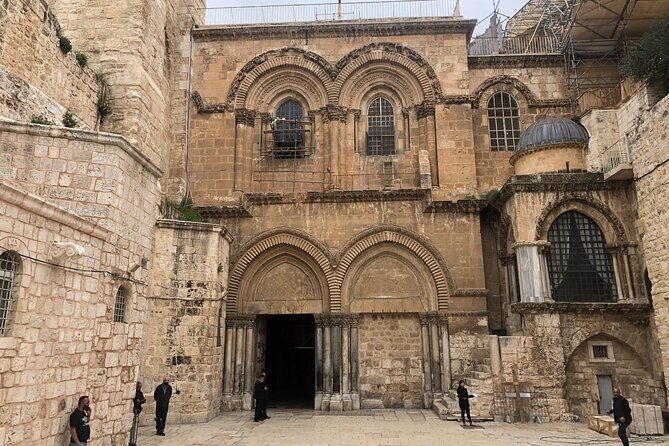
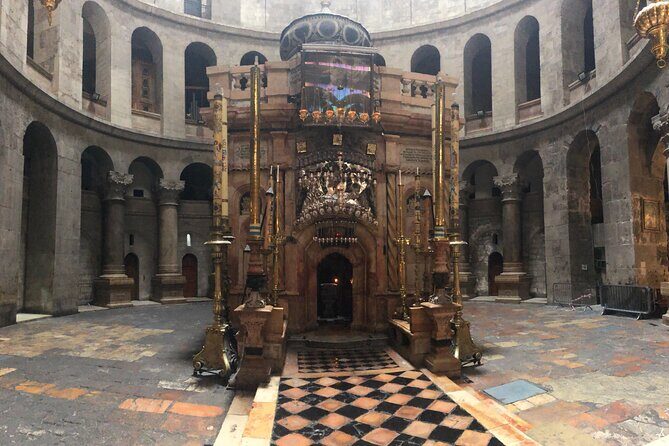
Inside the Church of the Holy Sepulchre, you visit the place of the crucifixion and the tomb area. You’ll also learn about Christian faith connected to the site, with enough context to understand why people treat it as more than a building.
This church complex can feel crowded and confusing on your own. With a guide, the flow becomes clearer: where you stand matters, and your understanding of the space improves as Orna explains what you’re seeing.
Practical tip: go in with comfortable patience. Even with a planned route, the church is sacred and busy. The payoff is that you’re guided through the meaning, not just the rooms.
Christian Quarter: locked-in stories, a ceramics stop, and time for a break
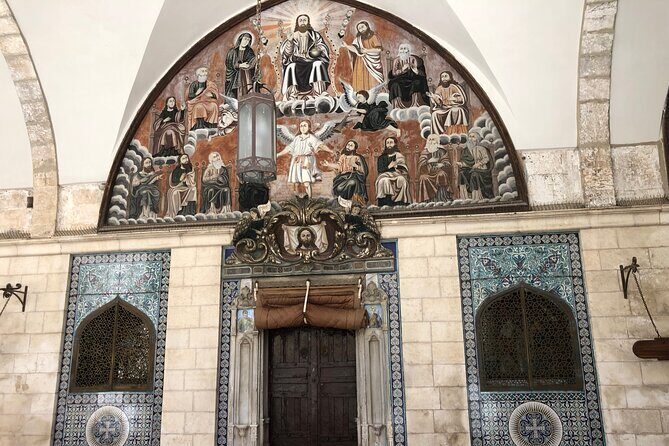
In the Christian Quarter, you’ll hear about a patriarch who locked himself in his room and received food through the window. That story adds a human dimension to the stones—Jerusalem’s conflicts aren’t abstract, and people lived them in daily life.
You’ll also stop at an Armenian ceramics shop, with a chance to browse real craft rather than only look at religious artifacts. Then there’s time to eat a cake and drink coffee at a local cafe. That’s not included in the tour price, so plan for it, but having this built into the route is helpful because it gives you a calmer reset point.
You’ll also learn about the lowest statue in Jerusalem and meet local merchants depending on availability. That last detail is the kind of “small chance” you can’t plan on alone, and it’s a nice bonus when it happens.
Our Lady of Peace rooftop finish: the Crimean War story and wide views
The tour ends with a change of pace at Our Lady of Peace, where you leave Jerusalem for a moment in a story sense: you’ll learn why the hotel was built there, by whom, and how it connects to the Crimean War. Then you’ll go up to the roof for a panoramic view over the new city and the Old City.
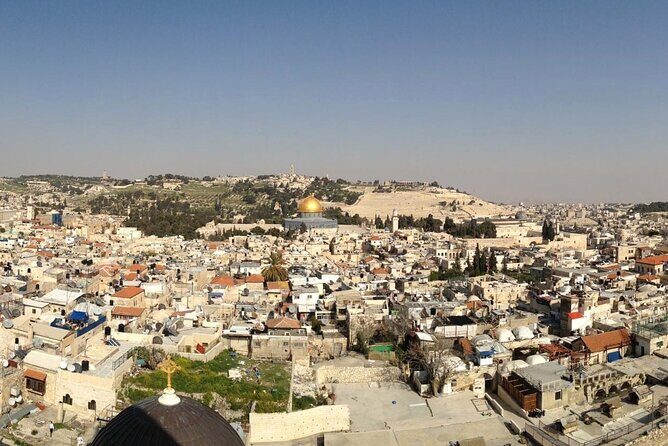
This is a valuable final step because it gives your brain a big picture. From the rooftop you can see different quarters, the Temple Mount area, and the Mount of Olives. After hours of moving through narrow lanes, having that overview helps you remember what you walked and how the Old City sits in the larger city.
You’ll also hear why the hotel was blown up and how it stood for about 19 years on the border between Jordanian Jerusalem and Israeli Jerusalem. It’s a reminder that Jerusalem’s borders have shifted, often abruptly, and physical buildings can tell those political stories too.
The tour ends at Notre Dame of Jerusalem Center at HaTsanhanim St 3.
How much it costs, and why it can still be good value
The price is $650 per group (up to 8) for about 6 hours, with entry fees included and delivered by mobile ticket. On paper, that can look pricey if you’re thinking in per-person terms.
But the value comes from three things the data clearly supports:
- It’s private, so you’re paying for time and interpretation, not just transport
- Entry fees are included, which reduces the most annoying kind of surprise cost
- The itinerary is focused on places that need careful access handling—especially Temple Mount, Western Wall, and the church complex
For small groups (families, couples, friend groups), the math often becomes reasonable because you’re not paying “per ticket per person.” Instead, you’re buying one guide’s full attention for the day.
Also, you get the kind of explanations that don’t come from a guidebook: why gates and walls have names, why quarters have boundaries, and how religious sites overlap with political control.
Who this tour is best for
This is a great match if you:
- Want a guided route that helps you understand Jerusalem’s layout fast
- Have interest in Judaism, Christianity, and Islam as living traditions, not just monuments
- Prefer a private setting where you can ask questions and move at a sensible pace
- Would like context for politically sensitive history—without it turning into a debate
If you only want the shortest list of must-see stops, or if you strongly dislike dress/security rules, you might find the structure a bit demanding. But if you’re willing to follow the requirements, the guide’s explanations turn that challenge into a clearer understanding of the city.
Should you book Orna’s Private Walking Tour of Jerusalem’s Old City?
Yes, if you want a guided walk that makes the Old City make sense and you’re the type who appreciates details tied to real places. I’d especially recommend it when you’re traveling with a small group and you want one licensed guide—Orna Simchi—to connect walls, quarters, synagogues, Temple Mount history, and Christian sites into one coherent day.
Book it if:
- You want entry fees included
- You care about understanding what you’re seeing at Temple Mount and in the Church of the Holy Sepulchre
- You want a private group capped at eight, with a guide who can handle different backgrounds
Skip it (or consider a shorter option) if:
- You can’t meet the Holy Sites dress/security requirements
- You’re only interested in a single religion’s sites and don’t want the overlap
If you go in prepared—with water, a hat, and flexible expectations about Temple Mount access—you’ll walk away with a much clearer mental map of Jerusalem and a day that feels more like understanding than just sightseeing.
FAQ
What’s the meeting point and where does the tour end?
The tour starts at Jaffa Gate, Old City, Jerusalem and ends at Notre Dame of Jerusalem Center, HaTsanhanim St 3, Jerusalem.
How long is the tour?
The duration is listed as about 6 hours.
Is this a private tour?
Yes. It’s private, and your group is the only group on the activity.
What’s the group size?
The price is per group for up to 8 people.
Are entry fees included?
Yes. All entry fees are included.
What’s included in the price and what’s not?
Included: licensed tour guide and entry fees. Not included: hot drink and a cake (at the cafe stop), plus you should bring hat, water, and comfortable walking shoes.
What should I wear for the Western Wall and Church of the Holy Sepulchre?
A dress code is provided: no tank tops, and pants or skirts to the knees for the Western Wall and the Church of the Holy Sepulchre.
What are the Temple Mount dress rules and restrictions?
Temple Mount dress rules include: men should wear pants under the knees and a T-shirt; women should wear a long skirt or pants (not skinny), plus a long-sleeved shirt with no cleavage. You should also avoid bringing holy books and sacred objects, weapons (including Lederman), laptops/tablets/iPads, alcohol, and musical instruments. If you don’t have a required cover, workers provide a skirt.
Is Temple Mount always visited?
No. Temple Mount is closed for visitors every Friday, Saturday, and during various Muslim and Jewish holidays. When closed, the tour includes a viewpoint overlooking the Temple Mount instead.
Is the tour available on Fridays?
The schedule is subject to Temple Mount closure rules, and there’s also a note that on Fridays the four Sephardic synagogues are replaced with another synagogue.