REVIEW · JERUSALEM
From Jerusalem Small group tour Old&New City ENTRY FEES INCL
Book on GetYourGuide →Operated by Rent-a-Guide | est.1985 · Bookable on GetYourGuide
Jerusalem can feel like a lot at once. This day trip helps you get your bearings fast while seeing the city’s biggest religious landmarks in one loop. I love the panoramic stop at Mount of Olives, and I also like how the guides (including Ofir and Sharon) keep answering questions while still moving on schedule.
The route threads through multiple faiths and neighborhoods, so you get more context than just sightseeing snapshots. The one catch is time: the day is packed, and the Church of the Holy Sepulchre stop may feel rushed depending on crowds.
If you want a slow, sit-down kind of visit where you can linger in every doorway, this may not match your pace. But if you want a smart overview with guided meaning, it’s a strong value for a first day in Jerusalem.
In This Review
- Key things you’ll notice on this Old & New City route
- Ein Karem: a gentler first chapter of Jerusalem
- Mount of Olives: the view that turns directions into understanding
- Mount Zion: three iconic stops with a timeline feel
- Into the Old City: Armenian and Jewish quarters at walking speed
- The Cardo (Roman Road): why a restored street matters
- Wailing Wall and Kotel: a pilgrimage moment you’ll feel
- Via Dolorosa to the Church of the Holy Sepulchre: meaning meets time pressure
- How the tour runs: small group van, tight timing, and smart priorities
- Dress code and on-the-ground basics (so you’re not stopping mid-tour)
- Price and value: what $97 covers and what you still pay for
- Who this tour fits best (and who should choose differently)
- Should you book this Old & New City day trip?
- FAQ
- FAQ
- How long is the tour?
- Does the price include entrance fees?
- Are meals included?
- Is pickup included?
- What language is the tour guide?
- Is there free cancellation?
- What should I wear for holy sites?
- What places does the itinerary include?
- Can the tour be canceled by the provider?
- Final word
Key things you’ll notice on this Old & New City route
- Ein Karem first for a calmer start before the Old City pressure hits
- Mount of Olives panorama to see how the city stacks up and where key sites sit
- Mount Zion stops including King David’s tomb, the Last Supper room, and Dormition Abbey
- Old City walking loop through the Armenian and Jewish quarters, plus the restored Cardo (Roman Road)
- Kotel and the Wailing Wall as a major pilgrimage moment with guided explanation
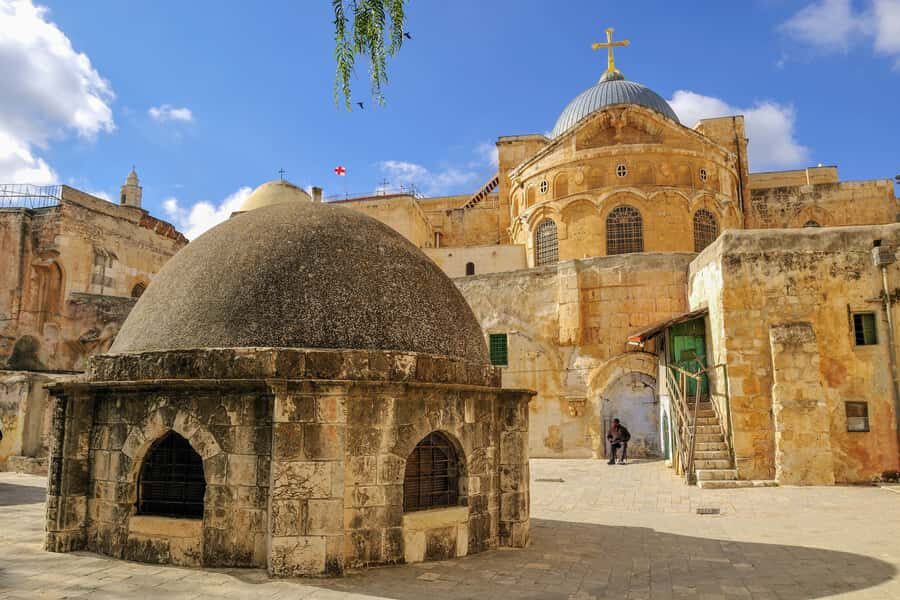
- Via Dolorosa to the Holy Sepulchre, where time and crowd levels matter
Ein Karem: a gentler first chapter of Jerusalem
You start the day with pickup and then head to Ein Karem for a short visit. Even with just a little time there, it helps break the mental intensity of the Old City. It’s a nice reset: you begin with a neighborhood feel before you step into the places where history gets thick.
The way this tour starts also makes practical sense. It’s a good buffer before the crowds and security checks later on. And because you’re with a guide, you’re not just looking at streets—you’re getting meaning behind what you’re seeing.
You can also read our reviews of more city tours in Jerusalem



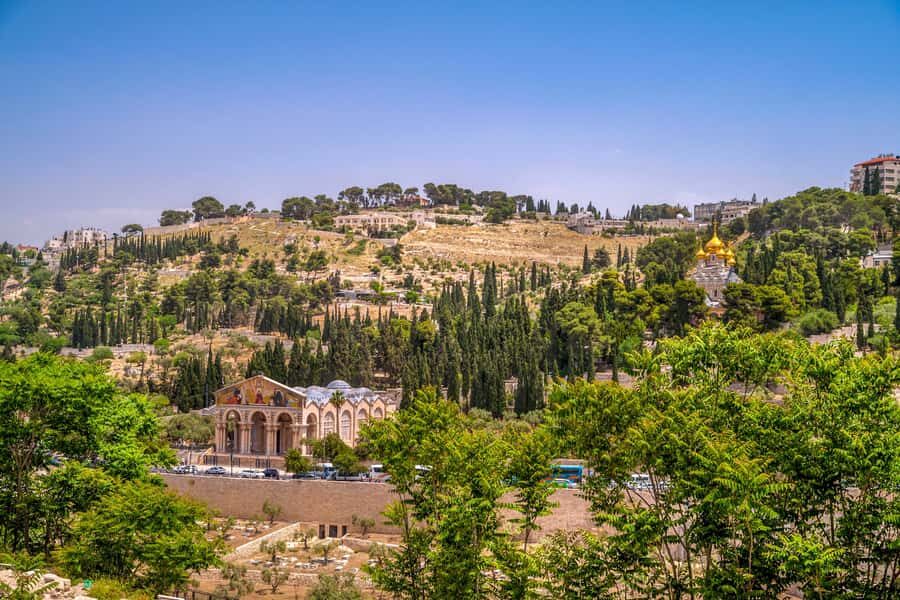
Mount of Olives: the view that turns directions into understanding
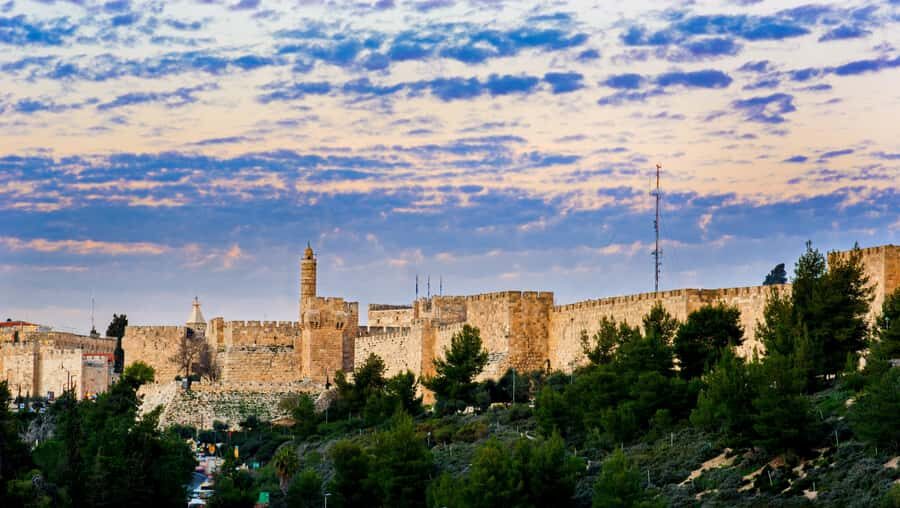
Mount of Olives is your big visual payoff. From here, you can finally connect the Jerusalem you’ve seen on photos with the Jerusalem you’re walking later. This is where the guide explanations click, because you can match what’s said to what’s in front of you.
I like that this stop is about orientation, not just a photo. Once you’ve got a sense of the city layout, the Old City route feels less like a maze. You also get a breather before the day becomes nonstop walking.
If you’re the type who gets overwhelmed by too much at once, take a moment here. Look out, then listen. The rest of the day goes faster when your brain has a map.
Mount Zion: three iconic stops with a timeline feel
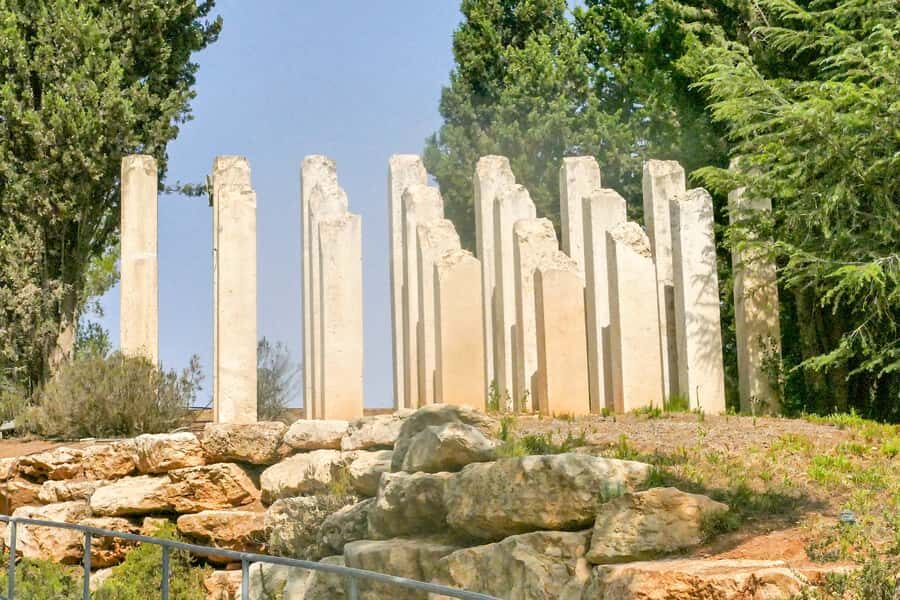
After the viewpoint, the tour moves to Mount Zion. The planned highlights include King David’s tomb, the room of the Last Supper, and Dormition Abbey.
What makes this section worth your time is the sequence. The stops aren’t random; they create a rough timeline so you understand why these places keep showing up in the stories people tell about Jerusalem. Your guide should be linking the religious significance and the historical layers as you go, and the route design helps that land.
This is also a good moment to pace yourself. Between the morning driving and the Old City walking later, Mount Zion is your chance to see major sites without the tight-feeling crowds right around the gates.
Into the Old City: Armenian and Jewish quarters at walking speed
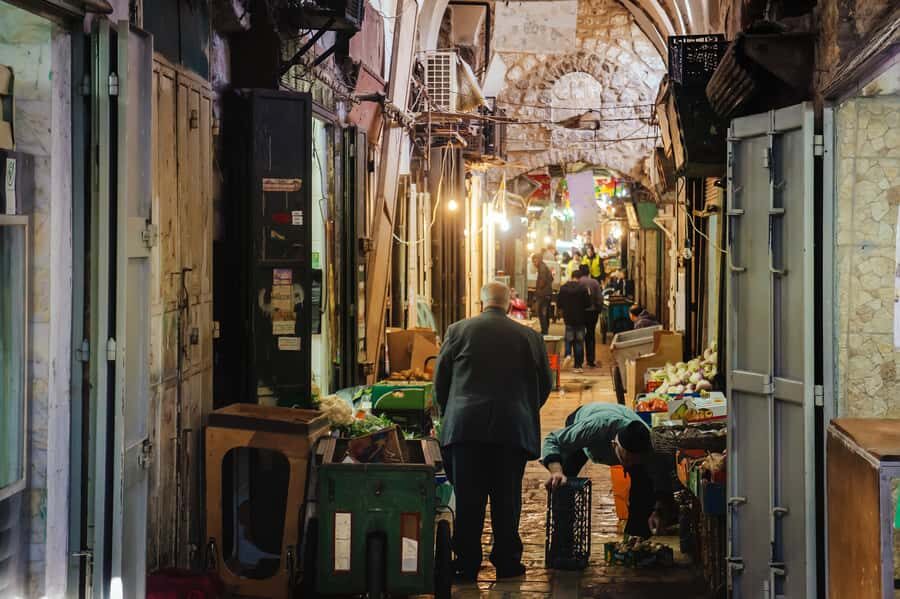
Now you shift from driving views to Old City walking. The tour enters through the Old City area and focuses on the Armenian and Jewish quarters. You also pass through the Cardo—also known as the Roman Road—which is recently excavated and restored.
This is one of the most practical parts of the itinerary. The Cardo stop gives your feet something tangible: you’re seeing a street path tied to Jerusalem’s older urban life. It also helps explain how the city developed, because you’re not only standing at sacred points—you’re moving through a historic corridor.
One caution: Old City lanes can get crowded quickly. Even with a small group, you’ll be walking at a pace set by the guide and the flow of people. If you dislike feeling rushed, plan to accept brief looks as part of the value here.
The Cardo (Roman Road): why a restored street matters
The Cardo stop sounds simple until you stand on it. A restored street like this turns abstract history into something you can understand with your body. You can imagine movement: markets, processions, daily life.
And because it’s included in the route, you don’t have to spend extra time researching where to go on your own. You get a guided interpretation in the moment. That’s one reason this tour works well for travelers with limited time—especially if you’re trying to do Jerusalem in one day without getting lost.



Wailing Wall and Kotel: a pilgrimage moment you’ll feel
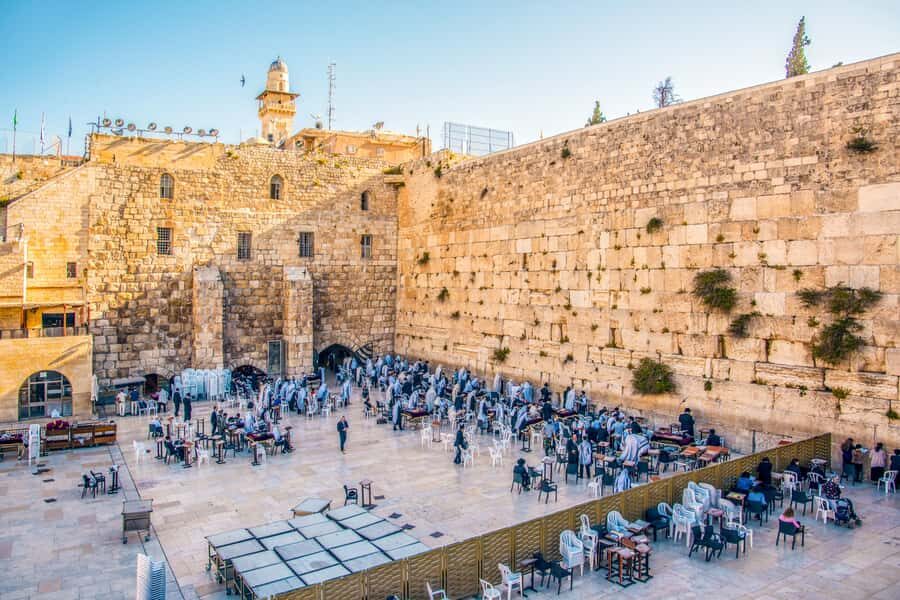
Next comes the Wailing Wall, known as the Kotel. This is one of the biggest pilgrimage sites in the world, and your guide’s explanations help you understand why people come here and what it represents in Jewish life.
Even if you’ve seen photos, you’re likely to be surprised by the density of the moment. The area draws constant attention—people praying, people visiting, people taking in the space. The key is to follow the guide’s direction so you’re respectful and efficient.
This stop is also a reminder that Jerusalem is not a museum. You’re stepping into something active. That changes how you experience the place, even if you’re only there for a short segment.
Via Dolorosa to the Church of the Holy Sepulchre: meaning meets time pressure
The route continues along the Via Dolorosa and then to the Church of the Holy Sepulchre. This is where the day’s pace can become the biggest question.
Here’s the practical reality: the Church of the Holy Sepulchre can be crowded, and there are multiple areas inside. On this kind of schedule, you might find you don’t get as much time as you hoped for getting deep inside and exploring at your own pace.
That matches what I’d expect from a full-day overview. You’ll see the main points, and you’ll get history and significance from the guide, but it’s not built for long lingering.
My advice: decide what matters most to you before you arrive—quick photo and move on, or slower absorption of one section. If you’re hoping for a long interior visit, this tour can still be a good experience, but manage expectations.
How the tour runs: small group van, tight timing, and smart priorities
This is a small-group day trip with a 450-minute duration, so you should plan on a long, active day. Pickup is included from centrally located Jerusalem hotels, and if your hotel isn’t central, you’ll be routed to the closest meeting point.
One detail that matters: the van can get you closer than bigger buses. In at least one run on record, the group used a comfortable luxury van and could park where larger vehicles couldn’t. That means less long hauling across distance, even if the Old City still requires walking.
Group size is generally small enough that you’re not stuck behind a sea of bodies. One itinerary I’ve seen listed capped at about 13 people. Still, the Old City doesn’t care about headcounts—crowds are crowds.
You’ll also want to accept that shopping time is limited. This tour is designed to cover the bases, not browse for an hour. It’s also easy to get information overload in a day like this, especially if your guide is offering a lot of detail and your brain is tired. If that happens, it helps to pick one or two themes—like Christian sites only, or Jewish landmarks only—so your memory has anchors.
Dress code and on-the-ground basics (so you’re not stopping mid-tour)
You’ll need modest dress: no shorts or sleeveless shirts, plus head coverings are required for visiting holy sites. It’s one of those details that can turn into a stress spike if you forget it.
Bring something light for warmth, because layers are useful when you’re moving between outdoor viewpoints and interior sites. Also, wear shoes you’re comfortable walking in for hours. Jerusalem’s sidewalks and Old City lanes reward the prepared.
If you’re traveling with a scarf or hat, you’re already half ready. If not, plan to have a way to cover up quickly.
Price and value: what $97 covers and what you still pay for
At $97 per person, this day trip includes pickup, transportation, guiding, and entrance fees to sites. Meals are not included.
That matters for value. In a day like this, entrance fees add up fast if you’re buying tickets one by one. By bundling entrance fees into the price, the tour reduces the hassle of deciding what to pay for and when.
You should still budget for food. Many people use the free time for lunch, and you’ll want cash or a card ready depending on what the stop area offers. Also keep in mind that this is a packed route, so you might prefer quick meals over long sit-down dining.
If you’re in Jerusalem for a short visit and want an organized first-day overview, this pricing structure tends to make sense.
Who this tour fits best (and who should choose differently)
This tour is a great fit if you want:
- a first-day orientation that ties the city’s main landmarks together
- a guided walk that includes Jewish, Christian, and Armenian areas
- a one-day plan that prevents logistical guesswork
It may not be ideal if you:
- want slow time in the Church of the Holy Sepulchre
- prefer minimal walking and lots of downtime
- need long breaks for shopping or extra independent wandering
If your dream day in Jerusalem is quiet and detailed, you might combine this with one separate day for deeper exploration. If your dream day is seeing the icons and learning why they matter, this hits the target.
Should you book this Old & New City day trip?
Yes—if you want a strong first pass through Jerusalem that’s organized, guided, and built around the big-ticket landmarks. The combination of Mount of Olives, the Old City walking route with the Cardo, the Kotel, and the Holy Sepulchre makes it a practical way to experience a lot in one day without guessing your way around.
Skip it or adjust expectations if you’re hoping for lots of quiet time inside the Church of the Holy Sepulchre. In a day designed to cover everything, some stops will be brief.
FAQ
FAQ
How long is the tour?
The tour runs for about 450 minutes, which is roughly 7.5 hours.
Does the price include entrance fees?
Yes. Entrance fees to the sites are included.
Are meals included?
No. Meals are not included.
Is pickup included?
Yes. Pickup is included from centrally located Jerusalem hotels. If your hotel is not central, you’ll be given the address of the closest meeting point.
What language is the tour guide?
The tour is described as English, and the tours are conducted in two languages.
Is there free cancellation?
Yes. You can cancel up to 24 hours in advance for a full refund.
What should I wear for holy sites?
You’ll need modest dress with no shorts or sleeveless shirts, and head coverings are required.
What places does the itinerary include?
You’ll visit Mount of Olives, the Wailing Wall (Kotel), the Church of the Holy Sepulchre, and you’ll also walk through the Armenian and Jewish quarters, including the Cardo (Roman Road). The day also includes stops at Ein Karem and Mount Zion sites.
Can the tour be canceled by the provider?
Yes. The tour might be canceled up to 2 days in advance if the minimum number of participants is not reached.
Final word
If you’re weighing this against DIY, booking wins on time and context. You’ll trade a bit of freedom for a guided route that gets you to Jerusalem’s must-see places efficiently.