REVIEW · JERUSALEM
All Inclusive Walking Tour Old City Jerusalem
Book on Viator →Operated by Booqify - Amazing Jerusalem · Bookable on Viator
Jerusalem’s Old City is a puzzle box. This small-group 6-hour walk helps you connect the dots between the Western Wall, the Dome of the Rock area, and the Church of the Holy Sepulchre, with breaks that actually matter. Guides like Efrat (friendly, patient, and ready with history notes for questions) and Leontine (strong command of history and a very calm pace) can make the route feel clear instead of overwhelming.
What I especially like: you get a guided day with a manageable group size (max 15), and you’re not left hunting for food. Lunch plus tea or coffee are included, which is a big deal in a place where timelines and crowds can get messy fast. The one caution: the dress code is real at worship sites, so plan your outfit carefully or you risk losing entry at key stops.
In This Review
- Key highlights worth planning for
- A 6-Hour Old City Walk That Actually Adds Up
- The Small-Group Advantage: Up to 15 People
- Price and Value: What $120 Covers
- Meeting at the Tourist Information Center and How the Day Flows
- Jaffa Gate to the Armenian Quarter: Getting Oriented Fast
- Ancient Jerusalem on Foot: The Cardo and Broad Wall
- Hurva Synagogue: Rooftop Views and a Story You’ll Remember
- Western Wall and Temple Mount: Sacred Space, Access Limits, and Smart Clothing
- Golden Menorah and the Via Dolorosa: Two Ways to See the Same City
- Church of the Holy Sepulchre: The World’s Most Intensely Marked Christian Site
- Deir Al Sultan and the Status Quo Rule You’ll Notice
- Practical Tips So You Don’t Lose Entry or Time
- Who This Tour Fits Best (and Who Might Want Another Option)
- Should You Book This Old City Walking Tour?
- FAQ
- How long is the walking tour?
- How many people are in the group?
- What time does the tour start, and where do I meet?
- What’s included with the tour?
- Is entrance included for all sites?
- Do I need to follow a dress code?
- Do I get a mobile ticket?
- Can I cancel and get a refund?
Key highlights worth planning for
- Max 15 people keeps the pace humane and the guide’s attention focused.
- Lunch + tea/coffee included means fewer logistics stress hours later.
- Hurva Synagogue rooftop views plus a guided story stop you won’t get on a quick photo loop.
- Temple Mount area context helps you understand what you’re seeing before you’re inside the most crowded zones.
- Old City walking route strings together Jewish, Christian, and Muslim sacred sites in one coherent day.
- Dress code enforcement can affect whether you get into worship spaces, so pack smart.
A 6-Hour Old City Walk That Actually Adds Up
This is the kind of tour that works because it’s built for orientation. Jerusalem’s Old City can feel like you’re walking in circles unless someone gives you structure. Here, the guide keeps you moving through a logical sequence of landmarks tied to the three major faith traditions, so the day feels like understanding, not just sightseeing.
You’ll be walking for about six hours, with short stop times that keep momentum. That pacing is good for a first visit because you’ll cover a lot of ground without getting lost in any single square. Just don’t expect this to be a slow, sit-and-stare day.
The tour also builds in “reset points” with a local lunch and a tea or coffee stop. It’s practical. You can’t properly enjoy the Old City if you’re hungry and irritated.
You can also read our reviews of more walking tours in Jerusalem



The Small-Group Advantage: Up to 15 People
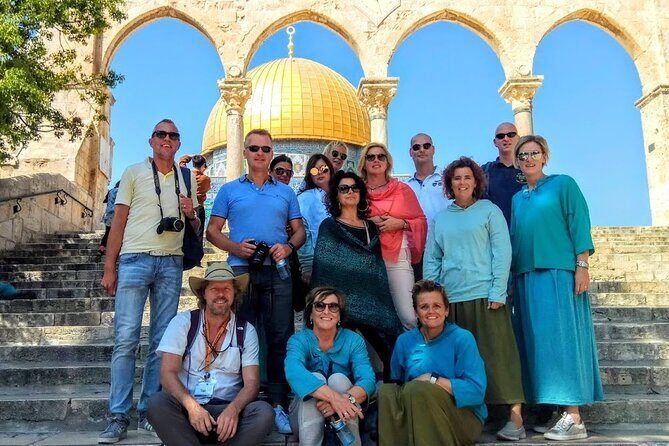
The tour caps at 15 travelers, and that matters more than it sounds. In the Old City, crowd density changes every few minutes. With a small group, the guide can shift how you move, pause when needed, and keep the group together in tight alleys.
This is also why the guide’s style stands out in the experience. When Efrat is leading, the day tends to feel question-friendly—she’s described as patient and ready with materials to answer details. When Leontine is leading, the pacing is often praised as well-timed, with the guide communicating context in a way that makes major sites easier to place in your head.
Bottom line: if you prefer a tour where you’re not swallowed by 40 strangers, you’ll likely appreciate this group size.
Price and Value: What $120 Covers
At $120 per person, this isn’t a budget deal. But it’s not just a walking route for sale either. Your money goes toward a guided, multi-hour route through major landmarks and includes lunch plus tea or coffee.
Think about what that saves you:
- You avoid the lunch scramble during the middle of the day.
- You get a guide to explain what you’re seeing—especially at sites where people often arrive with only a name and a quick photo idea.
- One key entrance stop—Hurva Synagogue—is included.
If you’re the type who hates spending your trip time comparing cafés and reading signage, paying for the structured day can feel like a bargain.
Meeting at the Tourist Information Center and How the Day Flows
The tour starts at 9:00 am at the Tourist Information Center Omar Ibn Katab in Jerusalem, and it ends back there. Because it’s a walking tour through the Old City, starting on time helps a lot. Late arrivals can break the flow because the group is moving through narrow areas and worship spaces.
In a place like this, order sometimes feels like a living thing—routes can shift depending on access and crowding. But the day’s core arc stays consistent: you start at Jaffa Gate, then work through major quarters and central historic streets, and you finish by hitting the most famous Christian sites, including the Church of the Holy Sepulchre and a roof monastery stop.
Expect frequent “look, listen, move” rhythms. The stops are long enough for photos and understanding, not long enough for a slow museum-style visit.
Jaffa Gate to the Armenian Quarter: Getting Oriented Fast
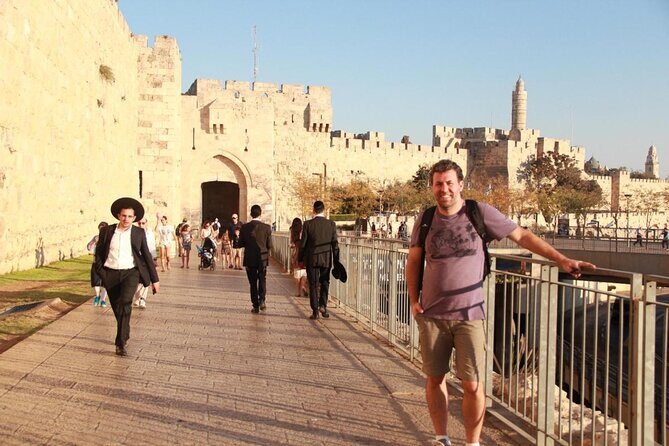
Most first-time visits start with Jaffa Gate, and that’s the right move. This main entrance is your mental switchboard: from here, you can begin to understand how the Old City is arranged and how different areas connect.
From there, you’ll head into the Armenian Quarter. It’s the smallest of the four quarters, and that size helps you feel the neighborhood character rather than only the big sights. The guide’s context typically includes the long Armenian Christian presence dating back to early Christianity, with monks settling in Jerusalem after Armenia adopted Christianity as a national religion.
Then comes the Cardo, the main street in ancient Jerusalem under Byzantine rule, running north to south. The Cardo is one of those “wait, this is what it used to be like” moments. Seeing it on foot makes the scale feel real—lined with columns on both sides, it’s a reminder that people once moved through the city in a very formal, structured way.
If you’re trying to wrap your head around time periods in Jerusalem, this early sequence is the strongest “setup” part of the day.
You can also read our reviews of more city tours in Jerusalem






Ancient Jerusalem on Foot: The Cardo and Broad Wall
The Cardo is one of the best places to learn “how old is this?” without getting lost in dates. It’s a single street, but it anchors multiple layers of Jerusalem’s story. You see how a city corridor becomes a reference point across centuries.
A few stops later, you’ll reach the Broad Wall in the Jewish Quarter. It’s described as a defensive wall dated to the reign of King Hezekiah. Even if you’re not a hardcore history person, this helps you understand why Jerusalem was fortified and why certain areas matter so much to different communities over time.
One practical note: the Old City can feel uneven underfoot and sometimes crowded. Keep your pace steady, keep your phone charged, and try not to sprint between stops. The guide’s timing works best when you walk like you belong to the group.
Hurva Synagogue: Rooftop Views and a Story You’ll Remember
The Hurva Synagogue stop is one of the most rewarding parts of the day. Entry is included, and the experience isn’t just a quick exterior glance.
Inside, you’ll admire the synagogue’s interior and learn what makes it special. The tour highlights the world’s tallest Holy Ark, and you’ll hear the synagogue’s story in a way that connects the building to lived faith and changing eras.
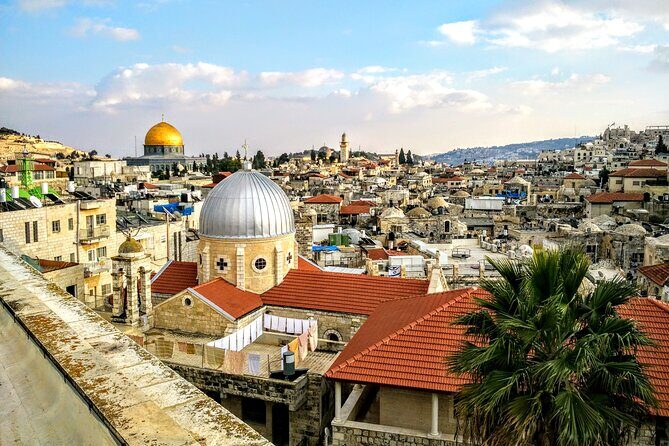
Then you get the rooftop payoff: a breathtaking 360-degree view. On a walking tour, this matters. It gives your eyes a chance to reframe everything you’ve been walking through, turning cramped lanes into a city map.
If you’re the type who likes meaningful stops rather than only “big name” photos, this is the stop to look forward to most.
Western Wall and Temple Mount: Sacred Space, Access Limits, and Smart Clothing
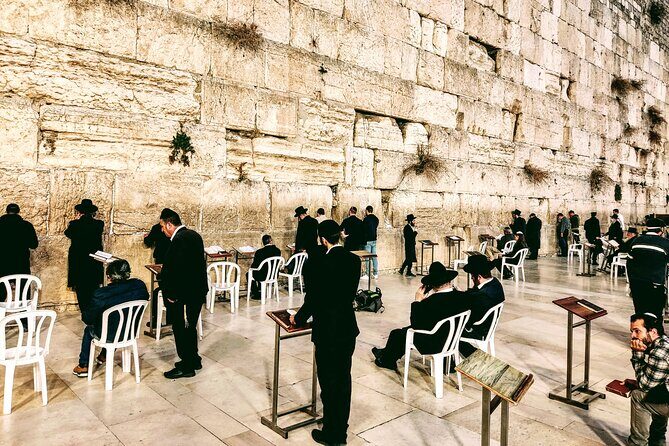
The Western Wall (also known as the Wailing Wall or Kotel) is a defining stop for Jewish visitors and pilgrims. The tour explains it as part of the retaining wall surrounding the Temple Mount area, tied to the First and Second Temples. You’re there to see a place of prayer and pilgrimage—so behave accordingly: quiet voice, respectful posture, and give people space.
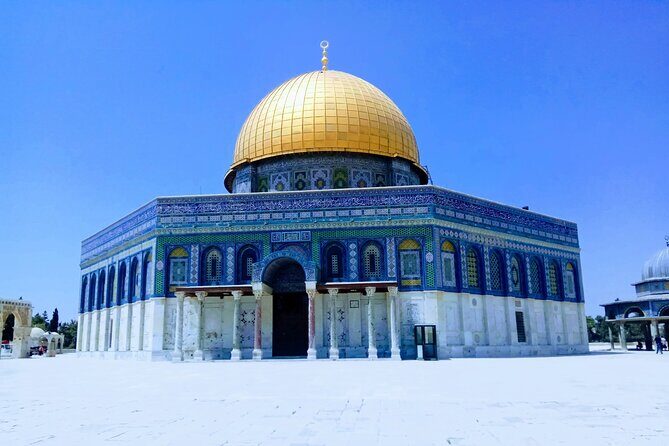
Right after that, you’ll move toward the Temple Mount area, where the Dome of the Rock and Al-Aqsa Mosque are located today. This part of the day is where the tour’s context pays off. It helps you understand why this area is treated as sacred ground by many people.
Now for the big real-world issue: dress code. The tour requires knees and shoulders covered for men and women. That means no shorts, and no sleeveless tops. If your outfit doesn’t fit, you may be refused entry. This is not a “maybe” rule—you should plan your clothes like they’re part of the itinerary.
One caution from a real-world perspective: you can’t rely on being able to enter all worship spaces if you forget this. It’s easy to pack light and regret it at the worst moment, so bring the layer or plan your outfit ahead of time.
Golden Menorah and the Via Dolorosa: Two Ways to See the Same City
From the Temple Mount area, the tour continues to the Golden Menorah. This isn’t just a decorative idea. The menorah is described as a Bible-linked seven-lamp lampstand associated with the tabernacle in Moses’ wilderness story and later the Temple. What’s on site today is a replacement constructed by the Temple Institute based on research by academic and biblical researchers.
If you’re the kind of traveler who likes to understand what something represents, this stop is useful. It also shows how religious imagination can connect to physical art and public space.
Then comes the Way of the Cross (Via Dolorosa), described as a processional route representing the path Jesus would have taken on the way to crucifixion, forced by Roman soldiers. Even if you’ve visited Christian sites before, this framing gives you a clear lens for why people walk it.
A practical note: this route can be crowded. Keep your expectations for “quiet reflection” realistic. If you want space for photos, do it fast and respectfully, then step aside.
Church of the Holy Sepulchre: The World’s Most Intensely Marked Christian Site
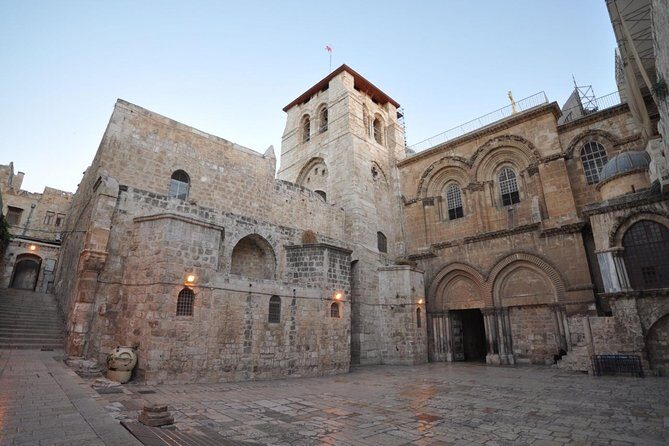
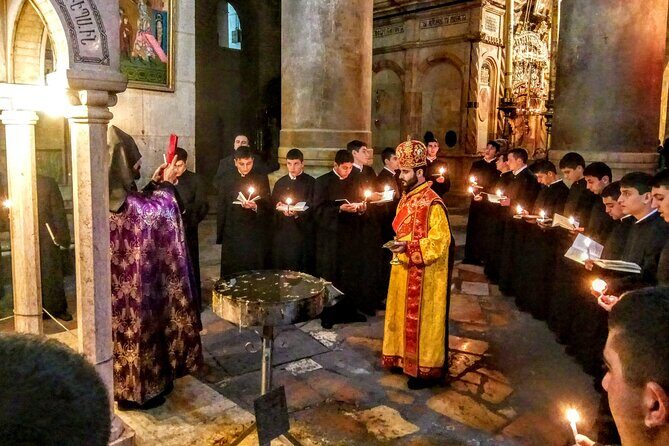
The Church of the Holy Sepulchre is likely the emotional peak for Christian visitors. This is described as the most sacred site in the world for Christians, connected with the crucifixion, burial, and resurrection of Jesus. Golgotha, the place of crucifixion, is inside the church.
Walking into the church with a guide is helpful because it’s not always obvious where the different sacred points are located. The tour also helps you manage expectations: you’re in a major pilgrimage site, and that means crowds, movement, and a lot of people trying to pray at once.
Again, keep your voice low and your time flexible. The stop is long enough to see key points, but it’s not a slow visit. If you’re sensitive to crowd pressure, try to take short breath pauses when you can.
Deir Al Sultan and the Status Quo Rule You’ll Notice
After the Church stop, you’ll visit Deir Al Sultan, described as a monastery located on the roof of the Church of the Holy Sepulchre. This stop comes with a crucial context: the Status Quo, an over 200-year-old understanding between religious communities during Ottoman rule, applies here.
You’ll feel this rule in the way space is managed and shared. Even without deep legal knowledge, the practical outcome is clear: this site operates with careful coordination among communities.
It’s also a good moment to slow down your mind after the Church of the Holy Sepulchre. Roof views and simpler sightlines can reset you before the day ends back at the meeting point.
Practical Tips So You Don’t Lose Entry or Time
Here are the details that can make or break your day.
Dress for worship sites first. Knees and shoulders must be covered for both men and women. That’s true even if the day feels casual when you start at Jaffa Gate.
Bring a light layer. Not because the tour says you must, but because stone churches and outdoor transitions can change how you feel quickly.
Use comfortable walking shoes. This is a walking tour across uneven Old City ground. You’ll cover a lot of distance in a tight area.
Keep your phone charged. With so many moving parts and photo moments, it’s easy to burn battery fast.
Expect controlled access. Some stops are sacred sites, so security and crowding can affect timing. The guide’s job is to keep the flow moving, not to guarantee every second is exactly as you planned.
Who This Tour Fits Best (and Who Might Want Another Option)
This tour suits first-time visitors who want structure. If you’re short on time, it gives you a guided route that hits the big anchors—Western Wall, Temple Mount area sites, Via Dolorosa, and the Holy Sepulchre—without making you stitch together separate bookings.
It also fits travelers who like “meaning” with their sightseeing. Learning about the Cardo as the Byzantine main street, the Broad Wall tied to Hezekiah, and the Hurva Synagogue’s architectural and rooftop perspective adds weight to what you see.
A possible drawback is that the day deals with places where history and current beliefs overlap. One review noted that the guide’s political views weren’t needed, which is a reminder to match your expectations. If you strongly prefer only neutral historical facts and no modern commentary, you may want to approach the tour with that in mind.
Should You Book This Old City Walking Tour?
Yes, if you want a structured introduction and you’re ready to dress correctly for worship spaces. The best reason to book is the combination of a small group, guided context, and included food that keeps your day from turning into a scavenger hunt.
Skip or rethink if:
- You’re not willing to follow the no shorts/no sleeveless rule at sacred sites.
- You hate crowds and need long, quiet stops.
- You’re very sensitive to how guides discuss modern implications alongside ancient sites.
If you’re in the first group—practical, curious, and ready for walking—this is a strong way to see the Old City without coming home feeling like you only collected photos.
FAQ
How long is the walking tour?
The tour lasts about 6 hours.
How many people are in the group?
The tour has a maximum of 15 travelers.
What time does the tour start, and where do I meet?
It starts at 9:00 am. The meeting point is the Tourist Information Center Omar Ibn Katab in Jerusalem.
What’s included with the tour?
A restaurant lunch is included, along with a complimentary tea or coffee.
Is entrance included for all sites?
Most stops are listed as free, but Hurva Synagogue admission is included.
Do I need to follow a dress code?
Yes. Knees and shoulders must be covered for both men and women. No shorts or sleeveless tops are allowed, and you may be refused entry if you don’t comply.
Do I get a mobile ticket?
Yes, the tour uses a mobile ticket.
Can I cancel and get a refund?
You can cancel for a full refund up to 24 hours before the experience starts. If you cancel less than 24 hours before, the amount paid will not be refunded.