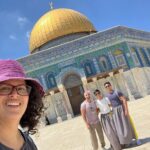
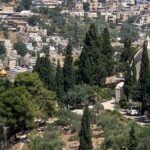
REVIEW · JERUSALEM
Jerusalem: Guided Walking Tour of the Old City
Book on GetYourGuide →Operated by Abraham Tlalim Tours LTD · Bookable on GetYourGuide
Jerusalem hits different at street level. This guided walking tour is built for your first real feel of the Old City’s nerve and nuance, walking you through major Jewish, Muslim, and Christian landmarks with stories tied to exact corners. I like that the Western Wall and Temple Mount area get serious context, not vague sightseeing, and I also like how guides handle questions in clear, friendly English. The main drawback: it is a long, intense walk with strict dress rules (no shorts, no sleeveless shirts), and the Temple Mount may be closed on some days.
Starting at Jaffa Gate, you’ll spend about four hours moving through the Old City quarters and hitting the big-ticket sites: Via Dolorosa, the Western Wall, Temple Mount viewpoints and (when open) the Dome of the Rock and Al-Aqsa Mosque, plus the Church of the Holy Sepulchre, including time inside. On Fridays, Saturdays, and some religious holidays, you won’t go onto the Temple Mount itself, but you’ll get a viewpoint looking over it instead, which helps you still make sense of what you’re seeing.
In This Review
- Key things to know before you go
- Starting at Jaffa Gate: fast orientation on foot
- Four quarters, one theme: how the tour connects places to meaning
- Western Wall and Temple Mount viewpoints: what you’ll actually take in
- Church of the Holy Sepulchre and the Via Dolorosa: walking the sacred route
- Four hours on uneven stone: pace, safety, and what to pack
- Price and value: why $57 makes sense for a first Jerusalem intro
- Who should book this tour (and who should skip it)
- Picking up on guide style: what tends to make the experience better
- Should you book this Jerusalem Old City guided walking tour?
- FAQ
- Where does the tour start, and where should I meet?
- How long is the guided walking tour?
- Is the tour guided in English?
- What are the main sites included on the route?
- Is food included in the ticket price?
- What should I bring for the tour?
- What clothing is not allowed?
- What happens if the Temple Mount is closed on my day of travel?
- Is this tour suitable for wheelchair users or people with mobility impairments?
- Can I cancel, and do I get a refund?
- Is there a pay-later option?
Key things to know before you go
- Jaffa Gate start and real wayfinding: Meet at the stone bench just outside Jaffa Gate and look for the guide in a green shirt with Guide in yellow on the back.
- Three faith stories, one walking route: You’ll connect biblical scenes and Qur’anic landmarks to the places where they happened.
- Temple Mount rules can change the stop: When the Temple Mount is closed, you’ll switch to a viewpoint instead.
- You’re walking the Old City, not touring from a bus: Expect steady walking and uneven old-stone ground, so wear comfortable shoes.
- Inside the Holy Sepulchre: This tour doesn’t just point at it from outside.
- Guides often make it feel paced and un-rushed: Many groups praise the calm speed and lots of time at key moments.
Starting at Jaffa Gate: fast orientation on foot
The Old City can feel like a maze if you arrive cold. Starting at Jaffa Gate is a smart move because it gives you a clear reference point immediately, and you’re moving into the quarters with a guide who can explain what each area has meant historically and religiously. When you can name what you’re looking at and why it matters, the streets stop feeling random.
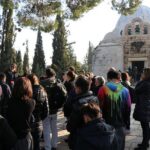
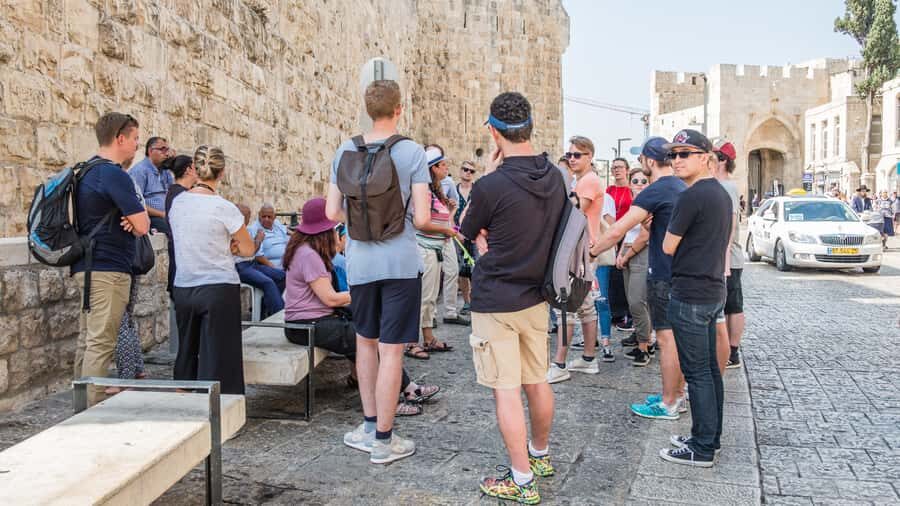
The meeting setup is also practical. Go to the stone bench just outside Jaffa Gate and look for a guide wearing a green shirt with Guide written in yellow on the backside. That small detail matters in Jerusalem, where signage can be easy to miss while you’re focused on crowds and stonework.
You can also read our reviews of more walking tours in Jerusalem
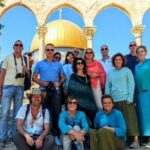
Four quarters, one theme: how the tour connects places to meaning
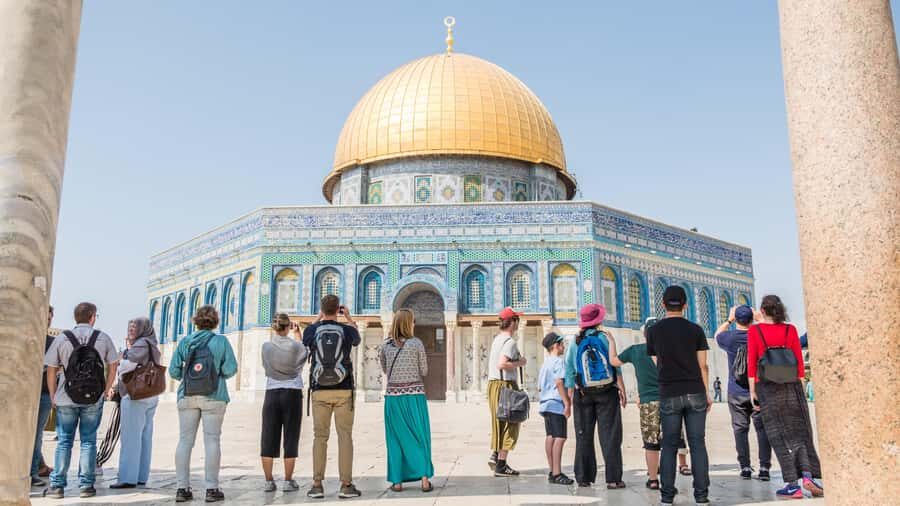
This tour’s big strength is how it ties landmarks to the stories people attach to them. You’re not just collecting photos. You’re learning why these sites matter to Jews, Muslims, and Christians, and what each tradition emphasizes when it points to Jerusalem.
As you walk through the different quarters, you’ll hear Jewish references like King David’s Tomb and the Western (Wailing) Wall, which stands as one of the last major remains connected to the Jewish Temple era. You’ll also get Muslim context for the place associated with the Prophet Mohammed’s ascent, plus stops centered on the Dome of the Rock and Al-Aqsa Mosque.
For Christians, the walk includes the Via Dolorosa, the path associated with Christ carrying his cross, and time around the Church of the Holy Sepulchre. The tour also mentions Christian landmarks such as the room connected with the Last Supper and the discovery of the True Cross, so you’re not left wondering why people are so moved in the same rooms you might otherwise treat like old buildings.
I especially like this format because it helps you notice how beliefs overlap and how the city layers meanings on top of meanings. It also gives you better conversations later when you meet people who have strong personal ties to these sites.
Western Wall and Temple Mount viewpoints: what you’ll actually take in

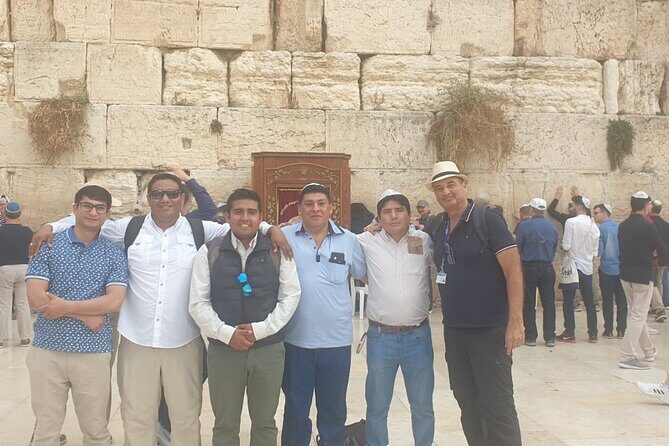
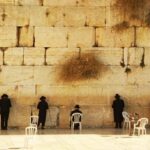
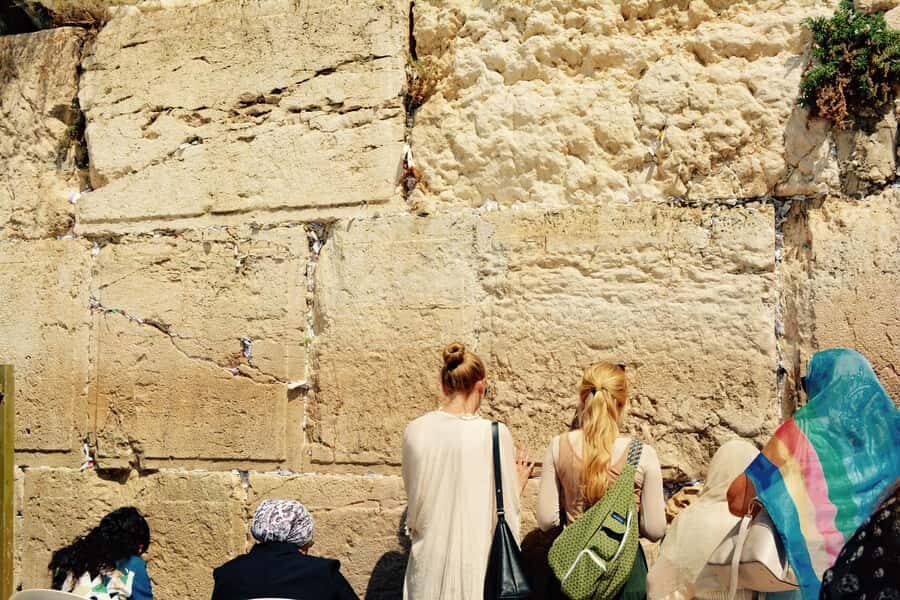
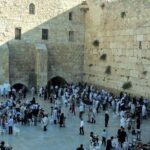
The Western Wall is the stop most first-timers recognize, but the guide makes it more than a famous wall. You learn what it represents for Jewish tradition, and you get a sense for why so many people come with prayers, rituals, and family stories. Some guides also take groups to a special spot near the Western Wall, so you can spend time in the area that feels most meaningful, not just the most crowded stretch.
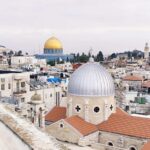
Then comes the Temple Mount area, which is where your experience can vary depending on the day. The Temple Mount (including the Dome of the Rock and Al-Aqsa Mosque) closes to visitors every Friday, every Saturday, and during various Muslim and Jewish holidays. When that happens, you won’t enter the Temple Mount itself. Instead, you’ll get a viewpoint that overlooks it, so you can still place what you’re learning onto the skyline.
Two practical things matter here:
1) Dress matters. Bring a scarf and plan for covered shoulders and modest clothing, since you can’t wear shorts or sleeveless shirts.
2) Sun and waiting can matter. Even if you don’t stop for long at each spot, the open air and the crowd flow can add up.
If your trip hits a closure day, don’t treat it like a “miss.” A viewpoint still helps you understand the geography and why so many sacred narratives are tied to that specific mount.
Church of the Holy Sepulchre and the Via Dolorosa: walking the sacred route
Walking the Via Dolorosa is one of those experiences where the street itself starts to feel like part of the story. The route is lined with layers of devotion, and your guide’s job is to keep that energy tied to context, not just atmosphere. You’ll learn how the path is connected to Christ carrying his cross to crucifixion, which helps you make sense of why people pause, look up, and speak quietly.
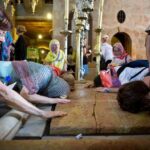
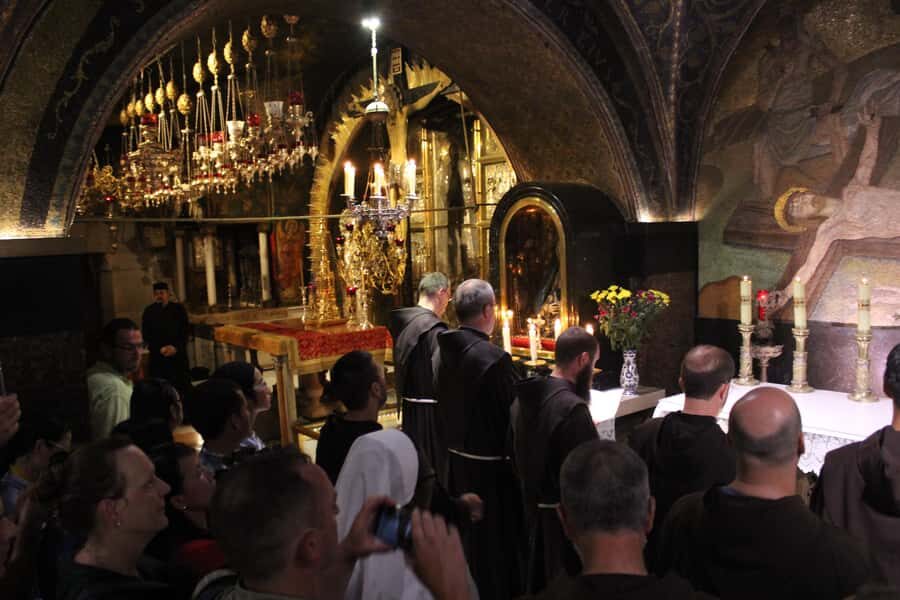
The Church of the Holy Sepulchre is the other major anchor of the tour. You don’t just view it from the entrance; you’ll venture inside. That inside time matters because the church is a maze of rooms and traditions in a single complex. You’ll hear about key Christian locations associated with the crucifixion and burial, including references such as the slab where many Christians believe Jesus’ body was laid after crucifixion.
A note for your expectations: this is not a museum-style visit. It’s a living holy site with ongoing religious meaning, and you’ll see how visitors behave differently from place to place. Having a guide helps you keep your bearings when everyone around you seems to know exactly where they’re going.
Four hours on uneven stone: pace, safety, and what to pack
Old City walking is not the same as strolling a city park. The ground is uneven, pathways narrow, and crowds can slow your steps. This tour is designed as a 4-hour format, so it’s structured for real movement with time at each priority stop.
From what I see consistently in how people describe their day, the best guides keep the group moving at a steady pace without rushing past the moments that matter. Several groups specifically call out good timing at each site, lots of Q&A time, and guides who keep things calm and organized through the most intense parts of the Old City.
Still, you’ll need to come prepared:
- Comfortable shoes are non-negotiable.
- Bring water because heat and crowd density can drain you faster than you expect.
- A sun hat helps when the shade disappears.
- A scarf isn’t just “nice to have.” It supports the dress requirements for sacred areas.
Also plan mentally for crowd flow. Even if your guide is great, the Old City has its own timing. That’s part of the experience, just don’t try to power through it on a tired body.
You can also read our reviews of more guided tours in Jerusalem

Price and value: why $57 makes sense for a first Jerusalem intro
At $57 per person for about four hours, you’re paying for more than access to famous places. You’re paying for interpretation. Jerusalem’s top sites are famous, but the meaning isn’t simple, and the context can’t be picked up quickly from a phone screen while you’re standing in the middle of it.
This is especially good value because the tour covers multiple major religious anchors in one go: Western Wall, the Temple Mount area (or a viewpoint when closed), Via Dolorosa, and the Church of the Holy Sepulchre. Add in live English guidance, plus a path through several Old City quarters, and the cost starts to look like a fair trade for your time and energy.
The main “cost” isn’t money. It’s that you should treat this as an early or middle-of-day anchor and not as a tiny side quest. Since food and drinks aren’t included, plan on grabbing something after the tour. That way you keep your energy up without turning your walking time into a snack hunt.
Who should book this tour (and who should skip it)
This tour is a strong fit if you want an organized, first-time orientation to Jerusalem’s Old City. It works well for people of all backgrounds who want to understand how Jews, Muslims, and Christians each make sense of the same streets and structures. If you’re short on time, four hours is a realistic window to see the major highlights without getting lost.
It’s not a fit if you have mobility limitations. The tour is not suitable for people with mobility impairments or wheelchair users, mainly because it’s a walking route in an old, tight environment.
It may also be uncomfortable for some people if you’re very sensitive to crowd density or heat, since you’ll be outside for much of the experience. If you come dressed correctly and pack water, you’ll be in better shape to enjoy the stories rather than endure the logistics.
Picking up on guide style: what tends to make the experience better
The tour is guided by live English support, and the biggest difference between a good day and a great day is the guide’s teaching style. Names that show up across recent groups include Shahar, Tania (Tanya), Nimrod, Yoni, Shimon, and Alexander Z. People often describe guides who:
- answer lots of questions without sounding annoyed,
- balance religious and historical significance without taking cheap sides,
- keep the group safe and organized,
- keep the pace fair, even in heat and crowds.
You don’t need to choose based on a personality brand, but you can look for signals: clear English, steady pacing, and a guide who explains what you’re seeing at each stop. That’s what turns a list of famous sites into a trip you actually remember.
Should you book this Jerusalem Old City guided walking tour?
Book it if you want a fast, structured way to understand Jerusalem’s key sites in one afternoon. It’s built for first-timers and people who like learning while they walk, especially if you care about context at the Western Wall, Temple Mount area, Via Dolorosa, and the Church of the Holy Sepulchre.
Skip it or switch expectations if you need step-free access, if you’re traveling on a Friday/Saturday and Temple Mount access is your top priority, or if you hate walking in crowds. For everyone else, this is a solid value: you pay a reasonable price for four hours of guided interpretation in the exact neighborhoods where the stories feel real.
FAQ
Where does the tour start, and where should I meet?
Meet at the stone bench just outside Jaffa Gate. Look for the guide wearing a green shirt with Guide written in yellow on the backside.
How long is the guided walking tour?
The duration is 4 hours.
Is the tour guided in English?
Yes, it’s a live tour with an English-speaking guide.
What are the main sites included on the route?
You’ll visit the Western Wall, Temple Mount (or a viewpoint if it is closed), the Dome of the Rock and Al-Aqsa Mosque area as applicable, and the Church of the Holy Sepulchre, along with stops connected to the Via Dolorosa.
Is food included in the ticket price?
No. Food and drinks are not included.
What should I bring for the tour?
Bring comfortable shoes, a sun hat, water, and a scarf. You should also bring your passport (a copy is accepted).
What clothing is not allowed?
Shorts and sleeveless shirts are not allowed.
What happens if the Temple Mount is closed on my day of travel?
Temple Mount is closed to visitors every Friday and Saturday, and during various Muslim and Jewish holidays. If it’s closed, the tour includes a viewpoint overlooking the Temple Mount instead.
Is this tour suitable for wheelchair users or people with mobility impairments?
No. It is not suitable for people with mobility impairments or wheelchair users.
Can I cancel, and do I get a refund?
Yes. You can cancel up to 24 hours in advance for a full refund.
Is there a pay-later option?
Yes. You can reserve now and pay later, keeping your travel plans flexible.