REVIEW · JERUSALEM
Old City of Jerusalem Guided Walking Tour
Book on Viator →Operated by Abraham Tlalim Tours LTD · Bookable on Viator
Four hours, five places with gravity.
This Old City of Jerusalem guided walking tour strings together several of the sites that sit at the center of Christian, Jewish, and Muslim traditions—so the Bible reads differently after you see the real ground it happened on. You’ll also skip a lot of guesswork thanks to a live guide, and you’ll move through the Old City at a pace that keeps the story going.
Two things I like a lot are the guided context at each stop and the way the route gives you a compact overview without adding paid admissions along the way. The tour runs about 4 hours with a maximum group size of 30, which matters in a place that can feel tightly packed.
One consideration: Temple Mount access can change based on the day. Temple Mount (including the Dome of the Rock and Al-Aqsa Mosque) is closed to visitors every Friday, Saturday, and during various Muslim and Jewish holidays, and then you’ll get a viewpoint instead—still good, but it’s not the same as entering.
In This Review
- Key highlights to look for
- Getting Your Bearings in the Old City (Meet at Omar Ben el-Khatab St 26)
- Church of the Holy Sepulchre: What You’ll See and Why Crowds Matter
- Temple Mount: The Closure Reality and the Viewpoint Backup
- Western Wall: Herod’s Work, Modern Prayer, and What Time Lets You Do
- Via Dolorosa: Walking the Processional Route with Clear Context
- Al Souq (Arab Market): A Needed Break from Monument Mode
- Price and Value: Is $45 Worth It Here?
- Weather, Crowds, and Picking the Right Day to Go
- Guides Who Can Make the Old City Feel Understandable
- Should You Book This Old City Walking Tour?
- FAQ
- FAQ
- How long is the Old City of Jerusalem guided walking tour?
- Where does the tour start and end?
- Is Temple Mount included even when it’s closed?
- What’s the maximum group size?
- Do you need to pay admission fees for the stops?
- Are food and drinks included?
- What do I need to bring for check-in?
- What happens if the weather is bad?
Key highlights to look for
- Storytelling that connects sites so you know what you’re seeing and why it matters.
- Free admission for the listed major stops, so your $45 goes mostly to the guide and your time.
- Small-group feel with a max of 30 people in crowded quarters.
- Temple Mount backup plan: if access is closed, you’ll visit a viewpoint overlooking it.
- A practical Old City mix: sacred sites plus Al Souq for a palate reset.
- Multiple guide styles possible—names like Nimrod, Orna, Shimon, Yoni, Shahar, Yariv, and Tania have been associated with standout guiding.
Getting Your Bearings in the Old City (Meet at Omar Ben el-Khatab St 26)

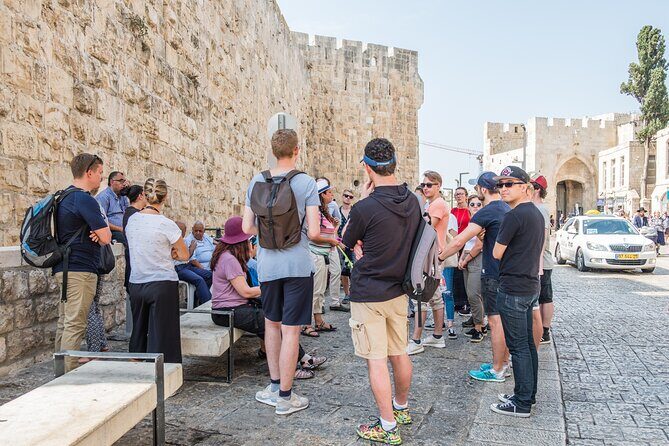
This tour starts at Omar Ben el-Khatab St 26 in Jerusalem, and it ends back at the same meeting point. Plan on a walking-heavy experience inside the Old City lanes, where distance feels longer than it looks and crowds can squeeze movement.
The timing is about 4 hours, and the group is capped at 30. That cap matters: smaller groups tend to stay tighter together when you hit bottlenecks—especially at Church of the Holy Sepulchre, where space can feel like a 3D puzzle.
You get a mobile ticket, which is handy if you want to travel light and not worry about paper. Also, the meeting point is near public transportation, so it’s easier to pair this with other Old City plans.
You can also read our reviews of more walking tours in Jerusalem
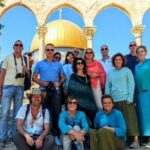


Church of the Holy Sepulchre: What You’ll See and Why Crowds Matter
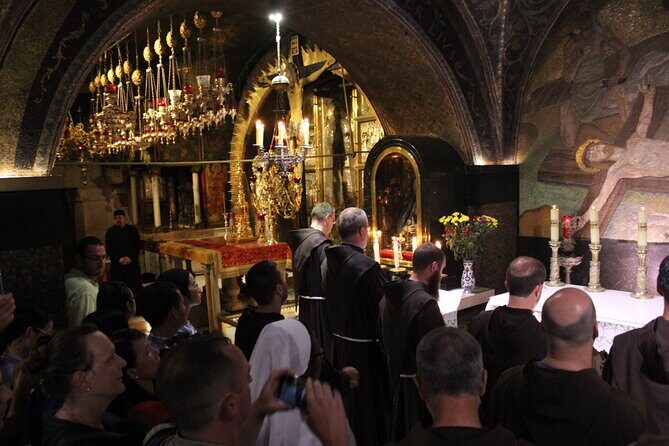
Your first stop is the Church of the Holy Sepulchre in the Christian Quarter. Christians believe it contains the two holiest sites in Christianity: the place of the crucifixion and the empty tomb where Jesus is believed to have been buried and resurrected.
You’ll have about 45 minutes here, and the admission ticket is free for this stop. This is one of those places where the building itself carries the weight, but it’s also where crowd control affects your experience—so the guide’s job is important.
What I’d watch for: you don’t just want photos. You want landmarks and orientation—what parts of the complex people point to, what stories connect to each area, and how to stay respectful while you move through a working holy site. With a good guide, the time feels full without turning into a rush-and-random-wander.
Temple Mount: The Closure Reality and the Viewpoint Backup
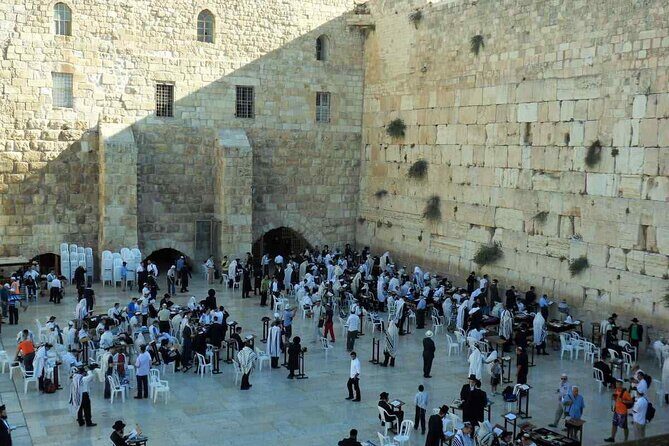
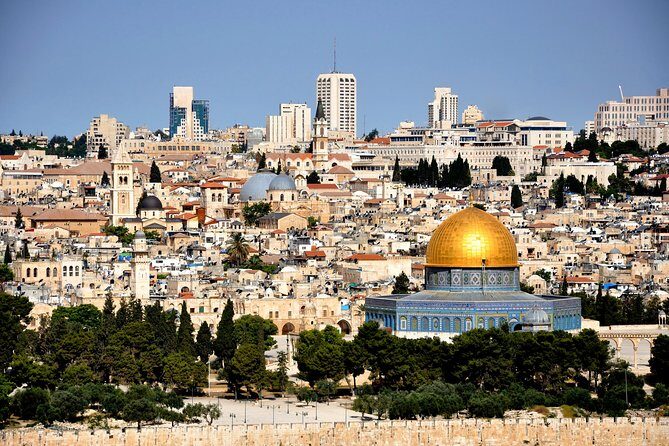
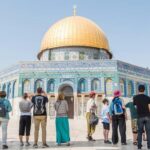
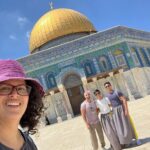
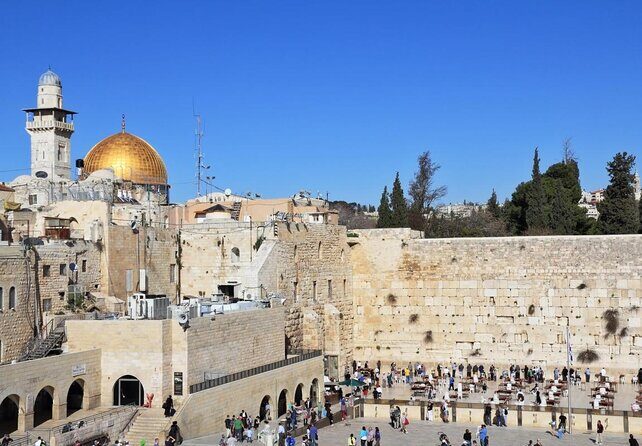
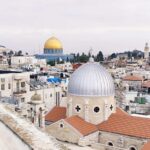
Next comes Temple Mount, the hill revered across Judaism, Christianity, and Islam for thousands of years. It’s on the schedule for about 1 hour, and admission is listed as free.
Here’s the real-world key: Temple Mount (including the Dome of the Rock and Al-Aqsa Mosque) is closed to visitors every Friday, Saturday, and during various Muslim and Jewish holidays. When that happens, you’ll still go out on a plan—your tour includes a viewpoint overlooking the Temple Mount.
So you should think of Temple Mount in two modes:
- If access is open, you get the visit itself.
- If access is closed, you’ll get the viewpoint experience instead.
This matters if Temple Mount is your #1 priority. If it’s the heart of what you came for, try to schedule around the closure windows—or at least go in knowing you may get the view rather than entry.
Western Wall: Herod’s Work, Modern Prayer, and What Time Lets You Do
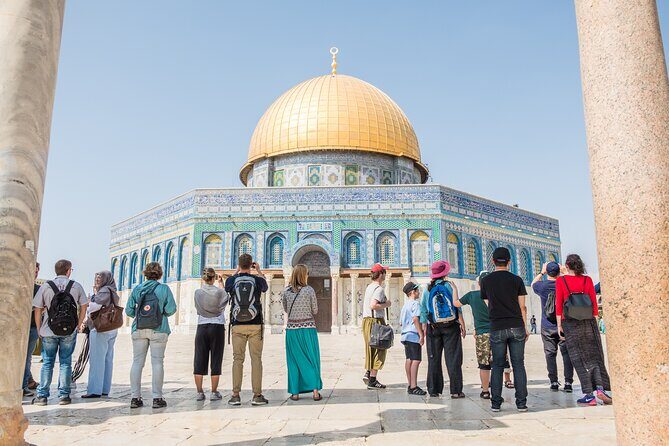
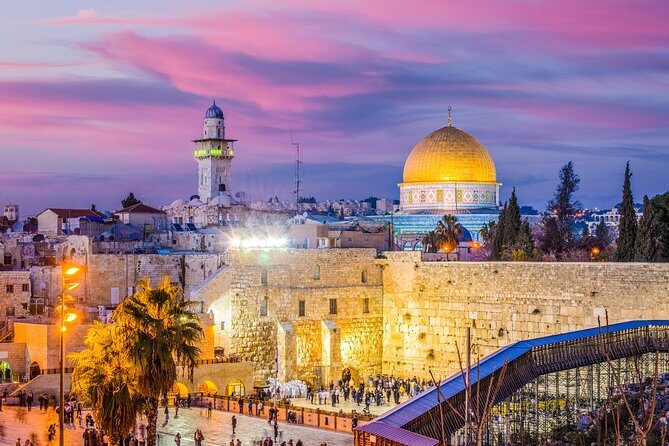
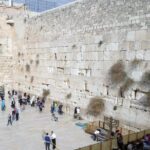
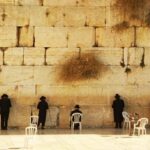
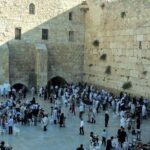
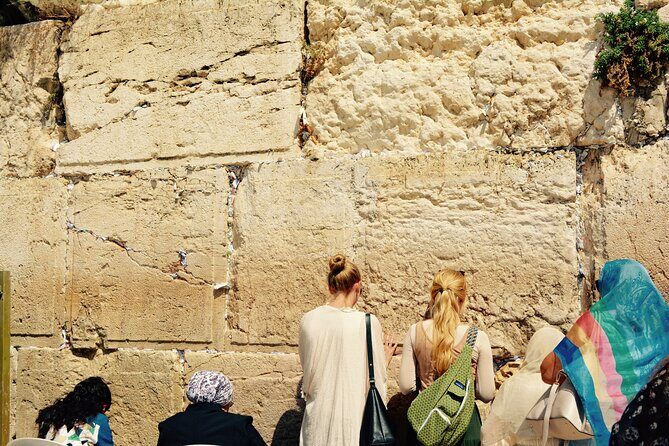
Then you’ll head to the Western Wall, Judaism’s holiest place where Jews are permitted to pray. It’s an ancient limestone wall in the Old City, originally erected as part of the expansion of the Second Jewish Temple begun by Herod the Great.
You’ll have about 45 minutes here, with free admission listed for the stop. This length is just right for seeing what the wall is in the first place—stone, scale, and setting—while also giving you space to understand the living practice happening alongside the archaeology.
In a guided walk like this, I like that the guide can help you read the wall beyond symbolism. You get a chance to notice the wall’s structure, its historical role, and how the modern act of prayer fits into the long timeline that brought people here.
Via Dolorosa: Walking the Processional Route with Clear Context
The tour then shifts into the Via Dolorosa, also known as the Way of the Cross. This processional route represents the path Jesus would have taken, forced by Roman soldiers, on the way to his crucifixion from the former Antonia Fortress to the Church of the Holy Sepulchre.
You’ll spend about 30 minutes here, with admission listed as free. This is a shorter stop, but it can be powerful because it turns streets into a sequence. Instead of thinking of the Via Dolorosa as a single dramatic landmark, you start to understand it as a walk with stages and meaning.
A good guide helps here by keeping it neutral and grounded—what the route is, how it’s interpreted, and why it still draws people today. If you’re sensitive to the way sacred places can overlap with politics, you’ll appreciate a guide who stays focused on history, tradition, and the human story of the streets.
You can also read our reviews of more guided tours in Jerusalem

Al Souq (Arab Market): A Needed Break from Monument Mode
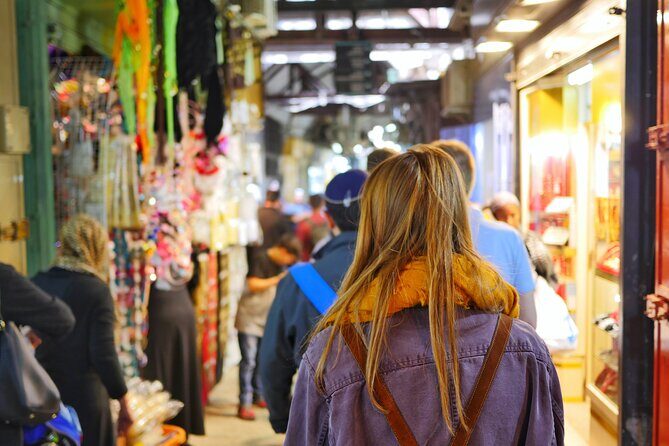
After the big religious anchor points, you’ll stop at Al Souq, the Old City market area also known as the Arab Souq or Suq El-Bazar. You’ll have about 30 minutes, with admission listed as free.
This part is less about ticketed sights and more about texture. Think of it as the place where the Old City stops being only scripture and becomes everyday life—sounds, colors, and small businesses stacked into narrow lanes.
Because food and drinks aren’t included on this tour, this is a practical moment to decide what you want next. Even just browsing can reset your brain after concentrated holy-site time, and it’s a good spot to pick up small souvenirs if that’s your thing (and to skip the overpriced ones later).
Price and Value: Is $45 Worth It Here?
At $45 per person, this tour sits in the “pay for a guide, save your sanity” category. For that price, you get a guided tour for about 4 hours, a capped group size of 30, and free admission listed for all the major stops on the route.
The big value isn’t only the sites. It’s the sequencing. In Jerusalem’s Old City, you can absolutely get around on your own—but it’s easy to miss the connections that make the experience click: what you’re looking at, what stories are attached, and how different faiths have shaped the same spaces over time.
There is one cost to plan for: food and drinks are not included. That doesn’t make the price bad—it just means you should budget for a meal or snack after the walk, especially if you’re hungry when you reach the souq and the guide has worked you through an intense stretch.
Weather, Crowds, and Picking the Right Day to Go
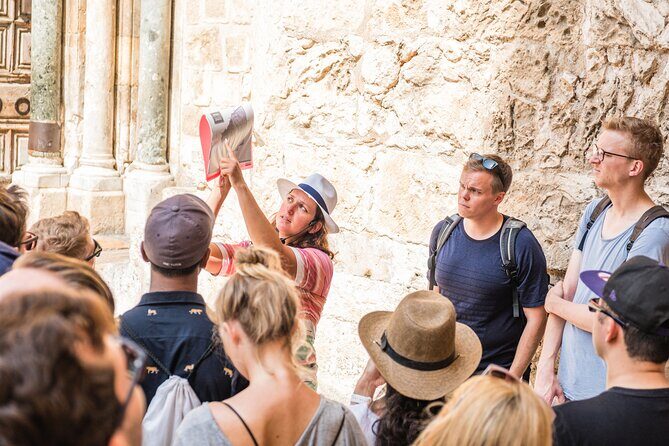
This is an experience that requires good weather. If it’s canceled due to poor weather, you’ll be offered a different date or a full refund.
Crowds are also part of the equation, not an emergency. The Church of the Holy Sepulchre area can get packed, and Temple Mount depends heavily on access rules and holidays. A good guide helps manage the flow—moving you before you get stuck and giving you enough context so the crush doesn’t turn into confusion.
If you hate waiting in lines, you’ll still want a guide here. If you love being in motion and learning while walking, this route is ideal because it keeps your attention on what you’re passing—not just on where you’ll sit next.
Guides Who Can Make the Old City Feel Understandable
One reason this tour earns high ratings is that the guide can seriously change your experience. Different leaders bring different styles, but the names that show up in strong feedback include Nimrod, Orna, Shimon, Yoni, Shahar, Yariv, and Tania.
Here’s what those guides are associated with:
- Nimrod: patient, considerate, strong storytelling pace.
- Orna: lively history and story delivery that makes time fly.
- Shimon: clear communication of holiness and multi-religion significance.
- Yoni: humor plus attention-getting explanations that keep groups engaged.
- Shahar: neutral, thoughtful framing with small insights.
- Yariv: energetic guiding that handles crowds and offers restaurant suggestions.
- Tania: detailed explanations with friendliness and thoroughness.
Practical tip: if you have a choice (or a note option), ask who will guide you. In a city like Jerusalem, the difference between a memorized route and a lived story can be huge.
Should You Book This Old City Walking Tour?
I’d book this if you want a first-pass tour that gives you real orientation fast. It’s especially useful if you plan to revisit sites later, because this walk helps you know what to look for the next time you’re on your own.
It’s also a strong pick if you care about how multiple religions interpret the same streets and places, and you prefer a guide who stays neutral and respectful. The route is built to cover the big names—Church of the Holy Sepulchre, Temple Mount area, Western Wall, Via Dolorosa, and Al Souq—without feeling like a full-day marathon.
The only “no” is simple: if Temple Mount entry is non-negotiable for your dates, check the closure pattern first. On Friday, Saturday, and during holidays, you’ll get a viewpoint instead of visiting the Dome of the Rock and Al-Aqsa Mosque.
FAQ
FAQ
How long is the Old City of Jerusalem guided walking tour?
It runs for about 4 hours (approx.).
Where does the tour start and end?
It starts at Omar Ben el-Khatab St 26, Jerusalem, and ends back at the same meeting point.
Is Temple Mount included even when it’s closed?
Yes. Temple Mount (including the Dome of the Rock and Al-Aqsa Mosque) is closed to visitors every Friday, Saturday, and during various Muslim and Jewish holidays, and then the tour includes a viewpoint overlooking the Temple Mount.
What’s the maximum group size?
The tour has a maximum of 30 travelers.
Do you need to pay admission fees for the stops?
For the listed stops, admission tickets are listed as free.
Are food and drinks included?
No. Food and drinks are not included in the tour price.
What do I need to bring for check-in?
You’ll have a mobile ticket, and you’ll receive confirmation at the time of booking.
What happens if the weather is bad?
The tour requires good weather. If it’s canceled due to poor weather, you’ll be offered a different date or a full refund.
If you tell me your travel dates (and whether Temple Mount entry is a must), I can help you think through whether this day fits your expectations.