REVIEW · JERUSALEM
Jerusalem : Must-See Attractions Private Walking Tour
Book on GetYourGuide →Operated by Guydeez Tours · Bookable on GetYourGuide
Jerusalem walks can feel like a living textbook. This private, customizable tour strings together the Holy Sepulchre, Temple Mount, Western Wall, and Via Dolorosa in a way that actually makes sense on the ground. I especially like having a guide who can steer you toward what your group cares about, and I love the quick, focused stops that keep the story moving. One watch-out: depending on your faith background and how literal you want the narratives, you should be ready to ask questions, because interpretation can vary.
I also like that the meeting point is right in the Christian Quarter area on Latin Patriarchate Street 33, so you start close to the action instead of wasting time. With a 4-hour window, you’re not trying to do everything in Jerusalem, you’re hitting the big spiritual landmarks plus the Old City Souk feel at the end.
The tour is built for comfort in motion: it’s a walk-first route with public transport support where needed, and it’s wheelchair accessible. Still, you’ll be in crowds around major sites, so wear good shoes and plan for lines and security checks.
In This Review
- Key takeaways before you go
- Entering the Old City on a Private, Four-Hour Route
- Meeting at Latin Patriarchate Street 33: Why This Start Matters
- Church of the Holy Sepulchre: Medieval Spaces and Big Meaning
- Temple Mount and the Dome of the Rock: Shared Sacred Ground
- Western Wall: Jewish Devotion You Can Feel in the Details
- Via Dolorosa and the Stations of the Cross: Walking the Christian Story
- Old City Souk Finish: After the Sacred Sites, the Real Street Life
- Your Guide Makes or Breaks It: What I’d Watch for
- Walking + Public Transport (When Needed): How to Stay Comfortable
- Price and Value: Is $117 per Person Worth It?
- Who This Tour Fits Best
- Before You Book: My Honest Decision Checklist
- FAQ
- How long is the Jerusalem private walking tour?
- Where does the tour start?
- What sites are included in the walking route?
- Is this tour private or shared?
- What language options are available for the guide?
- Is wheelchair access available?
- What’s included in the price?
- What is not included, like food or drinks?
- What’s the cancellation and payment flexibility?
Key takeaways before you go
- Truly private time: it’s exclusive to your group, not a shared bus stop-in-tour.
- Customizable route: you can shape the focus around your interests.
- Four major anchor sites: Church of the Holy Sepulchre, Temple Mount, Western Wall, Via Dolorosa.
- Guides who adapt: Efraim, Fares, Benjamin, and Isser are examples of guides praised for fitting the group and answering questions.
- Ticket help included: your team assists with booking for the visits you choose.
- Ending in the Souk zone: you get a final sensory stretch of shops, spices, and old-street energy.
Entering the Old City on a Private, Four-Hour Route
Jerusalem is not a museum you can sprint through. It’s a working city where different communities pray, argue, sing, and preserve. That’s why a private walking tour helps so much. You get someone local to explain what you’re looking at and why it matters, instead of just collecting photos.
This experience is designed to fit into a realistic time box: about 4 hours, with structured time at each major stop. You’ll have short photo pauses and guided time inside key areas, plus time at the end to take in the Old City Souk atmosphere. The pace is usually steady, but it’s still a walk day in a dense, sometimes slow-moving environment.
If your priority is Christian sites, Jewish sites, Islamic heritage sites, or simply understanding how they overlap in the Old City, you can usually tailor the emphasis. That flexibility is the difference between a tour that feels generic and one that feels like it was made for your group.
You can also read our reviews of more walking tours in Jerusalem

Meeting at Latin Patriarchate Street 33: Why This Start Matters
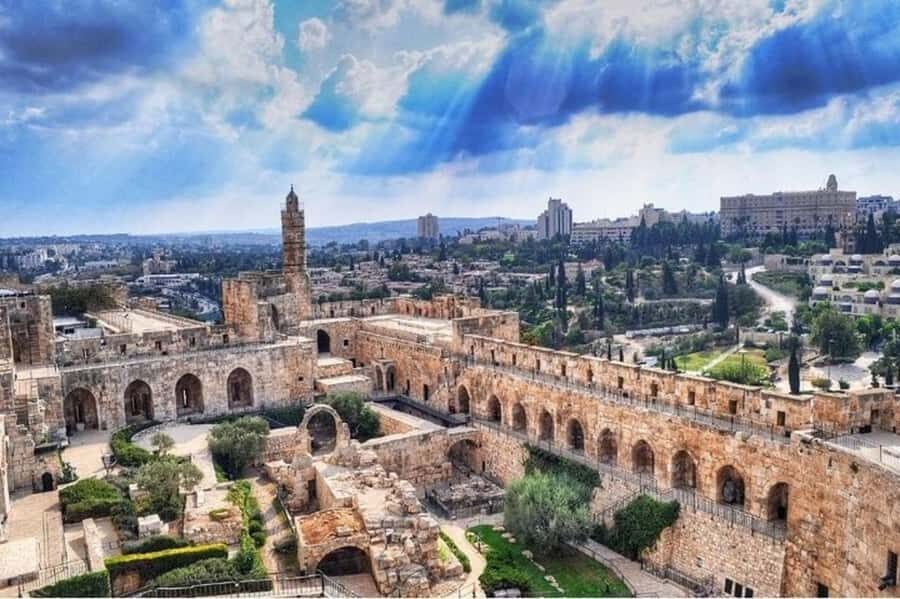
You’ll begin at Latin Patriarchate Street 33 in Jerusalem’s Old City area, near the Christian Quarter. This matters more than it sounds. Starting close to the heart of the Old City reduces wasted transit time and helps you get into the day early, when your group is fresher and less strung out by crowds.
It’s also a practical neighborhood for meeting people and regrouping. The guide can orient you quickly, explain how the route will flow, and help you figure out what to expect next—especially useful on routes where entrances and access can be unpredictable.
Church of the Holy Sepulchre: Medieval Spaces and Big Meaning
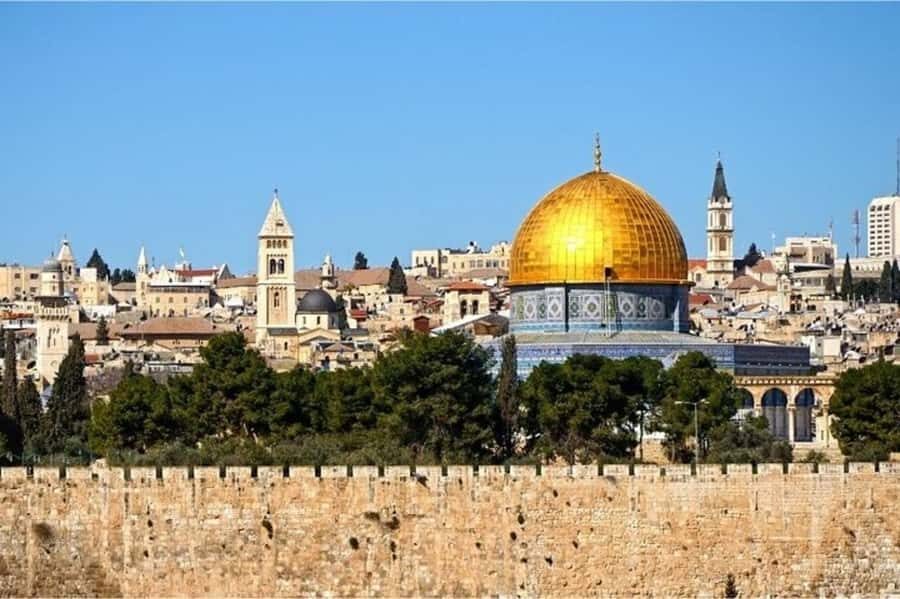
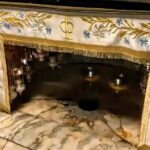
Your first stop is the Church of the Holy Sepulchre, one of the most intense, emotional places in Jerusalem. The church is famous for medieval architecture, layered spaces, and the tradition that connects it to the tomb of Jesus Christ. Even if you’ve read about it before, it’s the kind of place where your eyes keep catching new details.
What makes a guided visit work here is context. Without it, the church can feel like you’re walking through corridors and chapels with no map of significance. With a guide, you can understand what you’re seeing: where the focus points are, how different parts of the site are used, and why pilgrims treat this building with such reverence.
How to make it easier: move with purpose. Don’t try to absorb everything at once. Look for the guide’s cues on where to focus first, then let the rest of the building reveal itself as you go.
Temple Mount and the Dome of the Rock: Shared Sacred Ground
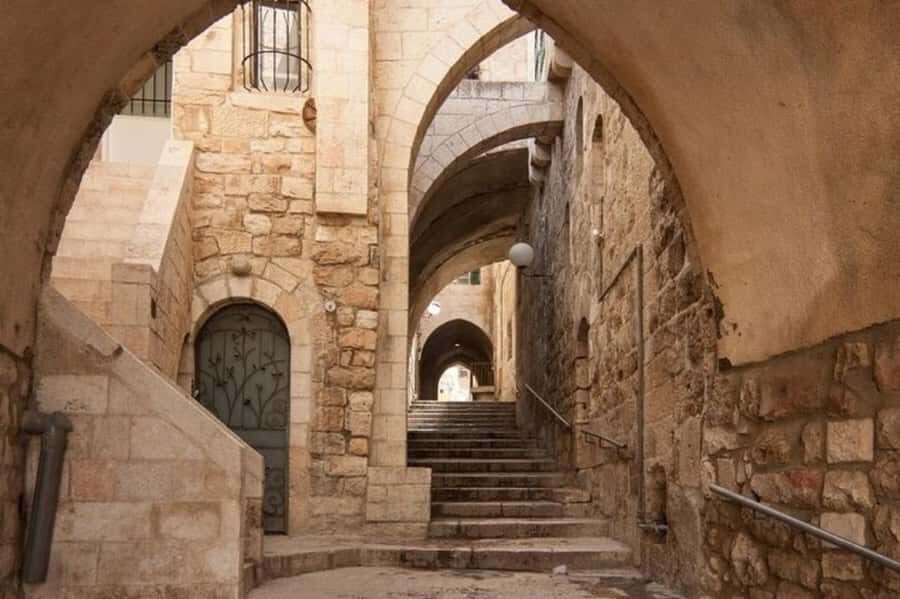
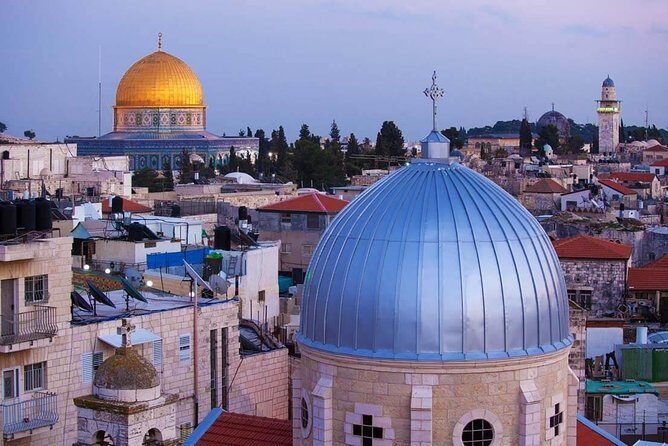
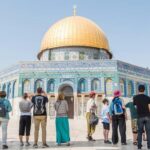
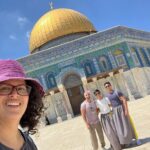
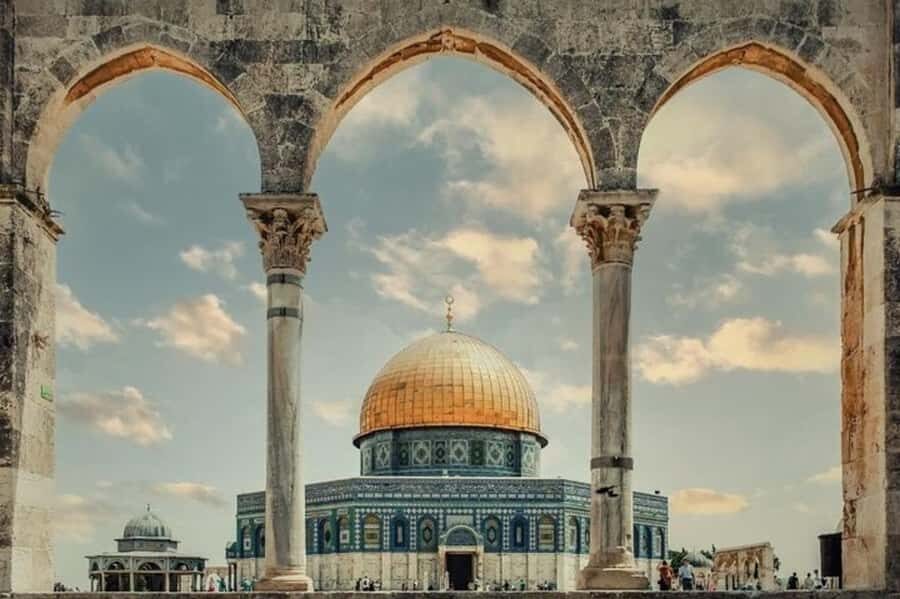
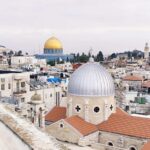
Next comes Temple Mount, cherished by Jews, Christians, and Muslims. That overlap is not a slogan here. It’s the lived reality of Jerusalem. The main landmarks at this stop include the Dome of the Rock and the Al-Aqsa Mosque, both essential to understanding Islamic heritage in the Old City.
A good guide helps you see past the obvious photo angles and understand what the structures mean to the communities who worship there. You’ll likely get an explanation that links religious tradition, architecture, and the way people approach prayer and reverence in that space.
Consideration: the Temple Mount area can involve security checks and rules that may affect how long you spend and how your group moves. Since the tour is private and customizable, the guide can usually adjust the flow to keep things smooth, but you should still expect that not everything will be perfectly timed like a classroom field trip.
Western Wall: Jewish Devotion You Can Feel in the Details
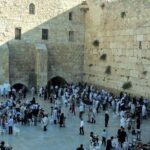
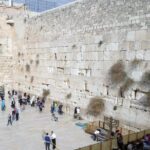
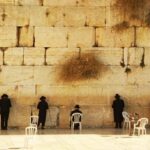
The Western Wall is next, and it’s a different tone from the church. Here, the atmosphere is intimate and prayer-focused. Even if you’re not Jewish, you’ll see devotion in real time: people reading, praying, and pressing notes into the wall area.
This is where having a guide really pays off. The guide can explain what you’re seeing and what the Western Wall represents, so you understand the significance beyond the iconic view. It also helps your group behave respectfully—because this isn’t a sightseeing stop where you can drift wherever you want without thought.
Small practical tip: keep your voice low and move deliberately. The Western Wall experience feels best when your group isn’t rushing and your attention isn’t split between phones and the story.
You can also read our reviews of more private tours in Jerusalem

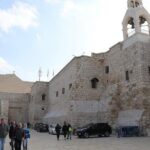

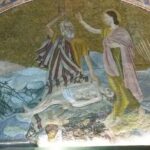
Via Dolorosa and the Stations of the Cross: Walking the Christian Story
After the Western Wall, you trace Jesus’ steps along the Via Dolorosa, pausing at the Stations of the Cross. This part of the tour is less about big architecture and more about story and spiritual memory.
A guided walk helps you connect the geography to the Christian tradition. Without context, the route can look like another busy Old City street. With a guide, you understand why certain points matter, what each station symbolizes, and how pilgrims typically experience this walk.
One thing to plan for: the Via Dolorosa area can get crowded. Since this is a private group, your guide can manage regrouping and keep your stop sequence efficient, but you still won’t have an empty street. Wear comfortable shoes and keep expectations flexible.
Old City Souk Finish: After the Sacred Sites, the Real Street Life
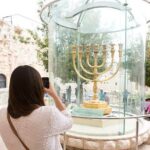
To close, you move into the Old City Souk zone for a sensory end to the day—shops, spices, smells, and everyday commerce. This isn’t just for shopping. It’s where Jerusalem feels lived-in rather than staged.
This last stretch is also a chance to ask your guide practical questions you’ll actually use later. Want a good spot for a meal? How do you best get around tomorrow? What’s worth a second visit if you have time? A private guide tends to be strongest here because they’re not rushing through a script.
If you’re the type who likes to pick up small souvenirs that mean something, this is the time. But even if you don’t buy, the sights and smells help your brain file away the day as more than just four famous monuments.
Your Guide Makes or Breaks It: What I’d Watch for
This tour lives and dies by the guide. The experience depends on how well your guide explains what you’re seeing and how confidently they handle sensitive topics. Several guides associated with this tour style stand out for strong communication and adapting to the group’s priorities, including Efraim, Fares, Benjamin, and Isser.
That adaptability is not small stuff. A private tour should feel like it hears you. In practice, it means the guide can spend more time where your group cares most and skim where you’re less interested, as long as the route and access allow it.
One caution: if you’re very strict about historical interpretation, you should feel comfortable asking clarifying questions. Since Jerusalem sites involve tradition, scholarship, and contested narratives, it helps to set your expectations early and ask how your guide explains the differences between tradition and modern historical viewpoints.
Walking + Public Transport (When Needed): How to Stay Comfortable
The experience is a walking tour, with public transport support included unless you select an option that changes that. That’s a smart mix. Pure walking is great in the Old City, but Jerusalem also has short stretches where transport saves time and energy.
What you should do is simple: bring water if you can (drink and food are not included), and plan for the fact that “4 hours” on paper can feel longer when you add security lines and crowd movement. The private nature helps because your guide can keep the group together, but it doesn’t eliminate the real-world pace of the Old City.
Wheelchair accessibility is listed, which is encouraging. If you’re traveling with mobility needs, it’s worth confirming the route approach with the provider ahead of time so the guide can plan around stairs and tight passages.
Price and Value: Is $117 per Person Worth It?
At $117 per person for 4 hours, this is not the cheapest way to see Jerusalem’s headline sites. But it can be good value if your priorities are clarity, comfort, and focus.
Here’s why it can be worth it:
- Private group means you’re not competing with strangers for attention.
- Customization means your time matches your interests rather than a rigid itinerary.
- Ticket booking help can save effort, especially for visits where timing matters.
If you’re traveling as a couple or small family, the private element often makes the price feel more reasonable. If your group wants to linger, ask questions, or see fewer places with deeper explanations, you’re paying for that flexibility.
If, however, you mainly want quick photos and you’re happy with generic signage explanations, a cheaper shared option might suit you. This tour is best when you want guidance and interpretation, not just a checklist.
Who This Tour Fits Best
This experience fits best if you:
- Want to see the big three faith landscapes in the Old City—Christian, Jewish, and Islamic—without getting lost.
- Like learning from a local guide and getting practical recommendations for what to do next.
- Prefer a private format where your group sets the pace and focus.
It’s also a solid choice if you care about communication in specific languages: the tour guide is available in English, Spanish, and French. That matters because nuance gets lost when explanations are awkward or simplified.
Before You Book: My Honest Decision Checklist
Should you book? I’d say yes if you want a structured but customizable walk with a guide who can explain what you’re seeing, and especially if you’d value help with tickets.
Skip it or rethink if:
- Your group wants strictly one narrow lens and hates discussion about interpretation.
- You’re expecting a quiet, empty experience. This is Jerusalem’s most visited zone for a reason.
If you do book, set yourself up for success by arriving ready to ask questions. Good tours happen when you engage. Bring comfortable shoes, plan for crowds, and remember: the point isn’t to sprint. The point is to understand what you’re standing inside and why people care so much.
FAQ
How long is the Jerusalem private walking tour?
The tour lasts 4 hours.
Where does the tour start?
The meeting point is Latin Patriarchate Street 33, Jerusalem.
What sites are included in the walking route?
The tour includes stops at the Church of the Holy Sepulchre, Temple Mount (including the Dome of the Rock and Al-Aqsa Mosque area), the Western Wall, and the Via Dolorosa, along with time in the Old City Souk area.
Is this tour private or shared?
It’s a private group and described as exclusive, meaning your group will not be mixed with others.
What language options are available for the guide?
The live guide is available in English, Spanish, and French.
Is wheelchair access available?
Yes, the tour is listed as wheelchair accessible.
What’s included in the price?
Included: a private/exclusive tour, customization, walking tour plus public transport when applicable (unless you pick an option that changes this), and help from the team to book tickets for the desired visits.
What is not included, like food or drinks?
Drink or food is not included.
What’s the cancellation and payment flexibility?
You can cancel up to 24 hours in advance for a full refund, and the tour offers reserve now & pay later to keep plans flexible.