REVIEW · JERUSALEM
3-Day Petra and Wadi Rum Tour from Jerusalem
Book on Viator →Operated by Abraham Tlalim Tours LTD · Bookable on Viator
Petra and Wadi Rum in one smooth sweep. This 3-day, guided, all-in-one trip links Jerusalem’s holy sites to Jordan’s biggest hits, with entrance fees, meals, and comfortable yurt-style nights in a Bedouin camp. I especially like the way the tour keeps the days structured while still giving you time to breathe in places like Petra.
The two parts I’d bet on for most people are (1) Petra with real guided context and (2) Wadi Rum in a 4WD jeep plus desert walking time. One thing to keep in mind: you’ll deal with border formalities and Jordan border taxes require cash (10 JOD), so plan ahead instead of scrambling at the counter.
In This Review
- Key things that make this tour worth your time
- The morning start in Jerusalem: Abraham Tours at 7:30
- King Hussein Bridge: the “admin” moment that shapes the whole trip
- Day 1 routing in Jordan: Mount Nebo, Madaba mosaics, Shobak Castle
- Jerash: Roman grandeur on the way (and why it’s a smart add-on)
- Petra Day: the Treasury, tombs, the Monastery, and your pacing options
- Wadi Musa and the Bedouin camp: what “yurt-style” actually feels like
- Wadi Rum on Day 3: jeep safari plus real desert time
- Price and what’s really included at $670 per person
- Comfort, packing, and border rules that can affect your day
- Logistics you’ll want to know: group size, guide handoffs, and who it fits
- Should you book this 3-day Petra and Wadi Rum tour?
- FAQ
- What’s the duration of the tour?
- What’s included in the price?
- Do I need to pay border taxes?
- Where do we meet, and when does it start?
- Is there any free time in Petra?
- What fitness level is required?
- What items are forbidden in Jordan?
- Is this tour available to Israeli passport holders?
Key things that make this tour worth your time
- All-inclusive meals and entrance fees so you don’t do the constant add-up in your head
- Bedouin camp sleep (yurt-style tents) with dinner, breakfast, and camp atmosphere
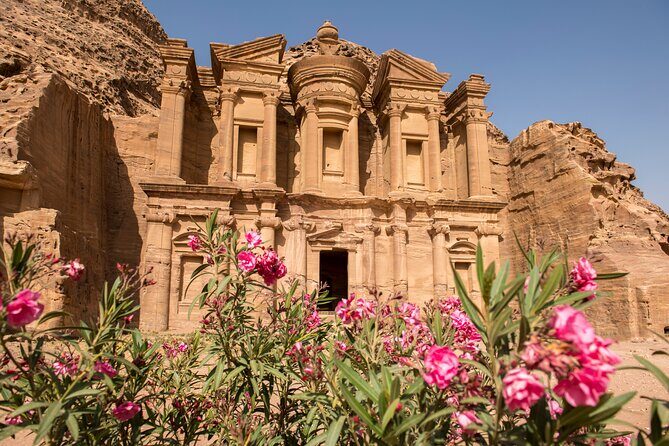
- Guided Petra that helps you understand what you’re seeing as you move through the Siq and tomb façades
- Wadi Rum 4WD jeep ride with stops at standout rock formations like Mushroom Rock
- Jerash included for Roman-era scale without needing extra booking on your side
- Small-group feel (maximum 47 travelers) plus a smartphone travel app for your route
The morning start in Jerusalem: Abraham Tours at 7:30
Your day kicks off early, with a 7:30 am start at Abraham Jerusalem (Ha-Nevi’im St 67). That early push matters, because the tour is packed: you’re driving out of the Jerusalem area, crossing the border, and still reaching multiple Jordan stops that same day. If you’re the type who likes a slow start, this is where you’ll feel it.
The meeting point is described as near public transportation, which is handy if you’re not staying in the Old City itself. And because this uses a mobile ticket, you’re not hunting for printouts later.
A few more Jerusalem tours and experiences worth a look
King Hussein Bridge: the “admin” moment that shapes the whole trip
Crossing at King Hussein Bridge is part of the rhythm here. Day 1 includes crossing out of the Jerusalem side, and Day 3 brings you back. The crossing is a known, predictable hurdle, but it still takes time and focus—especially when you’re carrying passports and following rules at the booths.
A practical note: the tour’s guides are coordinated by side (Israel vs. Jordan). That means don’t expect one person to guide you across everything without handoffs. You’ll get explanations and continuity, just with the usual border-country separation.
Also, bring your passport details seriously. The tour info is clear: you need a valid passport (original, not a copy), hats, sunscreen, comfortable shoes, and drinking water.
Day 1 routing in Jordan: Mount Nebo, Madaba mosaics, Shobak Castle
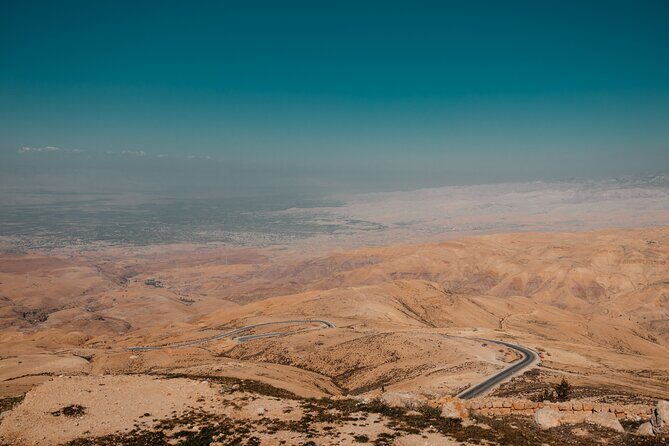
Day 1 is a strong “Jordan sampler.” You start with Mount Nebo, where the payoff is the panoramic viewpoint over the Jordan Valley. You don’t need a lot of imagination here; just stand, look, and let the size of the region sink in.
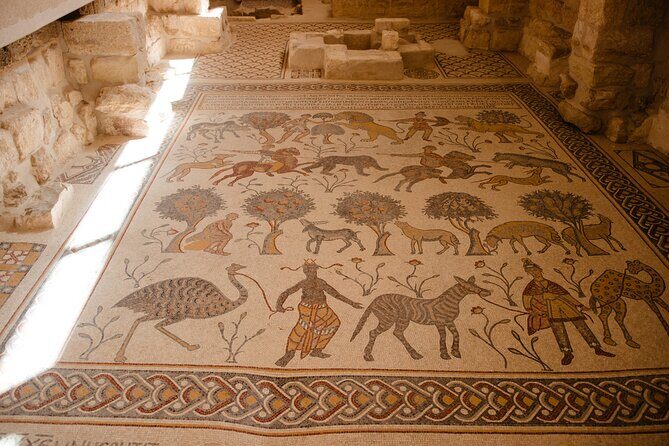
Next is Madaba, famous for mosaics. Even if you’re not a museum person, this stop is an easy win because the artwork is what you’re there to see. It’s also a nice tempo change from driving.
Then you reach Shobak Castle (Montreal), set on a hilltop. The structure is what makes the stop worth your time: it’s the kind of place where you understand why the location mattered. If you enjoy ruins with a little bit of “how did they defend this?” thinking, you’ll like this.
One consideration: Day 1 is long. You’ll keep moving, and the stops are timed like a route. If you prefer wandering without a schedule, you may need to treat this day as the logistics-heavy one and let Day 2 be your slow, wow day.
Jerash: Roman grandeur on the way (and why it’s a smart add-on)
This tour includes Jerash, the ancient Roman city. The advantage of adding Jerash here is simple: it’s a major “big scale” site, and you get it without making it a separate trip.
The practical benefit is that Jerash also works well for mixed interests. If Petra is your priority, Jerash still gives you variety—different architecture, different time period energy, and a chance to see how Jordan isn’t only about one famous rock-cut attraction.
Since the itinerary details provided don’t pin Jerash to a specific day slot in the same way Petra and Wadi Rum are listed, your real job as a reader is this: expect it to be on a driving day between Jerusalem and the Petra/Wadi Rum stretch. So keep your patience for transfers, and enjoy Jerash when it arrives.
Petra Day: the Treasury, tombs, the Monastery, and your pacing options
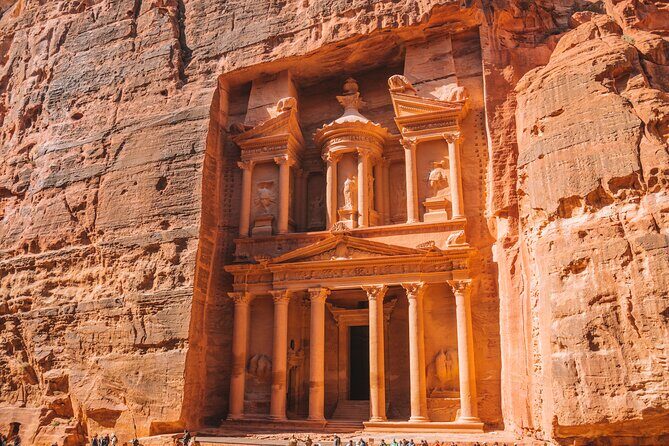
Petra is the headline. This is the day that makes your camera roll earn its keep.
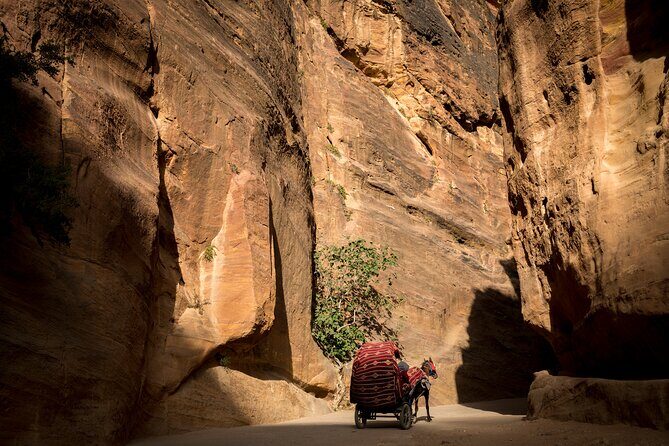
You enter with the classic sense of arrival: the sheer scale of the cliff walls and carved façades puts you straight into “how is this real?” mode. The Treasury is the first major moment, but the day is about moving beyond it.
After the main first stop, you’ll go deeper into the complex story of the site with the Royal Tombs and the Monastery, which is carved into the mountainside and rewards you with bigger views once you get there. If you’ve only ever seen Petra in photos, this is the day that changes your understanding: you see the site as a walking network, not a single postcard face.
A detail that matters for many people: the trip includes time to explore on your own after the main guided portion. That free window is more than a nice perk. It gives you control—time to slow down for photos, re-check what you missed, or simply catch your breath if Petra hits you with stairs and shadows in a way you weren’t expecting.
Practical Petra tip: wear comfortable shoes and plan for a moderate fitness level. The tour info calls for moderate physical fitness, and in Petra that usually means you’ll be walking for hours and adjusting to uneven ground and uphill bits.

Wadi Musa and the Bedouin camp: what “yurt-style” actually feels like
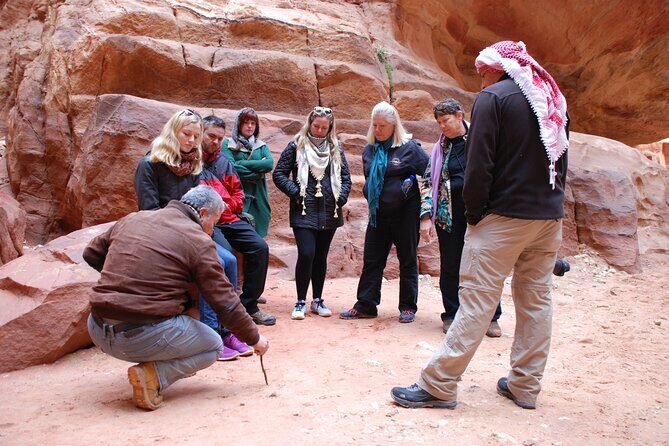
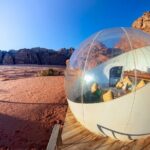
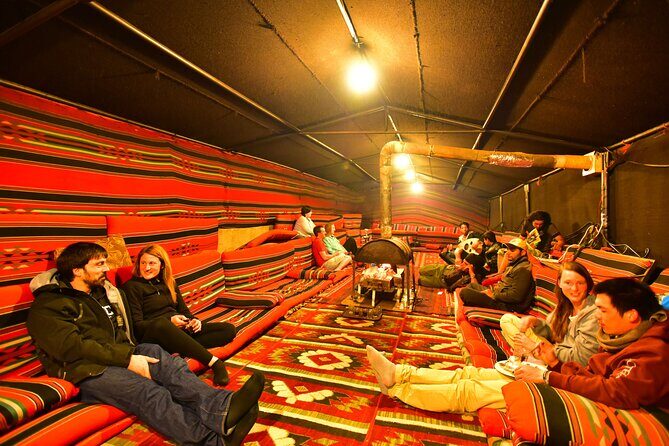
Sleeping in a Bedouin-style campsite is one of the things that separates this trip from the day-tour versions. Instead of constantly changing hotels, you get to stay in Wadi Musa area and shift into desert mode.
The camp setup includes breakfast and dinner, and the tour description emphasizes locally prepared Bedouin-style meals and campfire atmosphere. That matters because Petra days can be mentally full. Having your meals included and not needing to find food at the end of a long day makes the whole experience feel calmer.
In the reviews, guides by name like Mahdi, Ali, Abdullah, and Raina are singled out for being welcoming and patient with questions. That kind of guide personality isn’t just nice—it’s useful when you’re tired and the site is huge. If you get a guide who explains why certain rock carvings mattered, you’ll walk out feeling like you understood more than the photo could capture.
If you’re traveling solo, note that it’s likely you may share a room with a person of the same gender, depending on group size. That’s not unusual for tours of this type, but it’s worth knowing before you pack expectations.
Wadi Rum on Day 3: jeep safari plus real desert time
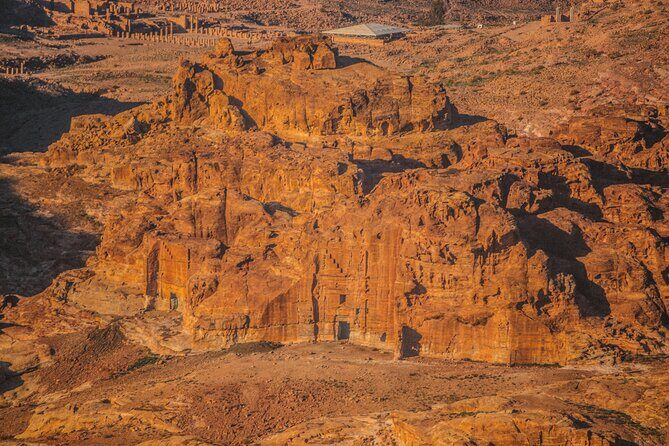
Then comes the desert shift: Wadi Rum Protected Area. You go out by 4WD/jeep, and the point is speed plus access. Jeeps help you reach the best rock formations without spending your whole day wrestling with sand and distance.
Once you’re in, you get classic Wadi Rum visuals: sandstone cliffs and wide dunes under bright sky. The tour includes a safari drive through rock shapes and stops at key landmarks like Mushroom Rock. That’s a standout because the shape is so unusual that you’ll recognize it even before you reach it.
You also get time for walking/hiking with mention of the Seven Pillars of Wisdom. That part is important: it’s not just a drive-by photo stop. You’ll get at least some time on foot so the desert feels like terrain, not scenery. Expect wind, dust, and bright sun—bring a hat and sunscreen even if the weather looks friendly.
If you’re sensitive to heat or sun, plan your water use carefully. The tour info specifically mentions drinking water. Treat that as a serious packing reminder, not a casual suggestion.
Price and what’s really included at $670 per person
At $670 per person, the value here is mostly about removing friction. You’re getting:
- Guided tour
- Air-conditioned vehicle
- Entrance fees
- 4WD/Jeep adventure in Wadi Rum
- Bedouin-style campsite accommodation
- A custom travel app
- Meals: breakfast (2), lunch (3), dinner (2)
For you, the practical meaning is fewer bills and fewer decisions. You’re not trying to price entry tickets, meal plans, and transport separately across two countries.
The catch is border taxes. The tour info lists:
- Israeli border taxes: 196 ILS
- Jordanian border taxes: 10 JOD, payable only in cash
You can pay Israeli taxes in ILS, Euro, or USD, and credit card or cash is available there. Jordan taxes are cash-only, so have some JOD ready to avoid stress. Currency exchange is available on the Israeli side, which helps, but you still shouldn’t wait until the last second.
Also included items like entrances can matter a lot in Petra and Wadi Rum, where costs add up fast when you plan tickets separately.
Comfort, packing, and border rules that can affect your day
This tour clearly spells out what you should bring:
- Valid passport (original)
- Hats and sunscreen
- Scarfs/shawls (handy for both comfort and religious-clothing expectations at borders)
- Warm clothes for night
- Comfortable shoes
- Drinking water
That night warmth point is easy to underestimate. Desert nights can cool down. Pack layers even if daytime feels hot.
Forbidden items in Jordan include drones and telescopes and telephoto cameras with zoom lenses higher than 1000mm. Also be aware that certain religious clothing or objects can create issues at the border crossing. If you have questions about a specific item, it’s worth checking before you go.
Logistics you’ll want to know: group size, guide handoffs, and who it fits
The maximum group size is 47 travelers, so you won’t be in a tiny private bubble, but it’s also not the kind of huge group where you feel lost. Expect a coach-style rhythm: stops, check-ins, and moving together.
A moderate fitness level is requested. That usually means comfortable shoes, stamina, and the willingness to walk and climb a bit in Petra and in desert areas.
This trip also has a clear note for Israeli passport holders: it’s not available to Israeli citizens with an Israeli passport. If that applies to you, you’ll need a different option.
Should you book this 3-day Petra and Wadi Rum tour?
If your dream includes Petra plus Wadi Rum, and you want the work handled—guides, entrances, meals, transport, and at least two nights of solid coverage—this is a good match. The all-inclusive structure is the core reason to book: it keeps you from turning a once-in-a-lifetime route into a spreadsheet.
I’d especially recommend it if:
- You want the guidance to make Petra easier to understand
- You like the idea of Bedouin camp nights instead of another hotel
- You want both a drive (4WD) and some walking time in Wadi Rum
- You’d rather pay one package price than negotiate multiple tickets and meals across borders
I’d hesitate if:
- You hate early starts and long driving days
- You don’t want to think about border taxes in advance (especially the cash-only Jordan portion)
- You’re looking for a super flexible schedule with lots of free time every day (this is structured)
If you can handle the border-day reality and you’re excited about Petra and Wadi Rum, this is the kind of trip that feels like it’s doing two big “Jordan moments” on one ticket—without making you plan every step.
FAQ
What’s the duration of the tour?
It’s listed as 3 days (approx.).
What’s included in the price?
The tour includes a guided tour, air-conditioned vehicle, entrance fees, a 4WD/jeep adventure in Wadi Rum, Bedouin-style campsite accommodation, and meals: 2 breakfasts, 3 lunches, and 2 dinners.
Do I need to pay border taxes?
Yes. Israeli border taxes are 196 ILS, and Jordanian border taxes are 10 JOD payable only in cash.
Where do we meet, and when does it start?
The meeting point is Abraham Jerusalem, Ha-Nevi’im St 67, and the start time is 7:30 am.
Is there any free time in Petra?
Yes. The tour includes an afternoon to explore Petra on your own after the main guided portion.
What fitness level is required?
Travelers should have moderate physical fitness.
What items are forbidden in Jordan?
The tour info says drones (any size), telescopes, and telephoto cameras with zoom lenses higher than 1000mm are forbidden.
Is this tour available to Israeli passport holders?
No. The tour notes that it is not available to Israeli passport holders.