REVIEW · TEL AVIV
16-Night Israel Jordan and Egypt Tour
Book on Viator →Operated by Booking-tours.com · Bookable on Viator
Three countries, one well-managed route. This Israel–Jordan–Egypt tour strings together the big religious and ancient-site moments with airport-to-airport transport and border help that keeps the travel stress low. I also like that it ends with a real Nile cruise flow in Egypt, so you’re not only bus-riding between monuments.
One thing to consider: the schedule can get physically demanding, especially the Mount Sinai sunrise climb timing and the long Jordan-to-Egypt handoff.
In This Review
- Key Things I’d Pay Attention To
- One Package, Three Countries: How This Tour Really Works
- Tel Aviv Arrival: A Gentle First Night After Ben Gurion
- Nazareth and the Galilee Circuit: Annunciation, Capernaum, and Yardenit
- Caesarea, Haifa Gardens, and Rosh Hanikra Caves to Acre
- Old City Jerusalem and Yad Vashem: A Full Day That Needs Timing Sense
- Dead Sea to Jericho to Bethlehem: Church of Nativity Highlights
- Masada by Cable Car, Qumran Caves, and a Dead Sea Float
- Petra Day: Treasury Views, Roman Theater, and an Extra Night Option
- From Petra to Mount Sinai: The Schedule Is the Real Risk
- Mount Sinai at Sunrise and St. Catherine’s Monastery
- Giza, Step Pyramid, Sakkara, and Memphis: Cairo in a Packed Day
- Aswan High Dam, Philae Temple, and the Nubian Show
- Kom Ombo, Edfu, and Sailing Toward Luxor
- Luxor West Bank: Hatshepsut, Valley of the Kings, and Three Royal Tombs
- Karnak and Luxor Temple, Then Back to Cairo
- Cairo’s Citadel, Mohamed Ali Mosque, and a Real Leisure Day
- Price, Visas, and What’s Actually Included for $3,478
- Who This Tour Suits Best (And Who Should Rethink It)
- Should You Book This Israel–Jordan–Egypt Tour?
- FAQ
- What city does the tour start in?
- What is the itinerary end point in Egypt?
- Are airport transfers and flights included?
- How are border crossings handled between countries?
- Which meals are included?
- What extra costs should I expect that are not included?
- Are there any special scheduling notes for Friday?
Key Things I’d Pay Attention To
- Border assistance is built in, so crossings are handled with local drivers rather than guesswork.
- You get two major “wow” eras: biblical sites in Israel and Jordan, then pharaonic Egypt plus a Nile cruise.
- Early departures are normal, including 7:20 a.m. pickup days.
- Your Petra day has options, like Petra by Night (extra fee).
- Some museum/site entries are not included, including a note about Mummy’s room in Cairo.
- This is a group tour (max 50), so expect the rhythm of a shared itinerary.
One Package, Three Countries: How This Tour Really Works
If you like big-country itineraries but hate the admin, you’ll likely enjoy this format. You start in Tel Aviv, move through Jerusalem, Petra, and Mount Sinai, then land in Cairo and continue by flight and cruise to Aswan and Luxor. The main value is that logistics are handled for you—flights, transfers, and the driving days.
For many people, the best part is the “no-solo” feel. Instead of piecing together separate bookings across Israel, Jordan, and Egypt, you’re led from one major base to the next with local support at the key border parts. You also get a climate-controlled van for the driving legs, which matters when days start early.
The tradeoff is pacing. This route hits a lot of names you’ve probably studied—Jerusalem, Petra, Sinai, Giza, Luxor—and you’ll feel the momentum. If you prefer slow mornings and lots of free time, this might feel like you’re always on the move.
You can also read our reviews of more evening experiences in Tel Aviv

Tel Aviv Arrival: A Gentle First Night After Ben Gurion
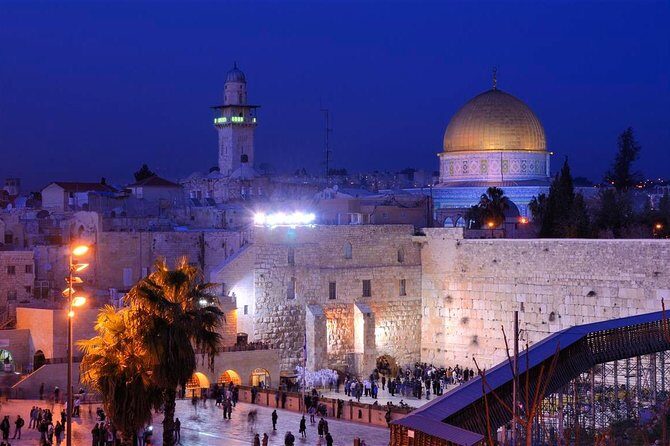
Day 1 keeps it simple: you land at Ben Gurion Airport, then transfer to Tel Aviv for your overnight. That’s a smart way to start, because you’re not immediately facing multiple connections or a long first-day drive.
Your tour start time is listed as 7:30 a.m., and many follow-up days use early pickup blocks (often 7:20 a.m.). So even though Day 1 is relaxed, don’t plan on a late night—you’ll want your energy for the day after.
Nazareth and the Galilee Circuit: Annunciation, Capernaum, and Yardenit
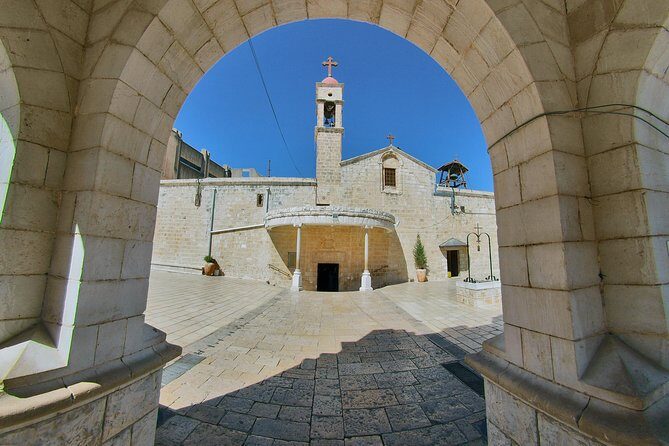
One day in northern Israel is where the trip’s biblical sites start stacking up. You pass through the Armageddon plain area and get a view of Megiddo before heading into Nazareth.
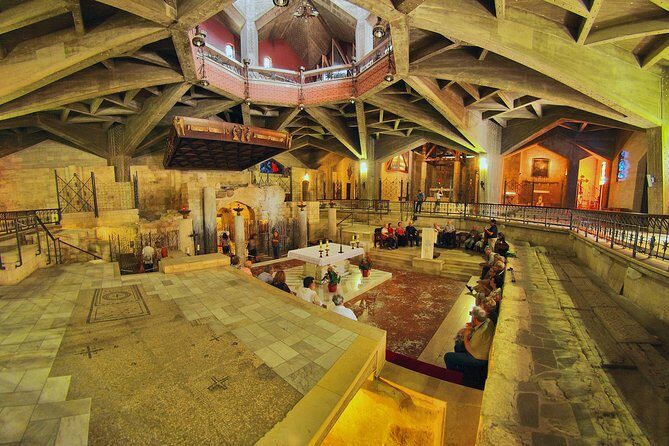
Nazareth is built around the Church of the Annunciation and the nearby Church of St. Joseph. From there, you move to the Sea of Galilee region and pass Cana, where the story of Jesus turning water into wine is part of the route’s narrative.
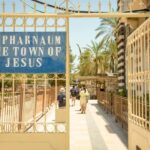
Then comes Capernaum, at the bottom of the Mount Beatitudes area. You’ll visit the Benedictine Church that commemorates the Multiplication of the Loaves and the Fish. You may also have the chance to be baptized at Yardenit on the Jordan River waters, which is one of those experiences that can feel very real because the setting is built for it.
Finally, you’ll pass Mount Tabor with its connection to the Transfiguration. This day is long—about 8 hours—but it’s also one of the most coherent days, because it moves from one key site to the next without random detours.
Caesarea, Haifa Gardens, and Rosh Hanikra Caves to Acre
The next day blends Roman, Ottoman/British-era, and coastal Israel scenes. You start along the Mediterranean coast, passing Herzliya and Netanya on the way to Caesarea.
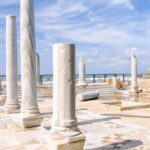
Caesarea’s standout for most visitors is the Roman Theater and the hippodrome nearby. It’s impressive because it lets you picture what empire-era entertainment looked like on this coastline.
Then you head to Haifa to see the Bahá’í gardens and shrine. After that, you ride a cable car down to Rosh Hanikra grottoes—a quick but memorable change of scenery with dramatic rock formations.
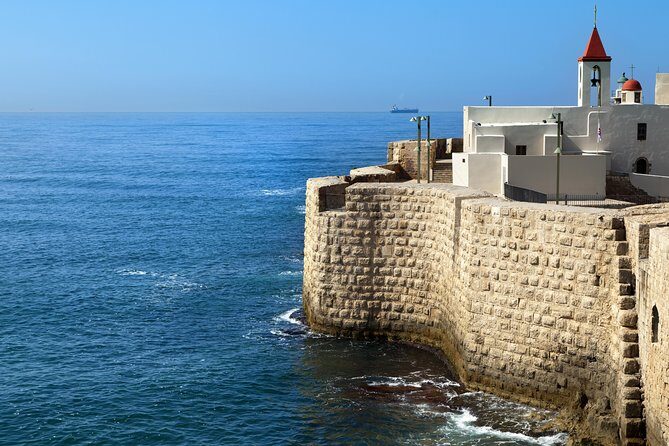
The day ends at Acre, including a walk through the Turkish prison, tied to British-era use after World War II. This is a heavier historical moment tucked into what could have been a purely scenic day, and it gives the coastline a fuller context.
Old City Jerusalem and Yad Vashem: A Full Day That Needs Timing Sense

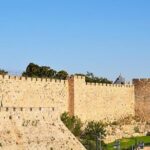
Jerusalem is where this itinerary goes full classic. You begin with an overview of the Mount of Olives, then pass the Church of All Nations and the Garden of Gethsemane before entering via the Zion Gate.
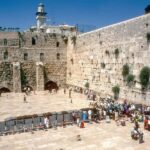
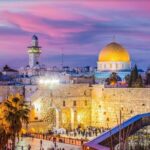
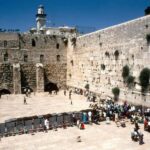
You’ll walk through the Armenian Quarter to the Byzantine Cardo, then continue into the Jewish Quarter to the Western Wall. From there, the itinerary follows the old devotional path along the Via Dolorosa, including the Stations of the Cross, before finishing at the Church of the Holy Sepulcher.
After that, you’ll go through Old City markets and then reach Yad Vashem, the Holocaust museum. Two practical notes: it’s included, but it’s also explicitly closed on Friday and Saturday, so if your route falls on those days, don’t expect it to run exactly as listed.
This is an 8-hour day, and it’s emotionally loaded. If you know you get mentally tired in very dense historical sites, pace yourself. Take breaks when you can and keep water handy.
Dead Sea to Jericho to Bethlehem: Church of Nativity Highlights
This is the tour day that takes you from “biblical geography” to “biblical landmarks.” You head to the Dead Sea area, passing the Inn of the Good Samaritan, then stopping at a Sea Level marker for a quick explanation.
You go on to Jericho, described as the oldest continuously inhabited city in the world, with views toward Mount Temptation. From Jericho, the drive continues to Bethlehem, including Manger Square and the Church of the Nativity.
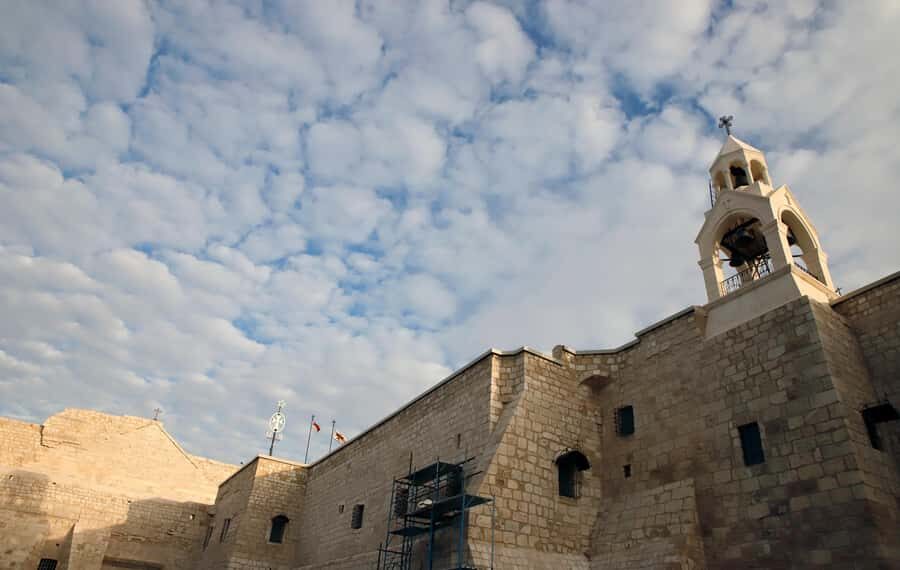
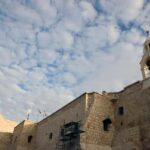
Inside, you’ll see the original mosaic floor from the 4th century, plus the place of Jesus’ birth marked by a star. The visit also covers the Manger, and an altar dedicated to the 3 Wise Men.
You’ll also tour the Crusader Church dedicated to St. Catherine, with a stop down into the grotto area. The route also mentions Milk Grotto and Shepherd’s Fields as you leave Bethlehem.
The practical upside here is structure. You won’t just hit one church and move on—you’ll get a sequence, with time to walk and see how the sites connect across the day.
Masada by Cable Car, Qumran Caves, and a Dead Sea Float
This day is built around three powerful stops: Masada, Qumran/Dead Sea Scrolls area, and the Dead Sea swim. You’ll be picked up around 7:20 a.m. and head south through the Judean Desert, then reach Masada.
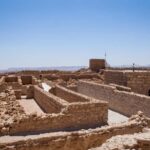
The route uses a cable car up to Masada, which is a big help if you don’t want the full hike. Once at the top, you’ll see the snake path, plus the palaces, a well-preserved bath house, a synagogue, Roman barracks, and more.
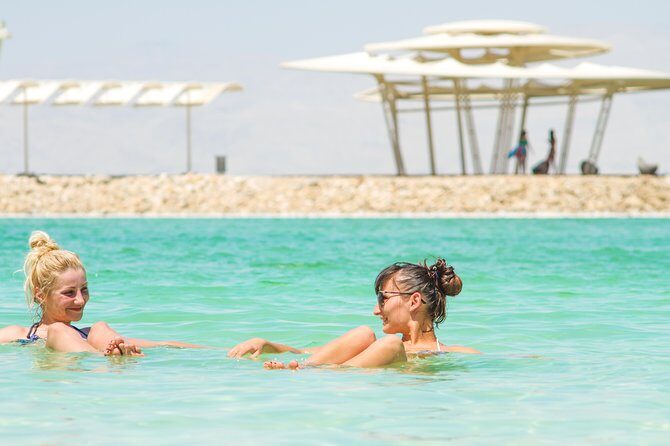
When you leave Masada, you pass Ein Gedi and then continue to the Qumran caves, known for the discovery of the Dead Sea Scrolls. After that, you reach the Dead Sea for a swim or float in the therapeutic waters.
Then there’s the added logistics win: after the tour, you’re dropped at Ben Gurion Airport for a flight to Ramon Airport in Eilat. You’ll then transfer to Eilat for overnight.
One key scheduling note: the tour says there are no domestic flights on Friday. If your itinerary lands on a Friday, you’ll get an overnight back in Tel Aviv, plus the flight to Eilat on the next day instead.
Petra Day: Treasury Views, Roman Theater, and an Extra Night Option
Petra is one of the world’s classic “how can this be real?” destinations, and the tour handles the main complexity: getting from Israel into Jordan and onward to Petra. You’ll be picked up around 8:30 to 8:45 a.m. and driven to the Arava border for assistance with border proceedings. On the Jordan side, a driver then takes you to Petra, a drive of about 2 hours.
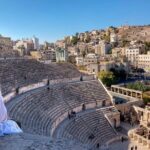
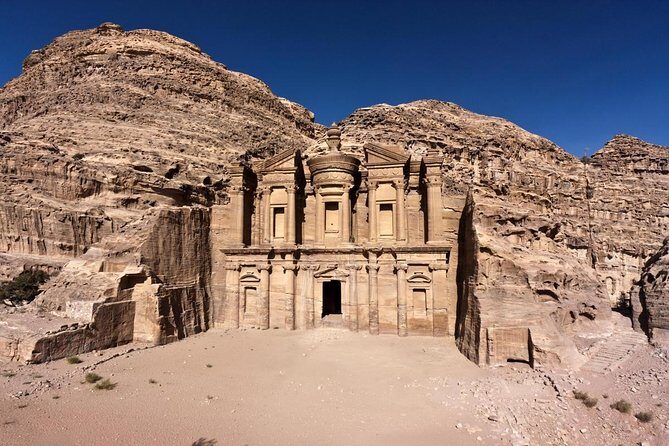
Once in Petra, you focus on the highlights: the Treasury (the postcard stop), plus additional temples, caves, tombs, and a Roman Theater. You’ll also have the option to see Petra by night, with an entrance fee of about $15 that is not included.
This is one of those days where your footwear matters. Petra is all about walking and steps. Even if you’re not a “fitness person,” just be ready for sustained walking under sun and shade changes.
Overnight is in Petra, which helps you avoid the fatigue of rushing back the same day.
From Petra to Mount Sinai: The Schedule Is the Real Risk
This is where you should pay extra attention. Day 8 is designed with a buffer and a handoff plan, but it can feel tight.
You wake up in Petra with a flexible start: you can go back into the Petra sight on your own, visit the market, or relax. Around 17:00, a driver takes you back to the border and Eilat. You then arrange to meet the driver around 21:00 for pickup to Cairo.
The timeline includes about 2 hours in Eilat for a quick bite or a swim, before you depart for Cairo. You then drive to the Taba border with border assistance, switch to an Egyptian-side driver, and continue to Mt. Sinai.
Then comes the key part: you climb the mountain and see the sunrise. The tour has a strong “timed experience” nature here, and if you’re not ready for a night climb, plan for it.
A real-world caution from the tour’s feedback: some departures didn’t feel smooth in this transition, especially right after a full day of Petra. If you’re considering booking, ask yourself: do you enjoy “on-the-clock” days where you can’t fully recover between major experiences?
Mount Sinai at Sunrise and St. Catherine’s Monastery
The next day continues the Sinai theme with more time on the religious sites and the monastery itself. You’ll climb at night and in the early hours again, then tour key places.
The route mentions the Church dated back to the 6th Century and that it has never been destroyed since then. You’ll see the Burning Bush connection and Jethro’s Well. You’ll also visit St. Catherine’s Monastery, described as one of the oldest working monasteries in the world, and you’ll hear about its world’s oldest library.
After this morning, you continue driving onward to Cairo for overnight.
For many people, this is where the trip becomes more than sightseeing. The climb and the sites around the monastery are physically demanding, but they also feel like a focused journey in a specific place, not just a checklist.
Giza, Step Pyramid, Sakkara, and Memphis: Cairo in a Packed Day
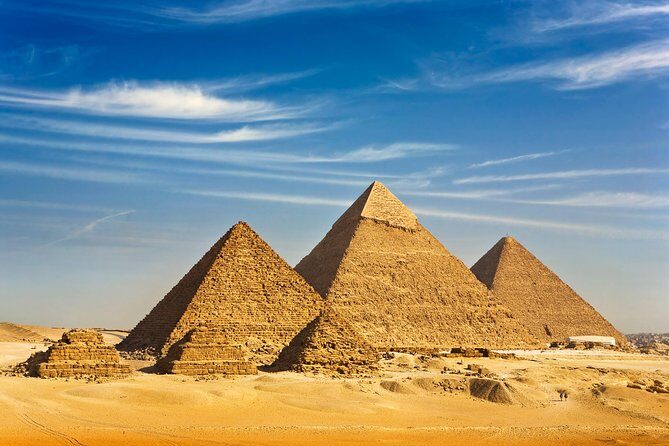
Cairo gets a day that’s built around the big ancient monuments. You’ll go to the Giza Plateau to see pyramids of Cheops (Khufu), Chephren (Khafre), Mycrenos (Menkaure), and the Sphinx.
The tour includes a short camel ride in the area. Then you continue to the Step Pyramid of Djoser and the pyramids of King Titi and Sakkara.
You’ll stop for lunch at a local restaurant, then visit Memphis and the Open Air Museum, including the statue of King Ramses II.
Important note for planning: it says entrance to Mummy’s room is not included. That matters for budgeting and for setting expectations, because you might arrive expecting everything to be covered. Also note this is about an 8-hour block.
Aswan High Dam, Philae Temple, and the Nubian Show
After Cairo, the trip shifts from road travel to flight and cruise rhythm. On Day 11, you fly from Cairo Airport to Aswan, then transfer to your ship and check in.
You eat lunch onboard, then start sightseeing with the Aswan High Dam and the Temple of Philae. After the tours, you return to the ship for dinner and a Nubian show.
This day is about comfort plus immersion. The flight gets you there fast, and the cruise base makes the rest of the week feel less like constant packing.
Kom Ombo, Edfu, and Sailing Toward Luxor
Next day keeps the cruise moving. You’ll visit the Temple of Kom Ombo, including the Sobek and Harores temple areas. Then you sail to Edfu and tour the Temple of Horus.
After that, the itinerary sails to Luxor for overnight. This kind of “sightseeing + sail time” combination is one of the best values in Egypt, because the movement happens without you living inside a vehicle all day.
Luxor West Bank: Hatshepsut, Valley of the Kings, and Three Royal Tombs
This is a strong Luxor day, with classic West Bank sites. You visit Thebes Necropolis and the Valley of the Kings, and you’ll enter 3 royal tombs in the area.
Then you visit Temple of Hatshepsut. After lunch onboard, you get a free afternoon and some night entertainment on board.
If tomb interiors are your thing, this day is a highlight. Three tomb entries is also a good way to break the day into distinct “stop moments” rather than just watching from outside gates.
Karnak and Luxor Temple, Then Back to Cairo
On Day 14, the cruise side wraps up and the itinerary shifts back to the land of temples. You start with breakfast, then check out procedures from the cruise ship. After that, you tour the East Bank with Karnak and the Luxor temples.
Lunch is at a local restaurant, and then you’re transferred to the Luxor airport for a flight to Cairo. You arrive in Cairo and are transferred to your hotel.
This day matters because it gives you Egypt’s temple scale again after the tombs. Karnak is one of those places where the sheer size hits you, and Luxor Temple helps bring it all back to a human scale.
Cairo’s Citadel, Mohamed Ali Mosque, and a Real Leisure Day
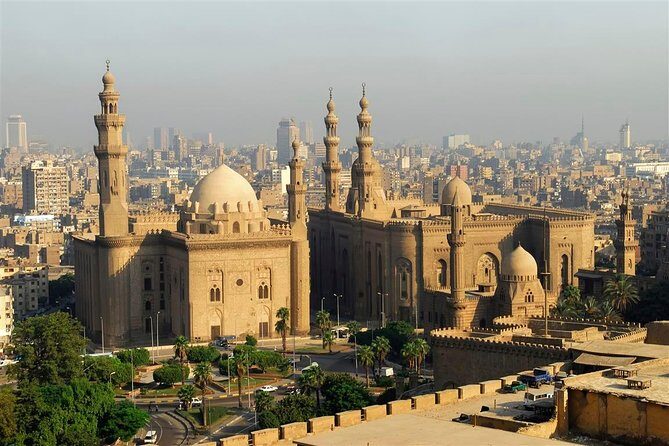
Cairo gets two phases: a full sightseeing day and then a calmer day to reset. Day 15 includes the Egyptian Museum, a city center tour with churches, then the Citadel of Salah El Dien and the Mosque of Mohamed Ali.
The route also flags optional tours, cruises, and shows you can ask about while you’re there. That’s useful, because it gives you freedom without needing to plan everything from scratch.
Day 16 is the downshift: a leisure day to walk around and relax on your own. That’s a smart inclusion because you’ll have had intense days before it.
Then Day 17 is simply transfer to Cairo International Airport for your flight home.
Price, Visas, and What’s Actually Included for $3,478
At $3,478 per person, the price can look high until you break down what you’re buying. You’re getting 15 nights accommodation, multiple guided tours across three countries, airport-to-airport logistics, a Nile cruise section with onboard meals, and transportation by climate-controlled van plus key flights.
Meals included are listed as: Breakfast (15), Lunch (6), and Dinner (3). That doesn’t mean every day is fully covered for food, but it does reduce your day-to-day planning.
What you should budget on top:
- A $130 per person departure tax is not included.
- Egypt visa: $60 USD per person.
- Jordan visa: $75 per person.
Also remember certain entries aren’t included:
- Petra by night is about $15 (not included).
- A note says Mummy’s room entrance is not included.
If you’re the kind of traveler who hates lining up tickets and figuring out border logistics, this package can feel like value. If you love totally free time and dislike climbing and long days, the cost won’t change the pace.
Who This Tour Suits Best (And Who Should Rethink It)
This fits best if you want:
- A guided, managed route across Israel, Jordan, and Egypt without piecing together transport.
- High-impact days like Jerusalem, Petra, and Mount Sinai plus the Egypt temple circuit.
- A cruise portion where you can rest while the itinerary keeps moving.
You might want to rethink it if:
- You hate schedule-driven experiences like the Sinai sunrise climb timing.
- You prefer slower travel with fewer transitions.
- You don’t want a day where you’re effectively moving from one big highlight into the next with limited downtime.
Physical readiness matters. The tour says you should have moderate physical fitness, and the route includes walking-heavy sites plus the Sinai climb.
Should You Book This Israel–Jordan–Egypt Tour?
I’d book it if you’re excited by the headline sites and want someone else to handle the hard parts: flights, transfers, and border assistance. The combination of Petra + Sinai + Cairo + a Nile cruise is exactly the kind of “big triangle” itinerary that can be hard to assemble on your own.
But I’d pause and ask careful questions if you’re sensitive to tight handoffs between countries or you worry about the night climbing. The biggest risk isn’t the sites—it’s the rhythm. If that rhythm works for you, this tour can be a strong value way to see three countries’ greatest hits.
FAQ
What city does the tour start in?
It starts in Tel Aviv, with pickup/transfer arrangements connected to Ben Gurion Airport.
What is the itinerary end point in Egypt?
The tour ends with a transfer to Cairo International Airport for your flight home.
Are airport transfers and flights included?
Yes. The tour includes airport-to-airport transport, with flights and climate-controlled van transfers.
How are border crossings handled between countries?
You get assistance at border crossings from local drivers, including drivers waiting on each side for continued travel.
Which meals are included?
The tour includes 15 breakfasts, 6 lunches, and 3 dinners.
What extra costs should I expect that are not included?
You should plan for $130 departure tax plus Egypt visa ($60 USD per person) and Jordan visa ($75 per person). Some site fees like Petra by Night (about $15) and Mummy’s room entrance are also not included.
Are there any special scheduling notes for Friday?
Yes. The tour notes there are no domestic flights on Friday, and in that case you’ll have an overnight in Tel Aviv instead, with the Eilat flight the next day.