REVIEW · JERUSALEM
From Tel Aviv/Ashdod or Jerusalem – Bethlehem Half Day Guided Private Tour
Book on Viator →Operated by Judah Tours · Bookable on Viator
Bethlehem in three hours, guided and practical. This private half-day tour lines up major Bethlehem highlights with a smooth car ride into the West Bank, then lets your guide stitch together the meaning behind each place. You’ll see both classic holy sites and modern-day context, with a mobile ticket and door-to-door pickup that helps everything stay on pace.
I especially like the private, patient pacing. In the best reviews, guides such as Dia and Abood are praised for clear explanations and for adjusting when plans get slower with kids or an older traveler. I also like that the route includes real local culture stops, like olive wood craft work and an arts space in the old city, not just a checklist of churches.
One thing to consider: because it’s a half-day, you won’t have hours inside every stop. Some stops are brief, and a few are pass-by moments rather than full, slow visits—totally fine if you want an efficient overview.
In This Review
- Key highlights at a glance
- Private Bethlehem without the bus headache
- Church of the Nativity: one of the oldest working churches
- St. Catherine of Alexandria and the Jerome connection underneath
- Milk Grotto: the story behind the white floor
- Shepherd’s Sanctuary (Beit Sahour): where angels first announced
- Passing Walled Off Hotel and Aida refugee camp without turning it into a spectacle
- Olive wood factory and Palestinian Christian craft traditions
- Bethlehem Museum, Rachel’s Tomb, and Deik Quarter art
- How the full route fits into 3 hours
- The guide makes or breaks it: Dia and Abood in the spotlight
- Price and value for a private group of up to 3
- Who should book this tour?
- Should you book this Bethlehem half-day private tour?
- FAQ
- How long is the Bethlehem half-day guided private tour?
- Where can pickup happen for this tour?
- How many people can be in a group?
- Is admission included for the main sites?
- Do I need a printed ticket?
- Does the tour include modern context like street art and refugee areas?
- Which art or museum stops are part of the day?
- Is free cancellation available?
Key highlights at a glance
- Door-to-door pickup in an A/C vehicle from Tel Aviv, Ashdod, or Jerusalem
- Church of the Nativity with guided time and included admission
- Shepherd’s Sanctuary (Beit Sahour) where the angels’ announcement is marked
- Olive wood craft context plus a pass by an olive wood factory
- Modern political street-level sights via Banksy’s Walled Off Hotel and a pass by Aida refugee camp
- Extra meaning stops like Rachel’s Tomb and Bethlehem Museum
Private Bethlehem without the bus headache
If you don’t want to spend your morning wrestling with shared buses, this is the model I’d pick. The tour is private, up to 3 people in your group, and it includes pickup from Tel Aviv/Ashdod or Jerusalem in an A/C vehicle. That matters here because you’re traveling between areas, and half-day tours work best when logistics are handled for you.
The tour also uses a mobile ticket, so you’re not juggling printed passes. And since it’s private, your guide can set the pace to your group rather than forcing everyone into the same rhythm.
Timing-wise, expect about 3 hours total. That’s short enough to fit into a Jerusalem day, but long enough to do the key sights with real commentary—not just “look and move on.”
You can also read our reviews of more guided tours in Jerusalem
Church of the Nativity: one of the oldest working churches
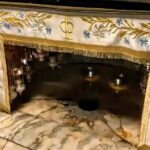
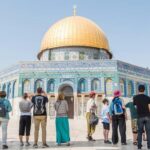
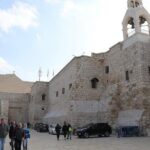
Your first major stop is the Church of the Nativity, and it’s not an abstract landmark. This church is described as one of the oldest working churches in existence today, built in the 4th century by Emperor Constantine over the grotto believed to be where Mary gave birth to Jesus.
In practice, this kind of site asks for two things: respectful attention and good guidance. The guided portion is the difference between seeing stone and understanding what people have meant there for centuries. You’ll get about 35 minutes and included admission ticket time.
A practical tip: wear shoes that can handle uneven stone and plan for tighter movement. It’s a working church, not a museum-only space, so the atmosphere can feel active even while you’re there for sightseeing.
St. Catherine of Alexandria and the Jerome connection underneath
Next comes the Church of St. Catherine of Alexandria, which is tied to a Franciscan monastery. It’s said to be on the site of Christ’s appearance to St. Catherine of Alexandria and his prediction of her martyrdom at the start of the 4th century.
This stop is included with about 30 minutes and no admission ticket cost. That frees time for what many people find even more interesting: the related “Cave of Jerome” angle.
Here’s the key detail you’ll want on your mental map. The Cave of Jerome is actually located beneath the Church of St. Catherine and can also be accessed from there. St. Jerome (345–420 A.D.) translated much of the Old Testament from Hebrew and Greek into the Latin text known as the Vulgate. So even if your main focus is Bethlehem, this adds a big layer of how the Bible reached the wider Christian world through translation work.
If you like religious history that connects sites to specific people, this is one of the smarter stops on the route.
Milk Grotto: the story behind the white floor
After the main church focus, the tour includes the Milk Grotto. This is associated with the Holy Family’s refuge during the Massacre of the Innocents, before they could flee to Egypt.
The name comes from a well-known tradition: a drop of the Virgin Mary’s milk fell on the cave floor and turned it white. You’ll get about 10 minutes here, and admission is free.
Even in a short visit, I think Milk Grotto works because it shows how pilgrimage sites build meaning through story. You’re not just looking at walls; you’re seeing how a legend becomes a place people return to.
Shepherd’s Sanctuary (Beit Sahour): where angels first announced
The tour then moves toward Beit Sahour and stops at the Chapel of the Shepherd’s Field, also called the Shepherd’s Sanctuary. This marks the place associated with the angels’ first announcement of Christ’s birth, in the Catholic tradition.
This is one of the stops with included admission time (about 35 minutes). It’s a nice counterbalance to the heavier church interiors earlier in the morning—more open-feeling in concept, even though you’ll still be in a sacred, built setting.
If you’re traveling with kids, this is a good moment to explain the “scene” of the story, not just the architecture. It also gives you a clear geographic sense of the Bethlehem region, not only Bethlehem’s old center.
You can also read our reviews of more private tours in Jerusalem
Passing Walled Off Hotel and Aida refugee camp without turning it into a spectacle
Bethlehem isn’t only religious story. It’s also lived reality right now, and this tour makes room for that in a careful way.
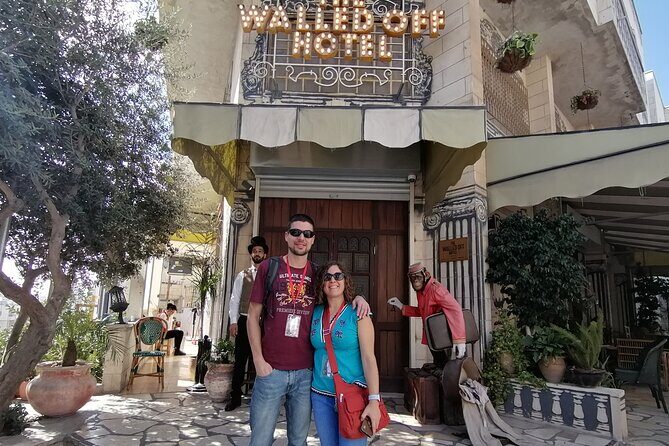
You’ll see Banksy’s Walled Off Hotel from the route and pass by Aida refugee camp. Those two stops sit in the same mental category for many people: contemporary art and the political landscape around it.
You also get a reminder that place matters. The Aida refugee camp is described as being about 2 kilometers north of Bethlehem and 1 kilometer north of Beit Jala. That kind of detail helps your brain stop treating the region as a vague background and start seeing how the sites relate.
Now, a fair note: because it’s a half-day, you’re not doing long on-foot time at these locations. It’s more “see it and understand it” than “spend the morning here.” If you want deep, slow context, you might pair this tour with another longer West Bank experience later.
Olive wood factory and Palestinian Christian craft traditions
One of the most valuable parts of this tour is the crafts connection. You’ll learn about traditional olive wood craft industries practiced by local Palestinian Christians, and the itinerary includes a pass by an olive wood factory.
This kind of stop changes how you shop for souvenirs later. Instead of buying a carved item as a generic memento, you understand why the craft exists and what it represents locally. It also helps you move beyond a narrow definition of Bethlehem as only churches and holy sites.
If you’re the kind of traveler who likes to buy one meaningful item rather than ten random ones, keep your eyes open here. Even when you don’t purchase, you’ll usually remember the skill and the story more than another photo from inside a church.
Bethlehem Museum, Rachel’s Tomb, and Deik Quarter art
Toward the end of the tour, you get a broader cultural frame.
Rachel’s Tomb is included, described as the revered burial place of the matriarch Rachel. It’s the sort of place that pulls the Biblical story deeper into the geography of the region, beyond the Nativity-centered route.
The Bethlehem Museum is another important layer. It’s dedicated to fostering a deeper understanding and appreciation for Palestine’s heritage, identity, culture, and art. That helps balance the day so you’re not only consuming historic sites—you’re also getting context for how culture continues.
You may also pass Bab idDeir Art Gallery, an independent artistic and cultural space in Bethlehem located in the Deik quarters of the historic old city. Even a brief stop here can be a reset. It’s a reminder that Bethlehem isn’t static; it’s producing art now.
How the full route fits into 3 hours
This is an efficient itinerary, and the structure is what makes it work.
You start with the most time-sensitive sacred sites (Church of the Nativity and St. Catherine), then add shorter-but-meaningful stops (Milk Grotto), and then shift to Beit Sahour’s Shepherd’s Sanctuary. After that, you connect the dots with route-based context: Walled Off Hotel, Aida refugee camp, olive wood craft work, and a cultural finishing stretch with Rachel’s Tomb and Bethlehem Museum.
For me, the smartest part is the ratio. You get guided time where it matters most (the big churches), then you use the remaining time to broaden perspective without running late.
A simple strategy: go into this tour with one or two must-see spots in mind. Then treat the rest as context-building. Half-day tours are best when you don’t demand a full-day experience inside a schedule that’s designed to be tight.
The guide makes or breaks it: Dia and Abood in the spotlight
For a tour like this, the guide is the difference between “I visited places” and “I understood why those places matter.”
The strongest feedback includes Dia, highlighted for explaining religion and local history clearly, with an emphasis on archaeology and restoration expertise. Another named guide in feedback is Abood, praised as careful and considerate—especially when someone in the group needed to move at a slower pace due to health limitations.
Even without knowing which guide you’ll get, those comments point to what you should look for in any Bethlehem guide: the ability to connect scripture to real geography, explain symbols without talking down, and keep the group moving in a respectful, non-rushed way.
If your priority is explanation over photo stops, choose this private format. It’s exactly the kind of itinerary where commentary is the main value.
Price and value for a private group of up to 3
At $450 per group (up to 3), you’re paying for a private vehicle, a guide, and included admission for key stops. Spread over 3 people, it can work out to a reasonable per-person cost for an experience that would be harder to replicate by piecing together taxis and separate guided visits.
The value also comes from time discipline. This is the difference between wandering through churches on your own and getting a guided route that uses your limited half-day well—Nativity Church plus the rest of the highlights, then meaningful modern context.
If you’re traveling as just 1 or 2 people, it may feel pricey compared with a shared group. But if you want a tailored pace (kids in a stroller, a slower-moving relative, or just a preference for comfort), private can be the better deal.
Who should book this tour?
I’d say this tour fits best if you:
- Want the Bethlehem highlights in about 3 hours without the hassle of public transport
- Prefer a private guide who can adjust the pace
- Like a blend of classic sacred sites and modern context
- Are okay with a structured, time-managed route (not an all-day wandering plan)
I might skip it if you want long, independent exploration in each church. This is a guided overview, not a slow pilgrimage day with hours of free time at every stop.
Should you book this Bethlehem half-day private tour?
Book it if your goal is smart efficiency: major sites, clear guidance, and a balanced look at both religious story and today’s context—delivered in a comfortable A/C private vehicle with door-to-door pickup.
Consider another option if you’re looking for maximum time per site or you strongly prefer unstructured, self-paced visiting. For most people doing a Jerusalem-based trip, though, this hits a sweet spot: you get the core places plus the context that makes Bethlehem feel like a living place, not just a list.
FAQ
How long is the Bethlehem half-day guided private tour?
It’s listed as about 3 hours.
Where can pickup happen for this tour?
Pickup is offered from Tel Aviv/Ashdod or from Jerusalem.
How many people can be in a group?
This is a private tour/activity with your group only, for up to 3 people.
Is admission included for the main sites?
Yes. The Church of the Nativity and Shepherd’s Sanctuary include admission ticket time. The Church of St. Catherine of Alexandria and Milk Grotto are listed as free admission.
Do I need a printed ticket?
A mobile ticket is provided.
Does the tour include modern context like street art and refugee areas?
Yes. The route includes passing by Banksy’s Walled Off Hotel and a pass by Aida refugee camp, plus a stop connected to olive wood craft traditions.
Which art or museum stops are part of the day?
The itinerary includes the Bethlehem Museum and may include Bab idDeir Art Gallery.
Is free cancellation available?
Free cancellation is available up to 24 hours in advance for a full refund. If you cancel less than 24 hours before, the amount paid isn’t refunded.