REVIEW · JERUSALEM
Jerusalem: Old City Highlights Tour
Book on GetYourGuide →Operated by Bein Harim Israel Tours · Bookable on GetYourGuide
Jerusalem can feel like a whole world in one day. This 10-hour highlights tour strings together viewpoints, quarters, and the big faith sites in a smart route that keeps you moving without losing meaning. It starts with a panoramic look from Mount Scopus and then works its way through the Old City on foot.
I especially like two stops: the Western Wall in the Jewish Quarter and the Church of the Holy Sepulchre, where centuries of devotion live right alongside serious history. You also get a tour guide who keeps the story clear as the streets change from quarter to quarter.
One catch to plan for: the day is long and the rules are strict. Modest dress is required, and this tour is not suitable for wheelchair users.
In This Review
- Key Things I’d Bet Your Day On
- Mount Scopus Views Before You Step Into the Old City
- Zion Gate to the Armenian Quarter: First Look at Jerusalem
- Jewish Quarter Highlights: Byzantine Cardo Remains and the Western Wall
- Via Dolorosa to the Church of the Holy Sepulchre: Faith, History, Crowds
- Old City Bazaar Break: How to Enjoy the Color Without Losing Your Place
- Garden of Gethsemane and Church of All Nations (With a Mon/Thu Switch)
- Kidron Valley Views and Ancient Tombs at a Slower Tempo
- Mount Zion: Dormition Church, Room of the Last Supper, and King David’s Tomb
- Price, Inclusions, and What You’ll Need to Budget for Food
- Practical Tips: Dress Rules and a 10-Hour Walking Day
- Who This Tour Fits Best (and Who Should Skip It)
- Should You Book This Jerusalem Highlights Tour?
- FAQ
- How long is the Jerusalem Old City Highlights Tour?
- What’s included in the price?
- Is food included?
- What languages is the tour guide available in?
- What happens on Mondays and Thursdays?
- Are there dress code rules and age restrictions?
Key Things I’d Bet Your Day On
- Mount Scopus first: you get oriented before you start threading through alleys
- Zion Gate to multiple quarters: the Old City feels like different neighborhoods, not one big maze
- Byzantine Cardo remains: you see how ancient Jerusalem laid out its main street
- Via Dolorosa to the Holy Sepulchre: the route follows the traditional path people know by name
- Mon/Thu swap: on certain days, the itinerary trades Mount Zion sights for the Holocaust Museum stop
Mount Scopus Views Before You Step Into the Old City
Starting at Mount Scopus is more than a nice photo moment. From up high, Jerusalem finally makes sense. You can see how the Old City sits in the wider city, and that helps you understand what you’re walking into later.
When the group moves from the viewpoint toward the Old City, I like that you’re not trying to read the streets blind. It’s a quick way to get your bearings fast. After that, your guide can point out where you’re heading with less confusion and less backtracking.
This also sets the tone for the whole day: you’re not just ticking off famous sites. You’re learning the geography so the religious and historical layers land with more weight.
You can also read our reviews of more city tours in Jerusalem

Zion Gate to the Armenian Quarter: First Look at Jerusalem
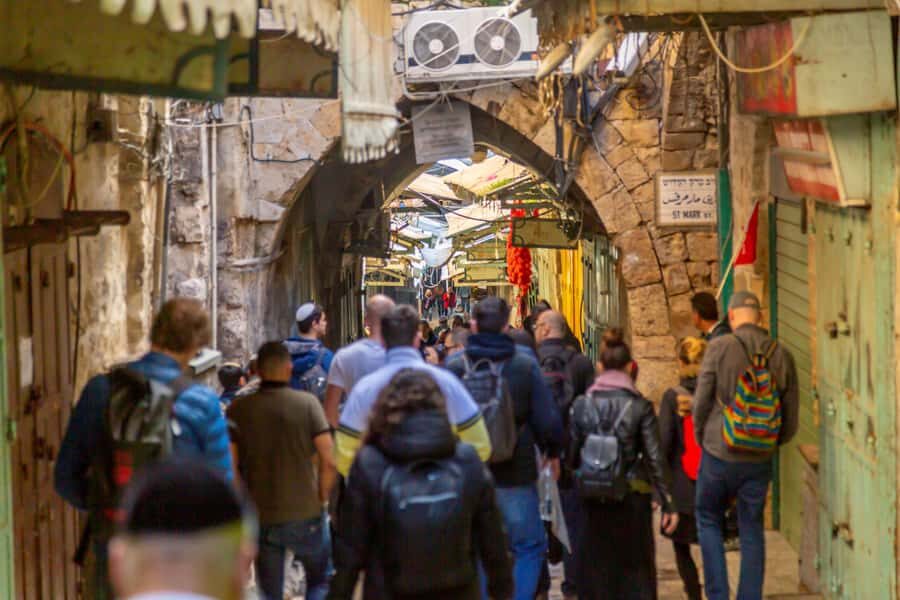
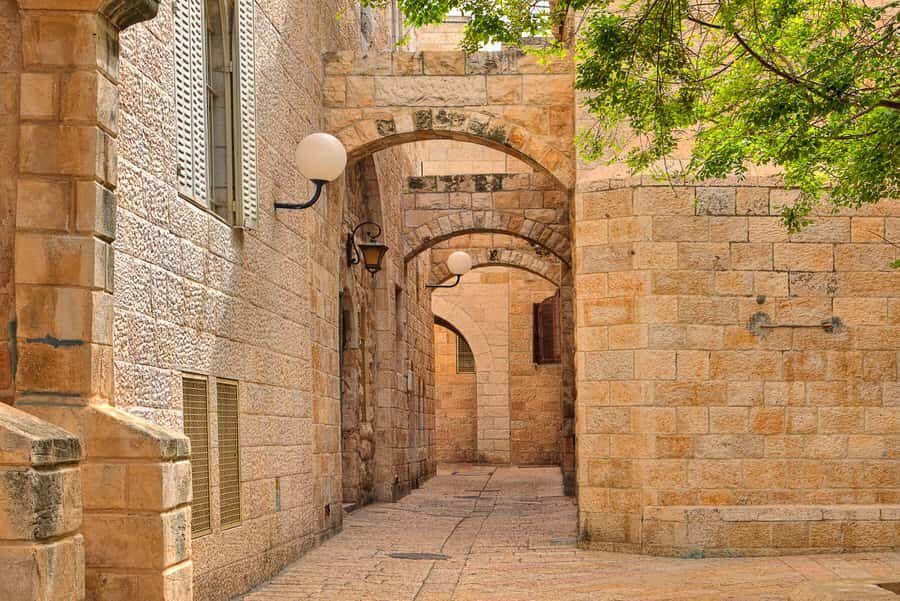
You enter the Old City through the historic Zion Gate, then step straight into the Armenian Quarter. The point here isn’t just atmosphere. Entering through an original gate gives you a sense of how people have moved in and out of Jerusalem for a very long time.
The Armenian Quarter stop is a good early buffer. After the big open view from Mount Scopus, these streets help you transition into walking mode. It’s also a chance to slow down and notice the textures of the city before the major holy sites start stacking up.
And because this is a guided tour, you’re not left wondering what you’re seeing. Your guide ties the quarter into the day’s overall route so it feels connected rather than random.
Jewish Quarter Highlights: Byzantine Cardo Remains and the Western Wall
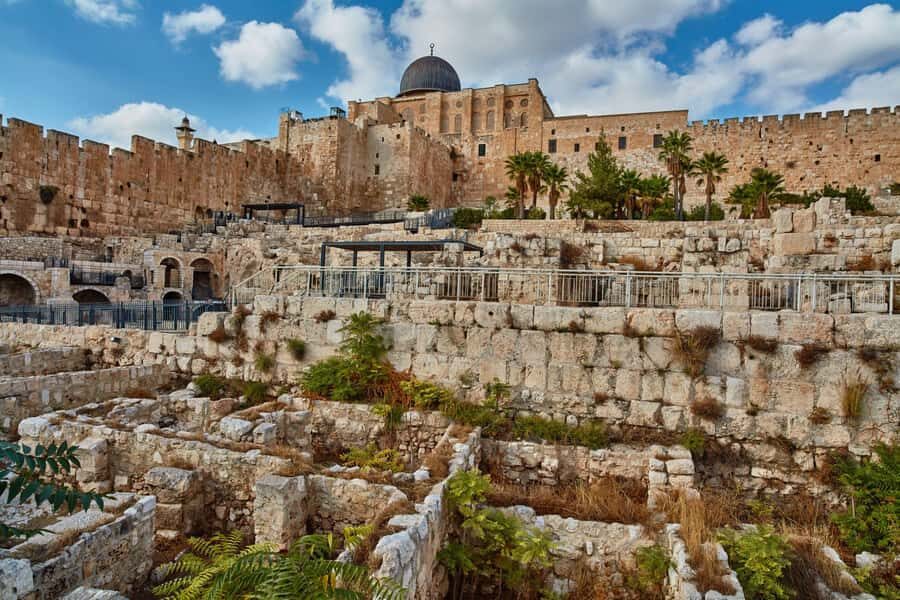
Next comes the Jewish Quarter, and two things make this section especially meaningful.
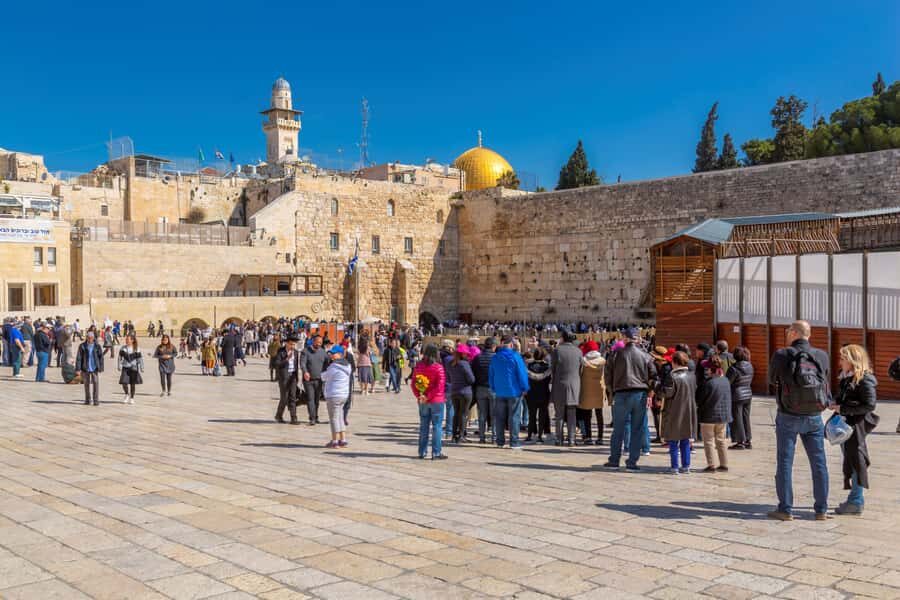
First, you’ll discover the remains of the Byzantine Cardo. That main street idea matters because Jerusalem wasn’t always built like it is today. Seeing the remains gives you a real anchor for how the city’s layout evolved across eras.
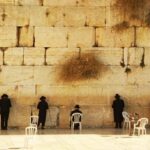
Second, you visit the Western Wall. This is one of those places where your guide’s framing helps you understand why it’s so central. It’s not just a landmark. It’s a living sacred space, and it’s common to feel the difference the moment you arrive.
Practical thought for your day: this portion of Jerusalem can involve steady foot traffic and tight areas. Go with a patient mindset, and don’t plan to speed through for the perfect picture. Let the site do its job.
Via Dolorosa to the Church of the Holy Sepulchre: Faith, History, Crowds
From the Jewish Quarter, the route follows the Via Dolorosa along the traditional path associated with Jesus until you reach the Church of the Holy Sepulchre. This is the part of the day that can feel emotionally intense, even if you’re just learning history.
The Church of the Holy Sepulchre is described as home to the sites of the crucifixion and Christ’s tomb, plus centuries of cherished religious treasures. Standing there, you get why people travel for this site year after year. It’s both deeply religious and deeply historical at the same time.
One practical note: when a place is this important, it can also be crowded and slower to navigate. That’s not a reason to avoid it. It’s just a reason to mentally plan for time and for moving in and out of busy areas.
If you want the most out of it, listen carefully to what your guide points out. In a complex site like this, direction matters. If you’re trying to self-navigate, you’ll likely miss how the key points connect.
Old City Bazaar Break: How to Enjoy the Color Without Losing Your Place
After the major holy sites, you’ll have time to wander through the Old City bazaar with its colorful stalls. This is the kind of stop where you can slow down and look around without feeling like you’re falling behind.
It’s also a chance to experience the Old City as a living place, not just a set of monuments. You’ll see everyday commerce happening right next to the sacred anchors that draw people from around the world.
My tip: treat this as a browsing pause, not a shopping marathon. If you want souvenirs, go in with a sense of what you want before you start walking. That keeps the bazaar time enjoyable rather than stressful.



Garden of Gethsemane and Church of All Nations (With a Mon/Thu Switch)
After the bustle of the Old City streets, the tour moves to the Garden of Gethsemane and the Church of All Nations. This change of pace is a big part of why the itinerary works. You’re moving from the dense Old City into a calmer setting tied to some of the most well-known moments in Christian tradition.
Then you’ll see the Kidron Valley with its ancient Jewish tombs. This stretch adds depth. It shifts you from the big structures into the broader religious geography around Jerusalem.
Now the important condition: on Mondays and Thursdays (except during Jewish holidays), the tour visits the Holocaust Museum instead of the Mount Zion sites and the Church of All Nations at Gethsemane.
So, if you’re traveling on a Monday or Thursday, don’t assume you’ll see the same stops. Your experience that day will be shaped by the swap, and the emotional tone can shift too. The Holocaust museum stop is sensitive content, and the tour info notes that children under age 10 are not permitted for Yad Vashem due to the sensitive content.
Kidron Valley Views and Ancient Tombs at a Slower Tempo
Even if you’re not spending a long time parked at one point, the Kidron Valley stop is valuable because it connects the spiritual sites to the physical terrain around Jerusalem.
Seeing ancient Jewish tombs in this setting helps you understand that the city’s sacred meaning isn’t limited to the biggest churches and walls. The landscape around Jerusalem carries memory. And when your guide explains how the valley fits into the bigger religious narrative, it’s easier to remember what you saw and why it matters.
I also like that this section feels like a breathing space in the schedule. After intense sites, you get a moment to look, absorb, and walk at a more human tempo.
Mount Zion: Dormition Church, Room of the Last Supper, and King David’s Tomb
The tour then heads to Mount Zion. Here you’ll see the Dormition Church, and visit both the Room of the Last Supper and King David’s Tomb.
This cluster is popular because it links multiple layers of tradition in a compact area. You get a sense of how different faith stories and key figures are anchored in the same neighborhood of sacred sites. It also helps that the tour format keeps the transitions tight: walk, listen, see, move on.
One day-planning note: remember the Monday/Thursday swap. On those days, the itinerary replaces the Mount Zion stops and the Church of All Nations with the Holocaust Museum. If Mount Zion sights are a top priority, double-check your travel dates.
Price, Inclusions, and What You’ll Need to Budget for Food
At $75 per person for a 10-hour day, the value is strongest because the tour includes a lot of the cost drivers that add up fast on your own.
Included:
- entry fees
- a guide
- transport by air-conditioned coach
- pickup and drop-off
Not included:
- food and drinks
For many people, the sweet spot here is that you’re paying for logistics and access, not just sightseeing. A coach with pickup means you spend less time sorting transportation. Entry fees included means you’re less likely to hit surprises when you reach each site.
The one thing you must plan for is food. Bring a realistic expectation: you’ll be active for most of the day, and you’ll need your own lunch and snacks. If you’re the type who hates decision fatigue mid-walk, you might want to eat before the most intense sites and then budget time to grab something later.
Practical Tips: Dress Rules and a 10-Hour Walking Day
This tour has clear clothing rules: shorts, short skirts, and sleeveless shirts are not allowed. Modest dress is required for holy sites, so wear something that covers appropriately before you leave.
Also keep comfort in mind. This is a long day with multiple walks in the Old City. Even if you manage the pace with your guide, you’ll still feel it in your legs.
A quick reality check from the tour’s suitability info:
- not suitable for wheelchair users
- children under 4 are not permitted
If you’re traveling with kids, pay attention to the age rule for the Holocaust Museum/Yad Vashem note (under 10 not permitted due to sensitive content). If that matters for your family, choose your day carefully.
Who This Tour Fits Best (and Who Should Skip It)
This is a great fit if you want a guided day that hits the major anchors of Jerusalem without having to plan a complex route on your own.
I’d especially recommend it if:
- you like a structured route with a guide linking sites together
- you want first-time orientation with a start at Mount Scopus
- you care about both major Christian sites and the Jewish Quarter highlights like the Western Wall
It may not be the best match if:
- you need wheelchair access (the tour is not suitable)
- you’re very sensitive to long walking and changing crowds inside sacred sites
- you’re traveling with very young children who won’t meet the age rules
Should You Book This Jerusalem Highlights Tour?
If your goal is to experience Jerusalem’s Old City highlights in one organized 10-hour outing with a guide and transport included, I think booking makes sense. The route is built for sequencing: Mount Scopus helps you understand the geography, then you move through key quarters and the major sites in a logical flow.
The only reason to hesitate is if your schedule falls on a Monday or Thursday, because the itinerary changes with the Holocaust Museum swap. If your must-see list includes the Church of All Nations and Mount Zion sites, plan your day accordingly.
If you can handle a long, walk-heavy day and you’re ready with modest clothing, this is a strong way to see the city’s biggest landmarks while still getting context, not just checkmarks.
FAQ
How long is the Jerusalem Old City Highlights Tour?
The tour lasts 10 hours.
What’s included in the price?
It includes entry fees, a guide, transport by air-conditioned coach, and pickup and drop-off.
Is food included?
No. Food and drinks are not included.
What languages is the tour guide available in?
The live tour guide is available in Spanish, French, and English.
What happens on Mondays and Thursdays?
On Mondays and Thursdays (except during Jewish holidays), the tour visits the Holocaust Museum instead of the Mount Zion sites and the Church of All Nations at the Garden of Gethsemane.
Are there dress code rules and age restrictions?
Yes. Shorts, short skirts, and sleeveless shirts are not allowed, and modest clothing is required for holy sites. Children under 4 are not permitted, and children under 10 are not permitted to visit Yad Vashem due to sensitive content.