REVIEW · JERUSALEM
Skip the Line:1.5Hour AudioTour – Yad Vashem Holocaust Remembrance Center Ticket
Book on Viator →Operated by Yad Vashem Holocaust Memorial · Bookable on Viator
Names hit harder when you hear stories. At Yad Vashem, this self-guided audio tour pairs admission to the museum with a 1.5-hour style route through the collections, letting you linger where you need to. I like how the tour is built for your pace, and I like that it starts strong with the eye-level emotional punch of the Living Landscape video artwork.
The biggest heads-up: you’re not getting a live guide’s extra context or Q&A, so if you want real-time interpretation, you may feel a little on your own. Still, the included headset setup and the museum’s own structure make it straightforward to follow.
In This Review
- Key highlights to know before you go
- Yad Vashem is heavy, but the audio format keeps it workable
- First stop: Living Landscape sets the tone fast
- Nine galleries, hundreds of items, and stories that go beyond country lists
- The audio guide: why it’s better than reading everything
- Hall of Names: the finale you should plan not to rush
- Timing your 1.5-hour flow without feeling cut off
- Price and fees: the real cost of entry in Jerusalem
- Ticket limits and what they mean for your visit
- Who this audio tour is best for
- Should you book this Yad Vashem audio tour?
- FAQ
- How long is the Yad Vashem audio tour?
- What does the ticket include?
- Is there an extra cost for parking?
- Do I need an entrance time reservation?
- What are the opening hours for 2025?
- What is the minimum age to enter?
- Can I present my voucher at any time?
- Is cancellation free?
Key highlights to know before you go
- Living Landscape opens the experience with a 13-meter film-and-photo installation showing pre-WWII Jewish life
- Nine museum galleries filled with artifacts, documents, video testimonies, photographs, and artwork
- Headsets included, so you can hear the audio clearly as you move at your pace
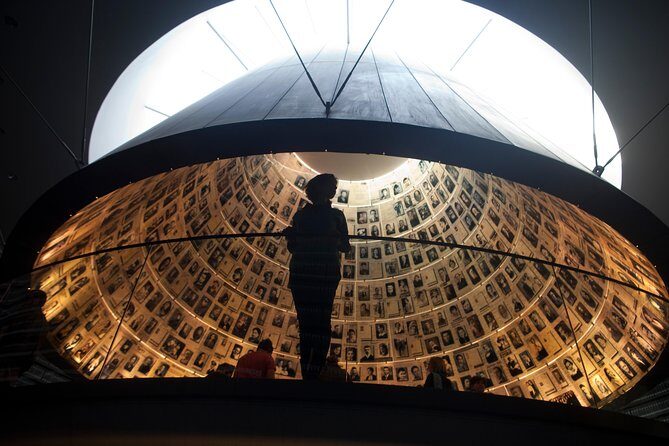
- Hall of Names delivers a powerful finale in a circular space with a 10-meter upper dome
- Mobile ticket + voucher anytime entry, which helps you avoid unnecessary waits
Yad Vashem is heavy, but the audio format keeps it workable
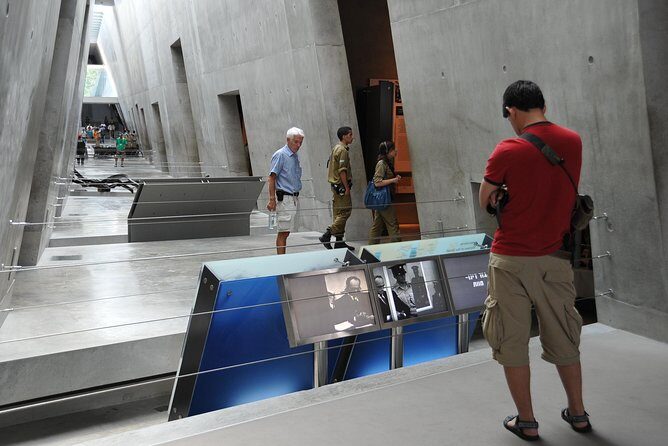
Yad Vashem can feel emotionally intense from the first minutes. What makes this experience usable is the structure: you enter the museum, follow the flow through the galleries, and listen to a pre-recorded audio guide that focuses on the people behind what you see.
The value here is simple. You’re paying for museum admission plus an audio layer that turns images, artifacts, and testimony into personal stories. With a duration of about 1 to 2 hours, you’re not committing to a half-day, but you’ll still have time to stop, listen, and reset your thoughts.
One practical plus: the ticket is a mobile voucher, so you’re not scrambling for paper. And the museum entry is flexible—you can present your voucher for admission at any time rather than being locked into a rigid entry window (you’ll still need the entrance-time reservation link from your booking confirmation).
You can also read our reviews of more tours and experiences in Jerusalem.



First stop: Living Landscape sets the tone fast
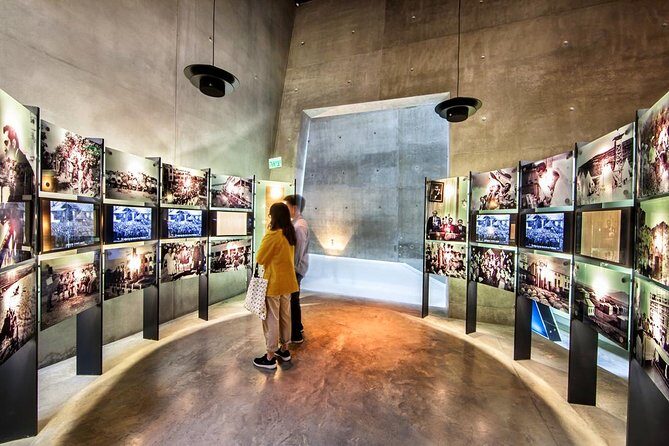
Right inside, you’ll meet the video artwork Living Landscape. It’s a 13-meter piece made from original film clips and photographs, designed to show the richness of Jewish life in Europe before World War II.
This matters because the museum doesn’t start by rushing you to the worst parts. It helps you build context first. The format is visually strong, and the audio guide then helps connect the images to the human stories behind them—victims and survivors—so you’re not just watching and reading. You’re understanding.
If you tend to skim at museums, this is one moment to slow down. The Living Landscape is the kind of display where the first minute carries extra weight, and the audio is timed to guide your attention.
Nine galleries, hundreds of items, and stories that go beyond country lists
Once you’re past the opening installation, the museum spreads across nine galleries. Inside, you’ll see hundreds of artifacts, photographs, documents, video testimonies, and artwork.
That mix is key. Holocaust remembrance isn’t only about one kind of evidence. You’re moving between objects, records, personal testimony, and visual work, and the audio guide is built to connect those pieces to individual stories. In other words, it’s not just information. It’s people—history told through the lived details.
Another thing I appreciate: the experience doesn’t feel trapped in a narrow geography. Based on what’s helped others get more understanding, this tour style supports learning that reaches beyond the usual country focus, and it adds new context to what you might already know from Germany, Poland, France, Italy, and similar places. If your goal is fuller perspective, the breadth of galleries and testimony items is exactly what you want.
The audio guide: why it’s better than reading everything
The audio guide doesn’t replace the exhibits. It works alongside them. As you move through the galleries, you’ll hear pre-recorded explanations that highlight the personal stories behind the images and artifacts you’re seeing.
This approach helps in two ways:
First, you can actually take in the room you’re standing in. Reading every label can make a museum feel like a scan marathon. Listening lets you watch what’s in front of you while still getting the meaning.
Second, it reduces the pressure to know the exact timeline in advance. Even if you come in with only general knowledge, the audio keeps you connected to what you’re seeing, so the museum becomes a guided sequence rather than a set of separate panels.
You should also know the tour includes headsets. That’s not a small detail—good audio is essential in a space where the subject matter already demands your full attention.
Hall of Names: the finale you should plan not to rush
At the end of the museum, you’ll reach the Hall of Names. This is a circular hall, and you’ll see a 10-meter-high upper dome.
This part earns your time. The museum’s earlier sections build context and humanize the material, but the Hall of Names shifts the feeling toward remembrance and scale. It’s the kind of stop where your brain needs a little quiet to absorb what you’re seeing.
If you’re trying to do everything at speed, you’ll likely miss what makes this room so affecting. I’d treat the final stretch like the most important part of your visit—not the bonus.



Timing your 1.5-hour flow without feeling cut off
The experience is listed for about 1 to 2 hours, which is a realistic window for a self-guided audio museum visit. You can choose a faster pace if you’re short on time, but you’ll probably enjoy it more if you let the audio dictate pauses.
Here’s a smart way to think about timing:
- Spend your first chunk on Living Landscape plus the early galleries, when everything is new and your attention is sharp
- Reserve your energy for the middle galleries where you’ll keep encountering artifacts and testimony
- Don’t let your pace sprint you into Hall of Names without slowing down
Also, check opening hours before you plan your day. For 2025, it runs Tuesday 8:30 AM to 4:00 PM. If you arrive late, you may feel rushed even with a self-guided format.
Price and fees: the real cost of entry in Jerusalem
At $11.00 per person, the ticket price is low for a museum admission + audio add-on combination. The catch is the $8.00 parking fee payable on site. Food and drinks aren’t included either, so you should budget for at least a water break if you’re there for the full audio pace.
So what’s the actual value equation?
You’re paying a modest base amount, then adding the two common day-of costs: parking (if you drive) and basic sustenance. If you’re walking or using local transport, you can keep the out-of-pocket spend close to the listed ticket price. If you’re driving, the total rises, but you’re still getting admission plus headsets and the pre-recorded audio guide.
One more practical detail: the confirmation includes an entrance time reservation link. That means the ticket isn’t a totally free-for-all. Plan to have your confirmation accessible so you can follow the entry instructions smoothly.
Ticket limits and what they mean for your visit
This experience lists a maximum of 5 travelers. Even though the audio tour is self-guided, that small maximum can matter if you’re picking up headsets or need staff help at entry.
The minimum age is 10 years old. If you’re traveling with kids, this requirement is important to respect, especially in a museum with heavy content and audio components.
For most people, participation is listed as possible. If you’re sensitive to emotionally intense exhibits, it’s worth thinking about your own comfort level and whether you want a shorter path or more breaks.
Who this audio tour is best for
This is a strong fit if you want a museum experience that’s structured but flexible. I think it works especially well for:
- People who prefer self-paced learning over a group schedule
- Visitors who want personal stories connected to what they’re seeing, not just general descriptions
- Anyone who benefits from audio guidance to slow down and focus
It’s less ideal if you’re the type who wants a living expert to interpret everything on the spot. Since this is a pre-recorded audio setup, you won’t get spontaneous answers or adjustments for your specific questions.
Should you book this Yad Vashem audio tour?
Yes, if you want meaningful museum access with a built-in story guide and a timeframe you can manage. The strongest reasons to book are the included headsets, the museum’s major exhibit arc from Living Landscape to Hall of Names, and the way the audio helps connect artifacts and testimony to human stories.
I’d especially recommend it if you’re trying to learn more than the headlines. The museum format covers a lot of material, and the audio makes it easier to keep meaning attached to what you’re looking at.
If you’re short on time, check the opening hours and plan to protect your ending. Hall of Names is the part you’ll remember longest, and it’s where rushing usually hurts.
FAQ
How long is the Yad Vashem audio tour?
The duration is listed as about 1 to 2 hours.
What does the ticket include?
The ticket includes admission to Yad Vashem plus a self-guided audio tour, and headsets to hear the audio clearly.
Is there an extra cost for parking?
Yes. There is an $8.00 parking fee payable on the premises. Food and drinks are not included.
Do I need an entrance time reservation?
An entrance time reservation link is included on your booking confirmation ticket, so you should plan to use it.
What are the opening hours for 2025?
For 2025, the listed opening hours show Tuesday: 8:30 AM – 4:00 PM.
What is the minimum age to enter?
The minimum age is 10 years old.
Can I present my voucher at any time?
Yes. The instructions state that you can present your voucher for admission at any time.
Is cancellation free?
Cancellation is free. You can cancel up to 24 hours in advance for a full refund.