REVIEW · JERUSALEM
Jerusalem: City of David, Underground Jerusalem Day Tour
Book on GetYourGuide →Operated by Bein Harim Israel Tours · Bookable on GetYourGuide
History moves underground here. This full-day tour strings together the best-known Jerusalem landmarks with real archaeology, from the City of David to the Byzantine Cardo. You get major viewpoints, several named sites tied to the biblical landscape, and a guided route that makes sense of what you’re seeing.
I especially like how the tour connects the dots between what’s above ground and what’s been uncovered below. The stops around the Mount of Olives area and Mount Zion help you understand the geography, while the underground sections show foundations, mosaics, and daily-life details that most quick tours skip. One watch-out: the Underground portions can mean tight squeezes and stair-and-stone crowding, so it’s not a great match for claustrophobia.
You also start getting value fast. With hotel pickup and drop-off plus an air-conditioned coach, you spend more time walking the sites and less time figuring out logistics. Still, the day includes about 3 hours of walking, plus a strict dress code (no shorts, short skirts, or sleeveless shirts), so plan for comfort and modest coverage from the start.
In This Review
- Key points to know before you go
- Temple Mount views, then Kidron Valley to Zion Gate
- Mount of Olives panoramas: Yad Avshalom, Beni Hazir, and the Garden of Gethsemane
- Mount Zion and the Tomb of David before the Old City route
- Sephardi synagogues and the restored Cardo: a key layer you can actually walk
- Jewish Quarter foundations, Hezekiah’s wall, and your trip downward
- Western Wall stop: a brief pause in the middle of the busy day
- Dung Gate to the City of David excavations: 3000 years in one route
- Price and value: what $89 buys you, and what costs extra
- Who this tour fits best
- Should you book Jerusalem: City of David, Underground Jerusalem?
- FAQ
- How long is the tour and how much walking is included?
- Where does the tour start?
- Is hotel pickup and drop-off included?
- What’s included in the price?
- What is not included?
- What language is the tour offered in?
- Are there clothing restrictions?
- Is the tour suitable for children?
- Is it wheelchair accessible?
- Can I cancel for a full refund?
Key points to know before you go
- City of David excavations and Underground Jerusalem are the core experience, not a quick photo stop
- Mount of Olives viewpoint + Jewish cemetery tombs give you a strong sense of place before you enter the Old City
- Zion Gate, the Cardo, and restored Sephardi synagogues connect Jerusalem’s layers to what you can actually walk through
- Hezekiah’s wall foundations, mosaic floors, and a mikveh bring the story down to everyday life
- A note at the Western Wall adds a classic Jerusalem moment, with a brief but meaningful pause
- 3 hours of walking and some tight spaces underground mean you should move at a steady pace
Temple Mount views, then Kidron Valley to Zion Gate
The day kicks off with a breathtaking overview of Jerusalem from the Temple Mount area, before you head toward the Zion Gate along the Kidron Valley. Even if you’ve seen Jerusalem photos before, getting the view from the right angle matters. You can start to picture why people have fought over (and prayed to) this city for thousands of years.
From there, the coach ride keeps the pace sane. You’re not walking between far-flung sites all day, which is a huge deal in Jerusalem where distances add up quickly. The route also sets you up for the religious and historical geography: you’re moving through the “shape” of the city, not just ticking off monuments.
If you’re hoping for a calm, slow day, this isn’t it. This is a full-day, packed schedule, and you’ll be trading comfort for access—most of the time you’ll be in motion, then catching your breath when the group stops.
You can also read our reviews of more city tours in Jerusalem



Mount of Olives panoramas: Yad Avshalom, Beni Hazir, and the Garden of Gethsemane
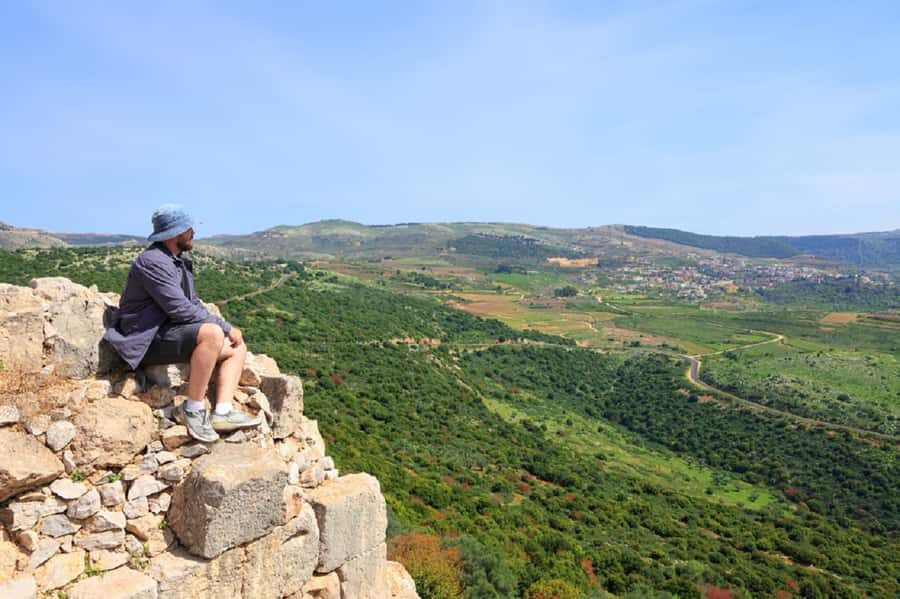
A big portion of the experience is visual. You get magnificent views from the Mount of Olives, plus stops around the Jewish cemetery area where you’ll see burial tombs including Yad Avshalom, Beni Hazir, and a tomb that’s often associated with Zechariah. These aren’t just names to memorize. In the right light, standing near these markers helps you understand why the Mount of Olives keeps showing up in stories tied to Jerusalem’s past.
Then you head to the Garden of Gethsemane area and the Church of All Nations. This is the part of the tour where you’ll likely notice how different Jerusalem sites speak to different audiences—some people come for biblical connections, some for art and architecture, and some for the feeling of being in a place that has kept attracting pilgrims.
The practical upside: these stops break up the underground-heavy program. Even if you end up spending your legs on stairs later, you’ll appreciate the chance to stand back, look out, and breathe for a moment.
Mount Zion and the Tomb of David before the Old City route
Next comes Mount Zion and a stop at the Tomb of David. It’s one of those places where the structure matters less than the setting and the sense of historical layering. You’re on one hill looking down toward the city’s older core, and you can feel how Jerusalem’s topography shapes where people built, visited, and returned.
From there, you enter the Old City through the Zion Gate on the way to the Cardo. The Cardo is Jerusalem’s classic “main street” idea—an ancient corridor that connects quarters, markets, and movement. If you enjoy understanding how people lived and traveled, this is a smart move. You’re not just walking from one holy site to the next; you’re following the bones of the city.
One note to keep you comfortable: the Old City walkways can get crowded, and your schedule is built around group movement. Go slowly at first, because once the pace sets, it’s hard to catch up without cutting into your own enjoyment.
Sephardi synagogues and the restored Cardo: a key layer you can actually walk
One of the tour’s standout planning choices is the stop at four restored Sephardi synagogues—dating to the seventeenth and early eighteenth centuries. These aren’t just decorative. They help you see that Jerusalem’s religious life kept evolving while older layers remained under your feet.
After that, you continue to the excavated 1500-year-old Byzantine Cardo. Walking a real Roman/Byzantine-era street is different from reading about it. You can feel the scale and the direction of the old city flow, and it makes the later underground stops easier to understand. If the underground sections are the headline, this is the setup that makes the “how” click.
I also like that the program keeps shifting between perspective and detail. Synagogues give you a cultural snapshot. The Cardo gives you the urban structure. Then, as you move onward, you start to get the sense that Jerusalem is like a stack of cities—each new one built over and around the previous.
Jewish Quarter foundations, Hezekiah’s wall, and your trip downward
The tour really earns its name here. In the Jewish Quarter, you’ll marvel at exposed foundations of the 2700-year-old wall of biblical Jerusalem built by King Hezekiah. This is one of those moments where you stop and realize you’re standing on the edge of what’s been uncovered, not an imagined reconstruction. It makes Jerusalem’s timelines feel concrete.
Then the tour descends a few meters to a two-thousand-year-old complex of homes with original mosaic floors and a mikveh. This is where the tour becomes more than sacred geography. You’re looking at daily life—homes, ritual immersion, and decoration—things that anchor big historic events to ordinary people.
Practical consideration: descending into archaeological areas often means stairs, uneven surfaces, and close quarters. The day includes about 3 hours of walking, and this is the part where you’ll feel it most. Wear shoes you trust for traction and comfort, and go easy on heels or anything slippery.



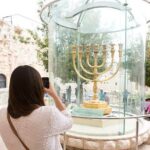
Western Wall stop: a brief pause in the middle of the busy day
Before the day’s final shift into the City of David excavations, there’s a brief stop at the Western Wall (Kotel). You’ll have time to place a note between its stones. This is short on purpose. The tour stays focused and keeps you moving, which is great if you don’t want the day to stall out waiting for crowds.
Still, even a short pause can work. If you’ve never done the note tradition, this is a simple moment to take it in without turning your whole schedule into a queue marathon.
If you want to keep the day smooth, use the time for what it’s meant for: a quick moment of intention, then back to the pace.
Dung Gate to the City of David excavations: 3000 years in one route
You leave the Old City through the Dung Gate and head to the remarkable excavations of the three thousand year old City of David. This is the heart of the experience: the ongoing archaeological work and the chance to see how Jerusalem grew, contracted, and reinvented itself over centuries.
The underground portions are usually the most memorable. They can feel intense—one reason this tour isn’t ideal for people with claustrophobia. You’ll likely encounter tight squeezes and areas where the group funnels forward at a slower speed than you’d expect. It’s worth knowing upfront so you can prepare mentally and physically.
The good news is that the “why” is explained by the guide. In past experiences, guides such as Daniel and Moti have been highlighted for being engaging and setting an effective pace, which matters when you’re spending hours moving through complex spaces. The difference between a good and a weak explanation here can be huge, because the sites are layered and easy to look past if you’re not guided.
One practical lesson from real-world experiences: entry coordination can cost you time, especially around site tickets. Bring some patience, and if you’re asked to pay for parts of the experience on-site, have your payment ready.
Price and value: what $89 buys you, and what costs extra
At $89 per person, this isn’t a bargain tour, but it can be good value if you like structure. You get a guide, air-conditioned coach transport, and hotel pickup and drop-off. That “ground transportation + local expert” combo is worth real money in Jerusalem, where sites are spread out and walking alone adds up fast.
What’s not included is just as important: entry fees and food and drink are extra. Also, the four synagogues have their own admissions, and at least one experience notes that having cash on hand was useful. I’d treat that as a practical hint: carry some cash so you’re not stuck in an awkward moment while the group waits.
If you’re mainly after one holy site area, a shorter tour might fit better. But if you want a full-day “see the city’s layers” approach—views, streets, walls, homes, and excavations—this price can feel fair.
Who this tour fits best
This tour is a strong match if you want Jerusalem archaeology with a guided narrative. It suits people who enjoy connecting the biblical stories to physical places and who don’t mind a busy day.
It’s also a good pick for anyone adding to other Jerusalem tours. The stops cover both the sacred highlights and the excavated urban layers that many half-days skip.
Skip it (or at least rethink) if:
- you have claustrophobia or you know you struggle in tight indoor spaces
- you’re sensitive to long walking days, since the tour includes about 3 hours of walking
- you need wheelchair access, since it isn’t suitable for wheelchair users
Should you book Jerusalem: City of David, Underground Jerusalem?
I’d book it if you want the City of David experience done in a structured, guided way. The combination of Mount of Olives viewpoints, Old City walking through the Zion Gate and Cardo areas, and then descending into excavations makes the day feel like one connected story instead of disconnected stops.
I’d think twice if you prefer a relaxed pace, need easy routes, or hate crowds and tight spaces underground. Also, because the tour involves entry fees at multiple points, plan to bring extra money for admissions and keep your expectations flexible if any part of the day shifts.
If your priority is Jerusalem’s layers you can see with your own eyes—walls, streets, mosaics, and excavations—this is one of the better ways to do it in a single day.
FAQ
How long is the tour and how much walking is included?
The itinerary includes 3 hours of walking.
Where does the tour start?
It starts with a view of Jerusalem from the Temple Mount area, then continues by drive along the Kidron Valley toward the Zion Gate.
Is hotel pickup and drop-off included?
Yes. Hotel pickup and drop-off are included.
What’s included in the price?
The tour includes a guide and transport by air-conditioned coach, plus hotel pickup and drop-off.
What is not included?
Entry fees and food and drink are not included.
What language is the tour offered in?
The tour is offered in English.
Are there clothing restrictions?
Yes. Shorts, short skirts, and sleeveless shirts are not allowed.
Is the tour suitable for children?
It is not suitable for children under the age of 4.
Is it wheelchair accessible?
No. The tour is not suitable for wheelchair users.
Can I cancel for a full refund?
You can cancel up to 24 hours in advance for a full refund.