REVIEW · JERUSALEM
Explore Jerusalem’s Old City
Book on Viator →Operated by Roni Peled Tour Guide · Bookable on Viator
Jerusalem changes when you get the right walking map. This private Old City experience is built around a tailor-made itinerary and a guide who brings the city to life through history and personal context. I love the way you can shape the day to your interests, and I also love the stop-by-stop focus, especially the City of David tunnels and the Western Wall. One thing to consider: the schedule can feel full and you will do a fair amount of walking, including dim tunnel segments.
With Roni Peled, the tour doesn’t treat the Old City like a checklist. It connects the dots across eras, from ancient water systems to modern-day prayer notes, and it even works for wheelchair users by adapting the route. If you’re looking for a quick photo run, this is not that kind of tour. It’s for people who want meaning with their steps.
In This Review
- Key points to know before you go
- Entering the Old City at Jaffa Gate: where the whole map starts
- Armenian Quarter and St. James Church: one community, 1,500+ years
- Mount Zion: last supper sites and the skyline over Temple Mount
- City of David National Park: 3,800 years underground and up to the water source
- Western Wall: the Temple-era connection and what you can do there
- Muslim Quarter: cotton makers, the bazaar rhythm, and the rise of Islam
- Via Dolorosa and Lina hummus: walking the path, then taking a real break
- Church of the Holy Sepulchre: crucifixion sites, anointing stone, and the tomb
- How the tour stays flexible: half-day, full-day, and wheelchair adaptation
- Price and value: paying per group, not per person
- Timing, meeting point, and ticket basics that keep things smooth
- Who this tour suits best
- Should you book this Jerusalem Old City tour?
- FAQ
- What is the cost per group?
- How long is the tour?
- Where do we meet, and where does the tour end?
- Is lunch included in the price?
- Are the admission tickets included?
- Do I get a ticket on my phone?
- Can this tour work for wheelchair users?
- How soon will I get confirmation after booking?
- What is the cancellation policy?
Key points to know before you go
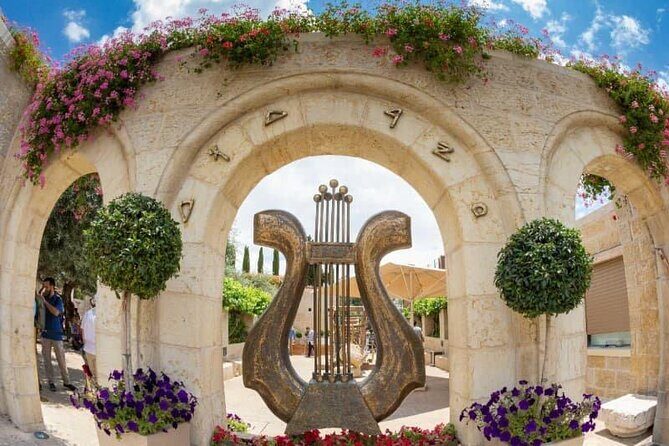
- Private and customizable: build a half-day or full-day plan around what you care about most
- Roni Peled’s story-based guiding: personal experiences plus clear historical context
- City of David tunnel time: you get flashlight-led passage through the Hezekiah tunnels
- Old City across four quarters: Armenian Quarter, Muslim Quarter, plus the West and Christian sights
- Holy sites with practical context: Western Wall, Via Dolorosa, and Church of the Holy Sepulchre in one coherent route
- Mobile ticket for simplicity: plan for a smoother check-in
Entering the Old City at Jaffa Gate: where the whole map starts
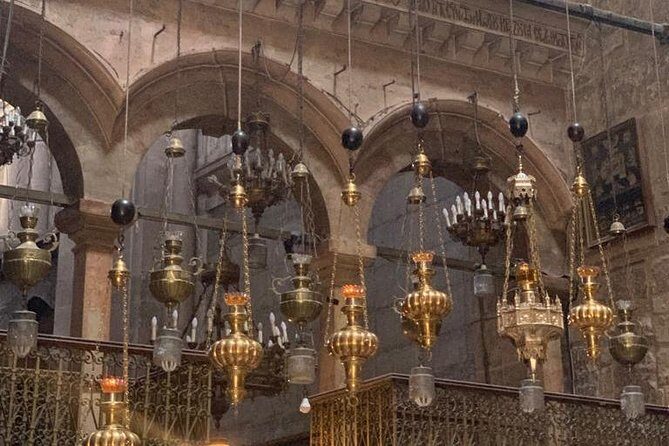
You begin at Jaffa Gate hostel, right at one of Jerusalem’s main entrances. The first stop matters because it gives you orientation fast. You learn what the gate represents, how its inscriptions and history connect to the city’s changing control, and why the area feels so busy even when you’re thinking long-term.
There’s also a viewpoint component: you get to understand the observation point near the Tower of David and what it means to stand somewhere that historically mattered for defense. If you’re the type who likes understanding why a place is positioned the way it is, you’ll appreciate that the tour doesn’t start in the middle of the action. It starts with the boundaries.
Practical note: Jaffa Gate is a natural place to gather your bearings. From there, you’ll move through quarters that can feel confusing if you go solo.
You can also read our reviews of more city tours in Jerusalem

Armenian Quarter and St. James Church: one community, 1,500+ years
Next comes the Armenian Quarter, entered from its main street. The tour leads you into the courtyard of St. James Church, where the guide focuses on the burial site of James, brother of Jesus, and James among the 12 disciples. Even if you know the names already, you’ll still benefit from hearing how the Armenian community’s story developed in Jerusalem over more than 1,500 years.
What I like about this stop is the balance of spiritual and everyday details. You don’t just hear about belief; you look at the architecture and traditional Armenian ceramics displayed in the church. That helps you see the Armenian presence as lived culture, not only as a religious label.
Timeline reality: this is a short stop, so it’s best if you arrive ready to pay attention for the key points rather than expecting long museum-style wandering.
Mount Zion: last supper sites and the skyline over Temple Mount
From the Zion Gate, you approach Mount Zion, and the guide sets up the political story that shaped the Jewish Quarter in the late 1940s. You learn about the fall in 1948 when it reached Jordanian control, and then how it was liberated in 1967. That historical frame makes the religious sites feel less like isolated monuments and more like layers of one city.
On Mount Zion itself, the tour includes several major sights:
- the Room of the Last Supper
- the Tomb of King David
- Dormition Church, focused on Mary, mother of Jesus
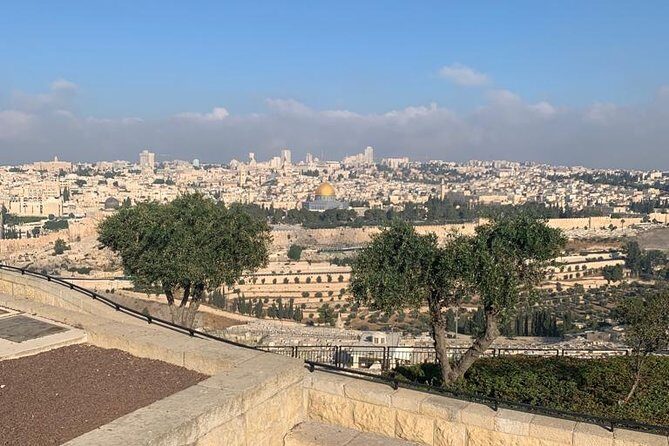
- a climb to the lookout point where you can see the Hill of Evil Counsel and the Temple Mount
The lookout point is one of those moments where the Old City stops being flat. Even with a short visit, you get a sense of how elevation shapes what people could see, worship, and defend.
Possible consideration: this segment is timed at about an hour, so if you want to linger for prayer or photos, you’ll need to be ready to do it efficiently and communicate your pace to the guide.
City of David National Park: 3,800 years underground and up to the water source
This is where the tour gets hands-on in a way most Old City tours don’t. In City of David National Park, the guide explains that the site was established by King David about 3,000 years ago as the capital of the United Kingdom of Israel.
You walk through foundations tied to King David’s palace and then see ruins connected to Judean kings and the officials who served them. Then comes the head-turning part: a 3,800-year-old tunnel connected to Jerusalem’s water supply and the Gichon spring—including the site connected to King Solomon’s anointing.
The tour also includes the chance to walk through the Hezekiah tunnels in the dark, led by flashlights. That change in lighting is more than dramatic. It helps you understand why ancient engineering was so important to survival and daily life.
At the end, you emerge near a Second Temple era pool associated with pilgrims bringing sacrifices: the Shiloan pool area.
Cost note that actually matters: the itinerary shows that admission for this segment is not included, so check what you’ll pay at the entrance here. It’s worth it if you want more than surface-level stops.
Main caution: if you feel uncomfortable in dark or enclosed spaces, consider whether tunnels are right for you. You will be walking through the darkened sections.
Western Wall: the Temple-era connection and what you can do there
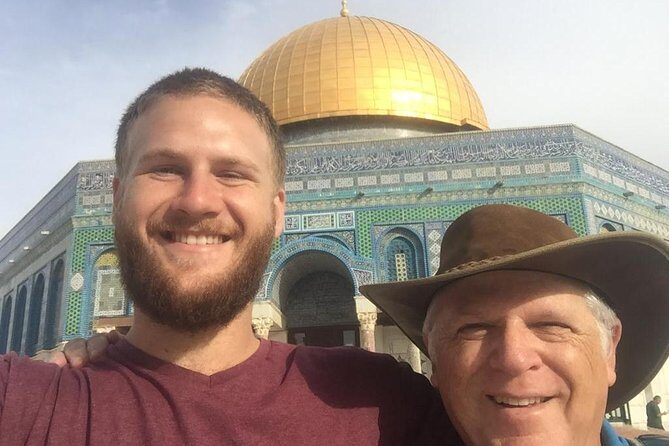
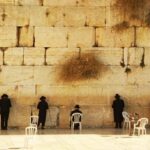
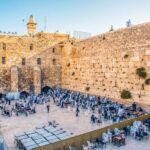
Then you reach the Western Wall, described as the last remains of the Holy Temple, where Jews have prayed and wept for redemption and return for centuries. The guide connects the Western Wall to its Temple-era proximity, then brings in the modern religious landscape around it.
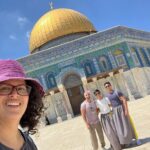
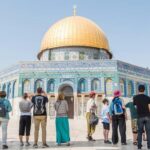
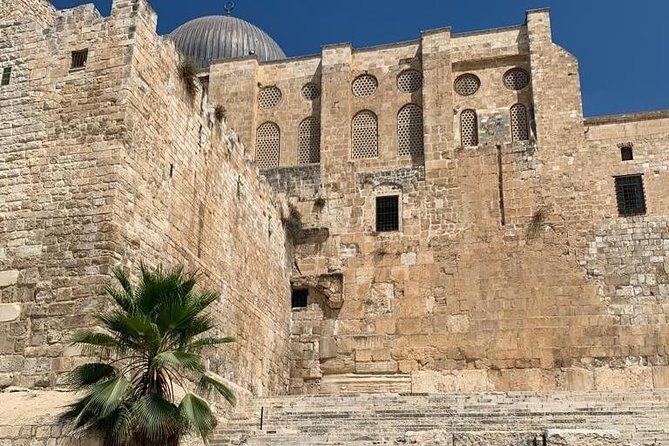
You’ll also see the Dome of the Rock and learn about the nearby El Aqsa Mosque, with context that helps the view make sense rather than just look striking. Another meaningful detail: you’re invited to pray and place a message in the wall. The tour includes time for that, even if you just want to watch how tradition works up close.
This stop is short—around 15 minutes—so it’s designed to give you the essence without turning it into a long waiting game. If you want more time for reflection, ask early so the guide can adjust the pacing.


Muslim Quarter: cotton makers, the bazaar rhythm, and the rise of Islam

The next area is the Muslim Quarter, where the tour leans into sights and stories through the bazaar. You spend time around the Market of cotton makers, described as about 600 years old and still active today. That detail is useful because it anchors the market in real continuity, not only in legend.
You also get sightlines back toward major landmarks, including the Dome of the Rock, while the guide explains the rise of Islam in the Land of Israel from 638 C.E. until today. Even if you’ve heard similar timelines before, the Old City geography makes it easier to visualize how history played out on specific streets.
Practical note: markets can be crowded and noisy. The tour time here is limited, so you’ll want to focus on what the guide points out rather than trying to browse everything.
Via Dolorosa and Lina hummus: walking the path, then taking a real break
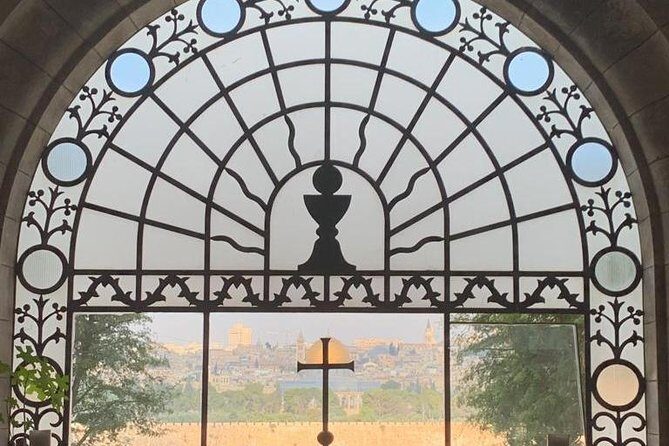
Next you walk parts of Via Dolorosa and visit the sites along the way connected with the steps of Jesus. This is one of the tour segments that feels like it’s meant for meaning as you move—because the route is the point.
You’ll also break for lunch at Lina, described as the best hummus restaurant in the city. Lunch is not included in the tour price, but building it into the plan helps because you’re not left guessing where to eat after a morning of holy sites.
If you’re trying to eat smart, choose a lunch pace that matches your afternoon energy. You’ll be heading to another major church stop after this.
Church of the Holy Sepulchre: crucifixion sites, anointing stone, and the tomb
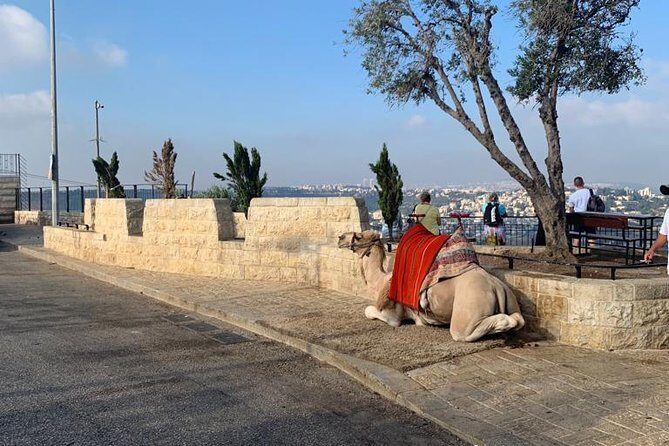
The final major stop is the Church of the Holy Sepulchre, where the guide focuses on the crucifixion, the anointing bed, and the tomb of Jesus. The tour gives about an hour here, which is a practical window: enough time to absorb the key points, but not so long that you lose energy in the crowds.
This is also one of the Old City places where the details matter. The same building can feel confusing without context. A guided visit helps you keep track of what you’re seeing and why it’s considered significant.
One consideration: churches like this can feel overwhelming if you come expecting quiet. Go in ready to manage the energy level and let your guide help you stay oriented.
How the tour stays flexible: half-day, full-day, and wheelchair adaptation
This tour is private, and you design the itinerary. That flexibility is the biggest value for many people because the Old City can be approached from different angles:
- More religious focus (Western Wall, Holy Sepulchre, specific Christian sites)
- More archaeology and engineering (City of David tunnels and water systems)
- More cultural history across quarters (Armenian and Muslim areas)
The guide can also adapt the route to be accessible for wheelchair users. That’s a meaningful factor here because the Old City is not an even, wide-smooth kind of place.
If you’re traveling as a family, a couple of friends, or a multi-generation group, private guiding often wins because you can set a pace that works for everyone instead of following strangers.
Price and value: paying per group, not per person
The price is $579.49 per group (up to 15). That’s not cheap on paper, but it can be a strong deal depending on how you travel.
Here’s how to think about value:
- You’re hiring a licensed guide for your group
- You get a custom route rather than a one-size script
- You’re covering major Old City highlights in one day, including the City of David tunnel portion with provided flashlights
- Most admissions listed for stops are free, which helps keep total costs predictable
If you max out the group size (15 people), the cost per person drops a lot because the price is not per head. If you’re only two or four in your group, it’s still a private experience, but you’re paying more for that privacy.
Duration is listed as 4 to 8 hours (approx.). This matters because the tour can shift between a half-day and a full-day experience depending on what you choose to emphasize.
Timing, meeting point, and ticket basics that keep things smooth
The tour starts at 8:00 am and meets at Jaffa Gate hostel. It ends back at the meeting point, so you aren’t dealing with extra transport planning at the end of a long day.
You receive a mobile ticket, and confirmation is received within 48 hours of booking, subject to availability. The meeting point is also noted as being near public transportation, which helps if you’re coordinating from another part of town.
For your planning: with an early start and a route that crosses multiple quarters, this is a good option when you want your Old City day to feel organized rather than improvised.
Who this tour suits best
I’d point you toward this tour if:
- You want an Old City day that feels structured but still personalized
- You prefer explanations with real context (politics, religion, and everyday culture)
- You like the idea of going beyond surface sights into the engineering side of Jerusalem, especially the tunnels
- Your group includes different interests and you want one guide to connect it all
It also works well for visitors who want a guided visit without losing control of the day. Private guiding means you can ask for more time at a stop that matters to you, and reduce time where you’ve already seen enough.
Should you book this Jerusalem Old City tour?
If you want the Old City to make sense as one connected story—from gates to quarters to prayer sites—this tour is a strong choice. The private, customizable format is the main reason to book, and the combination of places like City of David tunnels plus Western Wall plus Church of the Holy Sepulchre is hard to recreate well on your own.
Book it if:
- Your group includes people with varied interests
- You want a guide with both historical framing and personal perspective (Roni Peled’s background is a big part of why people love this tour)
- You’re ready for a day that’s active, not rushed
Skip it if:
- You want a slow, casual walk with no schedule pressure
- You’re uncomfortable with dark tunnel segments
If that fits you, this is a great way to turn Jerusalem from a list of landmarks into a city you understand.
FAQ
What is the cost per group?
The price is $579.49 per group, and the tour is for groups up to 15 people. It’s priced per tour, not per person.
How long is the tour?
The tour lasts 4 to 8 hours (approx.) and can be arranged as a private half-day or full-day guided experience.
Where do we meet, and where does the tour end?
You meet at Jaffa Gate hostel in Jerusalem, and the activity ends back at the same meeting point.
Is lunch included in the price?
No. Lunch at Lina (hummus) is mentioned as a break during the tour, but lunch is not included in the tour price.
Are the admission tickets included?
Most stops list free admission, but the City of David National Park segment shows that admission is not included.
Do I get a ticket on my phone?
Yes. The tour includes a mobile ticket.
Can this tour work for wheelchair users?
Yes. The tour notes that it can be adapted to be accessible for travelers with wheelchairs.
How soon will I get confirmation after booking?
Confirmation is received within 48 hours of booking, subject to availability.
What is the cancellation policy?
You can cancel for a full refund if you cancel up to 24 hours in advance of the experience’s start time. Free cancellation is available before that cutoff, and changes within 24 hours are not accepted.