REVIEW · TEL AVIV
Private Tour in Jaffa, Tel Aviv
Book on Viator →Operated by Booqify - Amazing Jerusalem · Bookable on Viator
Jaffa has layers you can feel. This private 6-hour route threads Jaffa Old City with Tel Aviv’s design-and-neighborhood story, mixing seaside-port history (Egyptians, Romans, Crusaders, and more) with modern city planning. I especially like the way a guide steers you from street to street with clear context, and I also love ending at Sarona Market where you can keep the day going with shopping or a real bite to eat.
One thing to plan for: a dress code applies at places of worship and selected museums. You’ll want knees and shoulders covered, since entry can be refused if you show up in shorts or sleeveless tops.
In This Review
- Key things to know before you go
- Why Jaffa and Tel Aviv fit together on one private walk
- Price and logistics: what $525 buys you
- Stop 1: Jaffa Old City—port-city stories from many rulers
- Stop 2: Neve Tzedek—gentrification with a clear before-and-after
- Stop 3: Rothschild Boulevard—electricity, water, and the birth of Tel Aviv
- Stop 4: White City—UNESCO International Style at human scale
- Stop 5: Sarona—Templars, WWII aftermath, and a market where the day ends well
- What I’d pay attention to when choosing this tour
- Who this tour suits best (and who might want a different style)
- Should you book this private Jaffa and Tel Aviv tour?
- FAQ
- How much does the private tour cost?
- How long is the tour?
- Is hotel pickup included?
- Is the tour private?
- What stops are included?
- Do I need to buy tickets for the stops?
- Is food included in the price?
- Is morning or afternoon timing possible?
- What dress code is required?
- Can I cancel for a full refund?
Key things to know before you go
- Private, small group feel: it’s just your group (up to 3), so you’re not stuck with a crowd pace.
- Jaffa’s multi-era port story: you’ll hear how Egyptians, Romans, Muslims, Crusaders, French (Napoleon), British, and Jews all shaped the area.
- Neve Tzedek’s big change arc: from a 19th-century slum almost erased to a high-end neighborhood with boutiques and fashion stores.
- Rothschild Boulevard planning details: including the Ahuzat Bayit plan with electricity, running water, and sewage—and the quick rename to Tel Aviv.
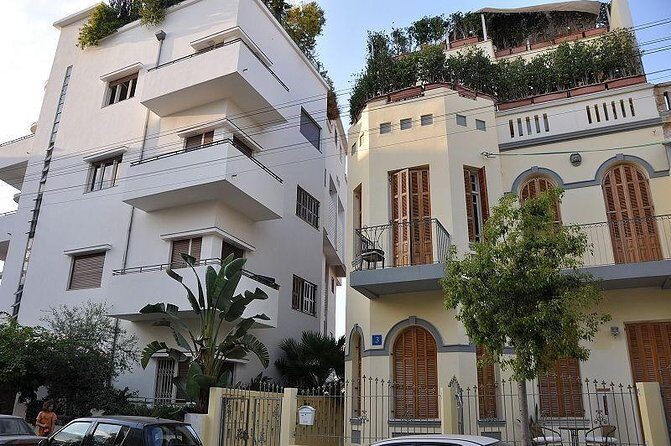
- UNESCO White City walking: the largest concentration of International Style buildings in the world, recognized by UNESCO.
- Sarona’s German Templar roots to modern market: renovated buildings now house shops, bars, restaurants, and an indoor food market.
Why Jaffa and Tel Aviv fit together on one private walk
Jaffa and Tel Aviv are often treated as separate stops, but they actually explain each other. Jaffa shows you the older port city shifts—conquest, administration, and migration—while Tel Aviv lets you see how people rebuilt and planned once the focus moved north.
What I like about this tour is that it doesn’t just toss names at you. The route moves in a logical line from waterfront history to neighborhood identity to the famous Bauhaus-era streetscape, then finishes with a place that feels made for lingering.
If you want a day that feels practical (good walking segments, defined stops, no wandering lost in translation), this style of itinerary makes sense.
You can also read our reviews of more private tours in Tel Aviv


Price and logistics: what $525 buys you
This tour costs $525 per group for up to 3 people, for about 6 hours. That’s not cheap if you’re traveling solo, but it can feel fair when you split the cost between two or three people—especially because you get a professional guide and a taxi from your hotel to Jaffa with the guide.
Plan on the tour being mostly walking between sites. Between stops, taxis are possible if you want to cut transit time, but they’re not automatically included throughout the route.
You also get a mobile ticket, which is a small thing but helpful when you’re moving between neighborhoods and don’t want to manage paper tickets in heat or sun.
Stop 1: Jaffa Old City—port-city stories from many rulers
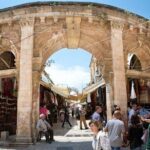
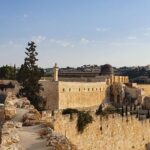
Jaffa Old City is the kind of place where the street layout itself feels like a clue. You’re walking through one of the world’s oldest working port cities, and the tour frames it as a place repeatedly taken over and reshaped by different powers.
Expect the guide to connect the dots across eras: Egyptians and Romans, Muslims and Crusaders, French influence tied to Napoleon, British administration, and then the Jewish return. The tour also points to Christian tradition, including the story that it was from Jaffa that Peter spread Christianity westward.
Then there’s the late-1700s Jewish neighborhood movement. The way the tour describes Jews heading north to start new neighborhoods helps you understand why Tel Aviv became its own story instead of staying locked as an outskirt.
What to watch for here
- You’ll likely do a fair amount of walking and standing, so bring comfortable shoes.
- If you’re hoping for a strict sightseeing-only day, consider setting the tone early with your guide so you get the right balance between stories and photos.
Stop 2: Neve Tzedek—gentrification with a clear before-and-after
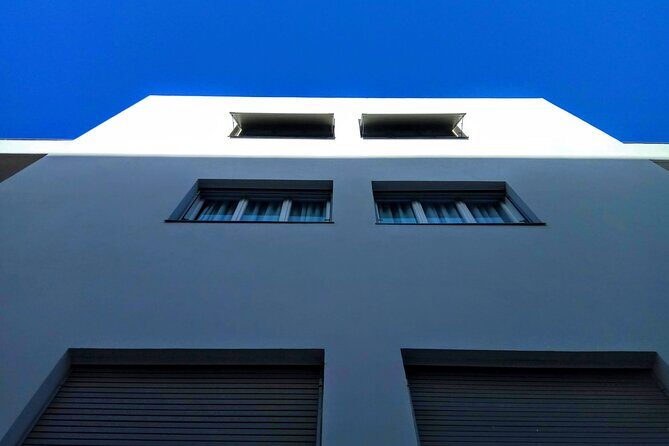
Neve Tzedek is the first Jewish neighborhood outside Jaffa, and the tour treats it as a lesson in how cities change. You’ll hear about its 19th-century start as a slum area that was almost destined to disappear.
Then the story shifts to how the area became much more desirable. In the tour framing, it goes from being an endangered neighborhood to becoming home to many of the city’s wealthier residents, with today’s streets lined with boutiques, cafés, restaurants, and fashion or jewelry stores.
Neve Tzedek is also a good break from the heaviest historical texture. Even if the day started with port-era layers, this stop gives you a chance to see what modern Tel Aviv looks like when it’s shaped by a real neighborhood past—not just a generic “new district” feel.
Possible drawback
Because this stop leans into the modern shopping-and-café vibe, it may feel less rewarding if you’re chasing only ancient history. Still, the neighborhood transformation story can be worth it if you like how cities evolve.
Stop 3: Rothschild Boulevard—electricity, water, and the birth of Tel Aviv
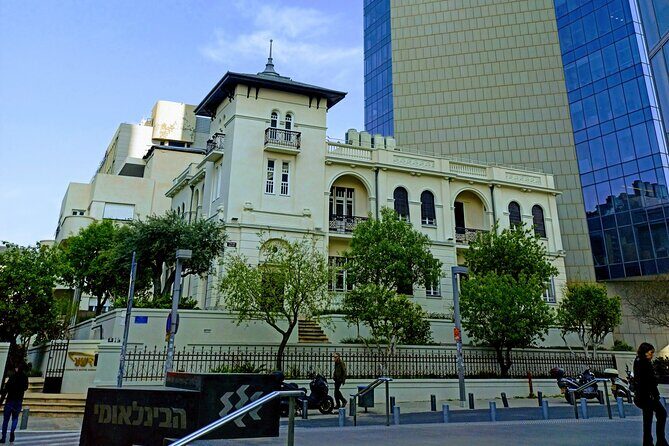
Rothschild Boulevard is where you start feeling the “planned city” energy. The tour’s explanation zooms in on a particular moment: in 1909, affluent Jews—arriving mainly from Eastern Europe—wanted quality infrastructure in a new neighborhood.
They built what was then called Ahuzat Bayit, and the guide highlights practical improvements like electricity, running water, and sewage systems. That focus on the basics is smart because it turns architecture and streetscape into something real: city-making.
Then the story moves fast. The neighborhood name changed to Tel Aviv the year after, and Rothschild Boulevard becomes one of the routes where you can feel that early ambition in how the area developed.
How to get the most out of this stop
Slow down and look at the building lines and street rhythm. This is one of those places where your guide’s framing helps you see details you’d otherwise miss when you’re just passing through.


Stop 4: White City—UNESCO International Style at human scale
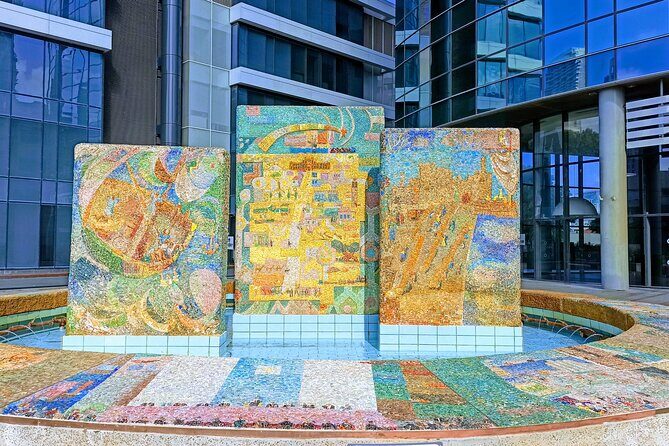
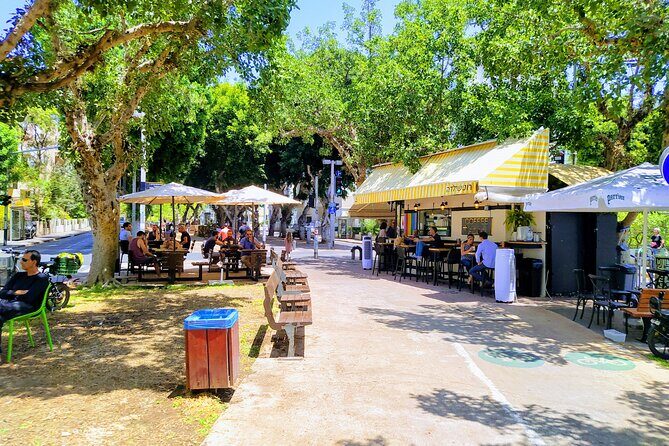
The White City is the reason people come to Tel Aviv for architecture, not only beach time. Here you’re walking through the largest concentration of buildings in the International Style in the world, and UNESCO recognized it as a World Heritage area.
A short walk might sound too brief for architecture this famous, but the time cap also works in your favor. It keeps you focused on the key viewpoints your guide wants you to notice, instead of turning the day into a long, slow architectural lecture.
Why this UNESCO stop is valuable
When you see the buildings as part of a design movement and not just background scenery, Tel Aviv feels different. The “why” behind the style becomes a story about the city’s modern aspirations—and the tour ties that back to the neighborhoods you saw just before.
If you’re prone to museum fatigue, this is a good way to get design context without the inside-room overload.
Stop 5: Sarona—Templars, WWII aftermath, and a market where the day ends well
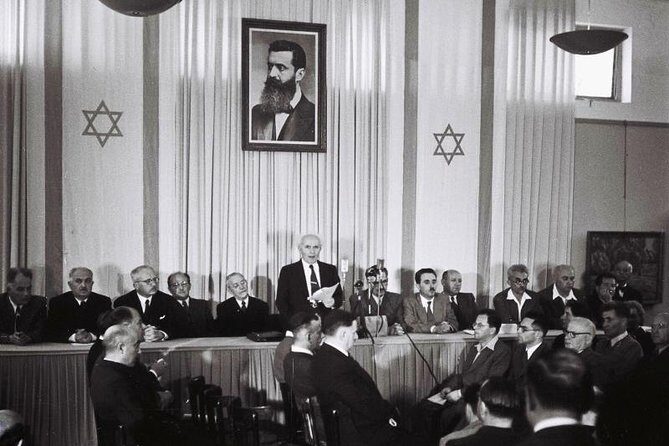
Sarona is both history and present-day convenience, and that combo matters. The tour starts with Sarona as an agricultural settlement founded in the second half of the 19th century by German Templars.
It then adds a difficult, specific turn: some Germans in the 1930s displayed swastika flags, and that wasn’t accepted by both the British and Jewish authorities. During WWII, many were expelled to Australia, and the tour uses that to explain how international politics bled into local streets.
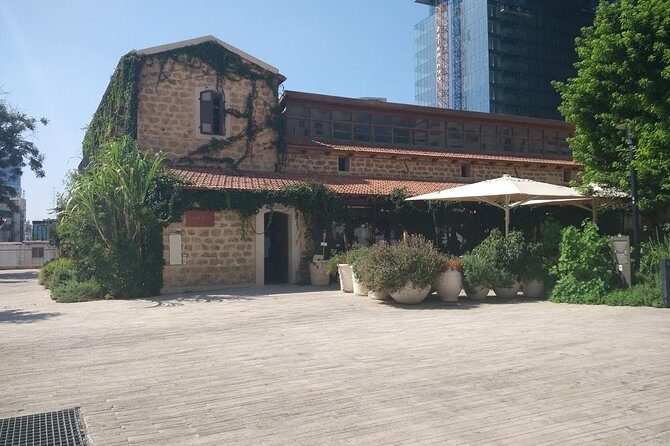
After 1948, Sarona became a headquarters for both the Israeli government and the Israeli army. The original buildings have since been renovated, and today the area functions as a popular shopping and dining zone with boutique shops, bars, and restaurants.
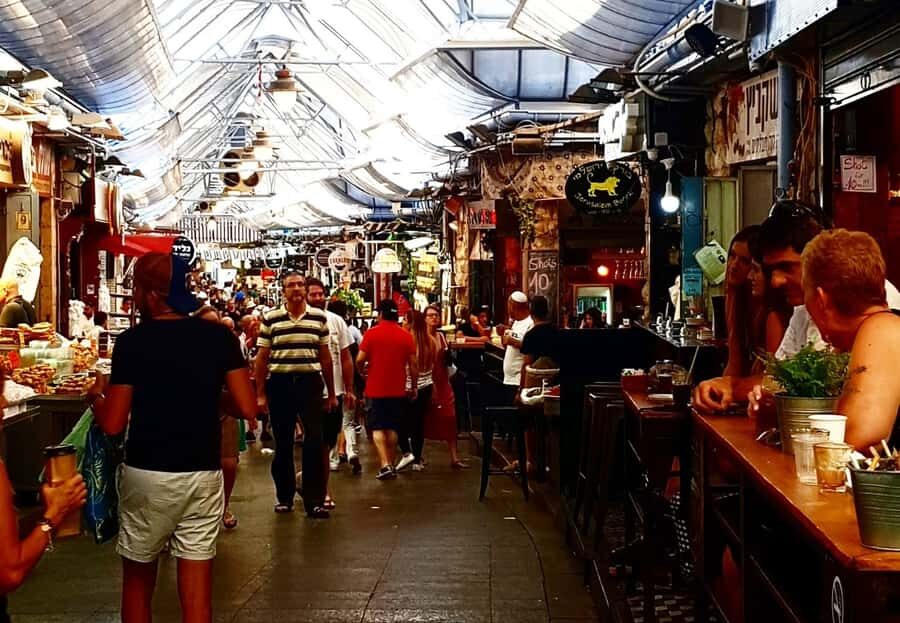
Then you get the practical payoff: the tour ends at Sarona Market. It’s a natural last stop because it lets you convert walking energy into actual time at your own pace—browsing, grabbing a snack, or just sitting down with air-conditioning and people-watching.
Tip for this final stretch
Keep some flexibility. Even if you think you’ll only browse for 10 minutes, Sarona Market is the kind of place where time disappears once you start choosing what to eat.
What I’d pay attention to when choosing this tour
The biggest praised strength is the guide quality. One highlight from past guests is that the guide was very effective at shaping the story, speaking fluent English, and making the tour feel worth the money.
That matters because this itinerary depends on explanation. Jaffa can look like a maze without context, and Tel Aviv’s architecture doesn’t hit the same without someone pointing out what to notice.
The other common theme is the balance of neighborhoods. You’re not just doing one “type” of day. You get old port streets, a neighborhood transformation story, a planned boulevards segment, major architecture, then a finish at a market where you can continue on your own.
One consideration: politics can be a time-sink with some guides. Based on an unhappy experience, a tour may occasionally spend too long on political debate instead of the sights. If you’re not in the mood for extended UN-related discussion during a walk, say so early and ask your guide to keep the pace photo- and street-focused.
Who this tour suits best (and who might want a different style)
This tour fits you if you want a guided route that covers multiple Tel Aviv “faces” without scrambling for transportation between far-apart points. It’s also a strong choice for couples and small groups who can split the group price and who like seeing how different waves of residents shaped the city.
You’ll also like it if you enjoy architecture and want the UNESCO White City stop explained in plain language. And if you like food and shopping, Sarona Market at the end makes the day feel complete.
Consider another option if you dislike any kind of political framing in the middle of a walking tour. You can’t avoid history in these places, but your comfort level with politics varies, and this is one area where guide style can matter.
Should you book this private Jaffa and Tel Aviv tour?
Book it if you want a single, efficient 6-hour day that ties together Jaffa, Neve Tzedek, Rothschild Boulevard, the White City, and a satisfying finish at Sarona Market. The best value comes when you’re traveling as a small group (up to 3), since the $525 price is built around that shared-group model and includes a hotel-to-Jaffa taxi plus a professional guide.
Skip it (or at least message your preferences) if you want a very low-history, low-politics day. Also plan your outfit carefully because the dress code can affect entry to worship sites and selected museums.
If you’re the type who likes your travel to make sense—where one neighborhood explains the next—this is a smart way to spend a day in Tel Aviv.
FAQ
How much does the private tour cost?
The price is $525 per group, up to 3 people.
How long is the tour?
It runs about 6 hours (approximately).
Is hotel pickup included?
Yes. Taxi transportation from your hotel to Jaffa with your guide is included.
Is the tour private?
Yes. It’s a private tour/activity, and only your group participates.
What stops are included?
The tour includes Jaffa Old City, Neve Tzedek, Rothschild Boulevard, the White City, and Sarona (ending at Sarona Market).
Do I need to buy tickets for the stops?
The stop admissions listed for this experience are free, and you also receive a mobile ticket.
Is food included in the price?
No. Food and drinks are not included, but the tour ends at Sarona Market where you can browse or grab a meal.
Is morning or afternoon timing possible?
Yes. The tour offers morning or afternoon options and can be customized to fit your schedule.
What dress code is required?
For places of worship and selected museums, knees and shoulders must be covered. No shorts or sleeveless tops, and you may be refused entry if you don’t meet the requirements.
Can I cancel for a full refund?
Yes. You can cancel up to 24 hours in advance for a full refund. Cancellation within 24 hours is not refundable.