REVIEW · TEL AVIV
From Tel Aviv: Jerusalem Old & New City Bus Tour
Book on GetYourGuide →Operated by Bein Harim Israel Tours · Bookable on GetYourGuide
Jerusalem gets packed into one full day. This Tel Aviv–to–Jerusalem tour strings together the big, moving parts of the city: Old City quarters, the Church of the Holy Sepulcher, panoramic stops from the Mount of Olives, and a later visit to Yad Vashem.
I like the way it gives you an instant sense of place. You start with wide views over Old and New Jerusalem, then you actually walk through the old quarters—Jewish, Armenian, the Cardo area—so the history sits in the streets, not just on a page.
One thing to plan for: it’s a lot of walking in heat, and the schedule is tight. If you want long hangs in one holy site or a slow browse through the Old City, this day tour may feel rushed.
In This Review
- Key points before you go
- From Tel Aviv to Jerusalem’s viewpoint: timing that makes sense
- Old Jerusalem walking route: Jewish and Armenian Quarters without losing the plot
- The Western Wall to the Via Dolorosa: a moving corridor of faith
- Mt. Zion: another perspective on Jerusalem’s layers
- Yad Vashem later in the day: somber, structured, and not built for rushing
- What I like most: guides, pacing, and the value of seeing it all
- The main drawback: tight time, heat, and shopping stops
- How to get the most out of the day: practical tips that matter
- Who this tour is best for
- Should you book the Tel Aviv–Jerusalem Old & New City Bus Tour?
- FAQ
- Is food included on this tour?
- Does the tour include entry fees?
- What sites are closed on Fridays, Saturdays, and Jewish holidays?
- Is modest dress required?
- Can I visit the Temple Mount on this tour?
- Is there a Russian-speaking guide for Yad Vashem?
- Are children allowed?
- Is the tour wheelchair-friendly?
Key points before you go
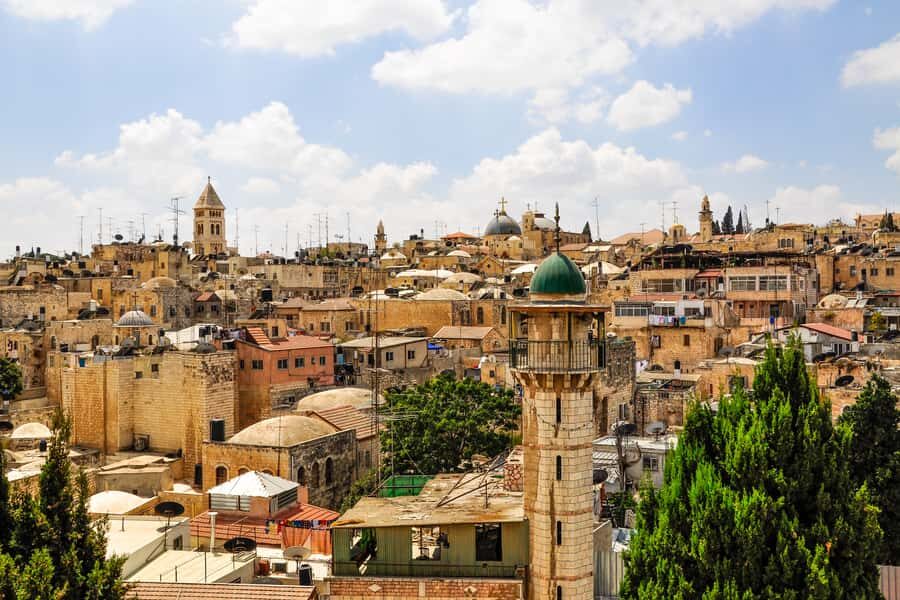
- Mt. of Olives panorama first, so you understand Jerusalem before you start squeezing into the Old City lanes.
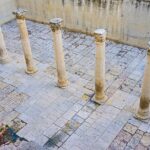
- Guided walks through the Jewish and Armenian Quarters and along the restored Cardo (Roman road).
- A route that connects the Western Wall (Kotel) with the Via Dolorosa and onward to the Church of the Holy Sepulcher.
- Yad Vashem later in the day with audio support (headphones provided), plus special closing-day substitutions.
- You’ll see how the day works in practice, thanks to guides who manage groups efficiently through crowds and busy intersections (Avi, Itamar, Coby/Kobi, Dani, and others are mentioned by name in past groups).
From Tel Aviv to Jerusalem’s viewpoint: timing that makes sense
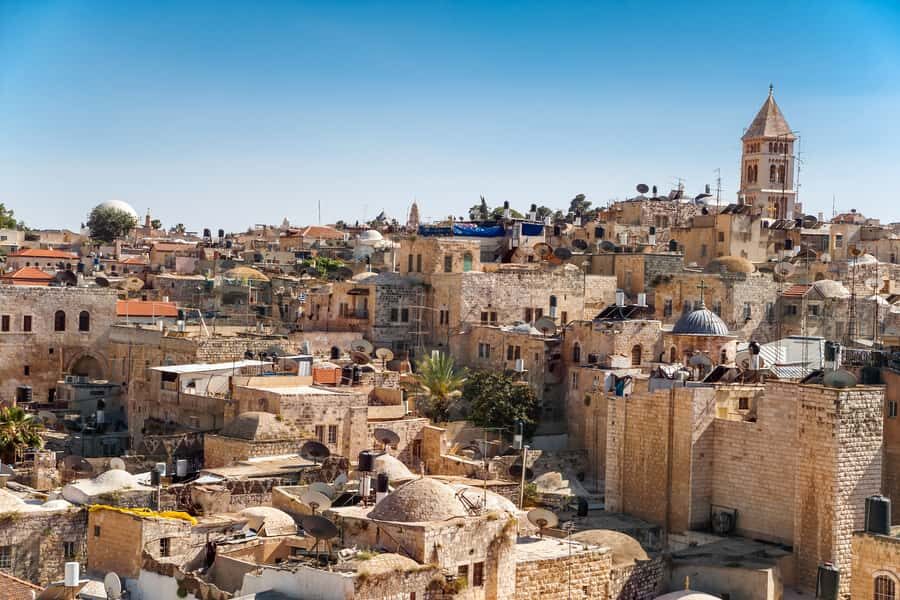
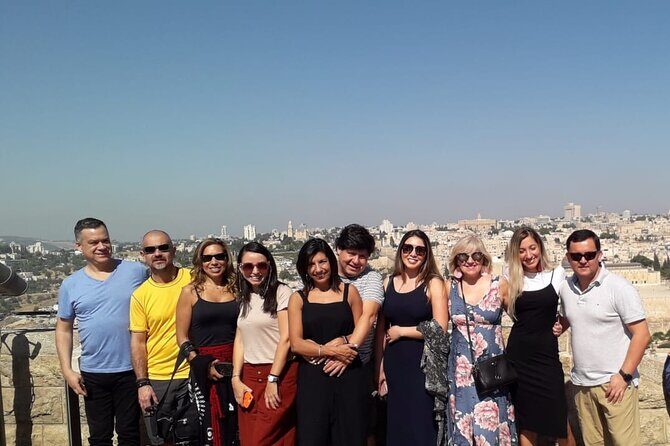
A day in Jerusalem starts before you even reach the Old City. You’ll be picked up in Tel Aviv by air-conditioned coach, then taken to the city so you can get one of the first rewards early: a broad look from the Mount of Olives.
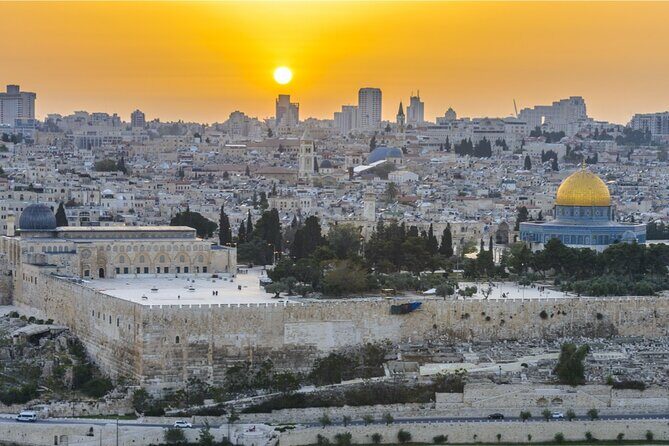
That panorama matters more than you might think. From up there, Jerusalem stops being a map and becomes a layered city—Old walls, New neighborhoods, hills, and valleys that help you picture where the next stops actually fit. It also gives you a natural “reset” before the walking begins, especially if your first impression is usually chaos.
After the drive, you’ll shift into guided storytelling mode. The goal is not just to name places, but to explain why they matter to different communities and eras. That’s where the guide quality really shows. Past groups specifically singled out guides like Avi and Itamar for being organized, funny, and very engaged, which helps when you’re moving fast and your day is full.
You can also read our reviews of more city tours in Tel Aviv
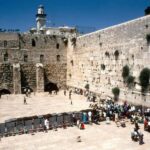

Old Jerusalem walking route: Jewish and Armenian Quarters without losing the plot
Once you enter the Old City area, the day turns into a guided walk through neighborhoods, not a drive-by list. You’ll go through the Jewish Quarter and the Armenian Quarter, then spend time around major historic focal points like the Cardo, described as the restored Roman road you can see from the area near the Jewish Quarter Street.
This is one of the tour’s best values: the Old City is a maze. Without context, you can see stunning things and still leave feeling disoriented. With a guide, you get the “why” behind what you’re seeing—what the Cardo represents, why these quarters developed the way they did, and how the streets connect to key religious sites.
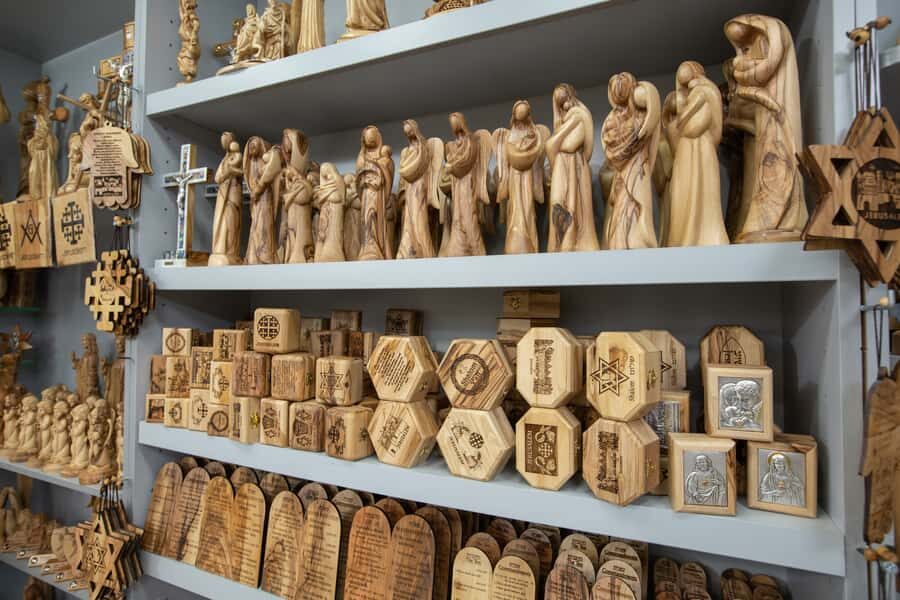
You’ll also have bazaar time, which is useful if you want to pick up small gifts and snacks that match Jerusalem life. Just keep your expectations realistic. Some people prefer more quiet time in the churches or less time at shopping stops; the tour is structured, and you’ll follow that structure. If you like to wander independently, plan to use your short free moments well.
The Western Wall to the Via Dolorosa: a moving corridor of faith

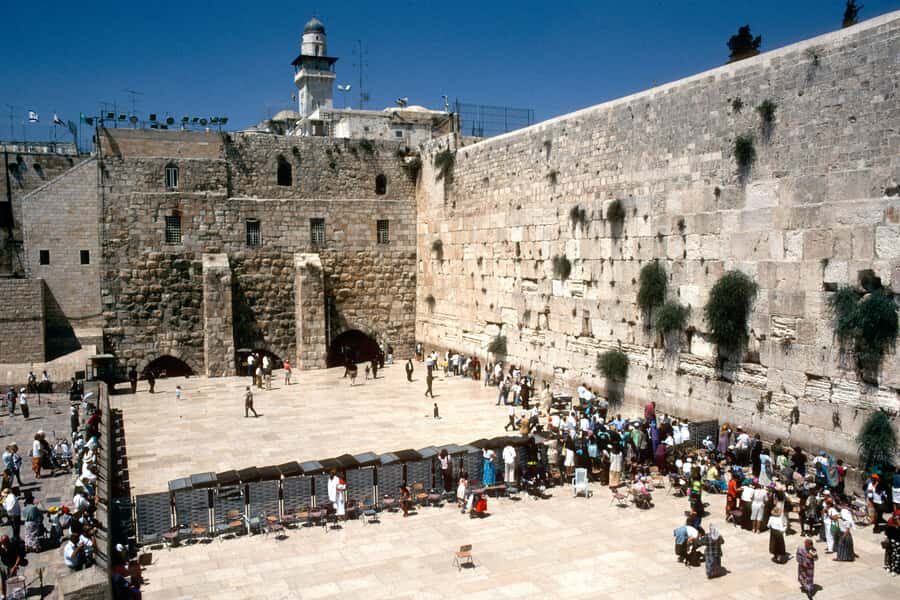
The route links three touchstones that many visitors see only one at a time. You’ll visit the Western Wall (Wailing Wall / Kotel), then continue toward the Via Dolorosa leading to the Church of the Holy Sepulcher, also known as the Church of the Resurrection.
For many first-timers, the Kotel is the emotional anchor. It’s one of those places where even if you don’t fully share the religious framing, you understand the significance instantly. From there, walking the Via Dolorosa adds a different rhythm: it’s not just about one monument, it’s about a sequence of stops along a corridor. That makes the guide’s explanation feel practical. You start to notice patterns—how people move, where the crowd bottlenecks happen, and why timing matters.
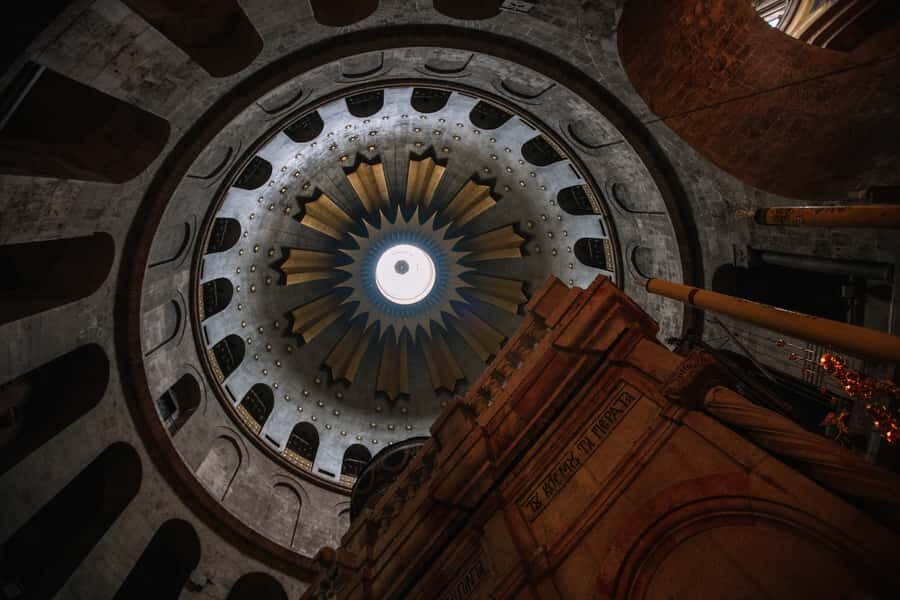
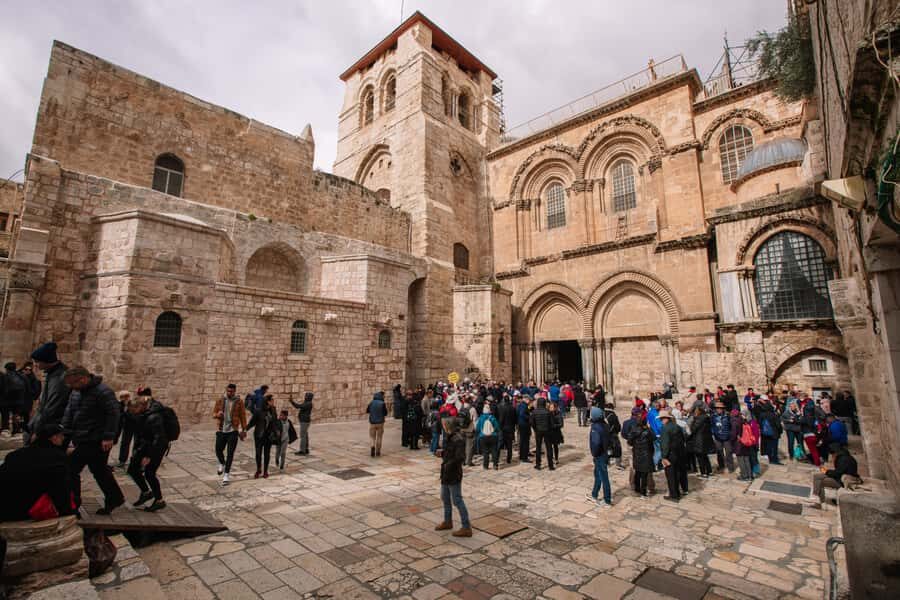
Then the tour reaches the Church of the Holy Sepulcher. This is one of those legendary sites that can overwhelm you if you don’t know where to focus. The Church is complex—multiple points tied to different traditions—and the time you have on a single day tour is limited. So your best strategy is simple: listen closely early, then look slower once you’re inside.
Mt. Zion: another perspective on Jerusalem’s layers
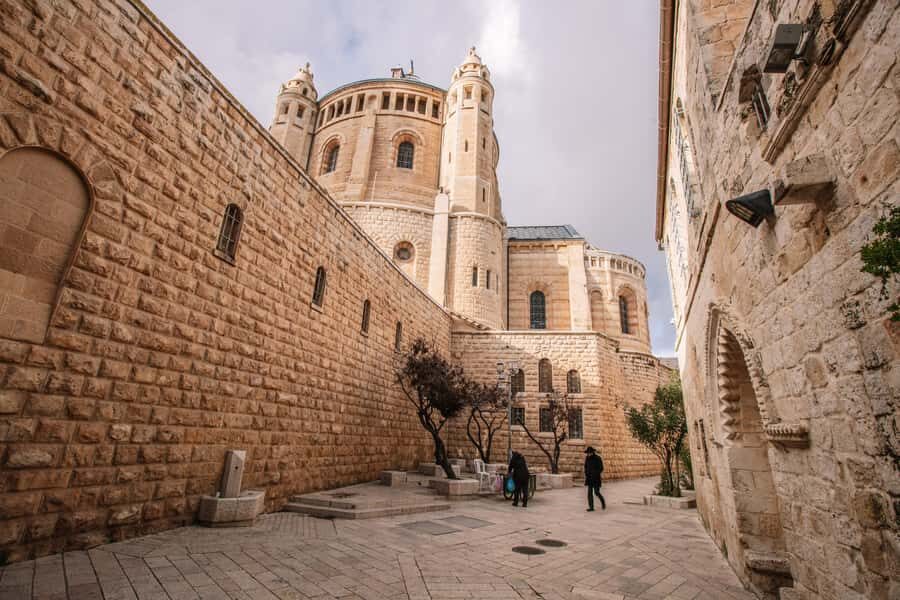
After the Old City core, you’ll climb toward Mt. Zion. This part works well after you’ve already walked a lot, because the emphasis shifts from narrow lanes to a more expansive sense of “place.”
The tour also includes different options depending on the day. On Saturdays, you can visit sites like the Hall of the Last Supper and David’s Tomb. That’s a big deal if your trip lines up with the weekend, because it adds key religious and historical stops that aren’t always accessible in the same way on other days.
If your trip isn’t on a Saturday, don’t worry—you’ll still get the Mt. Zion segment and the city’s viewpoint logic. The value is the transition: you’re moving from the Old City’s tight geography into another important hub that helps you see how Jerusalem’s sacred map spreads beyond the walls.
Yad Vashem later in the day: somber, structured, and not built for rushing
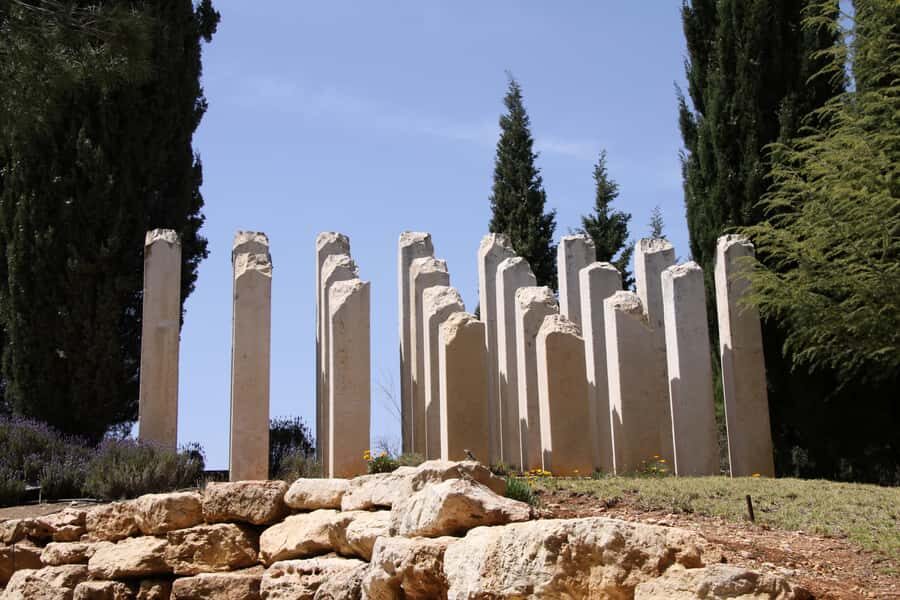
Then comes the day’s hardest stop: Yad Vashem Holocaust Museum. You’ll head there in the later part of the day by car. The museum complex includes multiple sections, but the museum itself draws the crowds since it opened in 2005.
This is where the tour’s structure really matters. You’ll get entry included, plus audio guiding with headphones provided at Yad Vashem. That’s practical if you want your own pace inside the galleries, but also need guidance to keep track of the big story. It’s also noted that a Russian-speaking guide is not available at Yad Vashem—so headphones and audio are the plan.
One key detail for families: children under 10 years old can’t enter the Holocaust Museum. If you’re traveling with kids around that age range, this tour isn’t a simple yes/no. You’ll want to double-check alternatives on the day.
Also, on Fridays, Saturdays, and Jewish holidays, the museum is closed. The tour switches to other sites such as the King David’s Tomb, the Hall of Last Supper, and the Church of all Nations at the Garden of Gethsemane. That substitution keeps the day moving without leaving you with a blank afternoon.


What I like most: guides, pacing, and the value of seeing it all
This tour’s highest praises center on the human factor: the guide. Many past participants named guides like Itamar, Avi, Coby/Kobi, Dani, Leat, Shalev, and others, often describing them as friendly, engaging, humorous, and very good at managing a group through the crowds.
That matters because the itinerary hits heavy, high-demand places. Jerusalem can feel like a constant negotiation with crowds. When a guide is sharp at logistics, you spend more time looking and less time panicking about where everyone is. Several reviews mention that guides handled busy areas calmly and efficiently, including with large groups moving together.
I also like the mix of old + new. The itinerary isn’t just “holy sites only.” You get time for Jerusalem’s modern layout too—at least through the travel between areas and the emphasis on both Old City quarters and the new-city museum stop. You leave with a clearer idea of how Jerusalem functions as a living city, not a set of postcards.
Finally, the comfort piece is real. You get an air-conditioned coach with pickup and drop-off in Tel Aviv. For a day that involves a lot of walking, that comfort isn’t a luxury—it’s part of the value equation.
The main drawback: tight time, heat, and shopping stops
Let’s talk about the stuff that can bug you, because it’s common in a one-day Jerusalem plan.
First: the day is intense. You’ll be walking through multiple quarters and key religious sites. Jerusalem isn’t flat, and temperatures can be high. The tour asks you to bring sunglasses, a sun hat, and sunscreen, which is a big hint that you’ll spend real time outdoors. Bring water if you can, and wear shoes you don’t mind breaking in.
Second: you’re on a schedule that prioritizes “see everything.” Some people feel they don’t get enough quiet time inside the most meaningful spots. A related issue: there can be time spent at stops that feel like shopping. A few comments point out tourist-trap vibes such as quick stops (for example an Elvis-themed coffee stop is specifically mentioned), plus bazaar and restaurant time. Those breaks can help the group stay organized, but they can also cut into the moments you might want for slower viewing.
Third: group logistics are not trivial. One review notes collection/pickup can run longer than expected, and another mentions time lost shuffling people between bus tours or managing multiple groups. Even when it’s handled well, it’s still time you can’t get back.
How to get the most out of the day: practical tips that matter
If you book this, you’ll have the best time if you go in with the right mindset: this is an overview tour, not a slow pilgrimage. You’re there to understand Jerusalem, not to spend hours inside every door you pass.
Here’s how to set yourself up:
- Wear comfortable, grippy shoes. You’ll walk a lot across uneven surfaces.
- Follow the modest dress requirement for holy sites. Even if you’re not religious, it keeps you from getting turned away or uncomfortable.
- Use your guide’s explanations to choose what to focus on. With limited time at big sites, listening first helps you look smarter.
- Plan your energy for Yad Vashem. It’s emotionally heavy, so don’t schedule it like it’s just another stop.
- If you love photos, know that Old City crowds can limit angles. It’s often better to pause and watch people for a minute than to chase the perfect shot.
If your dream is deep Temple Mount time or hours at one church, you’ll probably want to come back later on your own. But for many visitors, this day tour is the fastest path to getting oriented and deciding what you want to revisit.
Who this tour is best for
This experience is a strong fit if you:
- Have limited time in Tel Aviv and want a full day that covers the main Jerusalem highlights.
- Like guided history and explanations that connect places you might otherwise treat as isolated stops.
- Want the essential Old City route plus Yad Vashem in one organized package with pickup and drop-off.
- Enjoy humor and storytelling from a guide—multiple reviews specifically praise guides for being entertaining while still factual.
It may not be ideal if you:
- Want lots of unscheduled free time in the Old City.
- Are sensitive to crowd flow and tight transitions between stops.
- Need accessibility accommodations, since the tour is not suitable for wheelchair users and there are age limits for Yad Vashem.
Should you book the Tel Aviv–Jerusalem Old & New City Bus Tour?
I’d book it if your goal is a one-day, guided orientation to Jerusalem that hits the big emotional and historical landmarks, including Yad Vashem. The value is strongest when you want structure: air-conditioned transport, entry fees handled, a professional guide, and a day built to keep you moving without leaving you lost.
I’d think twice if you want long, unhurried time at each site or you know you’ll get stressed by a packed schedule and shopping-oriented breaks. In that case, you might prefer a slower itinerary with fewer stops.
If your timing matches and you can handle the walking and the emotional weight of the museum, this tour gives you a lot to work with for the rest of your trip. You’ll finish the day with a clearer Jerusalem in your head—and specific places you’ll want to return to.
FAQ
Is food included on this tour?
No. Food and drink are not included.
Does the tour include entry fees?
Yes. Entry fees are included.
What sites are closed on Fridays, Saturdays, and Jewish holidays?
On those days, the Holocaust Museum is closed. The tour visits other places such as King David’s Tomb, the Hall of Last Supper, and the Church of all Nations at the Garden of Gethsemane instead.
Is modest dress required?
Yes. Modest dress is required for holy sites.
Can I visit the Temple Mount on this tour?
The tour includes the Temple Mount area in its main attractions. Note that access can be time-restricted for tourists depending on the rules in place that day.
Is there a Russian-speaking guide for Yad Vashem?
No. A Russian-speaking guide is not available at Yad Vashem. Audio guiding and headphones are provided instead.
Are children allowed?
Children under 4 years old are not permitted. Children under 10 years old are not permitted to enter the Holocaust Museum.
Is the tour wheelchair-friendly?
No. The tour is not suitable for wheelchair users.