REVIEW · TEL AVIV
Holy Jerusalem Full Day Tour from Tel Aviv
Book on Viator →Operated by Click Tours · Bookable on Viator
Jerusalem clicks into focus fast. This full-day tour strings together the major religious and historic highlights in and around Jerusalem’s Old City, so you get your bearings early and see the places that shape the story of the city.
I like that you get professional, multilingual guidance (English, German, French, Spanish), not just a list of stops. I also like how it pairs the Old City’s key sites with a visit to Yad Vashem, so the day has both spiritual and historical weight.
One possible drawback: the day runs about 10 hours and the schedule is tight, so expect lots of walking, standing, and waiting for access at holy sites.
In This Review
- Key things I’d zero in on
- Getting oriented on Mt. Scopus, Temple Mount, and Gethsemane
- Entering the Old City through Zion Gate and powering through the highlights
- The Western Wall stop: the Kotel moment you can actually take part in
- Via Dolorosa and the Church of the Holy Sepulchre, with less guesswork
- Yad Vashem and the “museum closed” switch on holy days
- Price, logistics, and whether it’s good value for your time
- What to pack and how to pace yourself on holy-site days
- Who this tour suits best
- Should you book Holy Jerusalem Full Day Tour from Tel Aviv?
- FAQ
- How long is the Holy Jerusalem full day tour?
- What does the tour include?
- Where does the tour pick you up and drop you off?
- Where is the meeting point?
- Which languages are available for the guided tour?
- Do I need a certain dress code for holy sites?
- Is food included during the tour?
- Are children allowed, and are there restrictions for Yad Vashem?
- What happens if the Holocaust museum is closed?
- How does cancellation work?
Key things I’d zero in on
- Small-Group Energy (max 40): big sights, but still manageable with a guide keeping you on time
- Temple Mount and Old City entry plan: you don’t waste hours guessing where to start
- Western Wall prayer moment: a clear, meaningful stop with time to participate
- Holy Sepulchre and Via Dolorosa route: you follow the logic instead of getting lost in crowds
- Yad Vashem with a contingency plan: if it’s closed (Fri/Sat and Jewish holidays), the tour pivots to Garden of Gethsemane sites
Getting oriented on Mt. Scopus, Temple Mount, and Gethsemane

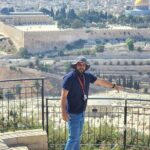
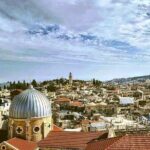
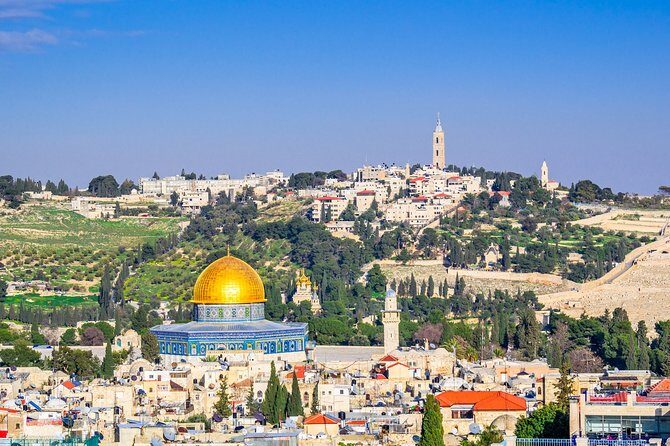
The tour starts with a view-first moment at Mount Scopus National Botanical Garden, with panoramic overlooks over Jerusalem’s skyline. I like this opening because it gives your eyes a framework before you plunge into narrow streets and stone walls later.
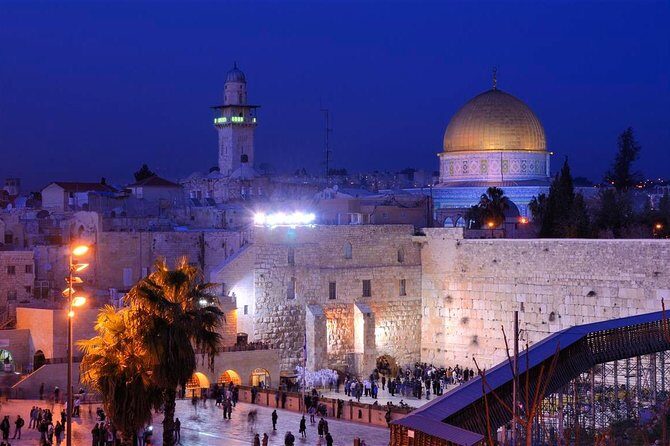
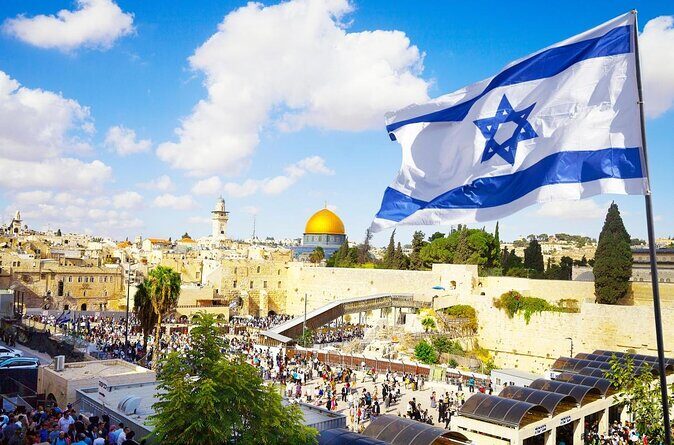
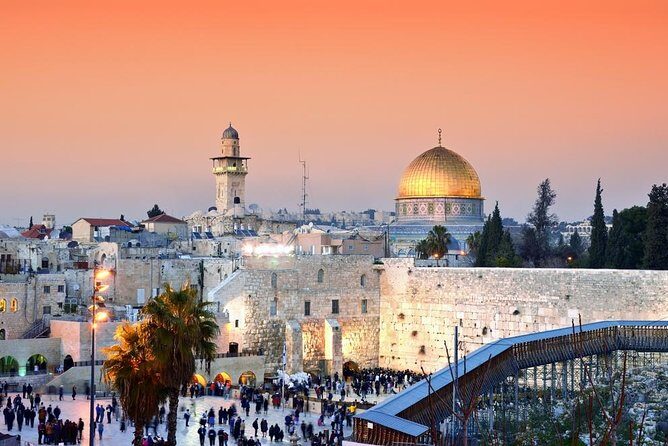
Then the route turns toward the Temple Mount area. From the viewpoint, you’ll see the golden dome of the Dome of the Rock and get the kind of photo that actually helps you connect what you’re seeing to what’s written in religious texts. You’ll also pass by a 3,000-year-old Jewish cemetery, which is a reminder that this city layers eras on top of eras.
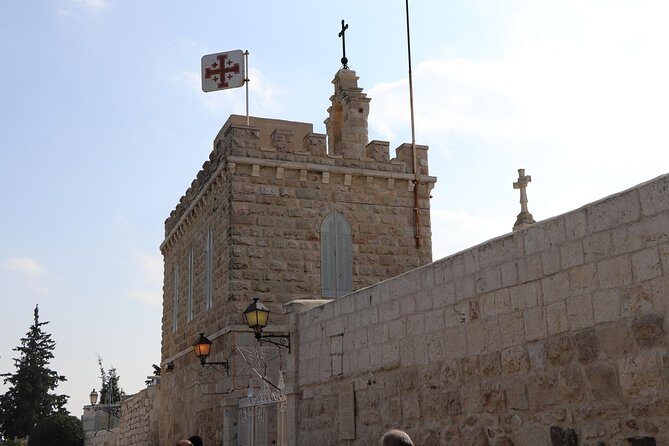
From there, you move along the Garden of Gethsemane area, plus you’ll pass key nearby landmarks like the Church of All Nations and the Kidron Valley. These are often “pass-by” stops on group tours, but here they work as waypoints: even if you don’t linger long at every spot, you’re building a mental map of how the neighborhoods and holy sites relate.
Modesty rules matter on this tour. You should plan for modest dress and head covering for holy sites, plus comfortable shoes because the day is not a sit-and-watch arrangement.
A few more Tel Aviv tours and experiences worth a look

Entering the Old City through Zion Gate and powering through the highlights
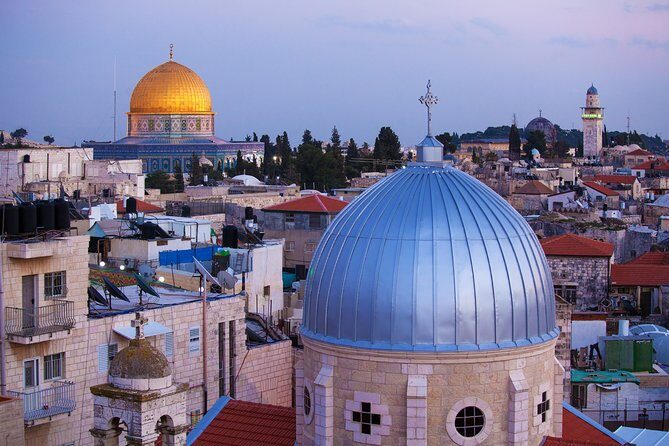
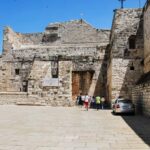
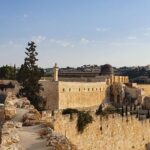
Next you head into the Old City via Zion Gate to visit the most important historical sites. This is where the tour earns its “first-time visitor” reputation, because you’re not trying to stitch together a do-it-yourself route with limited time and a maze of entrances.
You’ll spend about 2 hours in the Old City area, with guided stops and “pass by” moments around neighborhoods like the Armenian Quarter. The value here is context. A guided route helps you understand why some areas feel close together but historically belong to different communities and time periods.
A key mid-route stop is the Cardo, specifically the 1500-year-old Byzantine Cardo. You get about 30 minutes here, enough time to notice the street scale and imagine how this area functioned long before modern Jerusalem. I’m a fan of this kind of stop because it turns the Old City from an overwhelming set of photos into something you can actually picture.
Right after, you move into the Jewish Quarter for another brief guided look at the historic area, again about 30 minutes. This segment helps you see the Old City as more than a single holy landmark. It’s a living grid of buildings, streets, and community spaces where history shows up in everyday texture.
Practical note: Old City walking can feel like a constant slope of entrances, steps, and narrow passages. Even with a guide, you’ll want to keep your energy for the later big stops.
The Western Wall stop: the Kotel moment you can actually take part in
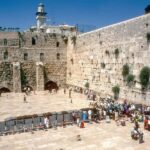
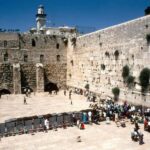
The Western Wall (the Kotel) is one of the clearest “pause and participate” moments on the day. You’ll have about 20 minutes at the wall, and the timing is set so you can join others from around the world to place a prayer note between the stones.
What I like about this stop is that it’s not treated like a quick photo break only. You get time for the simple, human act of being there, reading the mood around you, and deciding how you want to take part. The wall itself is a supporting structure associated with the Temple Mount complex, and it has long been a place of prayer since the destruction of the Temple in 70 CE.
The Kotel experience can be emotional. That’s not the tour’s fault, it’s just the nature of the place. If you’re someone who gets moved by quiet religious sites, you’ll probably love this stop. If you prefer fast and factual, you’ll still appreciate the structure of the visit and the way the guide keeps things respectful and organized.
Via Dolorosa and the Church of the Holy Sepulchre, with less guesswork
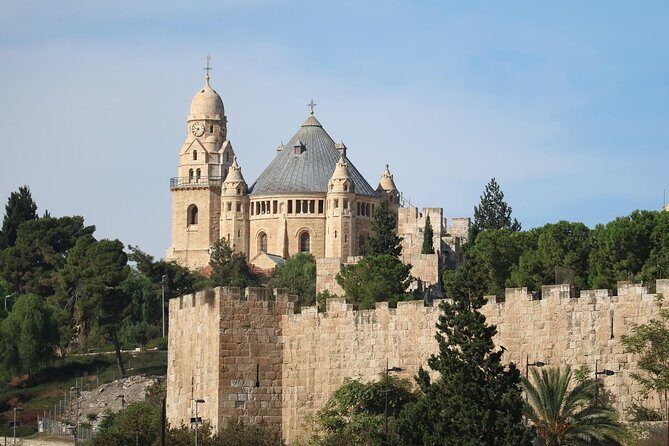
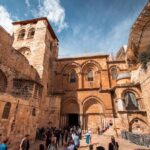
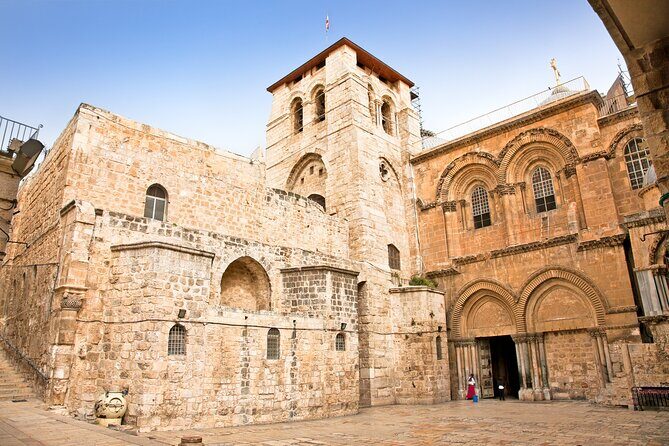
The tour then shifts to the Christian Quarter, followed by the Way of the Cross (Via Dolorosa) area and the Church of the Holy Sepulchre. This is a major concentration of pilgrimage sites in a small area, and without guidance you can end up walking in circles while trying to match what you read to what’s physically in front of you.
You’ll spend about 30 minutes exploring the Via Dolorosa area, then another 30 minutes at the Church of the Holy Sepulchre. The church is described as being built on the site associated with Jesus’ crucifixion and his burial tomb. Again, the key here isn’t only the landmark itself; it’s that the tour keeps the route logical so you can follow the story in the places where it’s traditionally located.
You’ll also pass by the Muslim Quarter and the lively bazaar. Even when you’re not stopping, seeing the texture of the Old City markets and street life is part of understanding that Jerusalem isn’t a museum. It’s a working city with real crowds, real commerce, and real neighborhoods.
If you’re sensitive to crowds and slow movement in narrow streets, build patience into your day. This section is where group pacing matters most, and a professional guide helps keep you moving when access is constrained.
Yad Vashem and the “museum closed” switch on holy days
The final major chapter is Yad Vashem – the World Holocaust Remembrance Center. The visit is about 1 hour 30 minutes, and it focuses on discrimination, persecution, and the annihilation of Jewish communities across Europe through artifacts and photographs. It also honors people described as Righteous among the Nations, those who risked their lives to save Jews.
This stop carries real gravity, and I think that’s why the tour includes enough time here. You’re not rushed through on a quick drive-by. You’re given space to absorb the message, even if you find yourself taking breaks to process what you see.
Two important practical notes based on the tour info:
- Children under 10 are not allowed inside the Holocaust museum.
- On Fridays, Saturdays, and Jewish holidays, when the Holocaust museum is closed, the tour substitutes the visit with the Church of All Nations at the Garden of Gethsemane and also includes the King David’s Tomb and the Hall of the Last Supper on Mount Zion.
That contingency is genuinely useful. A lot of tours fall apart when museums close. Here, you still get meaningful sites tied to the day’s schedule.


Price, logistics, and whether it’s good value for your time
At $140 for an approximately 10-hour full-day guided tour, value comes down to one thing: how much you benefit from having a plan stitched together for you. You get hotel pickup and drop-off (Tel Aviv, Netanya, Herzliya, or Jerusalem), a professional guide, and an air-conditioned vehicle. You also get a mobile ticket, which cuts down on last-minute hassle.
What’s especially helpful is that the itinerary lists admission tickets as free for the stops shown. Even when some places can charge separately depending on timing, it’s still a big advantage to have most of your core stops handled within the same price.
The group size cap is 40 travelers. That matters. With 40, you can still hear the guide and form a shared rhythm, but it’s not so large that you’re just a number in a stampede.
Food and insurance are not included, though. Also, you’ll want to budget energy. If you’re the type who needs long meal breaks and slow pacing, this might feel more intense than you expect. If you like a structured day where you see the headline sights and then go deeper on your own in the evening, this fits nicely.
What to pack and how to pace yourself on holy-site days
The tour recommends comfortable walking shoes, a hat, and sunscreen. I’d add one more practical idea: carry a small water bottle when you can, since food and drinks aren’t included. Heat and sun exposure are real in Jerusalem, and dehydration can sneak up fast when you’re moving between sites.
Dress matters too. You’ll need modest dress and head covering to visit holy sites. For many visitors, this is the difference between a smooth experience and an awkward scramble at the start of the day. If you don’t travel with a scarf or covering already, consider preparing one.
Time awareness also helps. Even with a guided plan, the Old City is the Old City—steps, narrow passages, and crowd flow. If you want clear photos, aim to let your guide handle positioning so you’re not constantly stopping and starting.
Who this tour suits best
This is a strong match if:
- you’re visiting Jerusalem for the first time and want the big anchor points of the city in one day
- you prefer guided interpretation over reading alone
- you want a single-day format that covers Temple Mount views, Old City quarters, the Western Wall, Christian holy sites, and Yad Vashem
It may not be ideal if:
- you’re traveling with someone who needs a lot of downtime during the day
- you want lots of free time to roam without a schedule
- you’re traveling with children who might struggle with the walking pace or the under-10 museum rule
Should you book Holy Jerusalem Full Day Tour from Tel Aviv?
I’d book it if your priority is getting oriented fast and seeing the defining places with a guide who can explain what you’re looking at. The structure is built for first-timers: Old City entry, Cardo and quarters, a real Western Wall moment, Christian Quarter landmarks, and then Yad Vashem with a time slot that’s long enough to matter.
I’d skip or reconsider if you’re hoping for a slow, flexible day with minimal crowds and maximal downtime. This is more “organized immersion through the headlines” than “choose-your-own-adventure.”
If you’re planning to go on a Friday, Saturday, or Jewish holiday, double-check expectations about the Holocaust museum swap. The tour’s substitution plan keeps the day meaningful, but it does change what you’ll see at the end.
Either way, come prepared for a long day, dress for holy sites, and you’ll get far more from Jerusalem than you would by trying to piece it together alone.
FAQ
How long is the Holy Jerusalem full day tour?
It runs for approximately 10 hours.
What does the tour include?
You get hotel pickup and drop-off, a professional guide, and an air-conditioned vehicle. Admission tickets are listed as free for the stops shown.
Where does the tour pick you up and drop you off?
Hotel pickup and drop-off are offered from Tel Aviv, Netanya, Herzliya, or Jerusalem. The tour ends back at the meeting point.
Where is the meeting point?
The start meeting point is Dan Tel Aviv Hotel, HaYarkon St 99, Tel Aviv-Yafo, Israel.
Which languages are available for the guided tour?
English, German, French, and Spanish.
Do I need a certain dress code for holy sites?
Yes. Modest dress and head covering are required for visiting holy sites in Jerusalem.
Is food included during the tour?
No. Food and drinks are not included.
Are children allowed, and are there restrictions for Yad Vashem?
The minimum starting age is 4 years old. Children under 10 are not allowed inside the Holocaust museum.
What happens if the Holocaust museum is closed?
On Fridays, Saturdays, and Jewish holidays, when the Holocaust Museum is closed, the tour includes a visit to the Church of All Nations at the Garden of Gethsemane instead, plus King David’s Tomb and the Hall of the Last Supper on Mount Zion.
How does cancellation work?
Free cancellation is available. You can cancel up to 24 hours in advance for a full refund; within 24 hours, there is no refund.