REVIEW · TEL AVIV
Jerusalem Private Full Day Tour
Book on Viator →Operated by Guia Brasileiro em Israel · Bookable on Viator
Jerusalem in one efficient day. This private full-day tour strings together the Mount of Olives and the Old City with a Brazilian guide who explains what you’re seeing as you go. The day is built for meaning, but it’s also built for getting there without wasting hours.
I love the small, hands-on moments that turn big sites into personal ones—like the toast in a little olive tree cup and the focused prayer breaks. You also get real photo windows, not just a stop where everyone piles out for ten seconds.
One thing to plan for: it’s a long day with only no lunch included, plus you’ll need moderate walking and standing in stone-and-stairs areas.
In This Review
- Key highlights at a glance
- Private Jerusalem Full Day Tour: what the day feels like
- Price and group size: when $1,200 per group makes sense
- The drive through Israel: Judean Mountains, Bible mentions, and road-side context
- Mount of Olives: toast in an olive tree cup and photos with purpose
- Dominus Flevit to Church of All Nations: a downhill route that matches the story
- Grotto of Gethsemane and Tomb of the Virgin Mary: respect the quiet
- Golden Gates, King David’s family sites, and the Old City wall edges
- Cenacle and Dormition Abbey: last supper site and Mary’s sleeping tradition
- Zion Gate into the Jewish Quarter: navigation with the guide doing the hard work
- Western Wall: prayer time, rituals, and how to act respectfully
- Via Dolorosa and Calvary-route energy: an hour that actually lets you walk
- Garden Tomb or Holy Sepulcher: your ending depends on your tradition
- Practical tips before you go: comfort beats perfect plans
- Who this tour fits best
- Should you book this Jerusalem private tour?
- FAQ
- FAQ
- How long is the Jerusalem Private Full Day Tour?
- What time does the tour start?
- Do you get pickup and transportation?
- Is lunch included?
- What about tickets and admission fees?
- Is this tour private or shared?
Key highlights at a glance
- Brazilian guide with clear, honest explanations like Samuel, with a focus on accurate context
- Mount of Olives ritual moments including a toast and plenty of time for photos
- Gethsemane and the surrounding churches with short reflection stops and quiet prayer time
- Old City wall gates, Jewish Quarter, and Western Wall handled thoughtfully with time for reverence
- Via Dolorosa followed as a route, not a rushed checklist with a full hour for the stations
- A choice at the finish: Garden Tomb for evangelicals, Holy Sepulcher for Catholics
Private Jerusalem Full Day Tour: what the day feels like
This tour is designed for people who want the big Jerusalem sights in one go, without doing a stressful do-it-yourself circuit. You’re in a private, air-conditioned vehicle with WiFi onboard, and the day starts at 8:30am with pickup offered. It’s paced so you can actually absorb what you’re walking into, not just pass through.
The best part is how the itinerary is grouped. You’re not jumping randomly across town—you’re traveling the same general direction as the biblical and historic story arc. That makes the day easier to follow, especially when your guide ties each stop to Scripture, tradition, and local landmarks.
Because it’s private (your group only), you can ask questions and adjust your pace a bit. You’ll still have fixed stop times, but the flow stays human.
You can also read our reviews of more private tours in Tel Aviv


Price and group size: when $1,200 per group makes sense
It costs $1,200 per group (up to 7), which sounds steep until you think about what you’re buying. You’re paying for private transportation, a full-day guide, and a route that reduces time spent figuring out transit, entrances, and logistics.
For 1–2 people, it’s a premium splurge. For 5–7 people, it can feel like a smart way to split the cost of a guide and keep the day smooth. If you’re traveling with family or friends, this is where the math tends to work best.
Also, you’re not only paying for transportation. The day includes structured stops with prayer time and photo time, plus narrative context you’d struggle to recreate on your own.
The drive through Israel: Judean Mountains, Bible mentions, and road-side context
The morning begins with travel along well-preserved roads toward the Judean Mountains. You’ll see plantations, a reminder of Israel’s modern history tied to independence-era blockades, and the story of trees planted where the land once looked desert-like. Even in the car, your guide is building a map in your head.
A standout moment is the Aialon Valley reference to Joshua 10:13, where Joshua asks God to stop the sun and moon during a battle. Then you’ll head toward Emaus, connected to the New Testament appearance of Jesus after the resurrection. Whether you read those passages often or rarely, hearing them linked to real places helps the day feel coherent.
You’ll also get current information about Israel along the drive—useful if you want facts that go beyond headlines. The admission note for this stop is listed as free, so you’re not losing time to ticket lines.
Mount of Olives: toast in an olive tree cup and photos with purpose
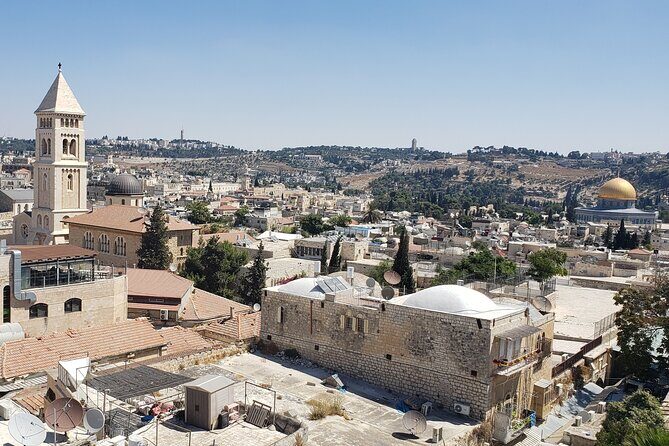
Arriving at the Mount of Olives is where the day starts to feel dramatically “Jerusalem.” This stop is structured as gratitude and reflection, not just sightseeing. You’ll have time to photograph, and there’s a guided explanation of events from the last days of Jesus tied to this area.
One charming detail: the tour includes a toast in a little olive tree cup. It’s brief, but it sets the tone—personal, symbolic, and memorable. If you’re the type who likes small rituals, you’ll appreciate this kind of touch.
Practical note: the weather can matter a lot here. If it’s sunny, bring sunglasses and sunscreen. If it’s cool, layering helps because time outdoors can stretch.
Dominus Flevit to Church of All Nations: a downhill route that matches the story
From the Mount of Olives, you descend toward sites tied to key moments in the Passion story. At Dominus Flevit, you’ll ride down in the vehicle along the path and get time for prayers and photos. This stop is connected to the idea of Jesus weeping, and the guide uses the location to talk about what it meant in that setting.
Then comes Church of All Nations (Basilica of the Agony). You’ll spend time in a sacred, Franciscan church area and see one of the oldest olive trees in the Holy Land. The tradition presented here connects the olive tree to the suffering of Jesus, including the image of him sweating blood—again, rooted in tradition and guide explanation.
This is a good stretch for anyone who wants both meaning and silence. You’ll get prayer time and photo time, and the stops are short enough that you don’t get burned out.
A few more Tel Aviv tours and experiences worth a look

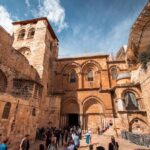
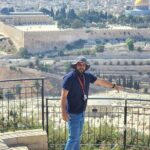

Grotto of Gethsemane and Tomb of the Virgin Mary: respect the quiet

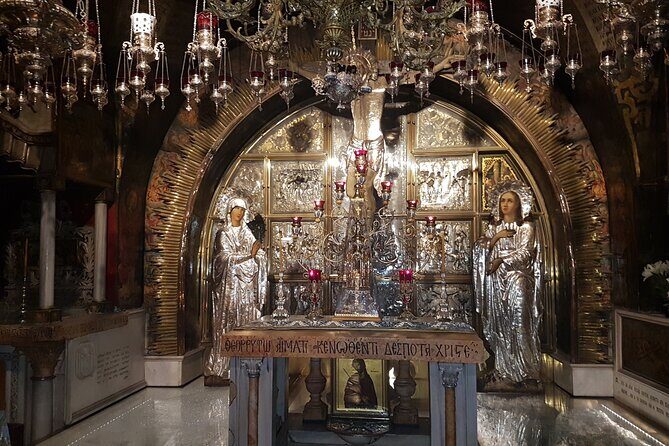
At the Grotto of Gethsemane, your visit includes reflection and photos. The tour description frames the grotto as a place associated with Jesus resting during visits to Jerusalem, and also ties it to acceptance linked to the temple. Whether you view these connections through Catholic tradition or a broader historical lens, the key is that the stop is treated as contemplative, not commercial.
Next is the Tomb of the Virgin Mary, linked to Orthodox tradition. You’ll be able to take pictures and enjoy the Orthodox ritual element noted in the tour description. This is one of those moments where you learn the difference between simply visiting a church and witnessing a living tradition.
These are also the parts of the day where you’ll notice the “feel” of Jerusalem: stone, incense, low voices, and people praying seriously. Don’t fight the mood. Slow down for it.
Golden Gates, King David’s family sites, and the Old City wall edges
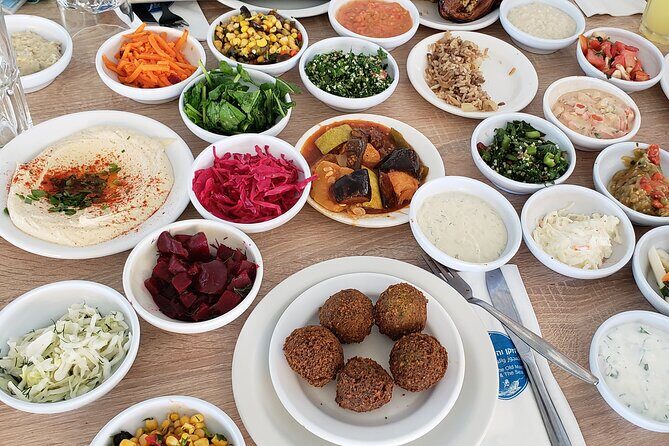
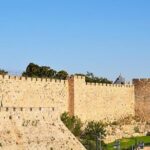
As the itinerary continues, you’ll pass through major holy landmarks that visitors often only see from afar. The Golden Gates stop highlights the closed gates in the current wall of Jerusalem and links them to an entrance tradition tied to Jesus and the Temple era. You’ll also visit the Tomb of King David’s son, Absalom, as described in the tour flow.
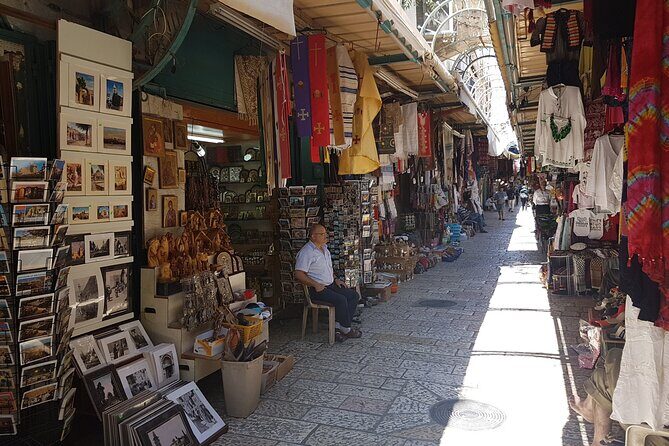
After that, your route brings you into Jerusalem proper and introduces you to the atmosphere of the Old City streets. There’s a short stop at Church of São Estevão, connected to the stoning and death of the first Christian martyr. Then you’ll continue with time to pass around the walls and learn key points as you go.
This “walls and nearby sites” segment matters because it gives you context before you plunge into the densest part of the city. You’ll get a better sense of where you are once the walk begins.
Cenacle and Dormition Abbey: last supper site and Mary’s sleeping tradition
The Cenacle stop is all about the Last Supper connection, with explanations and time for photos. This is where the day shifts more clearly into Christian sacred geography. Even if you’ve seen pictures before, being in the physical area helps you understand why people return here year after year.
Then the itinerary moves to Dormition Abbey, also tied to “Sleeping Mary” tradition—where Mary fell asleep before leaving for Paradise. This church is noted as belonging to the German Benedictines. Short stop time, yes, but it’s enough to absorb the setting and follow the guide’s framing.
If you’re someone who likes to understand how different Christian traditions map onto different buildings, these two stops are useful. They’re also good “breathing points” before the Old City walking gets more intense.
Zion Gate into the Jewish Quarter: navigation with the guide doing the hard work
Next you’ll reach Zion Gate (also referred to here as Siam Gate), one of the seven access gates to the Old City walls. The tour includes explanation about the walls built by Suleiman the Magnificent, plus time for photos.
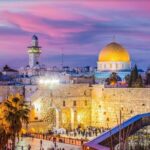
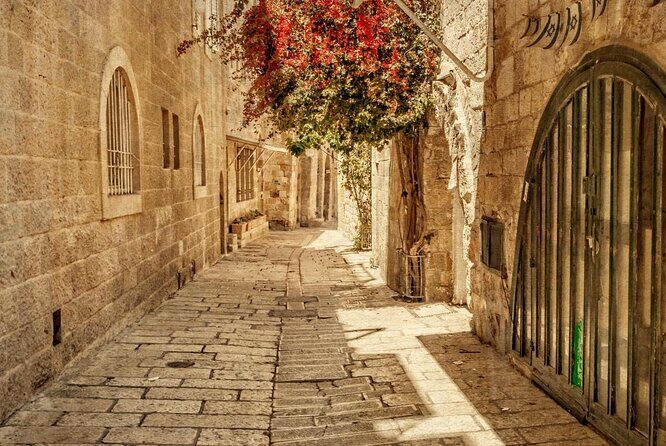
From there, you’ll walk through the Jewish Quarter. You’ll be able to appreciate architecture, including the description of a synagogue in the center of the block. The route continues toward the Wailing Wall, where you’ll spend time for prayers and to feel the energy of the place.
This part is not just scenic. It’s a sensitivity test—how you carry yourself matters. Keep your voice low, dress respectfully, and follow any guidance from your guide about where to stand and what to do.
Western Wall: prayer time, rituals, and how to act respectfully
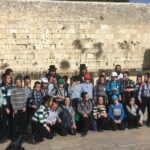
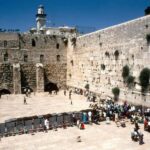
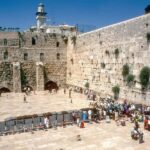
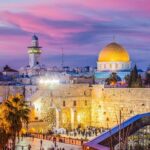
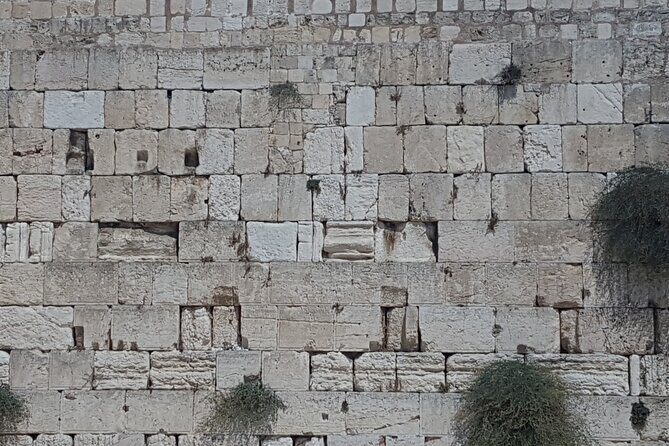
At the Western Wall, the itinerary explicitly builds in time for you to feel the atmosphere and participate in rituals and symbols repair, as described. The tour frames this as a moment where the place’s energy is strong, and the schedule gives you the time to do more than take one photo and move on.
Because this is a living sacred site, your best strategy is simple: follow the crowd cues without trying to copy everything. If you want a photo, wait for an opening. If you want prayer time, use it fully.
Also, plan your timing. The Old City can feel crowded, and even a private tour can’t change that. The guide’s job is to help you navigate calmly.
Via Dolorosa and Calvary-route energy: an hour that actually lets you walk
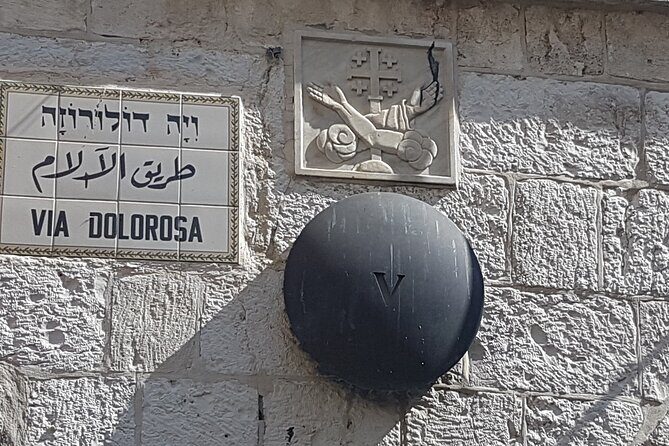
Next up is The Way of the Cross (Via Dolorosa). You follow the path Jesus took toward Calvary, passing the stations of the Via Cruz, with about one hour allocated. That’s long enough to feel the route rather than just point at it.
Here’s the best way to enjoy it: keep expectations realistic. You’re walking through an active, crowded religious corridor. If you go in mentally ready for stops and interruptions, you’ll stay present.
The guide’s explanations can help you connect the stations to what you already know, and the time window means you won’t feel constantly rushed.
Garden Tomb or Holy Sepulcher: your ending depends on your tradition
The tour’s finish includes a choice based on your background. If you are an evangelic, you visit the Garden Tomb. If you are Catholic, you visit the Church of the Holy Sepulcher.
Both are major Christian pilgrimage sites, but they offer different vibes. The itinerary gives about one hour here, so you’ll have enough time to view, reflect, and photograph without the day ending too abruptly.
If this is a key part of your faith journey, consider that you may have stronger emotions at whichever site matches your tradition. Either way, treat the stop like a conclusion, not a quick photo stop.
Practical tips before you go: comfort beats perfect plans
You’ll be in a car for long stretches, but the sacred sites themselves require walking and standing. The tour asks for moderate physical fitness, so wear shoes you can trust for uneven pavement and stone steps.
Bring layers. Jerusalem can shift temperature fast, especially between viewpoints like the Mount of Olives and indoor churches. Also bring sunscreen and water. The tour does not include lunch, so I recommend planning small snacks if you tend to get hungry mid-day.
For photography, keep your phone charged. The day includes repeated opportunities for photos—especially at the Mount of Olives and key church moments—so you’ll want your battery ready.
Who this tour fits best
This Jerusalem private full-day tour is a great fit if you want a guide to connect places to meaning and help you manage time across the Old City. It’s also ideal for families or friend groups who want to split the group price and avoid transport stress.
If you prefer totally self-guided wandering, this might feel structured. The schedule has set stops, and you’ll get the best experience if you’re okay with a plan that moves you along.
Should you book this Jerusalem private tour?
I’d book it if you want a single-day route that covers the Mount of Olives, major churches, the Western Wall area, and the Via Dolorosa with prayer time built in. The value lands best when you’re traveling with a group up to seven, because you’re effectively paying for private transportation plus full guided context all day.
Skip it only if you strongly prefer long, unscheduled time inside each site. The tour gives meaningful stops, but it’s not trying to replace a multi-day deep stay.
FAQ
FAQ
How long is the Jerusalem Private Full Day Tour?
The tour duration is about 8 hours.
What time does the tour start?
The start time is 8:30am.
Do you get pickup and transportation?
Pickup is offered, and the tour includes private transportation in an air-conditioned vehicle.
Is lunch included?
No. Lunch is not included.
What about tickets and admission fees?
The itinerary lists admission ticket free for the stops included.
Is this tour private or shared?
It’s a private tour/activity. Only your group will participate.
If you want, tell me your group size and whether you’re evangelic or Catholic, and I’ll help you decide how this tour fits your day (and what to plan for around the no-lunch window).