REVIEW · TEL AVIV
From Tel Aviv: Masada & Dead Sea Full Day Tour with Pick Up
Book on GetYourGuide →Operated by Bein Harim Israel Tours · Bookable on GetYourGuide
Masada and the Dead Sea, in one long day. This is a full-day guided hit of Southern Israel: you go from Tel Aviv by coach, ride up to Masada by cable car, then spend time at the Dead Sea where the water does the work. You’ll also stop to see Qumran cave country on the way back—enough to connect the dots without turning your day into a homework assignment.
I love the way the plan protects the key moments. The cable car ascent makes the climb far less exhausting, and you get those big views without saving all your energy for trekking. I also like how the Masada guide tour focuses on the ideas you should remember: Herod’s fortress layout, the Roman-era features, and the systems for surviving on a mountaintop.
One drawback: it’s still a long day—about 10 hours—so if you want to wander every corridor and spend ages at each viewpoint, you may feel slightly time-compressed, especially if you’re hoping for extra beach time after floating.
In This Review
- Key points before you go
- From Tel Aviv Pickup to the Judean Hills
- Judean Desert Photo Stops: Getting the Scale Right
- Cable Car Up to Masada’s 1,300-Foot Plateau
- Masada Ruins in a Guided Two-Hour Window
- What you’ll focus on at the top
- The zealot story, explained without drowning you in it
- The one thing to watch
- Qumran Caves on the Return Drive: The Dead Sea Scrolls Connection
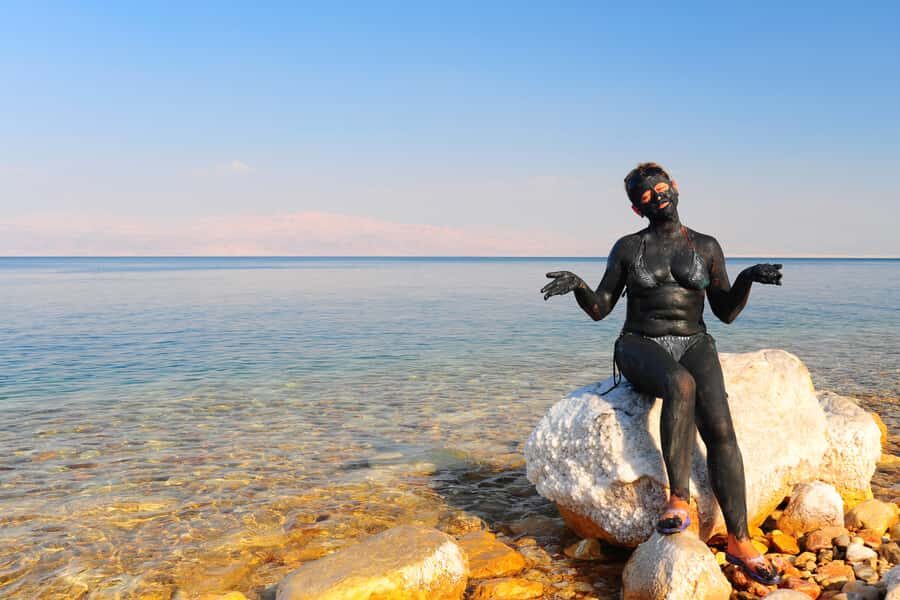
- Dead Sea Mineral Beach: Float Time, Mud Bath, and Real World Comfort
- Mud bath basics (and why it feels like a spa)
- What to wear and pack for the water
- Food, Heat, and What to Bring for a 10-Hour Day
- Price and Value: Why This Works as a Guided Day Trip
- Guide Quality: The Difference Between Seeing and Understanding
- Who Should Book This Tour
- Should You Book This Masada & Dead Sea Full Day Tour?
- FAQ
- How long is the Masada and Dead Sea full day tour?
- Does the tour include hotel pickup and drop-off?
- Is the cable car ride included?
- How long do you spend at the Dead Sea?
- What else is included besides Masada and the Dead Sea?
- Is food included in the price?
- Which languages are available for the live tour guide?
- What should I bring for the day?
- Is this tour suitable for children or wheelchair users?
- How does cancellation work?
Key points before you go
- Cable car first, so you keep your legs for the ruins
- Masada’s top-down views are the payoff—this isn’t a quick photo stop
- Herod’s complex is easy to understand with a guide telling you where to look
- Qumran caves show up on the drive, tying the Dead Sea Scroll story to real geography
- Dead Sea time is built in, plus the mud-bath option for that spa-like payoff
- You’ll be in sun for a chunk of the day, so pack for heat and dryness
From Tel Aviv Pickup to the Judean Hills
This tour starts with hotel pickup, and that matters more than you’d think. Leaving Tel Aviv by coach means you avoid the stress of arranging transport in a place where distances add up. It also gives you time to get your bearings early, because the drive sets context: Judean Hills terrain, desert edges, and the general geography behind the sites.
Once everyone is loaded, you’re on the road for stretches of time. You’ll get at least one break for photos and a chance to stretch your legs, but the day’s real rhythm is built around scheduled anchors: Masada, Qumran area, and Dead Sea Mineral Beach. I’d treat this as a guided day of big geography, not a slow stroll day.
A few more Tel Aviv tours and experiences worth a look


Judean Desert Photo Stops: Getting the Scale Right
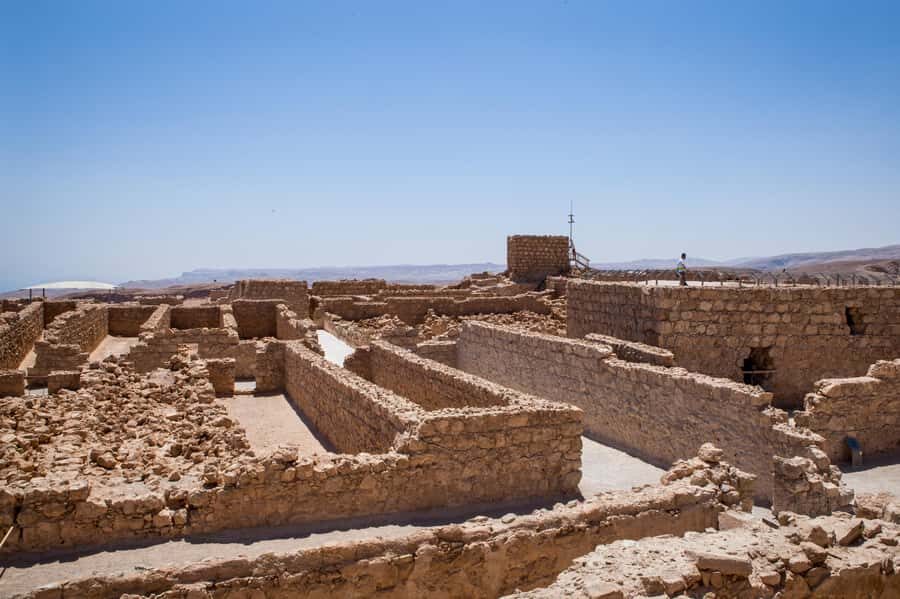
Between Tel Aviv and the sites, you’ll pass through areas that look empty until you realize what people built here and why. The bus includes a short photo stop in the broader Judean Hills/West Bank region, then continues onward.
This part is useful because it makes Masada and Qumran feel connected, not like separate attractions from a brochure. From a practical angle, the breaks are your chance to use restrooms and refill water before you get into the sun-and-steps portion of the day.
Cable Car Up to Masada’s 1,300-Foot Plateau
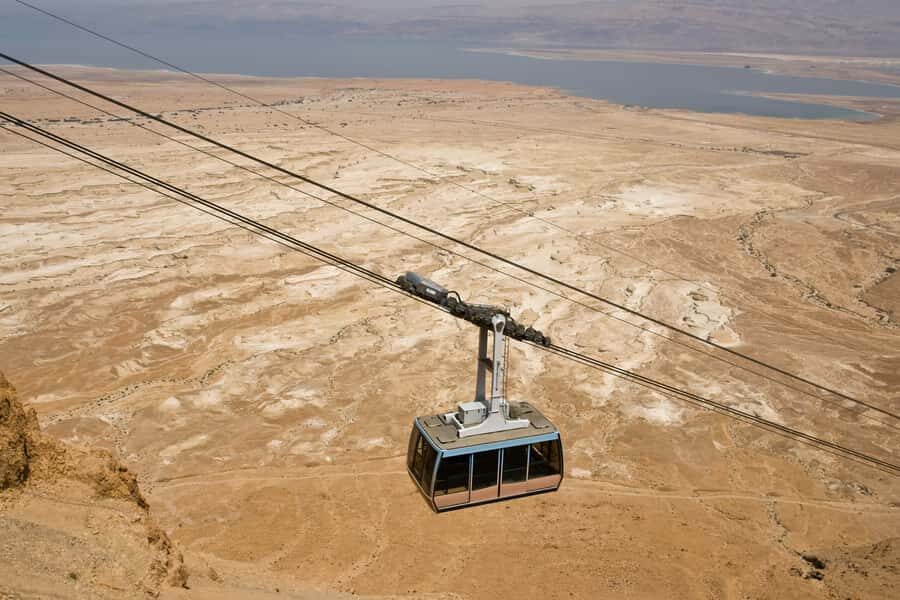
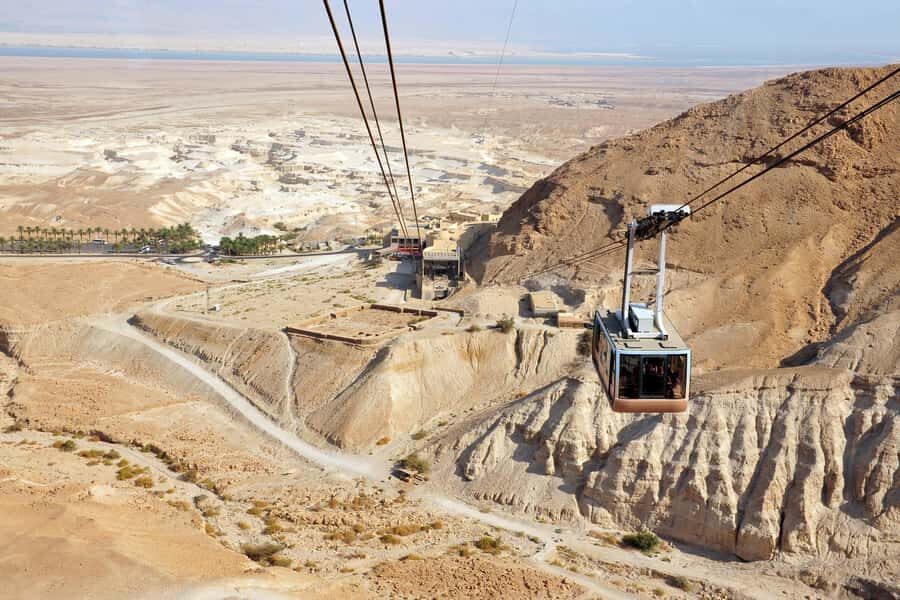
Masada is perched on a plateau about 1,300 feet above sea level, and that verticality changes how you experience it. Up here, you don’t just look around—you feel the isolation. The tour handles the hardest part with a round-trip cable car ride, which turns an exhausting climb into a scenic approach.
As you ascend, you’ll start noticing what the fortress was built for. It’s defensive, yes, but it’s also about control of views—especially toward the Dead Sea and the Judean Desert. This is one of the rare places where the landscape explains history, fast.
Masada Ruins in a Guided Two-Hour Window
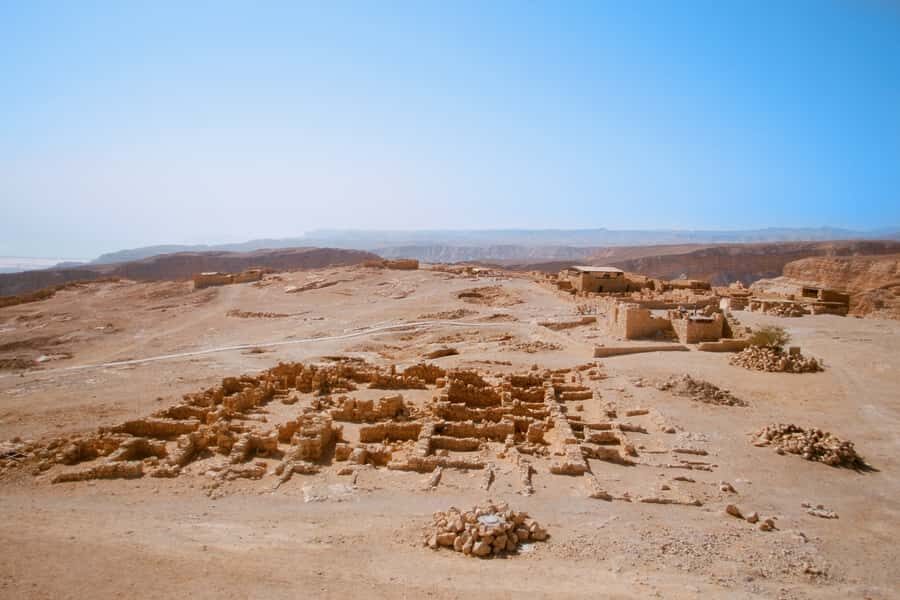
Masada is big, and two hours doesn’t mean you’ll see every corner. What you do get is a guided highlight structure: the parts that explain how the place worked and what mattered most.
What you’ll focus on at the top
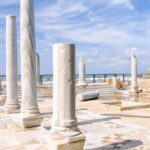
The guided visit covers King Herod’s mountain fortress, built around 37 BC. You’ll see remains connected to daily life and power—palace spaces, Roman baths, and mosaic floors. Even in ruin form, the details help you picture the contrast: luxury planned on a mountaintop that’s hard to reach and impossible to ignore.
Two Masada details are especially worth remembering because they explain how people survived there:
- The water system: the site has 12 cisterns, each with capacity up to 140,000 cubic feet. That’s the logic behind staying power.
- The religious/cultural footprint: Masada was home to the oldest synagogue in Israel. It’s a reminder that this wasn’t only about warfare.


The zealot story, explained without drowning you in it
You’ll also hear the background of Masada becoming a refuge for Zealots against the Romans, ending with the tragic mass suicide in 73 AD. I like that a good guide doesn’t just recite dates. The best tours connect the story to the geography you’re standing on right now—how a fortress like this functions when the world outside closes in.
The one thing to watch
You’ll be moving on uneven stone and you’ll spend time outdoors. Bring comfortable shoes and expect sun. Even with the cable car, you’re still at an exposed site, so don’t plan to save all your energy for later in the day.
Qumran Caves on the Return Drive: The Dead Sea Scrolls Connection
On the way back, you’ll stop in the Qumran area for a photo break and sightseeing, then you’ll have lunch time there as part of the schedule. The highlight here is the connection to the Qumran caves, the locations associated with the ancient Dead Sea Scrolls.
This stop is short, but it’s meaningful if you’re the kind of person who likes to place artifacts in real geography. The caves are hard to understand from a map alone. Seeing the environment, then hearing the story from a guide, makes the whole “where did the scrolls come from” question feel less abstract.
If you want maximum time, this isn’t the part that stretches into hours. But it’s designed to keep your day flowing to the Dead Sea—where your body will finally get the reward.
Dead Sea Mineral Beach: Float Time, Mud Bath, and Real World Comfort
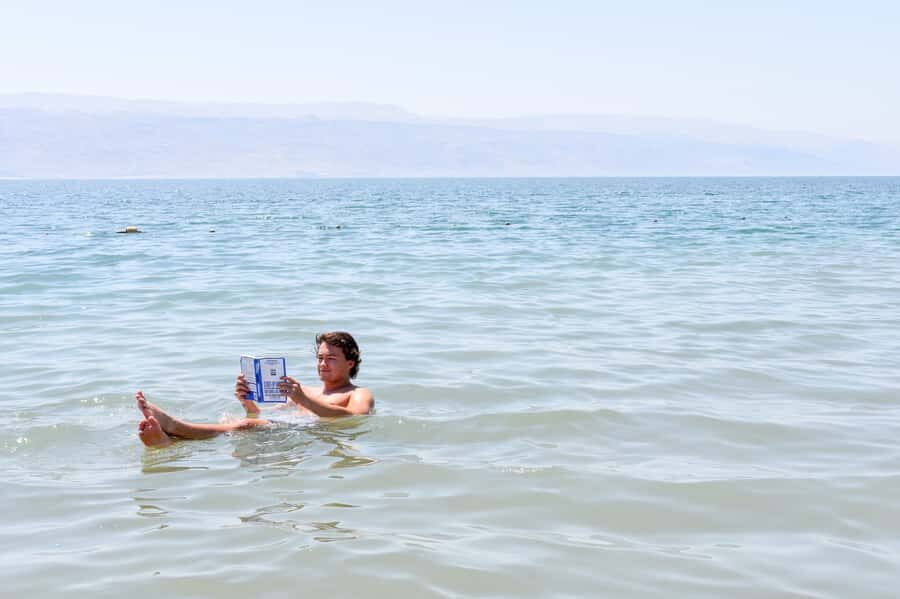
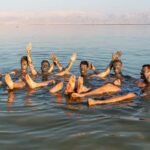
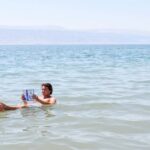
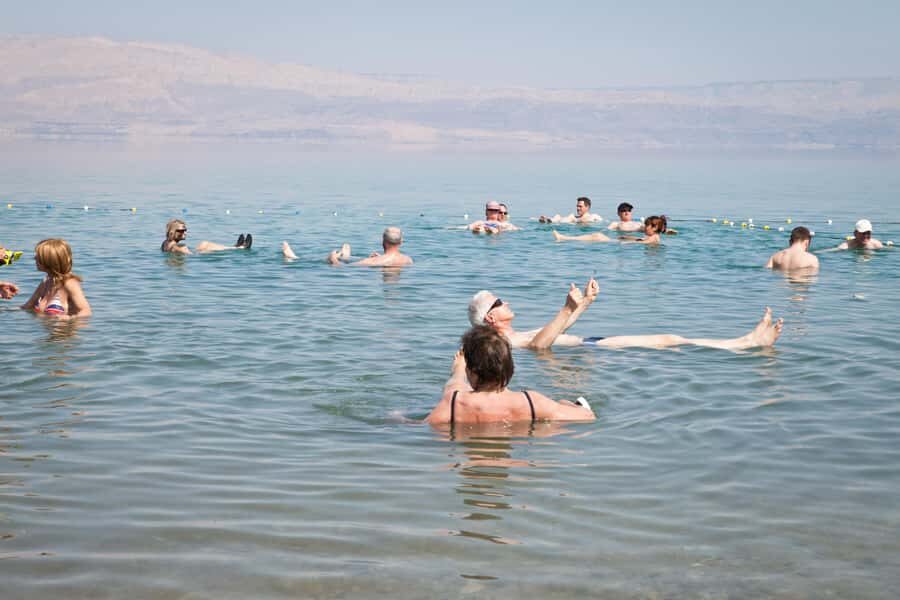
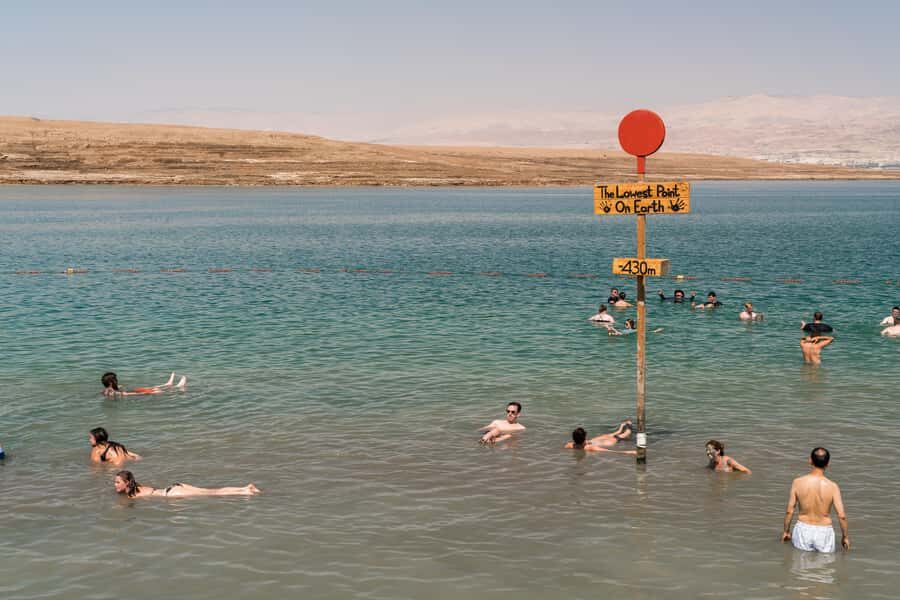
Now for the part people talk about for a reason. You drive to the Dead Sea area at Dead Sea Mineral Beach, located in the Jordan Rift Valley between Jordan and the West Bank. This is the lowest place on earth, and the water’s extreme salt density makes floating almost effortless—your body goes more “up” than “in.”
The tour includes a guided component plus swimming time for about 1.5 hours. Based on what you’ll likely feel in the sun, that window is generally enough. The trick is knowing this isn’t the place for long endurance swimming. It’s a floating experience, plus optional mud.
Mud bath basics (and why it feels like a spa)
The tour includes time for a mud bath, and the mineral-rich mud is part of the therapeutic appeal. You’ll also want to think about rinsing and protecting yourself from dryness afterward. If you’re prone to irritation, go easy and keep an eye on how your skin reacts.
What to wear and pack for the water
You’ll be in and around a hot environment with slippery surfaces. Bring:
- swimwear
- sunglasses
- sunscreen
- a sun hat
- comfortable sandals/flip-flops
A small practical note: the ground around the Dead Sea can feel scorching, so don’t assume regular shoes will be comfortable. Flip-flops make your life easier when you’re stepping between shade and shoreline.
Food, Heat, and What to Bring for a 10-Hour Day
Food and drinks aren’t included on this tour, so plan to buy what you need. Lunch is timed into the Qumran stop with break time, and you’ll have free time there as well. I’d treat lunch as flexible: keep an eye on your watch so you don’t lose your slot of Dead Sea enjoyment later.
Heat is the other real factor. Masada and the Dead Sea are both exposed and sunny, and you’ll likely spend meaningful time outdoors between transitions. The packing list is simple but serious:
- passport (for the day)
- sunglasses and sunscreen
- sun hat
- swimwear
- comfortable shoes
- flip-flops
- towels (recommended)
- a bathing-sanity layer of water and hydration planning
Price and Value: Why This Works as a Guided Day Trip

At $117 per person, this tour isn’t a budget-only whim—it’s a “pay for convenience and structure” kind of day. Here’s what you’re getting that usually costs extra if you DIY it:
- Masada entry fees
- Dead Sea entry fees
- round-trip cable car ride
- a professional guide in multiple languages (English, French, Spanish, German)
- air-conditioned coach transport
- hotel pickup and drop-off
Food and drinks are not included, and that’s the main gap. Still, when you total entrance fees plus transport plus the cable car, you’re paying for a packaged experience that keeps you from doing logistics while you’re trying to enjoy the views.
Guide Quality: The Difference Between Seeing and Understanding
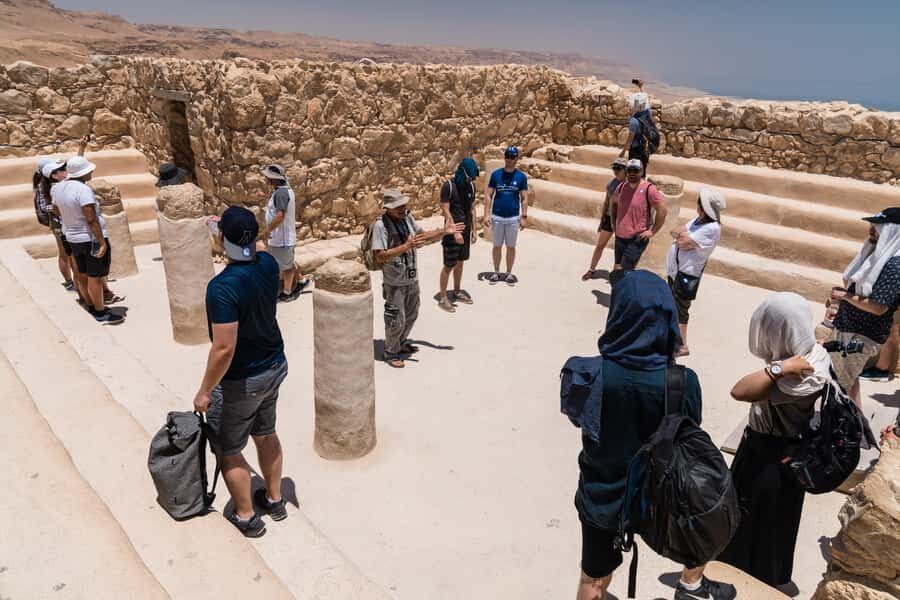
A big reason this tour earns such strong ratings is the guide factor. Names that show up often include Udi, Avishay Levy, Itamar, Yuval, Avi, Erez, Rabi, and Omri—people who combine history with a day-running rhythm. The best guides do two things well:
- They point out what to look for during the ruins so your photos make sense later.
- They explain the “why” behind Masada and Qumran without forcing you to memorize a timeline.
You’ll likely also feel how drivers and guides protect timing. Most people want the whole day’s flow: up at Masada, then down to the Dead Sea when it’s time to float and cool off.
One small consideration to keep in mind: some scheduled stops along the route can include extra time at shops. If your priority is maximizing swim minutes, I’d go in knowing there may be some shopping-style breaks and keep your mindset on the water.
Who Should Book This Tour
This is a strong fit if you:
- want a guided day focused on Masada + Dead Sea, not planning logistics
- like history that’s tied to where you stand
- want the cable car instead of the full-on hike approach
- prefer group structure with a guide keeping your day on track
It’s probably not ideal if you:
- hate long coach days (you’re signing up for about 10 hours)
- want extensive time roaming inside Masada beyond the guided highlights
- need wheelchair accessibility (this tour isn’t suitable for wheelchair users)
Should You Book This Masada & Dead Sea Full Day Tour?
If your goal is to hit two of Israel’s most iconic places in one day—with guided context and cable car convenience—this tour is a solid choice. You’re paying for structure: entry fees, transport, a professional guide, and the cable car, then you get the payoff of floating in the Dead Sea and optional mud bath time.
I’d book it if you can handle sun, walking on uneven ground, and a packed schedule. If you want a slow, sit-down exploration style with lots of free wandering, you might feel rushed. For most visitors, though, this is the best kind of day: concentrated, guided, and built around the moments you came for.
FAQ
How long is the Masada and Dead Sea full day tour?
The duration is 10 hours.
Does the tour include hotel pickup and drop-off?
Yes. Pickup and drop-off are included, with multiple Tel Aviv hotel pickup options listed by the provider.
Is the cable car ride included?
Yes. The tour includes a round trip cable car ride to Masada.
How long do you spend at the Dead Sea?
You’ll have about 1.5 hours at Dead Sea Mineral Beach, including swimming time.
What else is included besides Masada and the Dead Sea?
You’ll also visit the Qumran area for sightseeing and a photo stop, plus you’ll have lunch time there (food not included in the tour price).
Is food included in the price?
No. Food and drinks are not included.
Which languages are available for the live tour guide?
The live guide is offered in English, French, Spanish, and German.
What should I bring for the day?
Bring your passport, sunglasses, sun hat, swimwear, sunscreen, and comfortable shoes. Flip-flops are recommended for the Dead Sea area, and towels are also recommended.
Is this tour suitable for children or wheelchair users?
It is not suitable for children under 4 years old, and it is not suitable for wheelchair users.
How does cancellation work?
You can cancel up to 24 hours in advance for a full refund.