REVIEW · TEL AVIV
Jaffa and Neve Tzedek walking tour
Book on Viator →Operated by Tourist Israel · Bookable on Viator
Two neighborhoods, one great architecture walk. This Jaffa to Neve Tzedek route turns a morning in Tel Aviv into a guided story about how Bauhaus ideas changed the city’s look and feel. You get street-level walking time, not just photos from a distance.
What I like most is the way the guide connects architecture to real people. One guide name that shows up in positive feedback is Merona Levinstein, and the vibe from those walks is clear: she makes the history of Jaffa feel practical and human, not like a textbook.
My only caution: this tour is marketed as Bauhaus-focused, but one unhappy booking reported that they did not see Bauhaus as expected and said the start ran late by about 20 minutes. If Bauhaus buildings are your top priority, check in early with the guide so you’re not left guessing.
In This Review
- Key things to know before you go
- Why This Jaffa and Neve Tzedek Walk Works in Two Hours
- Starting at The Setai Tel Aviv and Timing Your Morning
- Stop 1: Jaffa’s Coastline, Old City Lanes, and the Flea Market Area
- Stop 2: Neve Tzedek—Tel Aviv’s First Neighborhood Beyond Jaffa Gates
- Bauhaus and UNESCO: How Rothschild Boulevard Fits the Story
- Group Size, Pace, and Photo-Friendly Stops
- Price and Value: Is $60 Worth It?
- Who This Tour Is For (and Who Might Want Something Different)
- Should You Book This Jaffa and Neve Tzedek Tour?
- FAQ
- How long is the Jaffa and Neve Tzedek walking tour?
- What’s the price per person?
- Where does the tour start?
- Where does the tour end?
- What stops are included on the walk?
- Will I need to buy tickets for the stops?
- Is the group size small?
- Can I cancel, and how far in advance?
- FAQ
- How far in advance do people usually book?
- Is the tour near public transportation?
- Will I get a confirmation after booking?
- Should You Book This Jaffa and Neve Tzedek Tour?
Key things to know before you go
- Small group feel (max 15 people), which keeps questions and conversations flowing.
- Jaffa old-city streets and the coastline, including time through the flea market area.
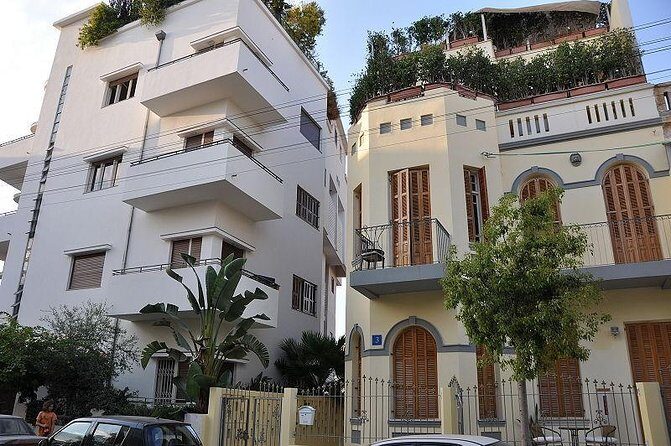
- Neve Tzedek’s role as Tel Aviv’s first neighborhood outside Jaffa gates, with architecture and stories to match.
- Bauhaus landmarks tied to UNESCO-listed heritage, linked to Tel Aviv’s Bauhaus-era transformation.
- Central starting point at The Setai Tel Aviv with an easy meet-up location and a walk that ends in Neve Tzedek.
Why This Jaffa and Neve Tzedek Walk Works in Two Hours
Tel Aviv can feel fast—new buildings here, traffic there, sand calling your name. This walk slows you down on purpose. Instead of trying to cover everything, you focus on two neighborhoods that show how the city grew: the older port area first, then the early suburb vibe of Neve Tzedek.
The format is simple: about 2 hours with a guide, kept to a small crowd (up to 15). That’s a big deal in Tel Aviv, where walking tours can otherwise turn into a shoulder-to-shoulder shuffle. With this one, you can actually hear details, and you’re not stuck waiting behind a group that moves like a single organism.
Best of all, the walk is built for people who care about more than what something looks like. You’ll hear the personalities and nuances behind the architecture and how Tel Aviv changed after the Bauhaus movement arrived. That’s what turns “pretty buildings” into “oh, that explains why this neighborhood feels the way it does.”
You can also read our reviews of more walking tours in Tel Aviv


Starting at The Setai Tel Aviv and Timing Your Morning
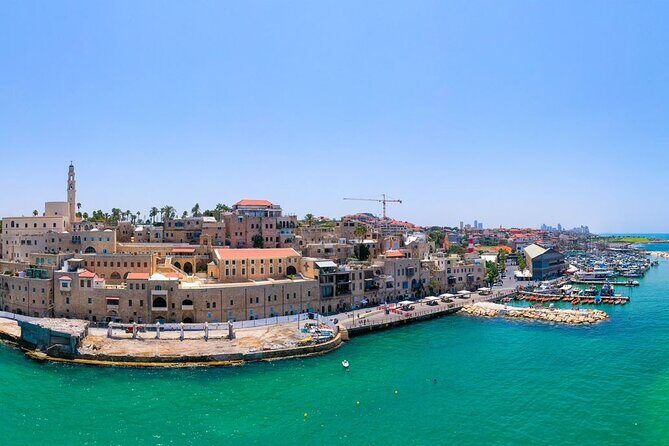
Meet-up is at The Setai Tel Aviv, on David Razi’el St 22 (Tel Aviv-Yafo), with a 9:45 am start. It’s a central, well-known hotel area, and the tour info notes it’s near public transportation—useful if you’re bouncing between beach, market, and museums that day.
Because the walk is about two hours, you can plan the rest of your day with confidence. Most people tend to pair this with lunch nearby, then keep wandering on their own in Neve Tzedek or along the coast. One review also mentioned a slightly longer version (around 2–3 hours), which suggests the guide may expand the route depending on pace and questions. So if you have a hard appointment, give yourself a little buffer.
One more timing note from a negative review: the start ran about 20 minutes late for that booking. That doesn’t mean it’s the norm, but it’s enough for you to smartly arrive a few minutes early, then don’t build your schedule as if the clock will be perfect to the minute.
Stop 1: Jaffa’s Coastline, Old City Lanes, and the Flea Market Area
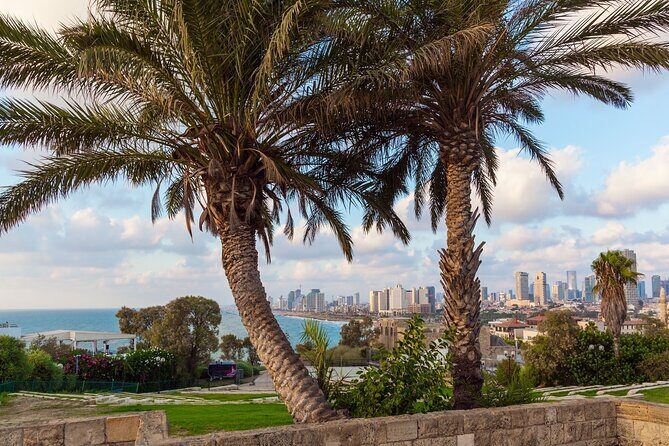
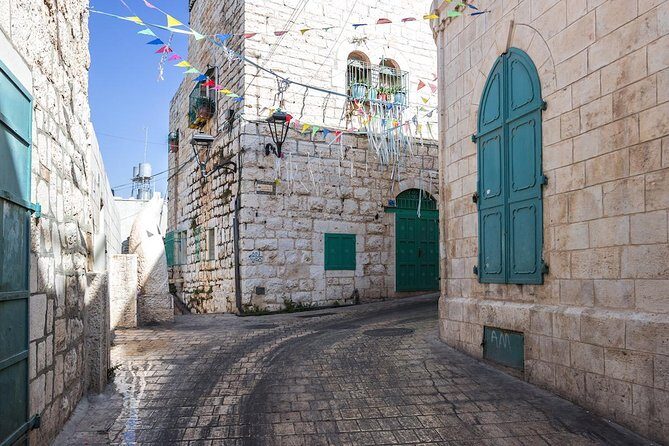
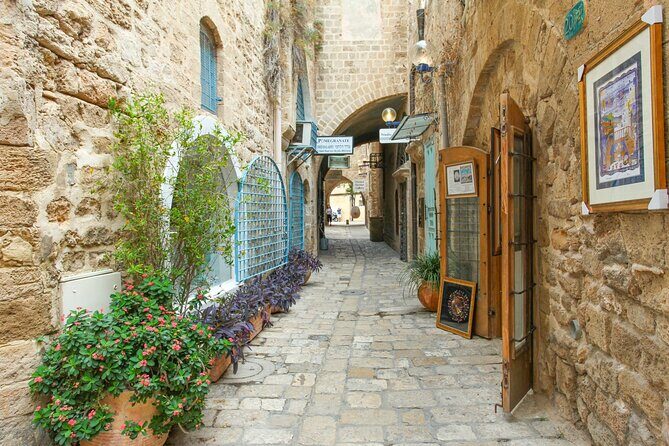
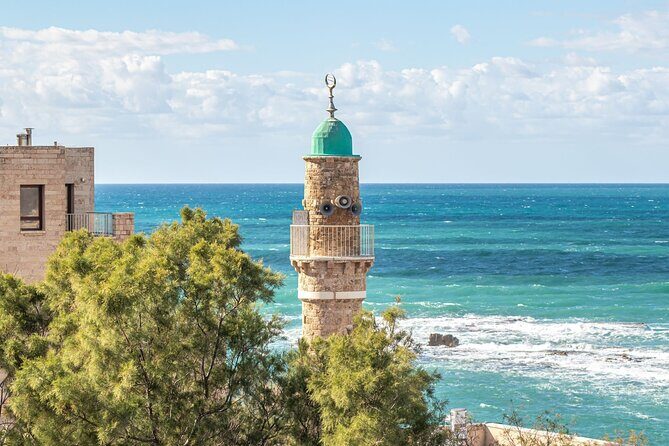
Jaffa is where Tel Aviv’s story gets older—and often more dramatic. This part of the walk focuses on the Jaffa coastline and the old city feel. You’re not just looking at the water; you’re walking through the kind of street pattern that tells you where people have been moving for centuries.
You’ll also spend time around the flea market area. This is more than a casual browse. In a good guided version, the market becomes a living clue: why people gather here, how daily commerce shaped the neighborhood, and how the port-city atmosphere helped form Jaffa’s character.
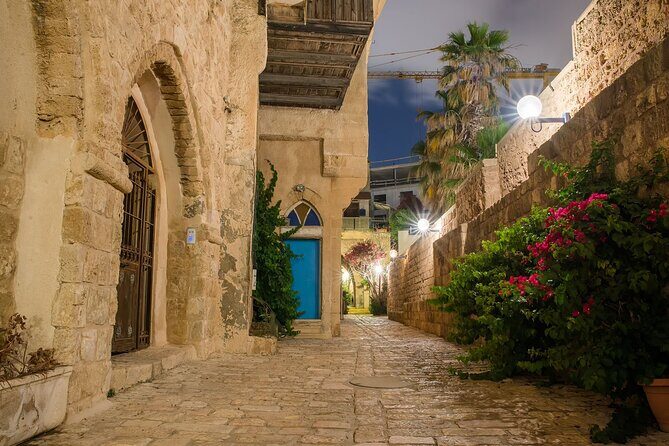
The positive reviews highlight exactly this style of sightseeing. People loved the walk through small walkways and the sense of connection to the sea. If you’re the type who enjoys streets more than landmarks, Jaffa often delivers better memories than a single “must-see” building.
Practical tip: wear shoes that handle cobblestones and tight turns. This stop is about wandering through older streets, and that means your feet do more work than you might expect from a “short” walking tour.
Stop 2: Neve Tzedek—Tel Aviv’s First Neighborhood Beyond Jaffa Gates
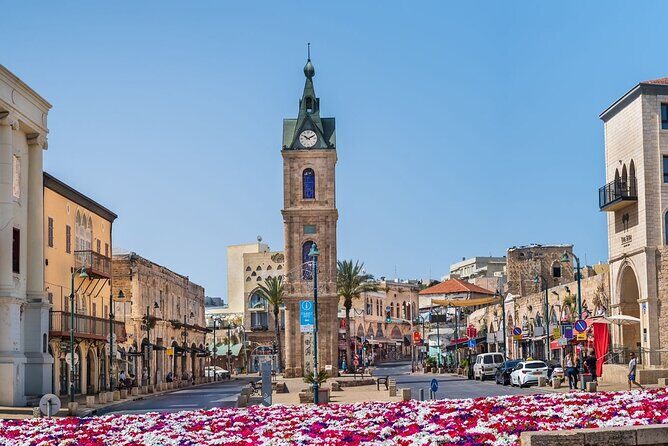
After Jaffa, you step into a different mood: Neve Tzedek. This is Tel Aviv’s first neighborhood outside the Jaffa gates, and that “first” detail matters. You’re seeing the moment when the city’s gravity shifted outward, when people started building new residential life just beyond the old defensive boundary.
This stop is built around the neighborhood’s amazing buildings and the story behind them. That phrasing can sound generic, but the meaning is straightforward: you’ll look at architecture while your guide explains why it took the shape it did, and how Neve Tzedek became a template for Tel Aviv’s expanding identity.
One of the best ways to experience Neve Tzedek is by foot, because the streets are the point. The architecture isn’t just on your phone screen—it’s shaped by how you approach it: turns, sightlines, and the way a façade changes as you walk past.
Also, Neve Tzedek is the right ending point psychologically. The tour finishes here, and you’re set up to keep exploring right away, whether you want more cafés, more photo angles, or simply to keep walking without a timetable.
Bauhaus and UNESCO: How Rothschild Boulevard Fits the Story

Here’s the key idea that ties everything together: the tour is designed to connect Tel Aviv’s Bauhaus-era identity with UNESCO-listed heritage, centered around Bauhaus landmarks linked to Rothschild Boulevard. In other words, you’re not getting Bauhaus content in isolation. You’re seeing it in the larger Tel Aviv city-building narrative.
The walking portion you do includes Jaffa and Neve Tzedek, but the architecture focus stays in the background as your guide explains how the Bauhaus movement arrived and changed the look and planning of Tel Aviv. If you like city history that’s tied to real streets, this approach makes sense. Bauhaus doesn’t land in a vacuum—it plugs into a city that already has a strong older core (Jaffa) and then grows outward (Neve Tzedek and beyond).
Now, I have to be honest about expectations because one review raised the issue. That unhappy booking said they were expecting to see Bauhaus and did not feel that happened. With the information you have, I’d treat this as a signal to do one simple thing: at the start of the walk, ask the guide how much of your time will be spent specifically on Bauhaus landmarks. If your goal is strict architecture sightseeing, don’t wait until the end to find out.





Group Size, Pace, and Photo-Friendly Stops
With a maximum of 15 travelers, this tour has a better chance of staying conversational. That matters when you want explanations beyond captions. In the positive feedback, people also praised the group size as perfect, which matches what you’d want for a two-hour walk: small enough that you’re not anonymous, large enough that it doesn’t feel like a private lecture.
The itinerary is built as two focused chunks—1 hour in Jaffa and 1 hour in Neve Tzedek. That pacing is ideal if you’re trying to see neighborhoods, not just “points.” You get enough time for the streets and the stories, without the fatigue that can come from overstuffed walking tours.
Photo-wise, you’ll get chances at the coastline, narrow lanes, and the architectural texture of Neve Tzedek. Keep in mind that old-city areas and neighborhood streets don’t always allow easy stopping. The best strategy is to be ready to shoot quickly, then step forward and let the group move—your photos will benefit because you’ll get better angles while you’re walking.
Price and Value: Is $60 Worth It?

At $60 per person for about 2 hours, this isn’t a “budget sprint” price. But it can still be good value if you care about guided context.
Here’s why: you’re paying for (1) a knowledgeable guide, (2) a structured route that links Jaffa and Neve Tzedek, and (3) architecture-focused storytelling tied to Tel Aviv’s Bauhaus-era identity and UNESCO-listed heritage. That combination is hard to replicate well on your own in a short time.
Also, the stops are described with admission as free, so you’re not juggling extra ticket costs mid-walk. And the small group size helps you actually use the time you’re paying for.
One more value clue from the ratings: the overall score is 4.5 from 23 reviews, and the top notes were about the walk size, guide quality, and how the history felt alive. That pattern usually means you’re not just buying movement—you’re buying understanding.
Who This Tour Is For (and Who Might Want Something Different)
This walking tour is a strong match if you:
- want a guided introduction to Tel Aviv’s old-and-new street contrasts
- care about architecture and city planning, not only beaches and museums
- like neighborhoods where you walk more than you sit
It’s less ideal if you only want Bauhaus buildings in a strict, architecture-only format and want zero time in market lanes and old-city streets. That’s not because those areas are bad—they’re part of the point. It’s because your priorities might not align with how the guide may structure the morning.
If you’re traveling with limited time and you want your bearings fast, this is a solid use of a morning. It gives you two memorable neighborhood “chapters” and sets you up to explore after.
Should You Book This Jaffa and Neve Tzedek Tour?
I’d book it if you want a small-group walking tour that connects Jaffa and Neve Tzedek to Tel Aviv’s Bauhaus-era identity, with a guide who tells stories in a way that makes you feel the place. The best reviews point to strong guidance and a route that feels like a real stroll—sea views, old streets, and neighborhood architecture, all in a manageable time window.
I’d be careful if your number-one goal is guaranteed, heavy Bauhaus landmark viewing. Do yourself a favor: ask at the start how much time is devoted to Bauhaus sights linked to Rothschild Boulevard. If that’s satisfied, you’re likely to enjoy the walk a lot more than if you’re hoping for a purely Bauhaus-focused photo tour.
FAQ
How long is the Jaffa and Neve Tzedek walking tour?
The tour runs about 2 hours.
What’s the price per person?
It costs $60.00 per person.
Where does the tour start?
The meeting point is The Setai Tel Aviv, David Razi’el St 22, Tel Aviv-Yafo.
Where does the tour end?
The tour ends in Neve Tzedek.
What stops are included on the walk?
You’ll visit Jaffa and Neve Tzedek.
Will I need to buy tickets for the stops?
The stops listed are shown with admission free, and the tour uses a mobile ticket.
Is the group size small?
Yes. The tour has a maximum of 15 travelers.
Can I cancel, and how far in advance?
You can cancel for a full refund up to 24 hours before the experience’s start time.
FAQ
How far in advance do people usually book?
On average, this tour is booked about 14 days in advance.
Is the tour near public transportation?
Yes, the meeting area is noted as being near public transportation.
Will I get a confirmation after booking?
Yes. Confirmation will be received at time of booking.
(Already got the key 8; if you want, I can replace the extras above with different questions.)
Should You Book This Jaffa and Neve Tzedek Tour?
Book it if you want a morning in Tel Aviv that mixes old-city Jaffa, sea-edge walking, and neighborhood architecture in Neve Tzedek, with Bauhaus-era context tied to UNESCO-listed heritage. Just be sure your expectations about the Bauhaus time on the route match what you want, and ask early if that’s the main reason you booked.