REVIEW · JERUSALEM
Classic Jerusalem Old City Tour – Dguide Self Guiding App
Book on Viator →Operated by Uri Goldflam - Travel Trailer Israel · Bookable on Viator
Jerusalem’s Old City can feel like a maze. This self-guided tour with the DGuide app lets you follow a smart route while keeping control of your pace, so you’re not stuck waiting for anyone else. I also like that the experience was built by long-time educator and guide Uri Goldflam, with a heavy focus on what you’re actually looking at.
Two things I like a lot: the flexibility (stay on the path or hop off and rejoin later) and how the key stops line up into a clear story. One thing to watch is practical reality—this area means real walking, stairs, and crowds, so bring comfortable shoes and keep your phone charged if you want everything to run smoothly.
In This Review
- Key Points to Know Before You Go
- How the DGuide App Turns a Free-Range Walk Into a Real Tour
- Jaffa Gate Start: Get Your Bearings Fast
- Tower of David: 360 Views and the Story in Stone
- Mount Zion Stops: Dormition Abbey, the Upper Room, and David’s Tomb
- The Roman Cardo and the Medeba Map Replica
- Hezekiah-Era Relic: A 2700-Year Thread Through the Bible
- Herodian Quarter and the Wohl Archaeological Museum
- Western Wall: The Closest Place to Pray by the Temple Mount
- Church of the Holy Sepulchre: A 4th-Century Origin With Layers
- Price and Value: Where $7 Really Lands
- Getting the Timing Right: Opening Hours and Your Walking Pace
- Who This Tour Suits Best (and Who Might Want a Different Plan)
- Should You Book This Old City Tour?
- FAQ
- How much does the Classic Jerusalem Old City Tour cost?
- How long is the tour?
- Where does the tour start and end?
- What do I get after booking?
- Are admission tickets included for the sites?
- What walking and fitness level does the tour require?
- Is cancellation free?
Key Points to Know Before You Go
- Uri Goldflam’s guided-style content: you get a teacher’s explanations without the time pressure of a group tour.
- Route flexibility inside the Old City: follow the suggested plan or go off on your own, then return when you’re ready.
- Great variety in a short window: history, archaeology, and major religious landmarks in about 2 to 4 hours.
- Most sites have no entry fees: several stops are free, so your $7 ticket goes further than it looks.
- A strong view payoff: Tower of David includes a 360-degree view that helps you understand where you are.
- Some museums cost extra: Tower of David Museum and the Wohl Archaeological Museum don’t include admission.
How the DGuide App Turns a Free-Range Walk Into a Real Tour

This isn’t a “read a random blog post” situation. The DGuide platform gives you a mobile-ticket experience that guides you stop to stop, with explanations timed to where you’re standing. The big win is control: you can take every detail or skim it, and you can step away from the route when the moment (or the crowds) changes.
After you buy the tour, you get access to the app through a coupon-code sent in your confirmation email. The app itself is free, so you’re not paying again just to use the tool. And because you’re moving at your own speed, you’re not forced into a rush you’ll later wish you could undo.
One practical note I really value: the tour’s design anticipates you will adjust. You can follow the suggested route, then return later, instead of feeling like you “failed” the experience because you detoured for a photo, a prayer pause, or a bathroom break.
You can also read our reviews of more city tours in Jerusalem



Jaffa Gate Start: Get Your Bearings Fast
Your walk begins at Jaffa Gate hostel, right by one of the main entrances into the Old City. Starting here matters because the Old City’s streets can swallow your sense of direction. With a guided-style route in your pocket, you’ll understand where you are as you move from gate to ramparts to holy sites.
You’ll get a short orientation before you head inside. That’s underrated. A brief “here’s what you’re about to see” helps you read the stones instead of just passing them.
Also, the tour ends back at the meeting point. That simple loop helps with planning—especially if you want to grab food afterward or continue exploring nearby neighborhoods without guessing how to get back.
Tower of David: 360 Views and the Story in Stone
Your second stop is the Tower of David Museum of the History of Jerusalem, built into the ancient Citadel. You’ll spend about an hour here, and the time is worth it if you like panoramic context. The view helps connect the Old City walls with the surrounding parts of Jerusalem, so your photos won’t be only religious landmarks—they’ll be geography too.
Entry to the museum isn’t included, so you’ll likely pay additional admission at the ticket window. Still, the stop is one of the best uses of your time because it gives you a high vantage point that makes everything else easier to understand as you walk.
There’s also a biblical and historical thread tied to the museum’s setting, including a traditional possibility about where the trial of Jesus may have taken place. Even if you’re not there for religious narrative, it’s the kind of place where the layers of Jerusalem become visible in a single glance.
Mount Zion Stops: Dormition Abbey, the Upper Room, and David’s Tomb
Next you shift to Mount Zion, a cluster of major Christian sites and a traditional connection to King David. The plan here is shorter—about 30 minutes—but it’s packed.
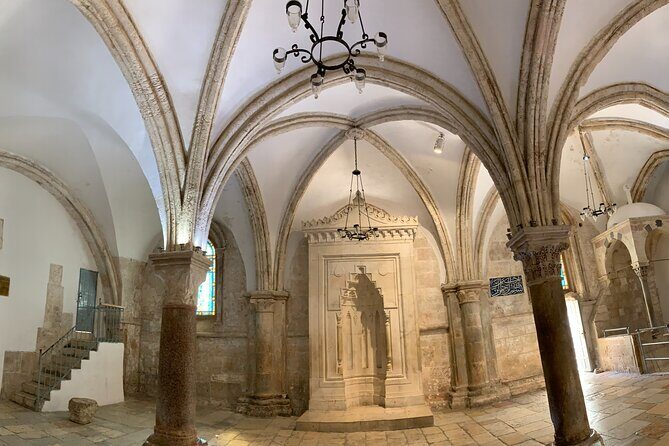
You’ll start with the Dormition Abbey, then move to the Upper Room, often identified with the Room of the Last Supper. The tour also points you toward the traditional location for the tomb of King David. These are not “one building, one story” stops. They’re places where later architecture sits on top of earlier claims, and your app explanations help you track what’s what.
Entry fees are listed as free for these stops, which makes this segment a strong value moment. The downside? This part of the city can feel more compressed and more “inside,” so if you dislike indoor crowds, go with a patient mindset.
The Roman Cardo and the Medeba Map Replica

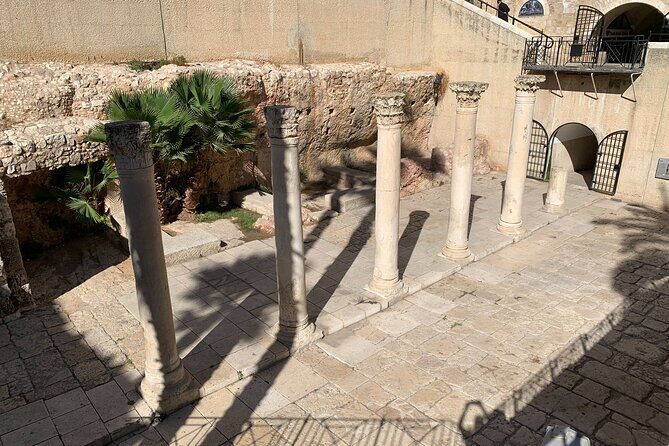
Then you walk into a very “Jerusalem is a palimpsest” kind of moment: the Roman Cardo. This road dates to the period when Jerusalem was rebuilt by Emperor Hadrian in the first half of the second century. Walking the Roman pavement gives you a real sense of the city’s older street grid still influencing what you see today.
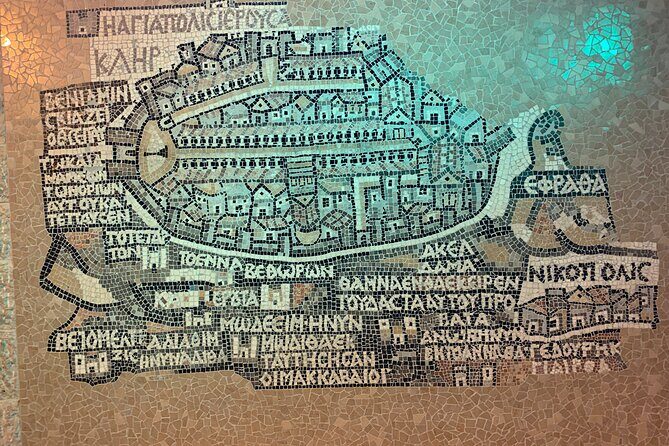
Here’s a detail I love because it’s specific: you’ll also see a replica of the oldest known map of Jerusalem—the Medeba Map. Even if you’ve seen photos of ancient maps before, seeing the replica in context helps you understand why people obsessed over accurate place names and routes.
If you’re the type who likes to connect history to your feet—meaning you enjoy knowing what layer you’re stepping on—this is a highlight. It’s also one of the easiest stops to enjoy quickly if you’re tired. The key points are visual, not just spoken.
A few more Jerusalem tours and experiences worth a look

Hezekiah-Era Relic: A 2700-Year Thread Through the Bible
After the Roman street, the tour includes a stop tied to a relic mentioned in the Bible from the time of King Hezekiah, about 2700 years ago. This is the kind of stop that can be easy to miss if you’re sprinting through the Old City, which is exactly why having an on-screen route helps.
Since the data doesn’t list an entry fee here, it’s likely another free stop that stretches your money. And even when you’re not fully focused on archaeology, these references can create the feeling of time stretching—like the city is constantly talking to itself across centuries.
If you’re traveling with family or friends who get restless, this is a good place to slow down for a minute, because it’s easy to understand the basic idea: the Old City keeps returning to the same stories, just in different materials.
Herodian Quarter and the Wohl Archaeological Museum
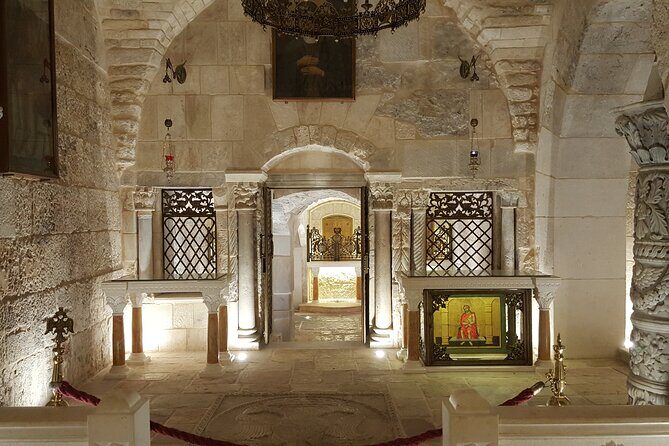
Next comes the Herodian Quarter and the Wohl Archaeological Museum, tied to major excavations from the first century. Expect to see evidence of wealthy, massive homes with expensive decorations—and also evidence of the city’s destruction by the Romans in 70 AD.
This segment is short—about 30 minutes—but it’s visually dramatic. You’re looking at physical reminders that Jerusalem didn’t just change rulers; it changed in a painful, irreversible way.
Museum admission isn’t included, so again, you may pay extra at the site. Still, if you want one stop where archaeology feels concrete rather than abstract, this is it. It also balances the more religious landmark focus with a clear “how people lived and lost” perspective.
Western Wall: The Closest Place to Pray by the Temple Mount

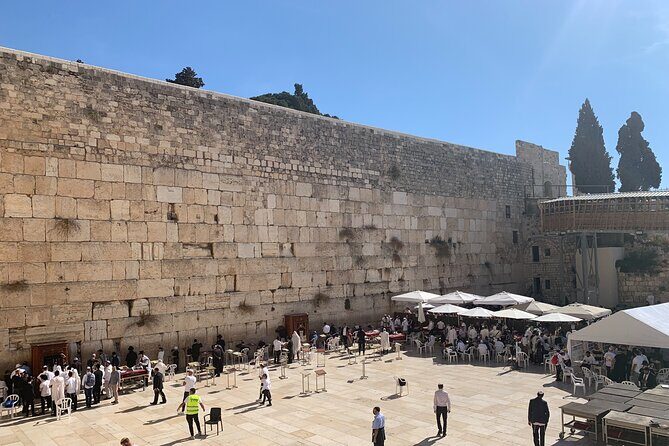
The tour then brings you to the Western Wall, a remnant of the Temple in Jerusalem. This is listed as a free stop, and it lasts about 20 minutes.
The explanation you’ll get here matters because the Western Wall isn’t just a wall you look at. It’s the closest place near the Temple Mount where Jews can pray. That single detail helps you understand why the wall carries such emotional weight, even for visitors who aren’t there for religious practice.
This stop is often the most crowded. If you’re the type who likes space to reflect, plan for patience. If you’d rather get your bearings and keep moving, the app’s time guidance can help you enjoy it without getting stuck longer than you wanted.
Church of the Holy Sepulchre: A 4th-Century Origin With Layers
Your final major stop is the Church of the Holy Sepulchre, described as the original church built in the 4th century, with later reconstructions. You’ll get about 30 minutes here, and the entry fee is listed as free.
The church is tied to the traditional locations of the crucifixion and resurrection of Jesus Christ. The key here is to understand that this is not a simple “visit one spot” building. It’s a structure built, rebuilt, and reinterpreted over time, so you’ll see physical layers that correspond to changing needs and changing beliefs.
If you’re someone who hates waiting, this is the one stop where you might feel the crunch of crowds and narrow pathways. But the payoff is that you’re inside a place where architecture and tradition collide in one small geographic area.
Price and Value: Where $7 Really Lands
The tour costs $7.00 per person, and that price looks almost too low—until you realize what you’re paying for. You’re not paying for an escorted group or private transportation. You’re paying for the DGuide content, structured pacing, and the convenience of having guidance in your phone while you walk the Old City on your terms.
Since the app is free and you receive coupon-code access via email after purchase, the setup cost stays low. Then consider the entry situation. Several big stops are marked free (like Mount Zion sites, the Western Wall, and the Holy Sepulchre). Two major museum-style stops have admission not included: the Tower of David Museum and the Wohl Archaeological Museum. So your total spending can range depending on what you choose to do inside.
Duration is listed as 2 to 4 hours, which is a realistic chunk of time for a focused Old City walk—enough to hit major points, not so long that you’ll be mentally done by the halfway mark.
Also, this is booked about 35 days in advance on average, which suggests it’s a popular plan for people who want structure without scheduling a full tour day.
Getting the Timing Right: Opening Hours and Your Walking Pace
The tour’s available hours are listed as Monday through Thursday, 8:00 AM to 5:00 PM, across a date range from 03/16/2022 to 06/18/2026. That’s a helpful constraint. If you’re visiting on a weekend, you’ll need an alternate plan.
The tour also calls for a moderate physical fitness level. Expect walking and using stairs. So even though it’s self-guided, it’s not a sit-and-stare experience. Bring comfortable shoes, and plan for the kind of stops where you might pause at entrances, move through stairs, and adjust to crowd flow.
If your phone battery dies, the experience depends on your ability to keep using the app. I recommend you treat this like a full-day walking plan even if the app time says a few hours.
Who This Tour Suits Best (and Who Might Want a Different Plan)
You’ll likely enjoy this if you want a guided narrative but don’t want to be locked into someone else’s speed. The “follow the suggested route or go off and return later” approach is perfect when you’re also taking in the Old City’s spontaneous moments—like a quiet prayer space, a surprising view, or a moment to catch your breath.
You’ll also like it if you care about both Jewish and Christian landmarks and want connections explained in plain terms. Uri Goldflam’s content style—professional, friendly, and detail-focused—is built for people who want more than a checklist.
On the other hand, if you hate stairs or you need frequent rest stops, the walking and stairs requirement could be a strain. And if your group wants a fully escorted experience with someone directing you around crowds, you may feel the difference between self-guided and live-led.
Should You Book This Old City Tour?
If you want a low-cost way to get structure, context, and a clear route through the Old City—without paying for a private driver or committing to a fixed group pace—this is a solid choice. The blend of free stops and a focused route means you can keep costs reasonable, especially if you don’t rush through everything.
I’d book it if you value explanations that make the sights easier to understand, especially the Roman layers, the archaeological museum segment, and the big religious landmarks. It’s also a nice fit for couples and small groups who want to stay together but still move at their own speed.
One last thought: in the Old City, your comfort matters more than your itinerary. If you arrive with good shoes, a charged phone, and realistic patience for crowds, you’ll get far more out of the experience.
FAQ
How much does the Classic Jerusalem Old City Tour cost?
It costs $7.00 per person.
How long is the tour?
The duration is about 2 to 4 hours.
Where does the tour start and end?
It starts at Jaffa Gate hostel, in Jerusalem, and ends back at the same meeting point.
What do I get after booking?
You’ll receive a coupon-code in the confirmation email to access the Classic Jerusalem Old City Tour in the Dguide platform. The Dguide app is free.
Are admission tickets included for the sites?
Some stops are free, but admission is not included for the Tower of David Museum and the Wohl Archaeological Museum.
What walking and fitness level does the tour require?
It requires moderate physical fitness, with walking and stairs.
Is cancellation free?
Yes. You can cancel up to 24 hours in advance for a full refund.
If you tell me your travel dates and whether you plan to pay for the museums, I can help you estimate how the day will feel within the 2–4 hour window.