REVIEW · JERUSALEM
Caesarea, Haifa, Rosh Hanikra, and Acre Tour from Jerusalem
Book on Viator →Operated by Click Tours · Bookable on Viator
Northern Israel in one long day. This tour strings together Caesarea’s Roman amphitheater, Haifa’s terraced Baha’i Gardens, Acre’s Old City, and the wave-carved grottoes of Rosh HaNikra. I like that the price includes entry fees plus a professional guide, so you can focus on seeing instead of stopping to figure things out. I also like the variety: Roman stone, religious architecture, sea caves, and Crusader-era streets in a single circuit.
One thing to consider: it’s a very early start (5:40am) and it’s a long day in an air-conditioned car, so if you hate mornings or tight schedules, plan ahead and pack your patience—especially early.
In This Review
- Key Points You’ll Care About on This Northern Coast Tour
- What This 12-Hour Northern Coast Trip Actually Gives You
- 5:40 AM Pickup and the Jerusalem-to-Tel Aviv Join-Up
- Caesarea National Park: Herod’s Big Statement in Roman Stone
- Haifa’s Baha’i Gardens: A Quick Stop With a Big View Payoff
- Rosh HaNikra: Cable Car Down to the Limestone Grottoes
- Grottos at the Lebanese Border Area: What You’ll Be Seeing
- Acre (Akko) Old City on Foot: Crusader Walls and Layers of Rule
- Citadel of Acre: Crusader Remains, a Prison, and British-Era Gallows
- How Much Time You’ll Spend Where (and How to Make It Count)
- Value Math: Why $108 Can Work (If You Want the Whole Circuit)
- What the Guides Add (And Why It Matters on This Route)
- What to Pack for a Comfortable Day Up North
- Best Fit: Who Should Book This Tour
- Should You Book This Tour?
- FAQ
- What time does the tour start?
- How long is the tour?
- Is hotel pickup included?
- Are entrance fees included?
- What languages are the guided tours in?
- Is food included?
Key Points You’ll Care About on This Northern Coast Tour

- Roman Caesarea with an amphitheater still used today, plus gateway/moat/walls you can actually walk around in
- Haifa’s Baha’i Gardens stop gives you the big visual payoff quickly—terraces tumbling down to the city
- Rosh HaNikra by cable car takes you down into limestone grottoes shaped by relentless sea waves
- Acre Old City and Citadel connect Crusader remains with later eras, including a Turkish prison and British Mandate gallows
- Hotel pickup and drop-off + all entrance fees included, so the core costs stay predictable
- Small-ish group cap (40 people) helps the day feel organized rather than chaotic
What This 12-Hour Northern Coast Trip Actually Gives You

This is the kind of tour that makes sense if you’re short on time but still want real variety. In one day, you move from Roman-era power and spectacle in Caesarea to the layered gardens of Haifa, then to sea caves at the northern edge of the Mediterranean, and finally to Acre’s fortified streets where multiple chapters of history overlap.
The practical win is that it’s planned as a route, not a scattershot list. You’re not hopping between stations or trying to coordinate buses on your own. An air-conditioned vehicle handles the driving while a guide ties each stop together with context, so you get more out of the ruins, the architecture, and the coast.
The downside is time. You’re looking at around 12 hours, starting at 5:40am. That means you should treat this as a full-day commitment, not an easy half-day add-on.
You can also read our reviews of more tours and experiences in Jerusalem.
5:40 AM Pickup and the Jerusalem-to-Tel Aviv Join-Up
The tour start time is 5:40am, and that’s not a typo. If you’re staying in Jerusalem, you’ll be picked up from your hotel, but you’ll join the tour from Tel Aviv. That’s normal for multi-area pickup days, but it does mean your morning may involve an extra coordination step before the coast portion begins.
Two tips make this easier:
- Set two alarms. Early starts are where you lose energy fast.
- Pack essentials in a day bag so you’re not rummaging at each stop. Water, sun protection, and a layer for cooler morning air can make a difference.
The tour uses a mobile ticket, and confirmation is provided at booking (or as soon as possible if you book within 12 hours). In real terms: you should be ready to show the ticket on your phone when the group meets.
Caesarea National Park: Herod’s Big Statement in Roman Stone
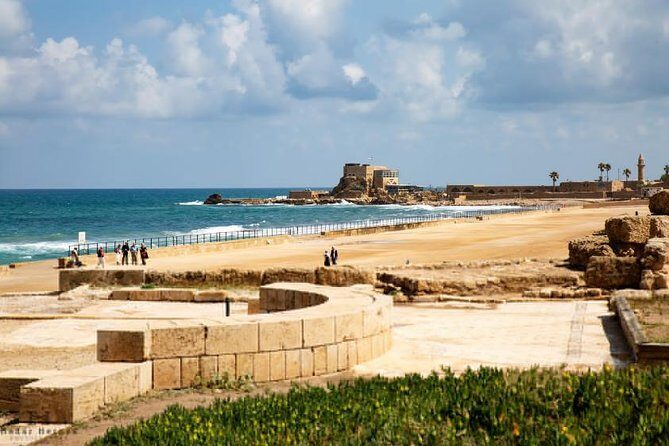
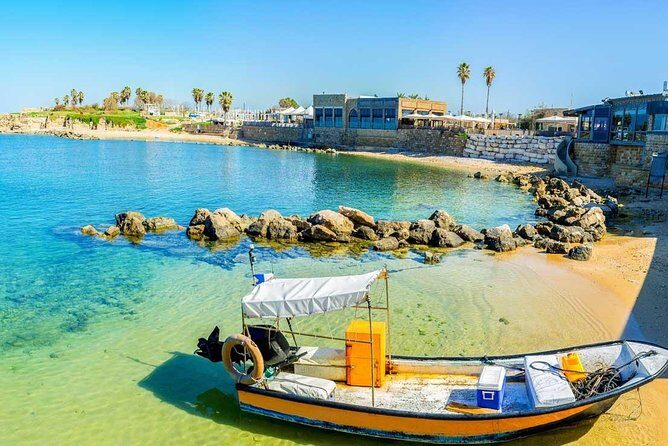
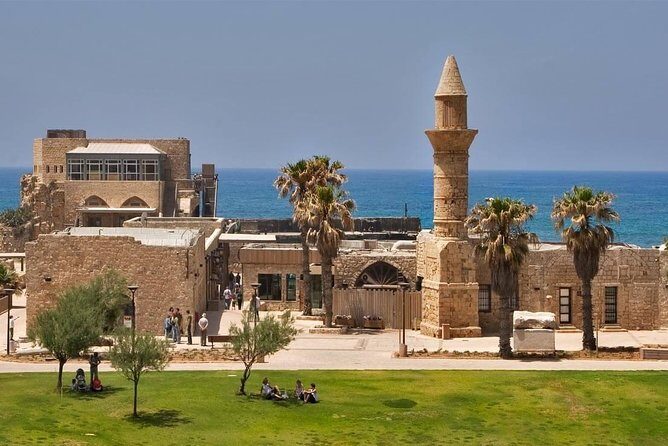
Caesarea National Park is the anchor stop, and it’s a strong one. Caesarea was built under Herod and named for Caesar, and the ruins reflect wealth and ambition. Even if you don’t read every sign, the layout tells you a story: you can see gateways, a moat, well-preserved walls and rooms—stone that was built to impress and to last.
My favorite part here is the Roman amphitheater. It’s described as perfectly preserved, and it’s still used for performances today by Israeli and international artists. That detail matters because it turns the ruins from static background into a working stage. You can stand in the same space where audiences still gather, and it makes the scale feel more real.
Right nearby, you also see part of what was once a hippodrome. It’s the kind of stop where a guide can help you read what you’re looking at—what each area probably was, and how Caesarea functioned as a Roman coastal city.
Practical consideration: This stop includes admission and is timed at about 1 hour. Wear shoes that handle uneven ground. If you’re only comfortable on smooth surfaces, you’ll feel the difference.
Haifa’s Baha’i Gardens: A Quick Stop With a Big View Payoff
After heading north, the tour includes a short stop in Haifa for the Baha’i Shrine and gardens. The gardens are known for their 19 terraced levels, stepping down toward the city below. Even in a brief visit, the visual impact is hard to miss: you get that sense of design-as-architecture, not just plants in a park.
This is scheduled for about 20 minutes, and admission is listed as free for this stop. That makes it ideal for two types of travelers:
- You want the highlight photo, the layout, and the main context without turning the day into a long garden walk.
- You’d rather spend your limited time on the coast and the Old City, where the walking is more intense.
If you’re the type who loves to slow down and wander, consider that 20 minutes can feel short. Still, it’s a good value moment inside a structured day.
Rosh HaNikra: Cable Car Down to the Limestone Grottoes
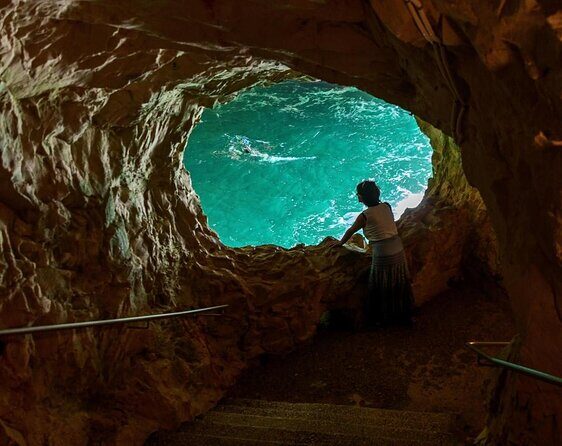
Then comes the most scenic shift of the day: Rosh HaNikra, the most northerly point along Israel’s Mediterranean coast. You’ll descend by cable car into a network of limestone grottoes formed by constant wave action against the rock.
This part is about more than views. It’s the geography doing the talking. The “why” behind what you see is built into the place: waves erode and carve over time, leaving a system of caves and passages you can experience from within.
The stop is about 1 hour, and admission is listed as free for the main Rosh HaNikra segment. That’s a nice break in the budget story because you’re getting a standout natural feature without extra ticket costs.
What to watch for: sea-coastal sites can be cooler than inland at certain times, but the day overall starts early and warms up. If it’s hot, you’ll want water and sun protection even though you’re not in direct beach mode all day.


Grottos at the Lebanese Border Area: What You’ll Be Seeing

After Rosh HaNikra, the itinerary includes a visit/exploration related to the Lebanese border grottos, timed at about 40 minutes. This is essentially the deeper look into the grotto area where the coastal geology meets a tense region’s real-world history.
Admission is listed as included for this segment, so you’re not expected to pay extra on the spot. The time is also short enough that you’re unlikely to feel stuck. If you’re someone who wants a clear plan and doesn’t want to guess how long you’ll spend at each site, this helps.
If you get motion sickness easily: cable cars can be a trigger for some people. The data here doesn’t mention special accommodations, so it’s worth thinking about your own comfort level beforehand.
Acre (Akko) Old City on Foot: Crusader Walls and Layers of Rule
Acre is where the day turns from outdoors to street history. You’ll visit the Old City of Acre for about 1 hour with admission listed as free for the Old City segment.
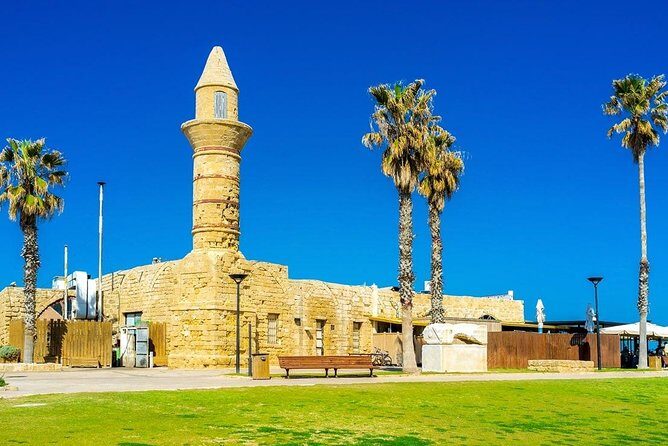
Acre is famous for being a place where layers overlap. The guide context matters here because the stones don’t come with one single story. You’re looking at different eras written into defenses, buildings, and infrastructure.
Strolling in the Old City on a guided schedule can be a smart approach. Left on your own, you might wander in circles. With a guide, you’re guided toward the points that connect to the bigger narrative.
Then you move to the Citadel of Acre, which includes admission and lasts about 1 hour. This is one of the more heavy-hitting stops on the tour.
Citadel of Acre: Crusader Remains, a Prison, and British-Era Gallows
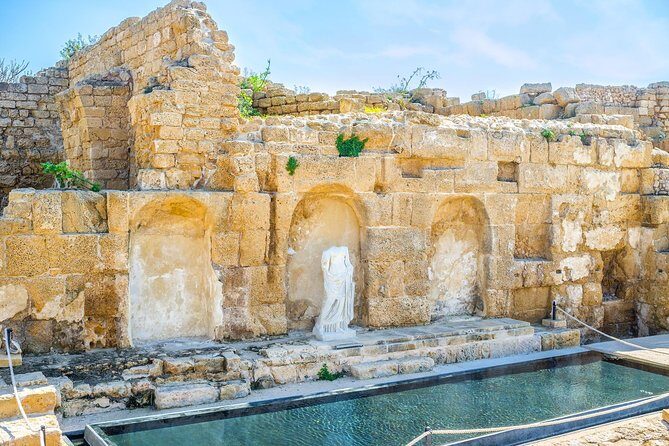
At the Citadel, you’ll see Crusader remains, plus details that show how later rulers used the site. The tour information specifically mentions:
- a prison used under Turkish rule
- gallows used under the British Mandate era to hang Jews who broke British law limiting Jewish immigration to Palestine after World War II
That list is sobering, and it’s also why this tour is more than scenic sightseeing. You don’t just see old walls. You see how power and punishment physically shaped the place.
If you prefer your history presented in a careful order, this is handled well in a guided format. The guide can connect what you see with why it mattered, instead of making you infer everything yourself from ruins and plaques.
Practical consideration: You’ll likely do some uneven walking and standing. Bring comfortable shoes and take breaks when you can.
How Much Time You’ll Spend Where (and How to Make It Count)
This day has a clear rhythm:
- Caesarea: 1 hour
- Baha’i Gardens in Haifa: 20 minutes
- Rosh HaNikra: 1 hour
- Border/grotto segment: 40 minutes
- Acre Old City: 1 hour
- Citadel of Acre: 1 hour
Plus driving time and the morning start.
That schedule means you should aim to:
- Get your “big photos” early at each stop so you’re not rushed at the end.
- Use the guide’s lead instead of trying to read every sign. In a day this packed, listening saves time.
A good tour day feels efficient because you’re not waiting around. The downside is that you can’t “linger forever.” If you know you love slow travel, you may want to plan extra time on your own later—especially around Acre.
Value Math: Why $108 Can Work (If You Want the Whole Circuit)
The headline price is $108, which sounds straightforward, but the real value is what’s bundled. This tour includes:
- hotel pickup and drop-off
- a professional guide
- an air-conditioned vehicle
- all entrance fees
Food and drinks are not included, so you’ll still need to budget for that part yourself.
Here’s the simple way to judge it: if you were trying to do Caesarea, Rosh HaNikra, and Acre on your own in one day, you’d spend time planning transport and likely pay multiple entrance tickets. This tour collects the costs and the coordination into one paid day, which is exactly what you want when you’re time-limited.
The best value tends to happen when:
- you want multiple sites without logistics stress
- you’d rather spend on one guided day than on half-baked DIY attempts
- you like having context for ruins and historical sites
What the Guides Add (And Why It Matters on This Route)
Guides can make a big difference on a route like this because you’re seeing places with layers, symbols, and changing eras. In the guide names included in this tour’s history of operations, you might meet people like Ms. Aviva, Dane, Sivan, or Yaacov (Jacob). When the guide is strong, it becomes easier to understand what you’re looking at and how the day fits together.
This tour also offers multilingual guiding in English, German, French, and Spanish, which helps if you’re traveling with someone who wants a shared language for the commentary.
If you care about hearing the story in your language, choose that language option during booking. It’s not just comfort. It’s how you’ll actually connect the dots between Caesarea’s Roman power and Acre’s later eras.
What to Pack for a Comfortable Day Up North
The itinerary has plenty of walking and lots of standing, especially at Caesarea and the Citadel. Since food isn’t included, you’ll also want to plan for energy.
Based on on-the-ground practical advice tied to this trip:
- Bring water
- Wear a hat
- Use good walking shoes
Also consider a light layer. Morning can feel cooler than midday along the coast, and you’re going in and out of different outdoor areas all day.
Best Fit: Who Should Book This Tour
This tour suits you if:
- you want to cover Caesarea, Haifa, Rosh HaNikra, and Acre in one go
- you prefer guided interpretation over self-guided wandering
- you’re comfortable with an early start and a full-day schedule
It may not be ideal if:
- you hate long car rides
- you want lots of free time to linger at one site
- you have strict limits on standing/walking
One more useful detail: the tour has a minimum starting age of 4 and a maximum of 40 travelers, which usually keeps the group manageable.
Should You Book This Tour?
I’d book this one if your priority is a structured day across northern coastal highlights, with entrance fees, guide, and transport handled for you. The mix is genuinely practical: Roman Caesarea, a quick Haifa garden hit, sea-cave scenery, and Acre’s layered old-town story—one after another, not fighting with schedules.
Skip it only if you’re likely to struggle with an early 5:40am departure or you need long free time at each stop. On this route, you’re moving, seeing, and learning efficiently. If that style fits your travel personality, this is a solid use of a day in the region.
FAQ
What time does the tour start?
The start time is 5:40am.
How long is the tour?
The duration is about 12 hours.
Is hotel pickup included?
Yes. The tour includes hotel pickup and drop-off. If you’re picked up from Jerusalem, you join the tour from Tel Aviv.
Are entrance fees included?
Yes. The tour includes all entrance fees.
What languages are the guided tours in?
Guided tours are available in English, German, French, and Spanish.
Is food included?
No. Food and drinks are not included, so plan for meals and bring what you need for comfort during the day.