REVIEW · HAIFA
Jerusalem & Bethlehem Tour from Haifa Port 2024 – Small Group
Book on Viator →Operated by Compass Travel Israel · Bookable on Viator
Jerusalem and Bethlehem in one cruise day. This small-group Christian highlights tour is built to fit a cruise schedule, with a real guide and the right mix of viewpoints and big-name churches. I like the way the Haifa Port pickup is set up so you can get moving fast, with the guide waiting at the exit arrival terminal holding a Compass sign.
I also really like the comfort and cost control here. You ride in a climate-controlled vehicle, and the tour lists entrance fees as included, so you’re not constantly stopping to pay at the door.
The main thing to watch is the pace: it’s an 8–10 hour day that stacks Jerusalem and Bethlehem together. Expect a long day of driving plus walking, and if traffic or crowds hit, you can lose time and feel the day running late.
In This Review
- Key highlights at a glance
- Why This Haifa Port Tour Works for Cruise Time
- Meeting at Haifa Port: Compass Sign Pickup and Smooth Start
- Mount of Olives: Panoramas and a View of Jerusalem’s Stories
- Gethsemane: Olive Groves, the Agony Story, and a Quiet Shift
- Mount Zion: King David’s Tomb and the Room of the Last Supper
- Old City Jerusalem Walk: Cardo and the Quarters You Pass
- Via Dolorosa to the Church of the Holy Sepulchre: Walking the Sorrowful Way
- Western Wall: The Kotel and the Temple Mount Reality
- Bethlehem’s Church of the Nativity and Manger’s Square
- Food and Clothing: How to Stay Comfortable in Worship Spaces
- Climate-Controlled Comfort vs. Real-World Traffic
- Small Group Size: Why Up to 18 People Feels Better
- Value for $255: What You’re Really Paying For
- Who This Tour Suits Best (and Who Should Skip It)
- Should You Book This Haifa Port Jerusalem and Bethlehem Tour?
- FAQ
- How long is the Jerusalem and Bethlehem tour from Haifa Port?
- Where do I meet the guide at Haifa Port?
- Are entrance fees included?
- Is lunch or food included?
- What dress code do I need for churches and worship sites?
- How big is the group?
Key highlights at a glance
- Port-timed transport so the day connects to your ship’s arrival and departure windows
- A/C vehicle between stops for a cooler, less exhausting day
- Old City walking through key quarters including the restored Cardo (Roman Road)
- Biblical places you can actually see from the Mount of Olives to Gethsemane and beyond
- Bethlehem’s Church of the Nativity with time at Manger’s Square
- Max 18 people for a more manageable group size than the big-bus option
Why This Haifa Port Tour Works for Cruise Time
Cruise days in the region have one brutal constraint: time. This tour is designed around your ship’s anchoring schedule and keeps the day to about 8–10 hours, which is about as long as you can go while still having a guided experience instead of a rushed dash.
The value isn’t just that it covers Jerusalem and Bethlehem. It’s that the transport is planned to your ship, with return service timed to your re-boarding window. That matters because the classic problem on shore excursions is getting back too late. Here, the “you’re on the clock” part is handled for you.
It’s also a licensed English-speaking guide setup, so you’re not stuck reading signs while everyone else stares at their phones. You’ll be able to connect what you see—Tomb, walls, churches—to the themes that bring people here in the first place.
You can also read our reviews of more tours and experiences in Haifa.
Meeting at Haifa Port: Compass Sign Pickup and Smooth Start
You start right at Haifa Port, and the meeting detail is clear: the guide waits at the exit arrival terminal with a Compass sign. That’s small, but it reduces the chaos factor. When you’re disembarking with dozens (or hundreds) of fellow cruise passengers, clear directions beat guesswork.
You should still plan to be early. Even with a good system, ports move differently depending on disembarkation flow. If you arrive a few minutes ahead of the coordinated pickup window, you buy yourself less stress later—especially because Jerusalem traffic can be unpredictable.
One more practical touch: you get a mobile ticket. That’s handy because you’re not hunting for paper vouchers while you’re carrying everything you brought off the ship.
Mount of Olives: Panoramas and a View of Jerusalem’s Stories
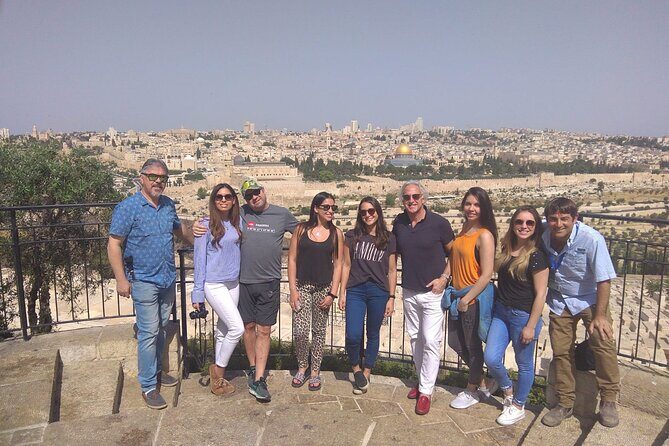
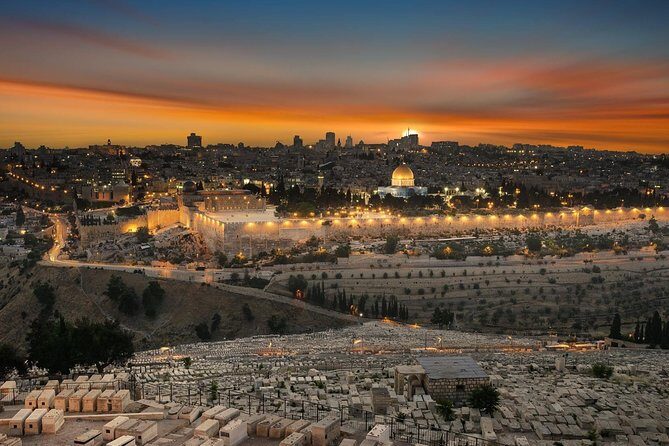
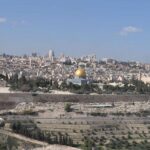
The day begins with a stop on the Mount of Olives, a place that works even if you don’t know a single Bible verse. You get a big panoramic overlook of Jerusalem, and that’s the point: it helps your brain make sense of where things are.
This is also a spiritually loaded spot in Christian tradition. The tour frames it around Jesus’ ascension in Acts (and the idea of return), plus the biblical geography that links Jerusalem to places like Bethany. Even if you’re coming for faith reasons, the perspective can still hit hard because you’re standing above the city’s layout.
You’ll have about 30 minutes here, so keep your expectations realistic. This is a viewpoint stop, not a long hike. If you want a slow photo session, pick a few angles and commit. Don’t try to cover the entire horizon.
Gethsemane: Olive Groves, the Agony Story, and a Quiet Shift
Right after the overlook, the route brings you to Gethsemane, at the foot of the Mount of Olives. This is where the tour shifts from sweeping views to intimate resonance: it’s tied to the moment of Jesus’ agony in the garden and the events leading to arrest.
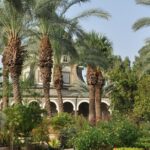
One detail I appreciate in how this stop is described: the setting isn’t generic. The church property includes small olive groves, adjacent to each other, identified with Gethsemane. That means you’re not only hearing about the place—you’re looking at a garden-like space that helps the story land.
Time is again about 30 minutes. You’ll want to slow down while you’re there, but don’t expect a long reflective break. If you’re sensitive to crowds inside sacred spaces later, use this stop to breathe and reset your energy for the Old City.
Mount Zion: King David’s Tomb and the Room of the Last Supper
Next comes Mount Zion, with visits to King David’s Tomb and the Room of the Last Supper. This is one of those “people come for different reasons, but everyone notices the gravity” stops. Even when you keep a tourist mindset, the site is hard to treat lightly.
There’s also a built-in reality check that I’m glad the tour includes: while King David’s Tomb is deeply sacred in Jewish tradition, the write-up notes there is no certainty it is the exact burial location described in the Bible. That’s a good balance, because it keeps your visit grounded instead of turning it into blind certainty.
You get about 1 hour on Mount Zion, which is enough to see the key areas without feeling like you’re in a factory line. Still, plan on some stairs and indoor movement. Dress for comfort because the pace ramps up once you hit the Old City.


Old City Jerusalem Walk: Cardo and the Quarters You Pass
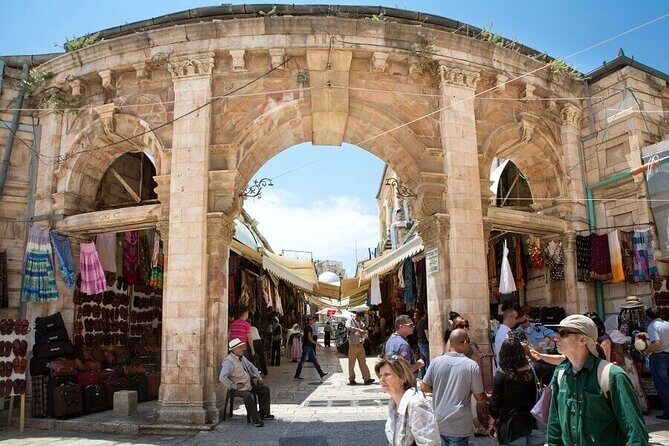
After Mount Zion, you enter the Old City of Jerusalem and walk through the Armenian and Jewish quarters. A highlight here is the Cardo—the Roman Road—described as recently excavated and restored. This matters because it isn’t just a church crawl. You’re walking the kind of street that once linked major Byzantine-era holy sites.
The tour’s connection between the Cardo’s southern segment (built during Justinian’s reign) and older Roman northern parts gives you more than a name to remember. You can look at the street and imagine Jerusalem as a connected hub instead of a set of isolated stops.
Expect about 1 hour for this segment. You’ll likely move through narrow lanes, and you’ll want your legs ready. Also, bring a practical mindset for entry lines and crowd flow—this part of the day lives or dies by how quickly groups can keep moving.
Via Dolorosa to the Church of the Holy Sepulchre: Walking the Sorrowful Way
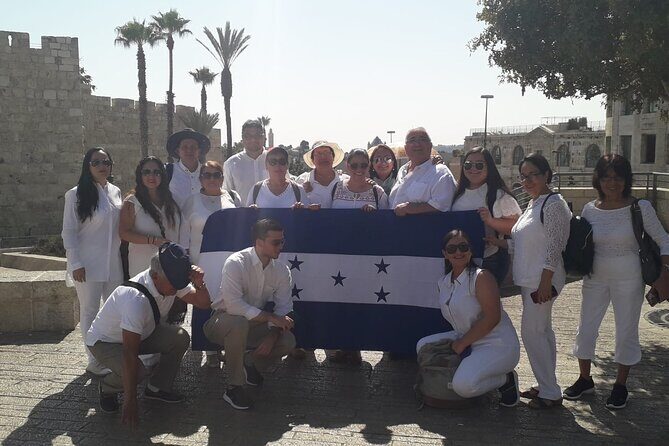
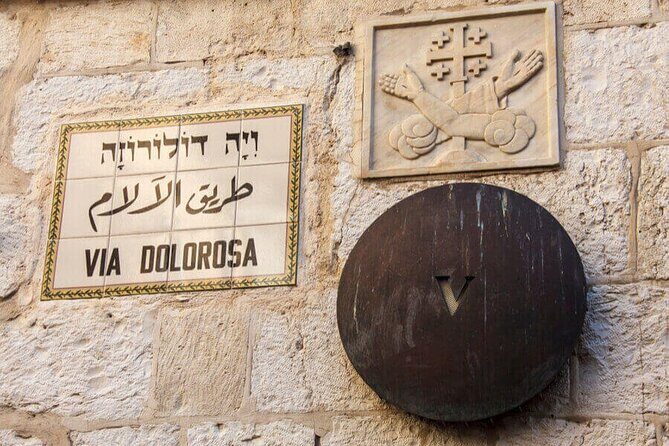
Then you head toward the Via Dolorosa in the Christian Quarter. This route is presented as the processional path connected to Jesus being forced by Roman soldiers toward crucifixion. Even if you’ve read the story before, seeing the narrow street setup and the ritual energy around it can make the narrative feel more immediate.
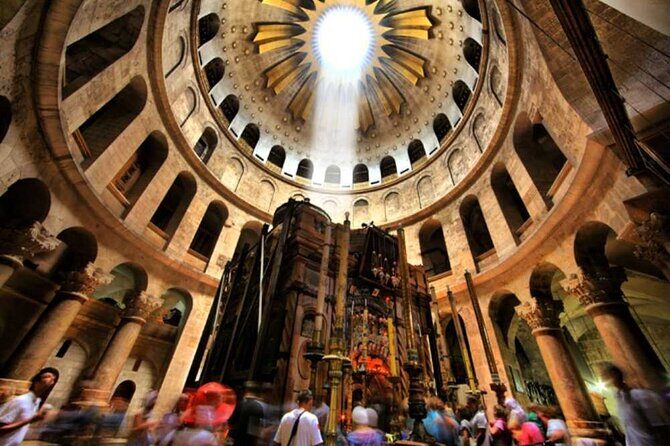
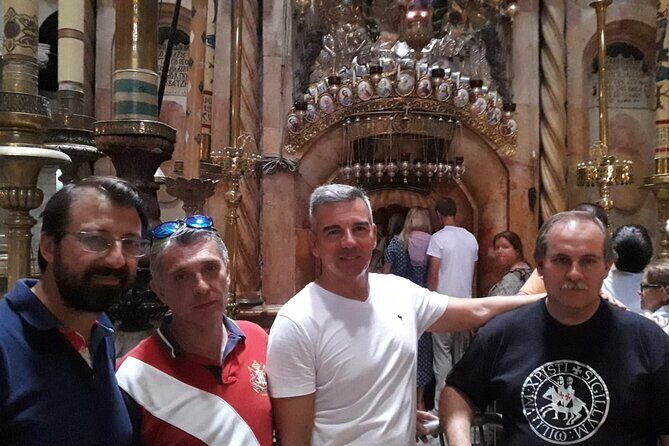
From there, the tour includes the Church of the Holy Sepulchre. This is framed as the most sacred site for millions of Christians, including the places identified with crucifixion, burial, and resurrection. The site centers on Calvary (Golgotha), and the description ties it to the Gospel accounts by name.
You’ll spend about 1 hour at the Holy Sepulchre area. Here’s the practical truth: this is a place where crowds can stack up in tight spaces. If you’re the type who needs personal space to feel comfortable, mentally prepare for that. Your guide’s job is to keep you moving and help you understand what you’re seeing without getting lost in the crowd.
Western Wall: The Kotel and the Temple Mount Reality
The Western Wall (also called the Wailing Wall or Kotel) is a short stop, around 30 minutes. Even with limited time, it’s worth treating this as more than a photo stop. It’s an ancient limestone wall tied to the Temple Mount’s holiness.
The tour explanation notes the key practical limitation: due to Temple Mount entry restrictions, the wall is the holiest place where Jews are permitted to pray. That context helps you interpret what you’re seeing—why people behave the way they do and why this location feels different from a typical sightseeing wall.
If you want to make your time count, keep your questions simple: What’s the wall? Why here? What restriction changed access? A good guide can translate those points quickly during your visit.
Bethlehem’s Church of the Nativity and Manger’s Square
Crossing into Bethlehem is often the “wow” moment for first-timers, because it shifts the atmosphere from Jerusalem’s big monuments to a place people visit specifically for the birth story. The tour frames Bethlehem as a Palestinian city experience too, which helps you remember this isn’t only a holy stage—it’s a living community.
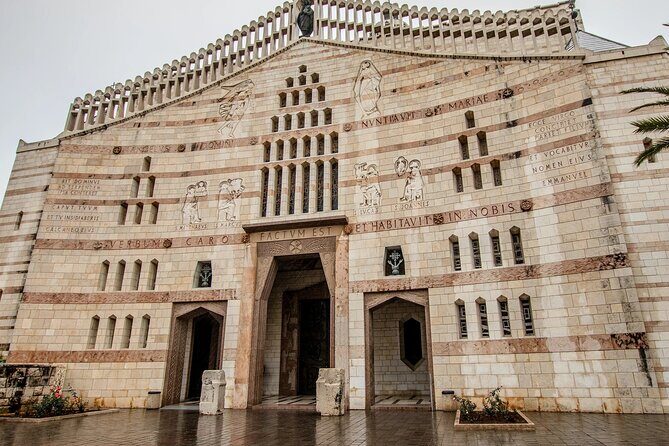
In Bethlehem, you visit the Church of the Nativity and Manger’s Square, with about 2 hours. The church includes a grotto where Jesus is said to have been born, and it’s presented as the oldest continually used site of Christian worship. That kind of continuity matters when you’re standing in a place that has pulled pilgrims for centuries.
Be prepared for “small space, big meaning.” These sites can feel dim and enclosed, and that’s normal here. If you’re expecting a Christmas-card glow, you might be surprised. But if you lean into the history-and-faith atmosphere, it can be powerful.
Food and Clothing: How to Stay Comfortable in Worship Spaces
Two practical issues can make or break this day: what you wear and what you do about food.
First, the dress code is strict. For places of worship and selected museums, your knees and shoulders must be covered. That means no shorts and no sleeveless tops for both men and women. If you don’t meet the rule, you can risk refused entry. I’d plan to bring a light layer even if it feels warm early.
Second, food and drinks aren’t included. There’s no lunch stop listed as included, so you should plan to eat on your own before or after the guided portion. On a long day like this, running on empty makes the walking feel twice as hard.
A small planning tip: carry a bottle of water you can handle discreetly, plus any basic meds. You’ll thank yourself between stops and during any waiting time.
Climate-Controlled Comfort vs. Real-World Traffic
The tour includes air-conditioned transfers, which is a genuine plus. Between Jerusalem stops, you’re spending time in a vehicle, and a cooled cabin can keep the day from feeling like a slow endurance test.
But here’s the tradeoff: the region can get congested. Even with A/C, time can slip if roads tighten or crowds build around holy sites. That’s why the tour is designed for cruise timing, but it doesn’t make traffic disappear.
Think of it this way: the vehicle helps your comfort; your guide helps your flow; but you still have a day that runs on city schedules, crowds, and sacred-space rules. The best mindset is flexible expectations. If you go in expecting a tight timeline, you’ll be disappointed. If you go in expecting a guided highlights loop, you’ll do better.
Small Group Size: Why Up to 18 People Feels Better
This experience caps at 18 travelers, which is the sweet spot for many people. Big buses can turn holy sites into long waits and short looks. A smaller group usually means faster movement and more direct guidance from your licensed English guide.
That said, “small group” doesn’t automatically mean “everyone sits perfectly together.” If you’re picky about seat placement or you’re with a couple and want to sit side-by-side, it’s worth knowing the vehicle may not always match your seating preferences.
The upside is that the day can still feel personal. When the group is small enough, it’s easier for a guide to adjust flow—like helping you prioritize what matters most if a stop runs long due to line or crowd conditions.
Value for $255: What You’re Really Paying For
At $255 per person, this isn’t a budget hop across town. But it’s also not one of those all-day “pay more, see less” excursions.
Here’s the value math that matters:
- Round-trip transport from Haifa Port timed to your ship
- Licensed English guide for the day
- All transfers in A/C vehicles
- Entrance fees included, so you avoid surprise ticket costs
Then subtract what you should plan to cover:
- Food and drinks (not included)
- Lunch (not included)
If you’d otherwise hire a driver or buy separate tickets on your own, the “included entrance fees + guided flow + port timing” often makes the price feel fair. If you’re someone who hates crowds and wants long, quiet time in each space, this price may feel like you’re paying for intensity rather than slow contemplation—because the day is packed.
So the real question isn’t just cost. It’s: do you want the highlights efficiently, with a guide keeping you on track? If yes, the price tends to make sense.
Who This Tour Suits Best (and Who Should Skip It)
This is a strong match if you:
- are on a cruise with limited shore time
- want Christian sites in both Jerusalem and Bethlehem without piecing it together yourself
- prefer a smaller group and an English-speaking guide
- don’t mind a long day with a mix of walking and viewpoints
It’s also a decent fit if you like having context. The tour approach connects places like Mount of Olives, Gethsemane, Mount Zion, and the Old City routes to the broader story people come to experience.
You might think twice if:
- you need a relaxed pace with lots of downtime
- you struggle with tight indoor spaces and crowd flow
- you’re hoping for long museum-style time in each stop
Should You Book This Haifa Port Jerusalem and Bethlehem Tour?
I’d book this if you want a guided “greatest hits” day that respects cruise realities. The combination of Haifa Port pickup/drop-off, A/C transport, and included entrance fees is exactly how you protect your time and your wallet.
I would only hesitate if you know you get grumpy when the day feels rushed. In that case, Jerusalem alone can deserve a full day. But if you’re visiting during a cruise stop and you want Bethlehem plus Jerusalem’s key Christian landmarks in one day, this tour is built for that mission.
FAQ
How long is the Jerusalem and Bethlehem tour from Haifa Port?
The tour runs about 8 to 10 hours, depending on your ship’s anchoring schedule.
Where do I meet the guide at Haifa Port?
Meet at Haifa Port at the exit arrival terminal. The guide will be waiting with a Compass sign.
Are entrance fees included?
Yes. The tour lists admission/entrance tickets as included for the stops.
Is lunch or food included?
No. Food and drinks are not included, and lunch is not included.
What dress code do I need for churches and worship sites?
You need to cover knees and shoulders. No shorts or sleeveless tops. If you don’t follow the dress code, you may be refused entry.
How big is the group?
This tour has a maximum of 18 travelers.