REVIEW · TEL AVIV
Tel Aviv & Old City of Jaffa – Tiny group from Tel Aviv
Book on Viator →Operated by Hallelujah Tours · Bookable on Viator
White City meets ancient port in one walk. This tiny-group tour connects Neve Tzedek with Jaffa’s Old City, and it does it at a calm pace with real context for why Tel Aviv and Jaffa matter. I like that the stops are specific (HaTachana, the Suzanne Dellal Centre, the Clock Tower, and the Ottoman Seraya building), and I also like that the guide ties the architecture to the UNESCO story people hear about in Tel Aviv. One possible drawback: it’s only 3 to 4 hours, so you’ll leave wanting more time in both neighborhoods.
The group stays small (max 10), so you’re not doing the usual slow shuffle of waiting for late arrivals. You also finish at the Clock Tower in Jaffa, which makes it easier to keep exploring on your own right after the tour ends. Just wear comfortable shoes and be ready for a fair amount of walking.
In This Review
- Key things to know before you go
- Neve Tzedek: Tel Aviv’s oldest-southern starting point
- Suzanne Dellal Centre stop: culture inside a historic neighborhood
- HaTachana in the middle of the route: the old railway station effect
- Proceeding into Jaffa: the ancient-port atmosphere shift
- The Clock Tower: your Jaffa orientation point
- Ottoman-era remnants: Seraya as a history clue
- Independence Hall and UNESCO context: tying it together for modern Israel
- Price and what you’re really paying for ($139 for 3–4 hours)
- Walking comfort and the small details that matter
- Logistics: the start at Dan Panorama and the finish at the Clock Tower
- Who this tour suits best (and who might want another option)
- Should you book this Tel Aviv & Old City of Jaffa tour?
- FAQ
- How long is the Tel Aviv & Old City of Jaffa tour?
- What is the group size for this tour?
- What’s included in the price?
- Is food included?
- Are admission tickets included?
- Where does the tour start and end?
- What time does the tour begin?
- Is the tour physically demanding?
- What should I bring in winter?
- What happens if weather is bad or the minimum number of travelers isn’t met?
Key things to know before you go
- Tiny group (max 10) means less time wrangling and more time actually looking.
- Neve Tzedek first: you start in Tel Aviv’s older south neighborhood, not the beachfront crowds.
- HaTachana + Suzanne Dellal Centre: you get the 19th-century railway-station conversion story in plain terms.
- White City / UNESCO context: the guide points out the Bauhaus-style architecture that helped earn global recognition.
- Jaffa’s anchors: Clock Tower views and Ottoman-era remnants like the Seraya building.
- Easy to continue after: the tour ends right at Jaffa’s Clock Tower.
Neve Tzedek: Tel Aviv’s oldest-southern starting point
This tour begins in the south part of Tel Aviv at the Dan Panorama Tel Aviv area (Kaufmann St 10), and it starts with Neve Tzedek. That matters because Neve Tzedek is often where first-time visitors can get a better feel for how the city looked and lived before the “Tel Aviv postcard” image took over.
You’ll walk through Neve Tzedek and get a chance to slow down and notice the local houses. The tour style here is less about ticking boxes and more about helping you see patterns—how neighborhoods grow, how building styles reflect time periods, and how daily life shows up in architecture. If you’re the type who likes to read a city’s story in brick and street layout, this opening section will click.
One practical note: Neve Tzedek is a walking neighborhood. So this is a good moment to be glad you booked a tour that keeps the group small. When you aren’t packed shoulder-to-shoulder, you actually have the time to look up at doorways, windows, and façades.
You can also read our reviews of more city tours in Tel Aviv



Suzanne Dellal Centre stop: culture inside a historic neighborhood
After Neve Tzedek’s house-and-street character, you move toward the cultural center tied to the area: the Suzan Dellal Centre. This stop helps shift your understanding from architecture-only to how people use these spaces. It’s a good place to learn how a neighborhood keeps its identity while still functioning as a modern cultural hub.
Even if you don’t plan to go inside any venue, the value is in the explanation you get from the licensed guide. You’ll hear how the neighborhood’s story connects with what people now recognize as Tel Aviv’s distinctive character.
If you’re hoping for a tour that’s strictly about famous monuments, you might find this part less “photo-stop, next!” and more “here’s why this place matters.” Personally, I like that—context makes the rest of the day easier to understand.
HaTachana in the middle of the route: the old railway station effect

Next comes HaTachana—the 19th-century converted railway station with its unique structures. This is one of those Tel Aviv sights that works even if you don’t know the dates in advance. The point of the stop is to show you how adaptive reuse works in real life: an old industrial/transport space becomes a cultural and leisure area.
On a short tour like this, HaTachana is a smart inclusion. It gives you a visible example of change over time. You’ll see the building shell and the way the space is shaped by its earlier purpose. And because the tour keeps moving, you won’t get stuck in a long museum-style segment.
What to watch for: you’ll probably want a few photos, but keep your eye on the guide while you walk. The best part here is the explanation of what you’re seeing, not just the fact that it’s “old and cool.”
Proceeding into Jaffa: the ancient-port atmosphere shift
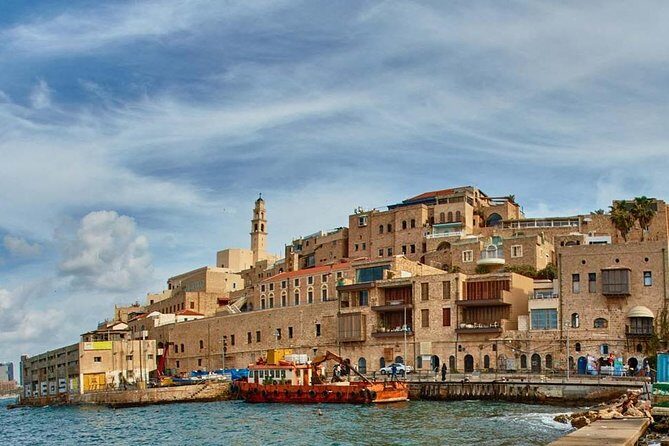
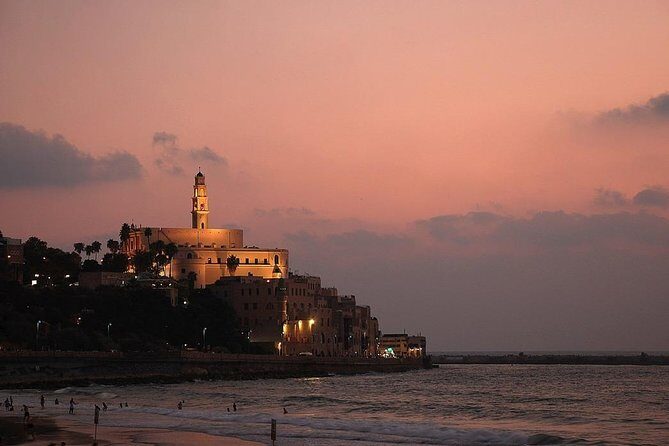
Then you head to Jaffa, one of the oldest cities in the world and historically a port city. This is a classic “you can feel it change” transition. Tel Aviv can look sleek and modern; Jaffa tends to read older—different street rhythm, different layers of history.
The tour’s Jaffa segment includes several “anchors” that help you keep orientation. Rather than wandering without a thread, you’ll have a clear route and a clear reason for each stop. That’s a big deal in Jaffa, where it’s easy to get visually distracted and forget to look for the historical clues.
This is also the part where the small group matters again. Jaffa’s streets can feel tight, so if you’re in a big group you’ll lose time. With a max of 10 people, the pace stays human.
The Clock Tower: your Jaffa orientation point
One of the best-known stops is the Clock Tower on Yefet St, which is also where the tour ends. The Clock Tower works as more than a landmark—it’s a “here’s where you are” reference point that makes it easier to keep exploring after the tour.
During the tour, you’ll view it as part of the Old City route. Ending here is convenient: you’re not stuck needing to travel again to go on with your day. If you want a smooth itinerary, this ending spot is a big plus.
If you’re using public transit or walking further into Jaffa afterward, plan your next steps around that ending location. It’s one of the few tours in the area that finishes right in a place that makes sense for continuing on foot.





Ottoman-era remnants: Seraya as a history clue
The itinerary includes the Ottoman “Seraya” building, plus other Old City points. Even without going deep into details of every era (this is only a few hours), Seraya helps you understand how different periods left physical marks.
This stop adds substance to the Jaffa experience. It’s easy to think of Old City areas as “old streets” only. With an Ottoman-era structure on the agenda, you get a more layered sense of time and governance—how architecture and administration can leave a lasting footprint.
I also like that this tour doesn’t treat history as separate from daily life. You’re in streets where people live and walk now, while learning how earlier systems shaped the space.
Independence Hall and UNESCO context: tying it together for modern Israel
The tour’s highlights mention stops such as Independence Hall and the broader explanation of why the city earned UNESCO World Heritage status. This is where the tour earns its name as an introduction—because the route is not only pretty views. It’s also about explaining the “why” behind Tel Aviv’s international reputation.
In Tel Aviv, the key theme tied to UNESCO is the Bauhaus-style architecture (often discussed under the White City identity). The guide’s job is to point out the features you might otherwise miss: the design language, the way buildings share stylistic traits, and how that created a recognizable city identity.
This isn’t just academic. Understanding what UNESCO recognized changes how you look at the city. Instead of seeing buildings as isolated objects, you start seeing them as part of a whole urban plan and a specific design era.
And that’s where the tour becomes useful for you beyond the walk. You can carry this framework into other neighborhoods or museums later.
Price and what you’re really paying for ($139 for 3–4 hours)
At $139 per person for about 3 to 4 hours, this isn’t a budget “walk and take photos” deal. But you also aren’t just buying a route. You’re paying for:
- a professional licensed guide
- small-group time (max 10), which usually means less downtime
- a structured path that links Tel Aviv’s Neve Tzedek and Bauhaus-era identity to Jaffa’s Old City anchors
- a route that starts in Tel Aviv and finishes at the Clock Tower, which saves you the “how do I get from here to there” headache
If you’re comparing this to a self-guided plan, the value is the interpretation. A guide can point out the specific architecture cues and explain how UNESCO recognition fits into the city’s story.
A realistic expectation check: it’s not a full-day “memorize every neighborhood.” It’s a focused introduction. If you want long stops and lots of sit-down time, you might feel it moves quickly. If you want clarity fast—and you plan to keep exploring afterward—this price can make sense.
Walking comfort and the small details that matter
This tour asks for moderate physical fitness. That doesn’t mean it’s a hardcore trek, but it does mean you should plan for steady walking. Comfortable shoes aren’t optional here. Also, because it’s outdoors much of the time, dress for weather.
Seasonal tip: in winter, the tour info calls for an umbrella and warm clothing. That’s practical advice. Tel Aviv and Jaffa weather can shift your comfort level quickly, and you’ll enjoy the explanations more if you’re not cold or soaked.
One more tip: bring a charged phone. The tour uses a mobile ticket, and having your phone handy makes everything smoother.
Logistics: the start at Dan Panorama and the finish at the Clock Tower
You meet at Dan Panorama Tel Aviv (Kaufmann St 10) at 10:00 am and finish at the Clock Tower, Yefet St 14. That start-to-finish flow is a real convenience. You’re not forced to backtrack to return to Tel Aviv immediately.
It also helps you plan your day. If you like to explore independently, ending near the Clock Tower means you can continue through Jaffa without a gap. And if you need to catch transit later, you’re ending in a central, easy-to-reference area.
The other detail that can affect your experience is timing. The tour is designed for 3 hours (listed as approx.), so don’t schedule a “must be somewhere else” task too close to the end. Leave some buffer if you can.
Who this tour suits best (and who might want another option)
This is a great fit if you want:
- a quick, organized way to understand Tel Aviv’s identity beyond beaches
- a focused look at Neve Tzedek, HaTachana, Bauhaus-style architecture, and Jaffa’s Old City anchors
- a guide who can explain how the city’s landmarks connect to larger historical themes
- a tour that’s small enough to feel personal (max 10)
It may be less ideal if you want:
- lots of food stops (this tour does not include food & drinks)
- long museum time or extended indoor exhibits
- a tour that covers every corner of Jaffa and all of Tel Aviv
If you like to pack your day with walking but also want the route stitched together with explanations, this is a strong match.
Should you book this Tel Aviv & Old City of Jaffa tour?
I’d book it if you’re looking for a short, high-signal introduction—Neve Tzedek to HaTachana to Jaffa, with UNESCO-era architecture context and Ottoman-era reminders built into the route. It’s good value when you care about understanding what you’re seeing, and the small group size helps you actually notice details instead of just moving as a crowd.
I’d hesitate if you’re expecting a long, fully comprehensive day. At this duration, you’ll learn a lot, but you won’t see everything. Also, bring a realistic attitude about timing: keep your plans flexible and make sure your phone is available in case the operator needs to coordinate.
If your goal is to get your bearings fast and leave with a clearer picture of Tel Aviv’s White City story and Jaffa’s layered old-port identity, this tiny-group tour is an easy yes.
FAQ
How long is the Tel Aviv & Old City of Jaffa tour?
It runs for about 3 to 4 hours.
What is the group size for this tour?
The group is limited to a maximum of 10 travelers, and it requires a minimum of 3 people.
What’s included in the price?
The tour includes a professional licensed tour guide.
Is food included?
No. Food and drinks are not included.
Are admission tickets included?
The tour lists admission ticket as free.
Where does the tour start and end?
It starts at Dan Panorama Tel Aviv, Kaufmann St 10, Tel Aviv-Yafo, and ends at the Clock Tower, Yefet St 14, Tel Aviv-Yafo.
What time does the tour begin?
The start time is 10:00 am.
Is the tour physically demanding?
It’s designed for travelers with moderate physical fitness. Comfortable shoes are recommended.
What should I bring in winter?
Bring an umbrella and warm clothing.
What happens if weather is bad or the minimum number of travelers isn’t met?
This experience requires good weather. If it’s canceled due to poor weather, you’ll be offered a different date or a full refund. If the minimum number of travelers isn’t met, you’ll also be offered a different date/experience or a full refund.