REVIEW · HAIFA
Haifa Shore Excursion: Private Jerusalem and Bethlehem Day Trip
Book on Viator →Operated by Bein Harim Ltd · Bookable on Viator
One day can change how you read Jerusalem. This Haifa port excursion lines up Mount of Olives viewpoints and Old City walking with a private guide who explains what you see and why it matters. Two big wins for me: the fast orientation from the Mount of Olives and the way the guide connects the holy sites to today’s reality. The only catch: the day is packed, so you’ll feel the time pressure, especially inside major churches.
You’ll get a good sweep of Jerusalem’s neighborhoods and then head to Bethlehem for the birthplace landmarks, including Manger Square, the Church of the Nativity, and the Milk Grotto. I also like that it’s built around cruise-day practicality: port pickup and drop-off, an air-conditioned vehicle, and a mobile ticket so you spend less time figuring out logistics.
In This Review
- Key Things I’d Plan For
- Port-To-Old-City: Why This Format Works
- Mount of Olives Views: Getting Your Bearings Fast
- Old City on Foot: Christian, Jewish, Armenian, and Muslim Quarters
- Christian Quarter (about 30 minutes)
- Jewish Quarter and the Byzantine Cardo (about 30 minutes)
- Armenian Quarter (about 20 minutes)
- Muslim Quarter and the Bazaar (about 30 minutes)
- Western Wall + Holy Sepulchre + Via Dolorosa: The Meaningful Triad
- Western Wall (about 20 minutes)
- Church of the Holy Sepulchre (about 20 minutes)
- Via Dolorosa stations (about 40 minutes total)
- Bethlehem in Two Hours: Manger Square and the Nativity Church
- Manger Square walking time
- Church of the Nativity (about 30 minutes)
- Milk Grotto and St. Catherine: Extra Stops With Different Energy
- Milk Grotto chapel (about 20 minutes)
- Church of St. Catherine of Alexandria (about 20 minutes; not included)
- Price and Value: What You’re Paying For (and What You’re Not)
- Logistics That Actually Affect Your Comfort
- Who This Day Trip Suits Best
- Should You Book This Haifa to Jerusalem and Bethlehem Tour?
- FAQ
- Is this tour private or shared?
- How long is the Haifa day trip to Jerusalem and Bethlehem?
- Where does the tour start?
- What’s included in the price?
- Are entrance fees included?
- Do I need modest clothing for holy sites?
- Do I need a passport?
Key Things I’d Plan For
- Mount of Olives first: get the city-view context before you start walking the Old City
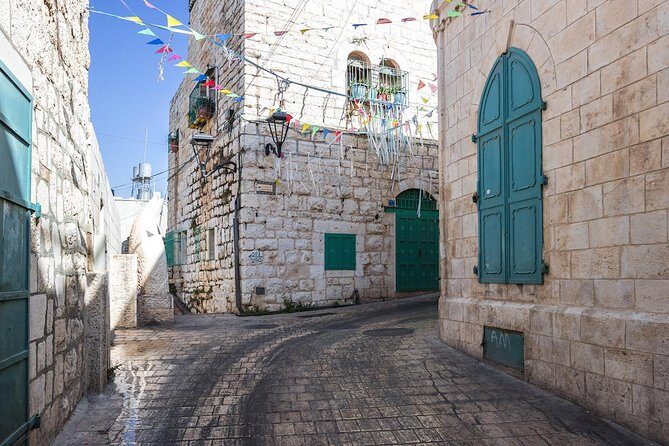
- Old City quarters on foot: Christian, Jewish, Armenian, and Muslim areas give you the full “patchwork” feel
- Western Wall + Holy Sepulchre + Via Dolorosa: three of the most meaningful stops, linked in one route
- Bethlehem walking time: time in Manger Square plus entry into the Church of the Nativity
- Milk Grotto + optional St. Catherine: extra religious stop that adds variety beyond the headline sites
- Guides that keep you moving and informed: on this route, guides like Benny, Moshe, and Tamar are known for history, Q&A, and staying on cruise schedule
Port-To-Old-City: Why This Format Works
A private shore excursion can feel like a luxury, but on this route it’s more than comfort. Haifa to Jerusalem and Bethlehem is a long day on any schedule. Having port pickup and drop-off means you’re not spending precious hours coordinating transport or figuring out where to meet.
The other reason this format works is the pacing. You don’t just “see” places. You get an order that helps everything click. Starting at Mount of Olives gives you geography. Then you move into Jerusalem’s Old City quarters and major holy sites while your guide keeps the story straight.
There’s also the cruise-day factor. You’re signing up for a specific return window, so the itinerary leans toward efficiency. That’s a plus if you only have one day and you want the essentials covered. It can be a minus if you prefer to linger in quiet corners without a stopwatch.
You can also read our reviews of more private tours in Haifa

Mount of Olives Views: Getting Your Bearings Fast
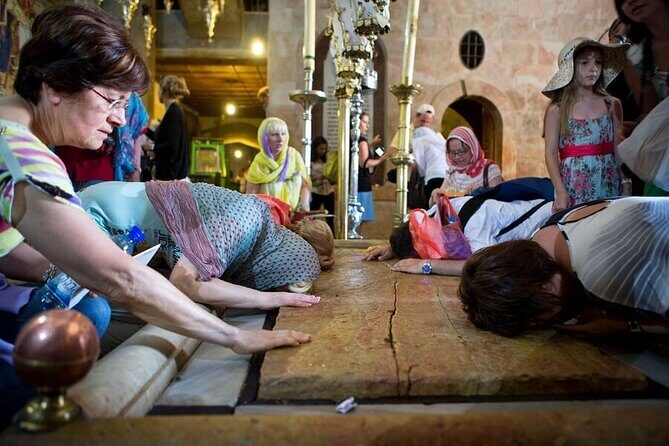
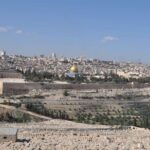
You start with a stop at the Mount of Olives, about 30 minutes. Admission is free for this viewpoint stop, and that matters because it keeps the day from feeling like everything is ticketed-but-short.
This is the moment where you get orientation. Jerusalem’s Old City sits in a bowl-like layout, and from here you can connect what you’ll walk later to what you’re looking at now. Even if you’ve studied maps before, seeing the city from this height makes the Old City route feel less like a maze.
Practical tip: bring something for the light. This stop is short, and the views are the point. If you can, plan your photos early. And remember that it can get cool or breezy depending on the season, even when the sun looks strong.
Old City on Foot: Christian, Jewish, Armenian, and Muslim Quarters
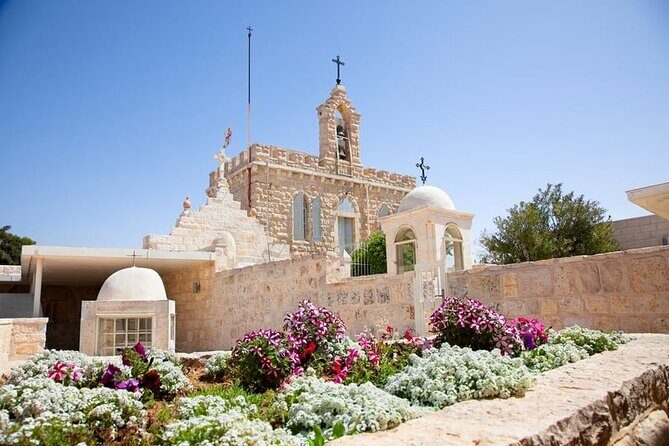
After the viewpoint, the tour shifts into walking mode with multiple Old City quarters. These stops are individually brief, but together they do something valuable: they show you Jerusalem as a living set of neighborhoods, not just a checklist of monuments.
Christian Quarter (about 30 minutes)
In the Christian Quarter you get a feel for street life and faith traditions side-by-side. Even without long formal visits, the neighborhood layout and atmosphere help explain why Jerusalem’s holy places have shared history with competing claims and communities.
Dress tip again: modesty matters here as much as at the churches. Keep knees and shoulders covered to avoid last-minute fixes at the entrances.
Jewish Quarter and the Byzantine Cardo (about 30 minutes)
Next you’re in the Jewish Quarter, including time around the Byzantine Cardo. This is one of those stops where a guide’s explanations can really change what you notice. The Cardo is tied to the idea of ancient Jerusalem’s main thoroughfare, so you’re not only seeing a current street network—you’re seeing the layered outline of older ones.
This is a good checkpoint for first-timers. You start picking up patterns: where roads run, how the Old City funnels you, and how close everything really is when you’re walking.
A few more Haifa tours and experiences worth a look

Armenian Quarter (about 20 minutes)
The Armenian Quarter stop is shorter, which means it’s more of a taste than a full exploration. Still, that quick hit can be useful. You’ll notice the shift in language, signage, and local businesses as you move between quarters, and it reinforces that Jerusalem isn’t one uniform “theme.” It’s different communities woven together.
Muslim Quarter and the Bazaar (about 30 minutes)
Then comes the Muslim Quarter with time to explore the colorful bazaar. This part can be sensory in a good way: textures, small shopfronts, and the feeling of everyday commerce right beside sacred sites.
Practical advice: wear shoes you trust. Even if each stop is timed, the total walking adds up. Also, keep your phone secure. Market crowds can tighten quickly in narrow streets.
Western Wall + Holy Sepulchre + Via Dolorosa: The Meaningful Triad
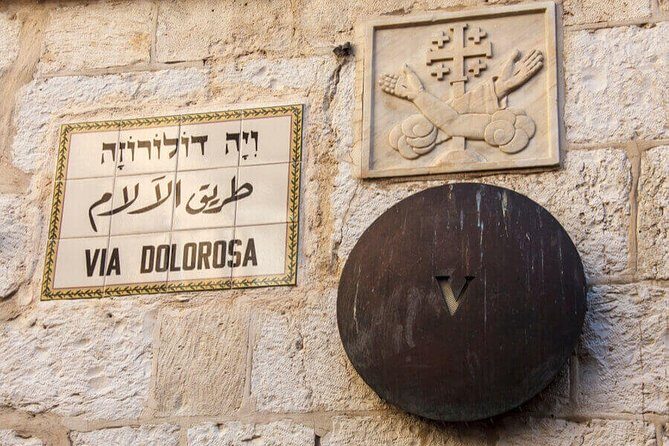
By the time you reach the Western Wall, you’ve already been building context with the quarters. That makes this stop more than a photo break.
Western Wall (about 20 minutes)
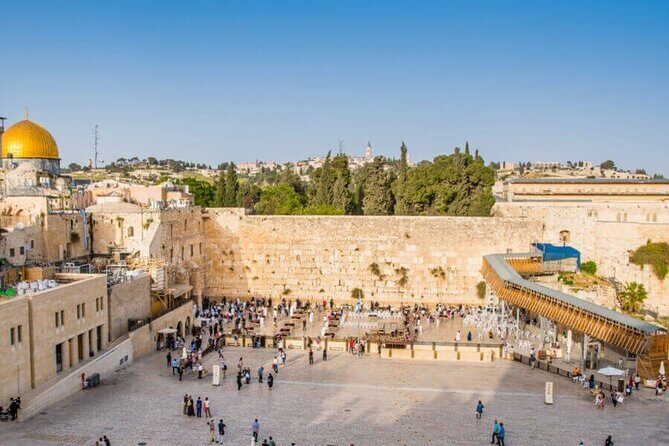
The Western Wall is short on the clock, but it’s one of the places where your guide’s positioning matters. You’ll have time to stand, reflect, and notice the rituals that shape the space. Even if you’ve seen pictures before, the physical closeness and the movement around you is different in person.
Tip: if you want a calmer moment, follow your guide’s cues on where to stand and when to step aside. The flow can change fast.
Church of the Holy Sepulchre (about 20 minutes)
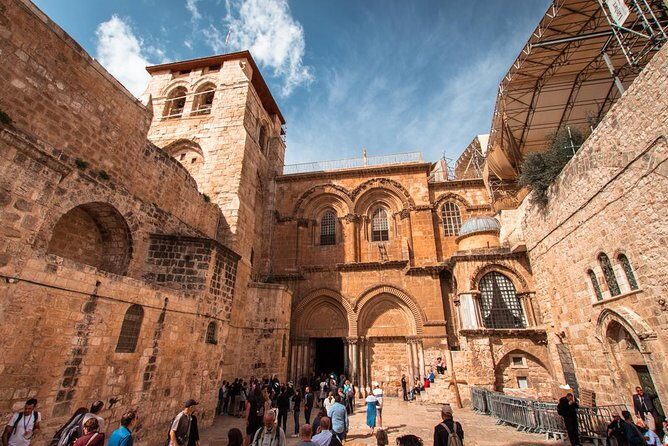
Next is the Church of the Holy Sepulchre. This is a big stop, but the time is limited. Expect that the building’s layout and crowds can affect how long you linger in any one area.
The value here isn’t “perfect sightseeing.” It’s experiencing the scale and atmosphere of one of Christianity’s most significant sites—while your guide helps you understand what you’re looking at and which areas are most important.
Via Dolorosa stations (about 40 minutes total)
Then you cover part of the Way of the Cross, the Via Dolorosa, with time at some stations (about 40 minutes). This is a good use of time because the route connects geography and story. You’re moving through a sequence rather than standing still at separate points.
Consideration: depending on the day’s crowds and security checks, your exact flow through stations may feel more constrained than the ideal “textbook walk.” Build in patience. This route rewards focus more than speed.
Bethlehem in Two Hours: Manger Square and the Nativity Church
After Jerusalem, the tour heads to Bethlehem, with about two hours of time in the area. That’s a helpful amount—enough to feel like you’re there rather than just passing through.
Manger Square walking time
In Bethlehem you’ll stroll around Manger Square. This area is the emotional center for many people coming here. Even if your beliefs are personal rather than formal, the square’s significance tends to land quickly.
Practical tip: treat Manger Square as your “reset moment.” Use it to buy water if you need it, check your bearings, and make sure your clothing fits modesty requirements for entering churches.
Church of the Nativity (about 30 minutes)
Then you’ll go inside the Church of the Nativity for about 30 minutes. Again, that’s not a long church visit. But it’s long enough to experience the scale, the sacred atmosphere, and the sense of stepping into an older layer of time.
If you care about photography, remember that inside churches, lighting can be tricky. Keep your expectations realistic and focus on moments rather than perfect shots.
Milk Grotto and St. Catherine: Extra Stops With Different Energy
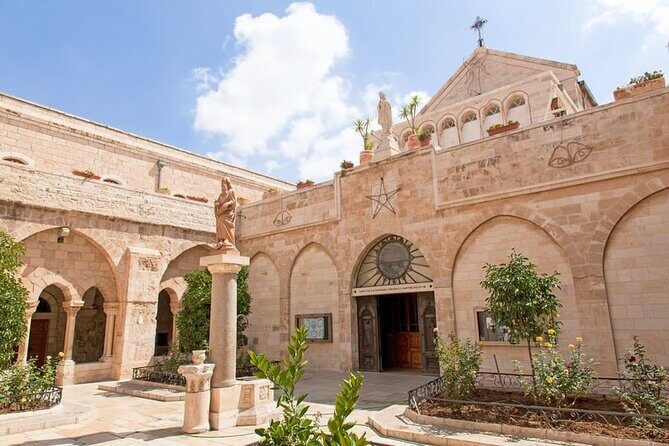
This day adds variety after the headline sites, which I like. Instead of only doing the two biggest Bethlehem stops, you also visit the Milk Grotto and may add the Church of St. Catherine of Alexandria if possible.
Milk Grotto chapel (about 20 minutes)
The Chapel of the Milk Grotto is about 20 minutes. It has a distinct feel from the Nativity Church—more of a quiet, smaller stop where people come for its traditions and symbolism.
Even if you don’t know the details ahead of time, the value is the change of pace. After Jerusalem’s walking and dense holy-site concentration, this can feel like a breath.
Church of St. Catherine of Alexandria (about 20 minutes; not included)
The Church of St. Catherine of Alexandria is listed as a possible visit (about 20 minutes) and it notes that admission is not included. That means you might need to pay separately if the stop happens for your group.
If you’re the kind of person who likes finishing with an additional religious site outside the main headline circuit, this can be worth it. If you’d rather spend every minute only where you’re guaranteed to get in, just keep flexibility in mind.
Price and Value: What You’re Paying For (and What You’re Not)
At $700 per person, this isn’t a budget excursion. So you should ask: what does that money buy you besides transport?
Here’s what’s clearly included:
- Port pickup and drop-off in Haifa
- A professional private guide
- Air-conditioned vehicle
- Mobile ticket
What’s not included:
- Food and drinks
- Toll and parking fees
- Entrance fees
So the value depends on how you travel. If you’d otherwise spend time arranging separate transport, waiting for buses, or losing daylight to transfers, this private format starts to make sense. You’re paying for reduced friction and someone to steer you through the key holy-site route.
The other value is the guide. In the strongest feedback tied to this experience, guides like Benny, Moshe, and Tamar are praised for giving context that goes beyond plaques—history, current political climate, and smart answers. That matters on a day like this because Jerusalem and Bethlehem aren’t neutral ground. A good guide helps you understand what you’re seeing without turning it into a lecture.
One more reality check: because entrances and food aren’t included, your final cost may rise a bit depending on what you eat and whether any paid entries are required.
Logistics That Actually Affect Your Comfort
You’ll be in motion for about 10 hours (approx.), starting and ending at Haifa Port. That’s a long day, even if it’s private. The itinerary is structured with multiple timed segments, which makes it feel well-managed—but it also means you won’t have infinite time in each stop.
A few comfort rules I’d follow:
- Wear shoes built for walking and uneven surfaces.
- Bring a light layer. Church interiors and morning-to-afternoon weather swings happen.
- Plan for modest dress. Covered knees and shoulders are required at holy sites.
- Bring a current valid passport. You’ll need it on travel day.
Because it’s a private group, your experience is more consistent. You won’t be stuck waiting for strangers to reappear after a bathroom stop. That said, you still follow the realities of security and crowd movement in the Old City and major churches.
Who This Day Trip Suits Best
This is a strong fit if:
- You’re doing Haifa on a cruise day and want the major highlights without negotiating.
- It’s your first time in Jerusalem and you want an organized route that makes geography click.
- Your group values a guide who can explain not only sacred sites, but also what shapes life and tensions today.
- You want a route that balances viewpoints, neighborhoods, and both Jerusalem and Bethlehem landmarks.
It may be less ideal if:
- You prefer long, unhurried visits where you can sit in one place for an hour.
- Your top priority is deep study of a single site rather than seeing several in one day.
- You want food fully handled. Since meals aren’t included, you’ll need to plan your own breaks.
Should You Book This Haifa to Jerusalem and Bethlehem Tour?
I’d book it if your goal is a well-timed, guided day that hits the core places: Mount of Olives, the Old City quarters, Western Wall, Holy Sepulchre, part of Via Dolorosa, and then Manger Square, Church of the Nativity, and Milk Grotto.
I’d think twice if your idea of a perfect day is slow travel with minimal crowd navigation. This tour is efficient, not relaxed. And at $700 per person, you want to feel confident you’ll use that structure well.
If you want a guide-led “one day to get your bearings” experience, this is a smart choice.
FAQ
Is this tour private or shared?
This is a private tour/activity. Only your group participates.
How long is the Haifa day trip to Jerusalem and Bethlehem?
The duration is about 10 hours.
Where does the tour start?
The tour starts at Haifa Port, Haifa, Israel, with port pickup and drop-off included.
What’s included in the price?
Included are port pickup and drop-off, a professional private guide, and an air-conditioned vehicle. A mobile ticket is also provided.
Are entrance fees included?
Entrance fees are not included. Most listed stops note admission as free, but the Church of St. Catherine of Alexandria specifically notes admission is not included.
Do I need modest clothing for holy sites?
Yes. Modest dress is required, with covered knees and shoulders when entering holy sites.
Do I need a passport?
Yes. A current valid passport is required on the day of travel.