REVIEW · TEL AVIV
Private tour: Caesarea, Haifa, and Mt. Carmel
Book on Viator →Operated by Israel in Color with Dr. David Gurevich · Bookable on Viator
Roman ruins, holy sites, big views—one day.
This private tour connects Caesarea’s Roman-era power with Haifa’s Bahai Gardens and ends with Mt. Carmel’s monastery viewpoints. I especially like how it stays flexible to your interests and how Dr. David Gurevich (PhD in archaeology) turns the stops into clear, human-sized stories instead of just dates.
One thing to plan for: entrance fees and lunch aren’t included, and it’s an all-day outing (about 8 to 9 hours). Also, you’ll want to pack modest clothing for the holy sites, so you’re not scrambling at the last minute.
In This Review
- Key things worth knowing before you go
- Starting in Tel Aviv: a smooth launch to the coast
- Caesarea National Park: Herod’s port world in two acts
- Stop 1: Roman theater, coastal palace views, and the hippodrome
- Stop 2: the ancient harbor and the newly opened museum
- Haifa’s Bahai Gardens: UNESCO serenity with real meaning
- Daliat El Carmel weekend market: Druze village food and a local pace
- Mt. Carmel at Muhraqa: Elijah, the view, and the Jezreel Valley
- Optional add-ons: Megiddo and Akko if you want more layers
- Price and value: what $475 per group really covers
- A guide with PhD depth: why Dr. David Gurevich changes the feel
- Practical tips that help you enjoy the full day
- Logistics you should confirm before the morning
- Should you book this private Caesarea, Haifa, and Mt. Carmel day?
- FAQ
- How long is the Caesarea, Haifa, and Mt. Carmel private tour?
- How much does the tour cost, and what group size does that cover?
- Where do we meet, and what time does the tour start?
- Is the tour private?
- What’s included in the price?
- Are entrance fees and lunch included?
- Which major stops are included on the core itinerary?
- What optional stops are mentioned?
- Do I get a mobile ticket?
- What are the cancellation terms?
- Is modest clothing required?
Key things worth knowing before you go
- Dr. David Gurevich’s PhD-level detail makes Caesarea feel like a living place, not a worksheet
- Caesarea National Park is handled in two focused blocks: theater/palace/hippodrome, then harbor and the museum
- Bahai Gardens are free to enter and sit at the center of the worldwide Bahai community
- Daliat El Carmel adds a real local-food stop in a Druze village setting
- Mt. Carmel includes both a viewpoint and a religious site tied to Elijah the prophet
- Optional add-ons may include Megiddo and Akko if you want to stretch the day
Starting in Tel Aviv: a smooth launch to the coast
This tour is built for an early start. You meet around 8:00 am at Tel Aviv Savidor Train Station, and you’ll return to the same meeting point by the end. If you’re already in central Tel Aviv, this makes the day feel simpler—you’re not zigzagging across the city at odd hours.
Pickup is offered, but private transportation isn’t listed as included. In plain terms: you should confirm what pickup means for your exact group setup (for example, where the car meets you and how you’ll move between stops). Once you’re moving, the route north to Caesarea is about a 40-minute drive, which helps the day start without feeling rushed.
You can also read our reviews of more private tours in Tel Aviv


Caesarea National Park: Herod’s port world in two acts
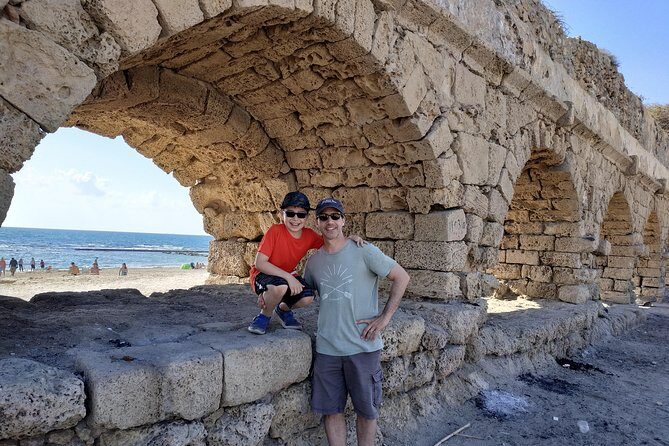
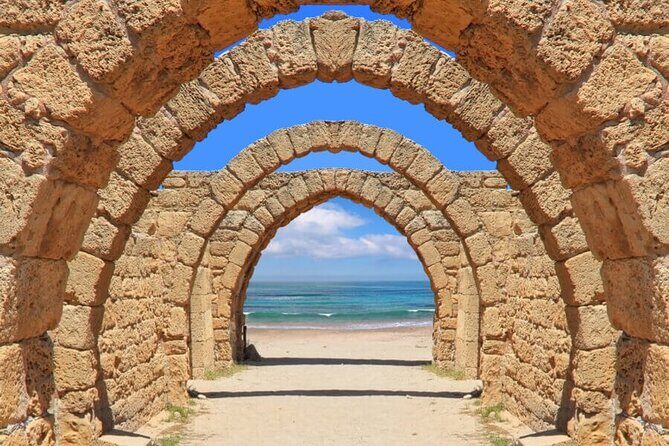
Caesarea is why this tour earns its keep. In one place you get Roman engineering, Mediterranean views, and the kind of layered history that helps you understand why later cultures kept coming back here.
The visit is split into two blocks inside Caesarea National Park. That structure matters: you’re not just walking a long loop with random stops. Instead, you get time to see the big-picture highlights first, then circle back for a harbor-focused second walk.
Stop 1: Roman theater, coastal palace views, and the hippodrome
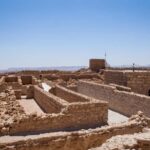
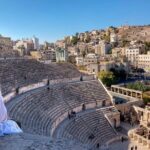
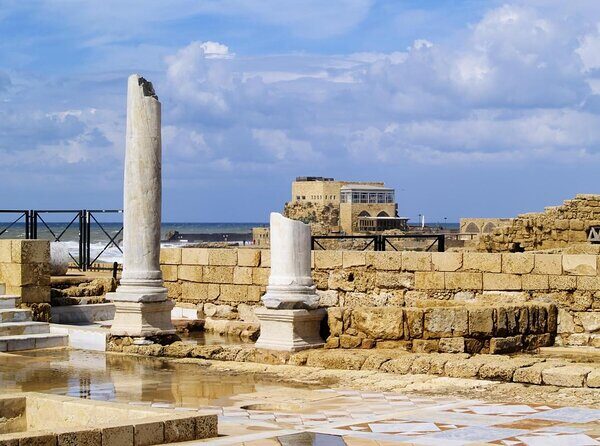
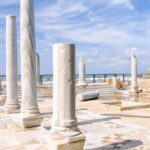
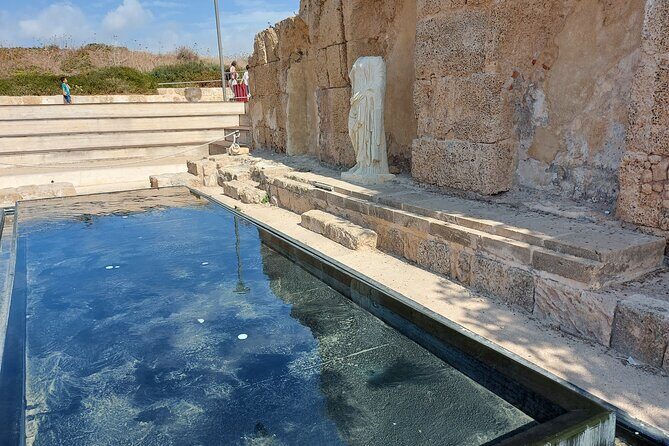
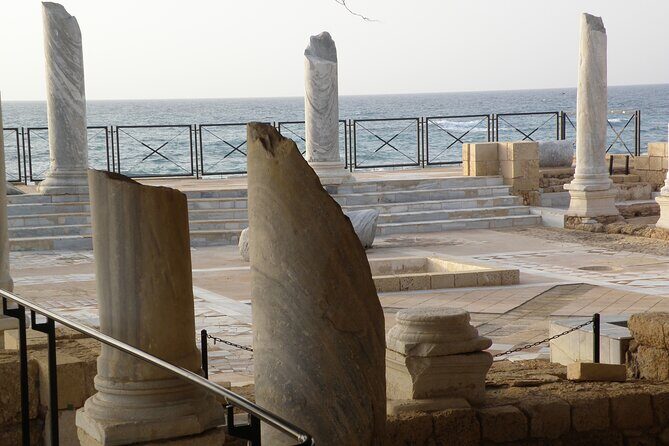
Your first major stretch includes the Roman theater, Herod’s coastal palace, the hippodrome (horse races), and an ending walk at the ancient port. The theater gives you the sense of scale—this wasn’t a small town playhouse. It was built for a kind of public life where performance and power were linked.
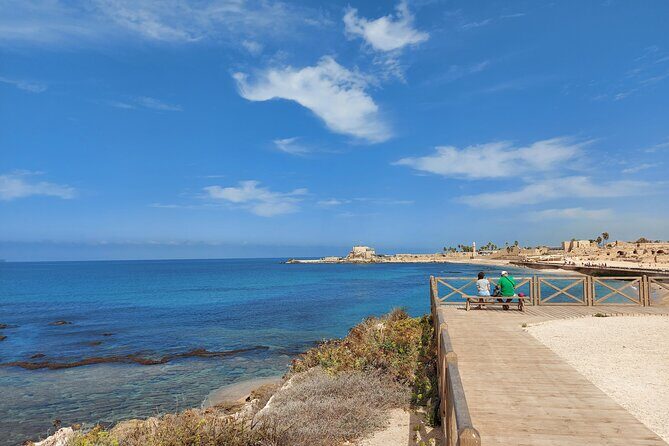
Then you shift to the coastal palace area, where the views do a lot of teaching for you. When you stand with the sea in front of you, it becomes obvious why rulers cared about this coastline. The hippodrome stop also adds color: you see that entertainment wasn’t just theater—horse racing was part of the same Roman civic rhythm.
Plan for walking. Even with careful pacing, you’ll cover a lot of ground, and some areas are uneven. Wear shoes you trust.
Stop 2: the ancient harbor and the newly opened museum
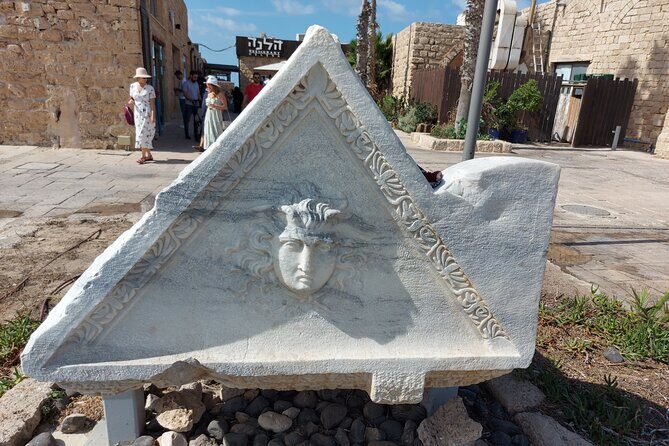
After the big highlights, you get a shorter follow-up block focused on the ancient harbor and the newly opened museum. This is where the day starts to feel more complete, because you move from “look at the ruins” to “put it in context.”
Entrance fees for Caesarea are not included, so you’ll want to budget for that separately. The payoff is that you’ll see the harbor setting again with fresh eyes, plus museum time to connect what you just walked through with what you’re now seeing indoors.
Haifa’s Bahai Gardens: UNESCO serenity with real meaning
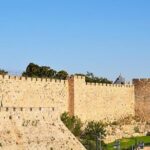
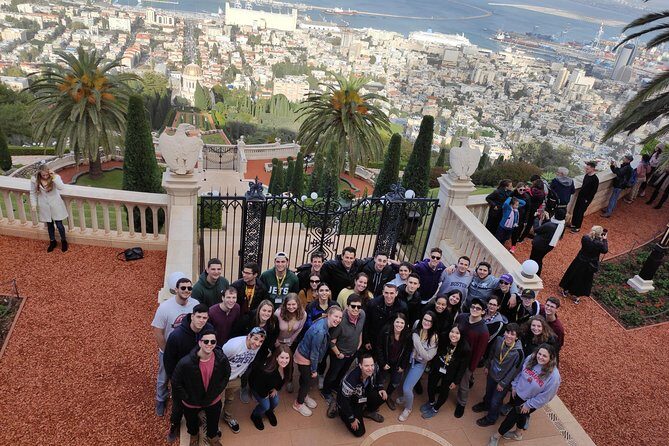
Next comes Haifa and the Bahai Gardens, a UNESCO World Heritage site and the center of the Bahai faith worldwide. You’ll have about 40 minutes here. That’s not long enough to do everything at an ultra-slow tourist pace, but it’s a solid window to get the core experience without turning the day into a march.
What I like about this stop is how it slows you down. The gardens aren’t just pretty—they help you understand why this location matters to millions of people. Since the gardens are listed as admission ticket free, you’re not dealing with another add-on cost on top of the day’s entrances.
Tip: treat the gardens as a holy-site visit, not just a photo stop. You’ll get more out of your time if you’re ready to be present.
Daliat El Carmel weekend market: Druze village food and a local pace
After Haifa, the itinerary shifts to a more everyday side of the region: Daliat El Carmel Weekend Market. This is your window for food and a change of texture from ruins and gardens.
You’ll spend about 1 hour here, and the plan is to eat traditional Middle Eastern cuisine in the Druze village setting. Entrance is not included (and likely not the point anyway), but your real decision is practical: come hungry, and be ready to choose from what’s available that day.
This is also a nice mental break. A big day like this can start to blur if every stop is “historical structure, historical structure.” The market stop resets you with movement, smells, and simpler conversation.
If you have dietary needs, mention them to your guide early so you’re not hunting at the last second with a short timeline.
Mt. Carmel at Muhraqa: Elijah, the view, and the Jezreel Valley
The final cultural anchor is Discalced Carmelite Order Muhraqa Monastery on Mt. Carmel. You’ll get about 1 hour total, and the order of the experience is important: there’s a view over the Jezreel Valley before you visit the monastery.
That viewpoint is more than a postcard. From here, you can understand geography in a way that ruins can’t. Big valleys and routes explain why empires, religions, and armies all cared about this region. It’s the kind of “map moment” that turns the rest of the day into a coherent story.
Then you visit the monastery dedicated to Elijah the prophet. Entrance fees here are not included, so again, expect to pay that on your own. The “modest clothing” note from the tour details applies strongly here—you’ll feel more comfortable if you dress with holy-site respect in mind.
Optional add-ons: Megiddo and Akko if you want more layers
The tour is designed as a customizable route, and optional stops may include Megiddo and the ancient city of Akko. These can be excellent choices if you want to add another major historical layer.
But here’s the practical caution: optional add-ons can stretch the day toward the longer end of the 8 to 9 hour estimate. If you’re traveling with kids, older adults, or anyone who gets tired in cars, ask early how adding a stop changes the pacing.
If you prefer a tighter day, you can stick with the core triad—Caesarea, Haifa, Mt. Carmel—and still feel like you covered a lot.
Price and value: what $475 per group really covers
The price is $475.00 per group (up to 15 people). On paper, that looks steep if you’re thinking per person. In reality, private tours work best when you spread the cost across a group.
What’s included: guiding. What isn’t: entrance fees, private transportation, and lunch. That’s a key point for value. You’re paying for interpretation and planning—not for tickets and meals.
If you’re a small group (say 2 to 4 people), the experience can still be worth it because you’re getting a PhD-level guide and a full-day route that you might not manage as cleanly on your own. If you can fill more seats, the math gets friendlier quickly, because the price is per group.
Also, this is a private tour, meaning only your group participates. That matters if you want to slow down for questions, adjust walking pace, or keep kids engaged without turning your day into a group herding exercise.
A guide with PhD depth: why Dr. David Gurevich changes the feel
This is one of those tours where the guide can make or break your day. Dr. David Gurevich (PhD in archaeology) has a style built around explanations you can actually use—political nuance, development over time, and how the pieces connect.
That depth shows up especially at Caesarea, where “Roman” could mean a dozen things. Instead of leaving you with scattered facts, you’re more likely to finish the morning understanding why the site mattered and how people used it.
The practical benefit is huge: you’ll ask fewer generic questions because the guide’s pacing helps you notice what matters. And if you’re traveling with a mixed-age group (kids to older adults), that teaching style can keep attention from drifting.
Practical tips that help you enjoy the full day
A few small things will make a big difference:
- Bring modest clothing for holy-site stops. You’ll feel better in the monastery and anywhere you’re asked to dress respectfully.
- Pack comfortable shoes. Caesarea’s stone surfaces and viewpoints mean you’ll walk more than you think.
- Budget for entrance fees at Caesarea and other non-free sites, since they’re not included.
- Plan lunch timing around the market stop. Lunch isn’t included, but the Daliat El Carmel hour is your best built-in chance to eat.
Also, wear a light layer. Coastal weather can shift, and monasteries plus viewpoints can mean cooler breezes.
Logistics you should confirm before the morning
Because private transportation isn’t listed as included, it’s worth confirming what your day’s movement looks like beyond the pickup offer. You’re meeting at Tel Aviv Savidor Train Station, so your first question is simple: does the guide meet you there and handle movement between stops, or do you arrange your own vehicle/taxi?
Another smart question: what’s the exact plan if you add Megiddo or Akko. Optional stops are common on customizable tours, but you’ll want clarity on how much extra time they take so you’re not surprised if the finish runs longer.
Should you book this private Caesarea, Haifa, and Mt. Carmel day?
If you want a single day that connects Roman Caesarea, Haifa’s Bahai Gardens, and Mt. Carmel’s Muhraqa monastery—with expert storytelling along the way—this is a strong choice. The format also suits groups that like a guided plan but still want flexibility, because the itinerary can be adapted to your interests.
I’d think twice if you hate long days or you’re trying to minimize extra costs. Entrance fees and lunch are on you, and the day is built as an all-day outing. But if you’re good with that trade-off, you’ll leave with a clearer sense of how this stretch of coastline shaped religion, politics, and daily life over centuries.
FAQ
How long is the Caesarea, Haifa, and Mt. Carmel private tour?
It runs about 8 to 9 hours.
How much does the tour cost, and what group size does that cover?
The price is $475.00 per group, up to 15 people.
Where do we meet, and what time does the tour start?
You start at Tel Aviv Savidor Train Station, with a start time of 8:00 am.
Is the tour private?
Yes. It’s a private tour/activity, and only your group participates.
What’s included in the price?
Guiding is included.
Are entrance fees and lunch included?
No. Entrance fees and lunch are not included.
Which major stops are included on the core itinerary?
Caesarea National Park (including Roman sites and a harbor/museum visit), the Bahai Gardens, Daliat El Carmel Weekend Market, and Muhraqa Monastery on Mt. Carmel.
What optional stops are mentioned?
Megiddo and Akko are listed as optional locations.
Do I get a mobile ticket?
Yes, the tour includes a mobile ticket.
What are the cancellation terms?
Free cancellation is available. You can cancel up to 24 hours in advance for a full refund.
Is modest clothing required?
Yes. Dress in modest clothing for visiting holy sites.