REVIEW · JERUSALEM
Jerusalem Half-Day Sightseeing Tour
Book on GetYourGuide →Operated by Bein Harim Israel Tours · Bookable on GetYourGuide
Jerusalem packs a lot into five hours. This half-day tour strings together some of the city’s most important sites—starting with panoramic views from Mount Scopus, then moving through Gethsemane, the Old City quarters, the Via Dolorosa, the Cardo, and ending near the Western Wall area and back into the Old City. I especially like the way a professional guide gives context so the stops feel connected, not random. I also like that the route includes both the major Christian sites and the Jewish holy places, so you get a wider look at why Jerusalem matters to different faiths.
My only caution is the crowd factor: the Old City can feel tightly packed, and that can make timing and group management a little stressful at times. If you’re sensitive to crowds or prefer slower, independent wandering, plan your expectations around a guided walk with stops you may not control.
In This Review
- Quick hits before you go
- A five-hour Jerusalem circuit that explains why three faiths share one city
- Getting oriented: hotel pickup and Mount Scopus first
- Kidron Valley to Gethsemane: the walk starts before the gates
- Entering the Old City: Western Wall Square via the Armenian Quarter
- Via Dolorosa Stations: when the route becomes a living corridor
- Church of the Holy Sepulcher: major meaning, more compression
- The Cardo and the restored Roman street feel: walking history at street level
- Pace, crowds, and what to wear so you enjoy the day
- Price and value: is $50 a smart deal?
- Who this tour fits best (and who should consider alternatives)
- Should you book this Jerusalem half-day tour?
- FAQ
- How long is the Jerusalem half-day sightseeing tour?
- Where does the tour end?
- How much does the tour cost?
- What is included in the price?
- Is hotel drop-off included?
- Do I need to buy tickets separately for sights?
- Are food and drinks included?
- What languages is the live tour guide available in?
- Is modest dress required?
- Is this tour suitable for young children?
Quick hits before you go
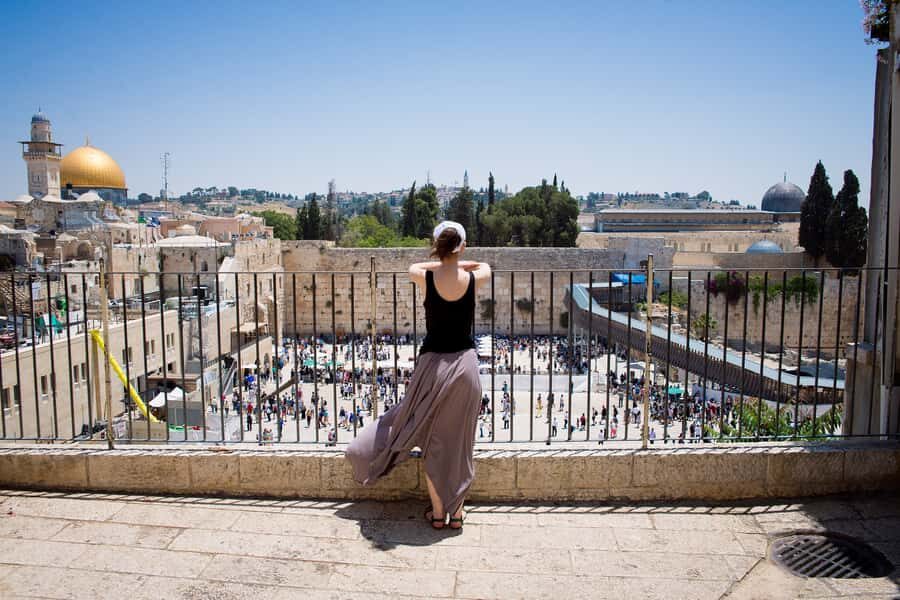
- Mount Scopus first: get your bearings with panoramic city views before you walk.
- Kidron Valley to Gethsemane: a direct route from the valley into the classic holy-city setting.
- Western Wall Square entry via the Armenian Quarter: you transition through quarters, not just point-to-point stops.
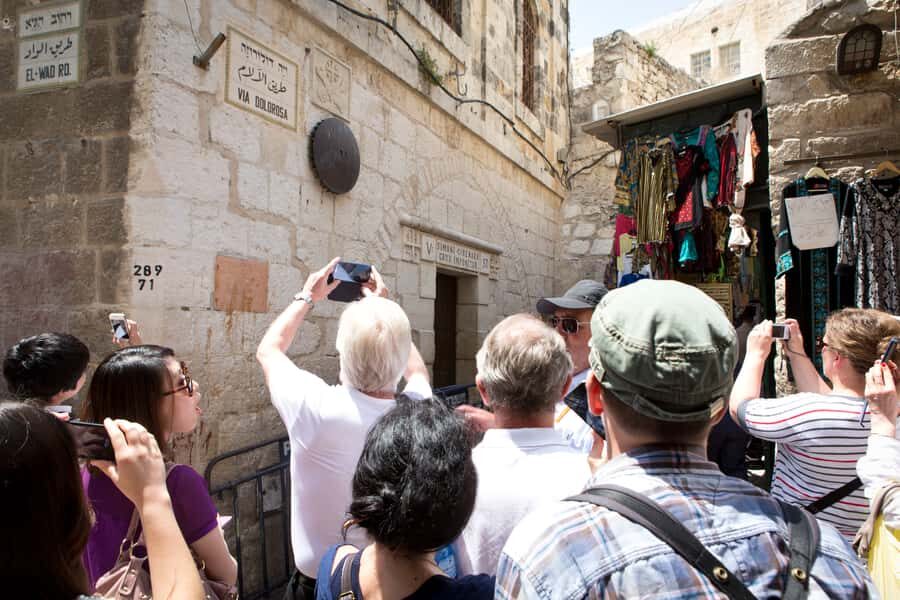
- Via Dolorosa Stations of the Cross: you follow the traditional route on foot and see key markers.
- Church of the Holy Sepulcher: a must-see stop where the walking becomes more concentrated.
- The Cardo and the Jewish Quarter: you see the renovated Roman-era main street and Jewish Quarter area on the way back.
A five-hour Jerusalem circuit that explains why three faiths share one city
Jerusalem is one of those places where one street can mean a lot to different people. This tour is designed for exactly that reality: you move through Christian, Jewish, and Islamic-connected spaces while still keeping the day short enough to stay practical.
I like how the route is built like a guided storyline. You start with high-ground views, then you drop into valleys and holy-city gates, then you walk through the maze of quarters. By the time you reach the Via Dolorosa and the Church of the Holy Sepulcher area, you’ve already seen enough setting to make the religious landmarks easier to place in your head.
A few more Jerusalem tours and experiences worth a look


Getting oriented: hotel pickup and Mount Scopus first
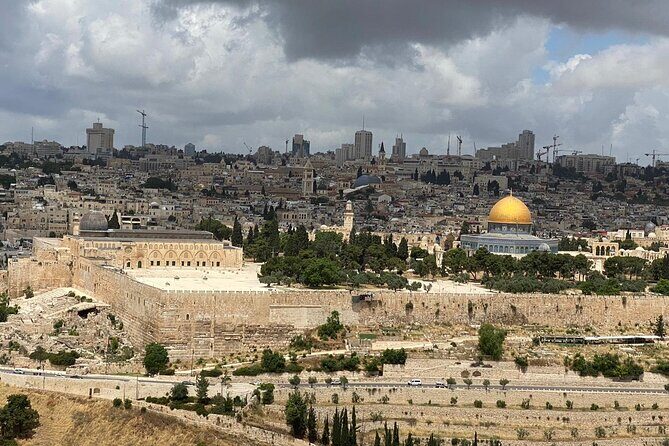
Most people arrive in Jerusalem with scattered impressions. This tour helps you connect the dots fast by starting with hotel pickup in the morning and a drive to Mount Scopus, one of the higher peaks overlooking the city.
From there, you get panoramic views that do two jobs. First, they help you understand Jerusalem’s geography, so the later walk feels less like wandering. Second, you see the city’s layout before you enter the dense Old City area, where it’s easy to lose your sense of direction.
One practical thing: the bus ride is part of the value. You’re not spending your limited time figuring out transfers and routes, and you’re traveling by air-conditioned coach.
Kidron Valley to Gethsemane: the walk starts before the gates
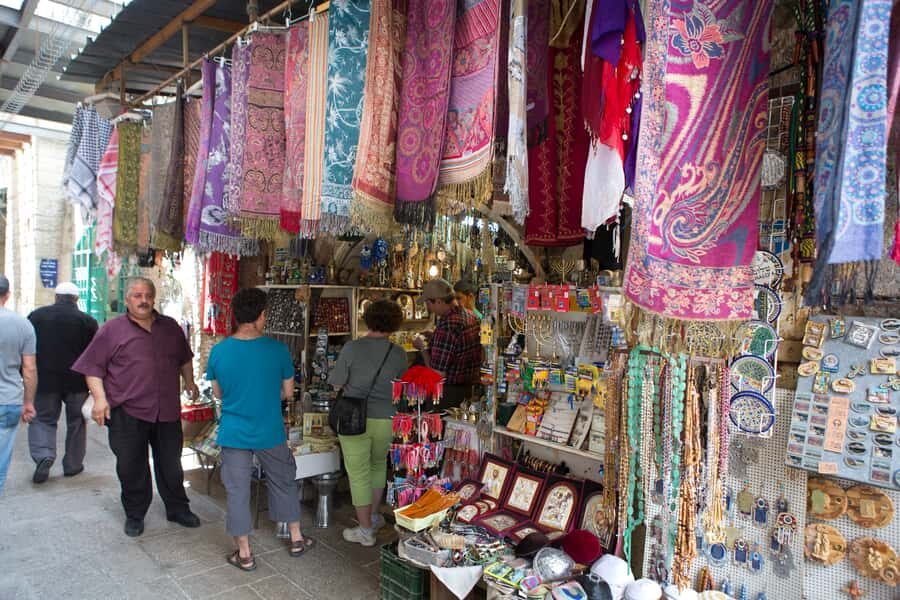
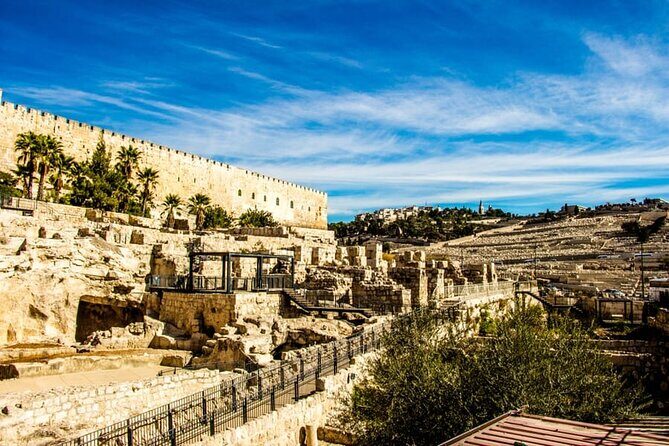
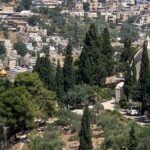
After Mount Scopus, the tour travels along the Kidron Valley toward the Garden of Gethsemane and the city walls. This stretch matters because it creates a transition. The scenery and the walls give you context for why the Old City feels enclosed, layered, and historically significant.
Gethsemane is often treated like a standalone stop. Here, it’s more useful because it sits on the way toward everything else. When you reach the Old City’s religious center later, you’ll feel like you’re moving through a connected sequence rather than jumping between distant points.
Entering the Old City: Western Wall Square via the Armenian Quarter
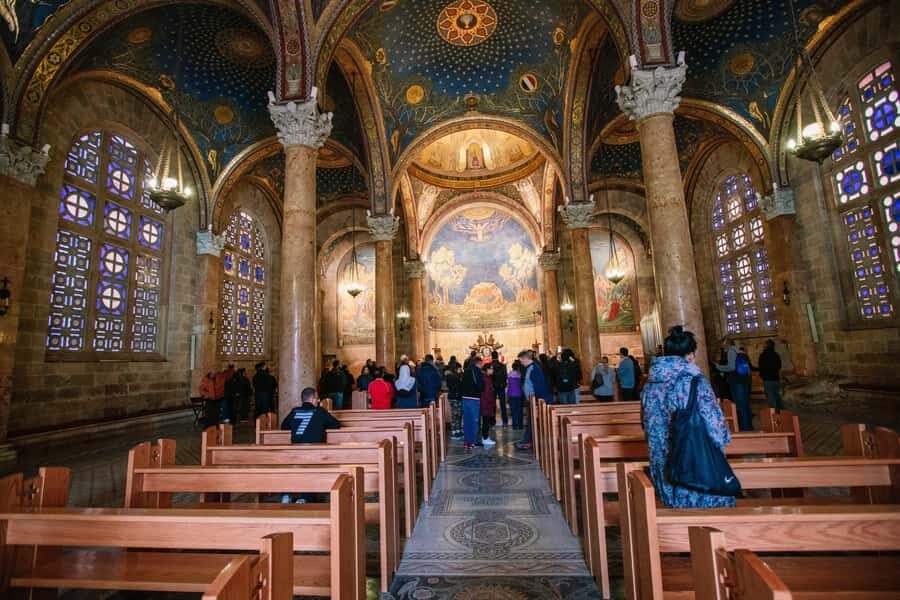
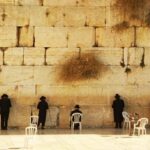
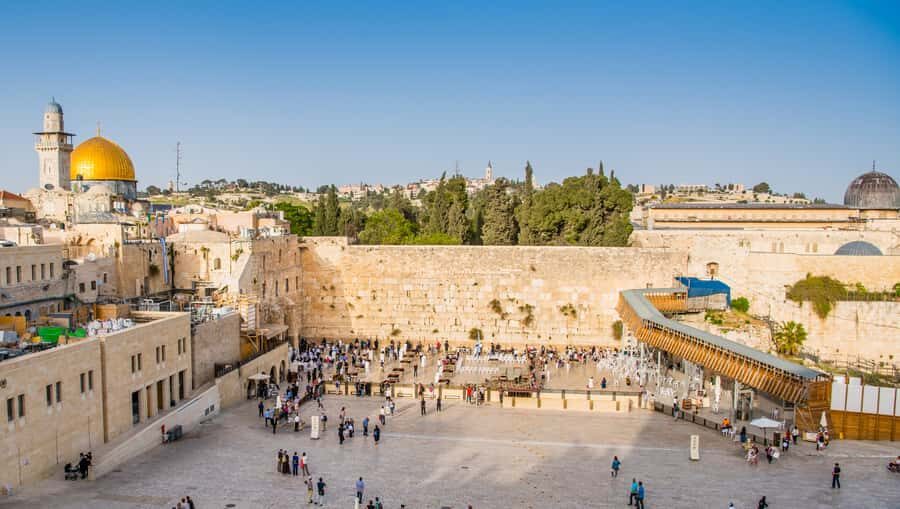
Next comes a key transition point: entering the Western (Wailing) Wall Square area via the Armenian Quarter. You don’t just arrive at the Wall from the outside; you walk through a quarter that helps you understand how Jerusalem’s neighborhoods function.
You’ll also stroll through the bazaar area and head toward the Christian Quarter. This isn’t only about shopping or browsing. It’s about experiencing the Old City as a lived-in place, with narrow lanes and constantly changing sights.
This is where the tour’s guided structure helps. Without a guide, it’s easy to get distracted by details and miss the bigger pattern. With a guide, you can connect streets, quarters, and landmarks into one mental map.
Via Dolorosa Stations: when the route becomes a living corridor
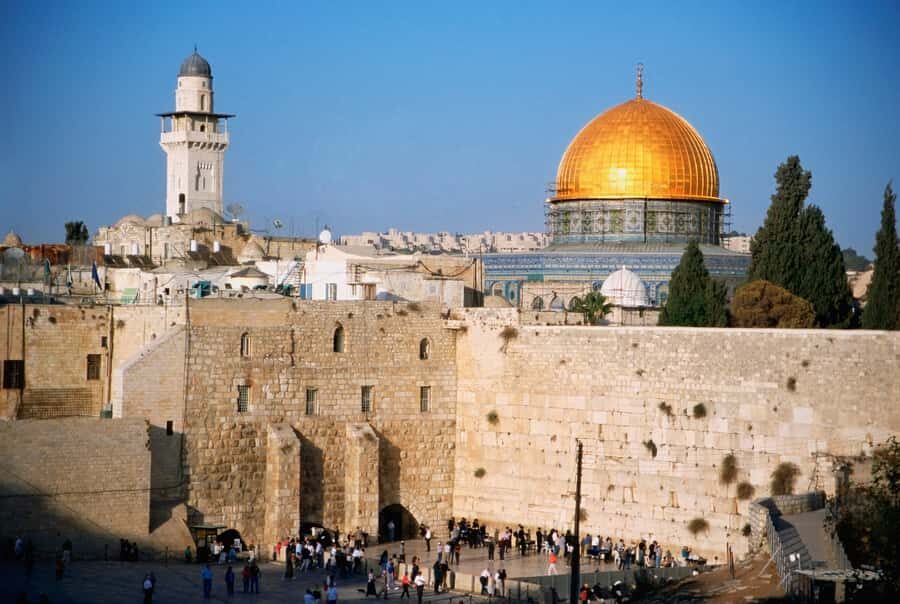
The Via Dolorosa portion is one of the tour’s signature experiences. You’ll see the Stations of the Cross along the traditional route, and the pace becomes more “walk-and-pause” than “drive-and-view.”
This is also a time to manage expectations. The Old City streets can get crowded, and the route can feel tight. The upside is that you’re walking where the story is physically marked, not just reading about it on a screen.
Dress matters here. The tour requires modest dress, so if you’re traveling in light summer clothing, plan ahead. A light scarf or layer can save you hassle at entrances and along religious sites.





Church of the Holy Sepulcher: major meaning, more compression
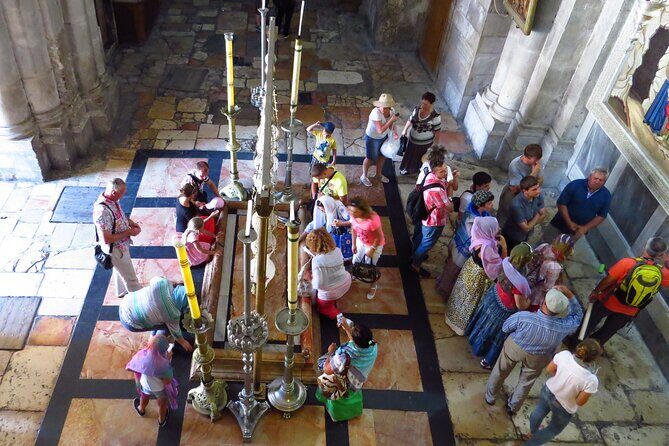
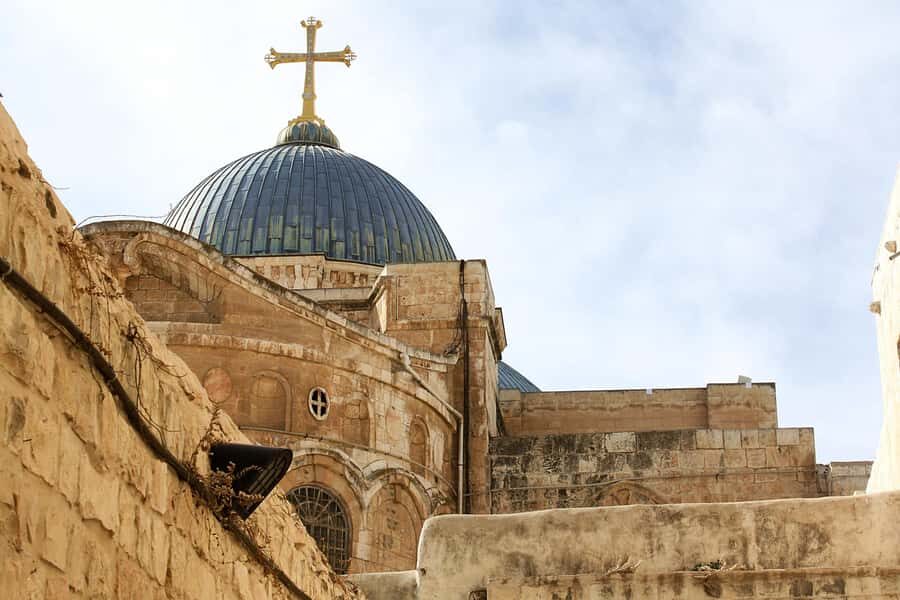
The Church of the Holy Sepulcher is the big spiritual destination for many visitors. On this tour, it’s reached after the Via Dolorosa stops, which helps your brain handle what can otherwise feel overwhelming: the church area can be busy, and it’s not exactly a quiet museum.
Still, this is one of the key reasons to pick a guided half-day. You’re not just looking at a building. You’re learning how different elements of the site are understood, and your guide can help you make sense of why the location is so central.
A practical note from how the tour has been experienced: sometimes there can be extra time spent in shop-like stops during the day. If you’re not into retail stops, you may want to move quickly and decide in advance whether you want to browse or simply keep pace with the group.
The Cardo and the restored Roman street feel: walking history at street level
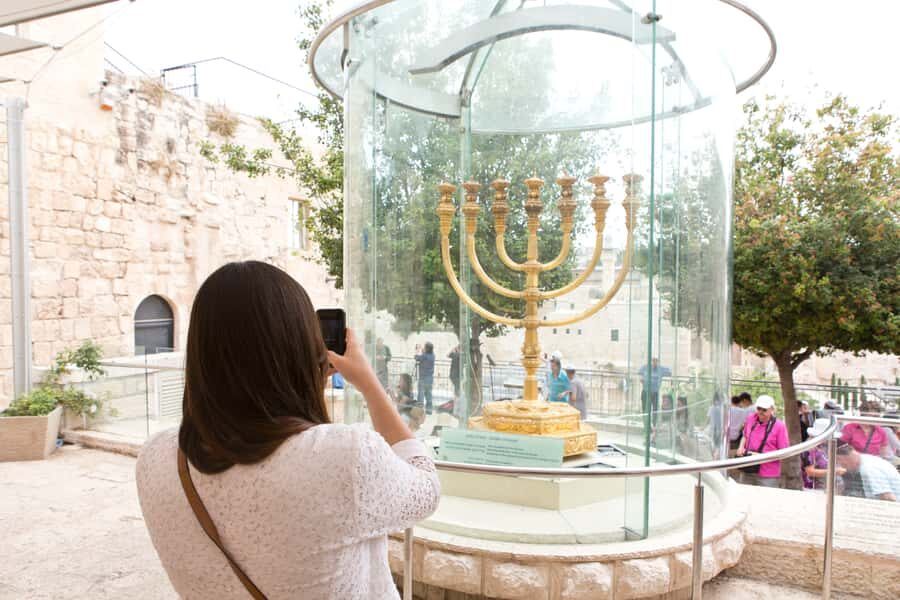
One of the best parts of this tour is that it doesn’t end only in the most famous religious spots. You’ll walk along the Cardo, described as the recently restored Roman road, plus you’ll pass through the renovated Jewish Quarter.
This section is valuable because it shifts your view from “holy sites as icons” to “holy sites as neighborhoods.” The Cardo gives you a street-level way to picture Jerusalem in earlier eras, not just in modern worship zones.
You also get a sense of renewal. The tour’s mention of restoration and renovation matters because it hints that Jerusalem is not frozen in one moment; it keeps changing, being repaired, and being re-used by each generation.
Pace, crowds, and what to wear so you enjoy the day
A half-day tour in the Old City is all about pacing. You’ll be walking through packed areas, so comfortable shoes are non-negotiable. Plan to move steadily, stop often, and accept that you won’t control how fast the narrow streets allow everyone to move.
Also, keep your morning routine simple. Your day will likely include waiting at a few transitions: entering sites, regrouping, and moving as a group through crowded lanes.
If you’re traveling with a group mindset, you’ll enjoy this. If you prefer quiet, slow exploring without guidance, you may find the structure a little restricting.
Price and value: is $50 a smart deal?

At $50 per person for about five hours, this is a relatively strong value if you want guided context and transportation included. You get hotel pickup, an air-conditioned coach ride, entrance fees, and a professional guide—plus the heavy lift of route planning through the Old City.
The big question isn’t just price. It’s what you gain. In Jerusalem, the difference between wandering and understanding is often the guide’s role: connecting sites to themes, clarifying what you’re seeing, and helping you prioritize what matters most in a short window.
The main cost to you is time and independence. Since food and drinks aren’t included, you’ll want a plan for lunch after the tour ends. The tour finishes in the Old City around 13:00–13:30, so it’s smart to have a nearby lunch strategy—either follow the guide’s suggestions in the area or choose somewhere you can reach easily.
Who this tour fits best (and who should consider alternatives)
This is ideal if you want a focused introduction to Jerusalem’s major holy spaces without spending your whole day on buses and ticket lines. It also works well if you like historical and religious context delivered in plain language by a guide, especially when you have limited time.
The tour is not suitable for children under 4, and modest dress is required. If you’re traveling with very young kids, you’ll likely find it harder to enjoy crowded lanes and multiple site stops.
If you’re the type who loves independent exploration and doesn’t care much about guided explanations, you might prefer a self-guided Old City plan. But if you want to get oriented quickly and walk away with a clearer understanding of how the city’s landmarks connect, this half-day format is a practical fit.
Should you book this Jerusalem half-day tour?
I think it’s worth booking if you want the big essentials—Mount Scopus views, Gethsemane area routing, Old City quarters, Via Dolorosa, the Church of the Holy Sepulcher, the Cardo, and Western Wall surroundings—done in one coordinated morning.
Book it especially if:
- you value guided context more than freeform wandering
- you want to see several top sites without figuring out transit
- you like a clear route that helps you navigate crowd-heavy streets
I’d hesitate if:
- you dislike crowds and tight timing
- you prefer to control your own pace in the Old City
- you’re strongly opposed to any extra stop that might feel like a shopping detour
If you can handle a guided walk and come prepared with modest clothing and good shoes, this tour is a solid way to get oriented fast and leave with Jerusalem making more sense.
FAQ
How long is the Jerusalem half-day sightseeing tour?
The tour duration is listed as 5 hours.
Where does the tour end?
The tour ends in the Old City at approximately 13:00 (with some notes indicating around 13:30).
How much does the tour cost?
The price is $50 per person.
What is included in the price?
Included are entrance fees, a professional guide, transport by air-conditioned coach, and hotel pick-up.
Is hotel drop-off included?
No. Hotel drop-off is not included.
Do I need to buy tickets separately for sights?
No. Entrance fees are included.
Are food and drinks included?
No. Food and drinks are not included.
What languages is the live tour guide available in?
The tour guide is available in Spanish, German, French, and English.
Is modest dress required?
Yes. Modest dress is required.
Is this tour suitable for young children?
No. It is not suitable for children under age 4.