REVIEW · JERUSALEM
Jerusalem: Dual Narrative Tour
Book on Viator →Operated by MEJDI Day Tours · Bookable on Viator
Jerusalem feels like it has two speakers at once. This inter-faith dual narrative tour pairs a Jewish and a Palestinian guide so you can experience the Old City through competing histories, from the Al Aqsa complex to the Western Wall and the Church of the Holy Sepulchre. I love the stop-by-stop context that connects what you’re seeing to claims of space over time, and I love how the guides keep the conversation human. One drawback: it can feel long and fast in heat, with limited time to linger and no built-in meal stop.
For a half-day outing at $65, you get a tight route, a small group (up to 20), and plenty to think about. I’d pack for comfort and plan your expectations: you’re not just sightseeing—you’re learning how different communities read the same stones.
In This Review
- Key Things to Know Before You Go
- The Two-Guide Format: How You’re Meant to See Jerusalem
- Jaffa Gate to the Armenian Quarter: Learning to Read Power on Arrival
- Jewish Quarter and the Roman Cardo: What Excavation Leaves Behind
- St Mark’s Syriac Church Rooftop: Borders, East Jerusalem, and the Big Picture
- Church of the Holy Sepulchre and Via Dolorosa: A Christian Route Through Competing Narratives
- Muslim Quarter and Al Aqsa: Why the Temple Mount Platform Is a Flash Point
- Western Wall and Al Buraq Square: Second Temple Memory and the Islamic Story
- Price and Logistics: Is $65 Worth It for This Much Ground?
- Should You Book This Jerusalem Dual Narrative Tour?
- FAQ
- How long is the Jerusalem Dual Narrative Tour?
- Where does the tour start and end?
- Who leads the tour?
- How many people are in the group?
- What sites are included?
- Is admission included?
- Is food included?
- What dress code should I follow?
- What should I bring?
- Can I cancel for a refund?
Key Things to Know Before You Go
- Two guides, one route: A Jewish guide and a Palestinian guide talk through the same sights from different angles.
- Major sites in 4.5 hours: Jaffa Gate, Cardo and Jewish Quarter, Holy Sepulchre, Temple Mount, Western Wall, and more.
- A rooftop East Jerusalem view: St Mark’s Syriac Church gives you a practical sense of borders and landmarks.
- Claims to shared space theme: You’ll repeatedly connect geography and signage to power and identity.
- Dress code matters: Knees and shoulders must be covered for men and women at worship sites.
- Bring water, expect crowds: Sun protection and steady walking are key for the schedule.
The Two-Guide Format: How You’re Meant to See Jerusalem
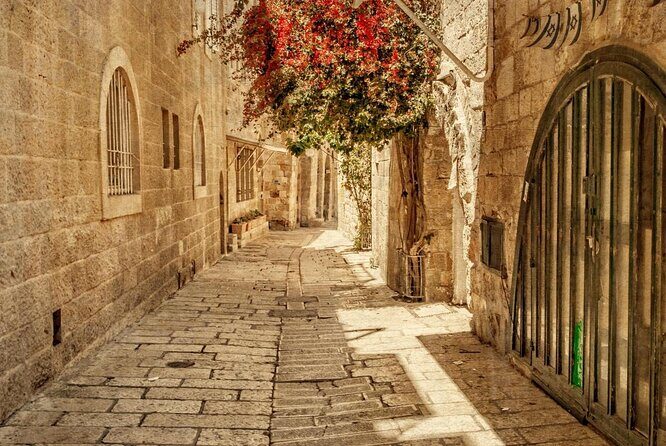
This tour is built around a simple idea: Jerusalem isn’t one story. It’s many stories, told by people who live with the consequences. By pairing a Jewish guide with a Palestinian guide, you get a guided comparison in real time instead of a single narrator telling you what to think.
I also like that it doesn’t stop at sacred facts. You’ll hear context about recent tensions and how people argue over the fate of the city. That kind of framing can make the Old City feel less like a checklist and more like a living argument carried out in streets, thresholds, and holy spaces.
One more thing: because the guides can disagree, you’ll get better results if you come with patience. Keep your questions respectful, listen for how each guide builds meaning, and don’t expect everyone’s timeline to match yours.
You can also read our reviews of more tours and experiences in Jerusalem.



Jaffa Gate to the Armenian Quarter: Learning to Read Power on Arrival
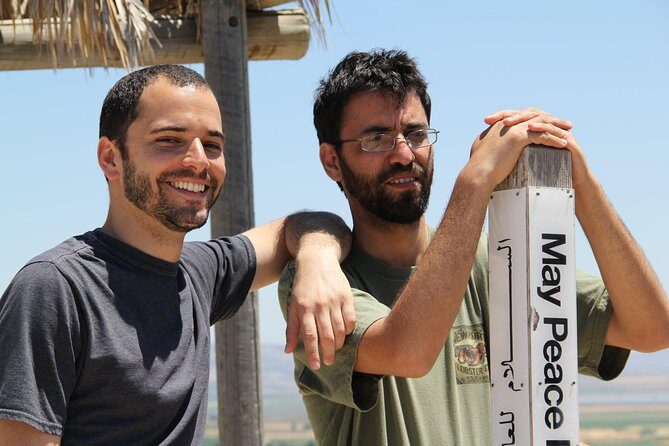
You start outside the Old City at Jaffa Gate, where the very entrance becomes a lesson. Your guide points you toward what the signs at the entrance communicate about ruling powers and claims to space. It’s a fast warm-up, but it sets the tour’s tone: the Old City is a place where meaning is posted, not just spoken.
From there you head to the Armenian Quarter. Here, you’ll notice signage that commemorates the Armenian genocide and talk about Armenian history and identity in Jerusalem. This stop matters because it shows you that the Old City isn’t only about one religious triangle. It’s also about minority communities, memory, and belonging in a layered city.
Practical note: these first stops are short, so wear comfortable shoes right away. You’ll want to be ready for quick transitions before you settle into the deeper sites.
Jewish Quarter and the Roman Cardo: What Excavation Leaves Behind
In the Jewish Quarter, you visit the Roman Cardo and learn how the Israeli narrative links Jewish life today to Jerusalem across earlier historical epochs. Even if you’re not a history geek, this part works because it explains why present-day identity often leans on what sits beneath your feet.
The tour also focuses on the excavation itself—what lies under the surface and which layers were removed to reach the current configuration. That’s one of the most useful ideas on the whole route: archaeology isn’t neutral when it becomes the foundation for today’s stories.
A drawback to consider: this stop is timed tightly. If you’re the type who likes to stand and absorb details slowly, you might feel a little rushed. I’d mentally switch from sightseeing mode to question mode here—watch, listen, then ask what each layer means in the larger argument about the city.
St Mark’s Syriac Church Rooftop: Borders, East Jerusalem, and the Big Picture
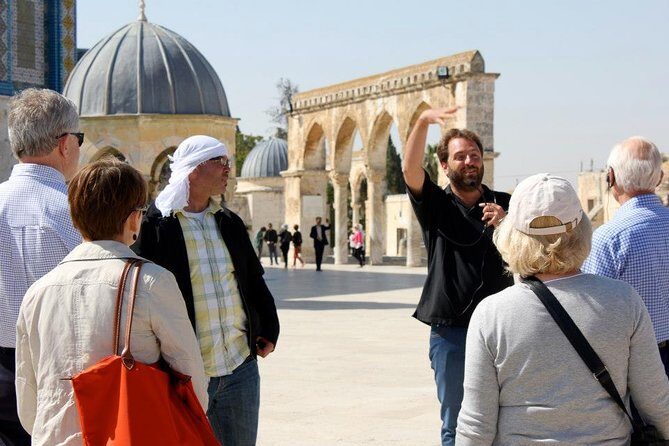
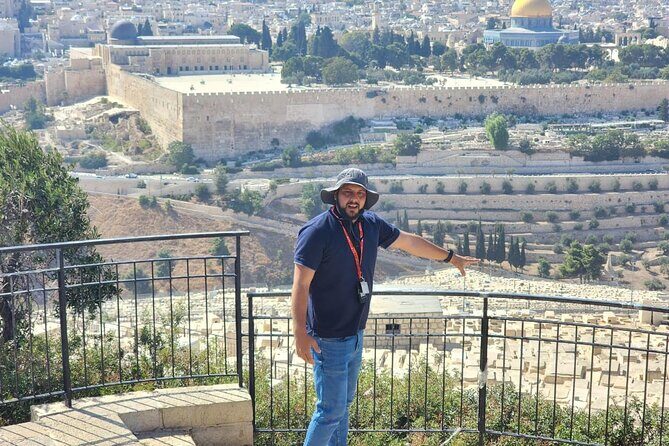
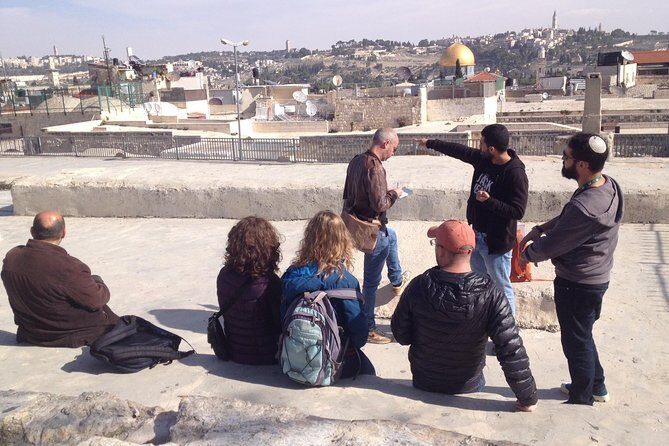
Next you’ll stop at St Mark’s Syriac Church, then move to a rooftop view looking toward East Jerusalem. This is one of the most practical moments because you’re not just learning names—you’re reviewing Jerusalem’s borders and major landmarks from above.
When you can see the city’s shape, the later stops make more sense. The Western Wall and the Temple Mount don’t feel like isolated icons; they start to feel like pieces in a geography where movement, visibility, and control matter.
Time is short here, so bring your best “look fast” attention. This is a good moment to ask your guides how they think about the city’s borders in everyday terms, not only in political terms.
Church of the Holy Sepulchre and Via Dolorosa: A Christian Route Through Competing Narratives
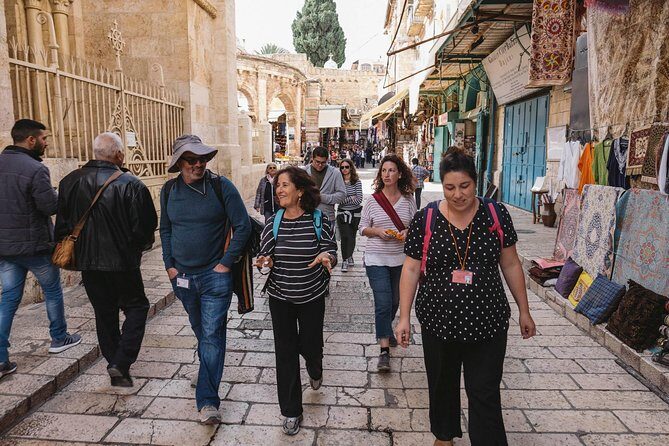
The Church of the Holy Sepulchre is the big Christian stop on the list. You’ll learn why it’s significant in Christian tradition and also how it appears in Israeli and Palestinian narratives. Then you move inside to visit major sites within the church.
The main value here is comparison. Many tours treat the holy sites like they belong to one storyline. This one presents the same place as a shared space with different meanings and different uses of history.
After that, you walk through the Muslim Quarter for context about the Old City’s communities and links to the Muslim world, including current tensions. That sets you up for your next step on the Via Dolorosa: the tour concludes near the 5th Station of the Cross and the Austrian Hospice.
Keep expectations realistic: these streets get crowded, and this schedule is designed to keep momentum. If you want long, quiet time in sacred spaces, you’ll probably enjoy adding an extra visit on a different day.

Muslim Quarter and Al Aqsa: Why the Temple Mount Platform Is a Flash Point
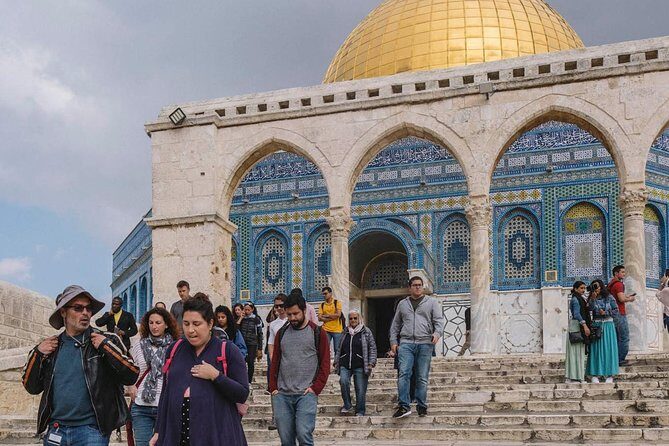
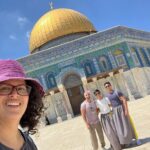
When you reach Al Masjid Al Aqsa on the Temple Mount/Noble Sanctuary complex, you’re dealing with the reason Jerusalem can’t be boiled down. The tour explains historic importance of the site for three religions and lets you view the Dome of the Rock shrine and Al Aqsa mosque.
Then comes the question your guides keep returning to: why is this platform such a flash point between Israelis and Palestinians? The tour doesn’t ask you to memorize slogans. It pushes you to connect religion, politics, and space—how one physical platform becomes the stage for many claims.
Plan for the site to feel intense in the real world: you’ll be walking in a busy, regulated environment, and it can be hard to process everything at once. The dress code also matters here. No shorts or sleeveless tops, and knees and shoulders must be covered for both men and women.
Western Wall and Al Buraq Square: Second Temple Memory and the Islamic Story
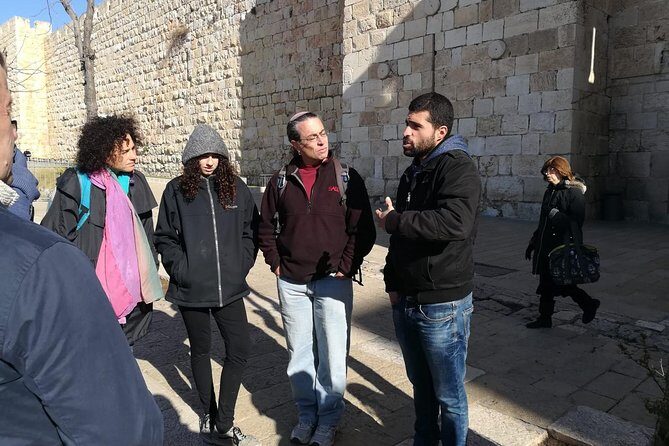
Before you reach the Western Wall/Al Buraq square, you pass through Wadi Road and enter the open complex area. Your guides connect the site to the Second Temple in Jerusalem and to the millennia-old tradition of Jewish pilgrimage to stand beside the remains.
Then they cover Al Buraq and the Islamic story of Muhammad’s flight to Jerusalem. You’ll also hear about what this open complex looked like before and after it was captured by Israel more than 50 years ago.
This is another stop where the tour’s “dual narrative” method pays off. The Western Wall is widely known, but the discussion here keeps the focus on how different communities anchor meaning in the same place. That contrast can make you notice details you would’ve skipped on your own.
One practical consideration: this area draws visitors. You’ll want to keep your water going and move when the group moves. Trying to pause too long can put you behind schedule for the Temple Mount section.
Price and Logistics: Is $65 Worth It for This Much Ground?
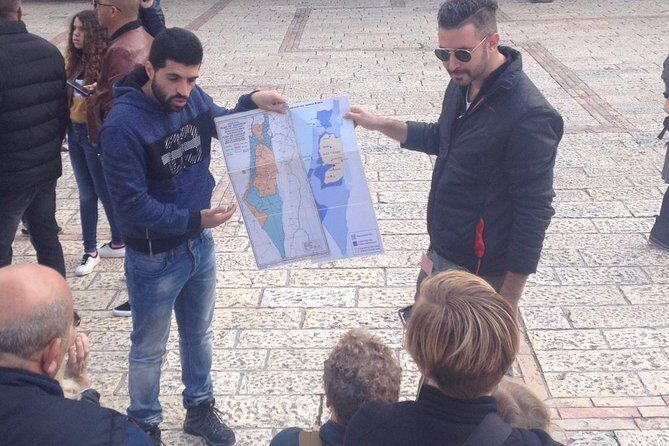
At $65 per person for a 4 hours 30 minutes tour, the value is about what’s included: two professional guides, an escort/host, a mobile ticket, and stops where admission is listed as free. Most of your cost is really buying guided interpretation, not paying entry fees.
I think it’s worth it if you want structure. You’re covering major Old City highlights in one run, and the dual guide pairing is the main product. Without that, you’d likely get one narrative from one guide—or none at all.
What to plan for:
- It’s a walking tour with modest fitness needs, not a sit-down lecture.
- Heat and crowds can make it feel tiring, so bring your own comfort strategy.
- Food isn’t included, so plan to eat before or after.
Also, follow the rules for worship spaces: cover knees and shoulders, no shorts or sleeveless tops. The tour also asks you not to bring large electronics, which is smart for a site that relies on respectful conduct and group flow.
Should You Book This Jerusalem Dual Narrative Tour?
Book it if you want to understand Jerusalem as a conflict shaped by faith, identity, and geography, not just as a bucket list. I’d especially recommend it if your trip is short and you want the Old City highlights plus context you won’t easily piece together alone.
Skip it (or pair it with a slower add-on day) if you hate fast pacing or you need long breaks to sit and recharge. This tour prioritizes coverage and discussion, not lingering.
If you go, come with curiosity and a calm tone. The payoff is seeing the city’s same places through two different historical lenses and learning how people live with that difference every day.
FAQ
How long is the Jerusalem Dual Narrative Tour?
It’s listed at about 4 hours 30 minutes.
Where does the tour start and end?
It starts at Jaffa Gate in the Old City, Jerusalem, and ends at the Austrian Hospice on Via Dolorosa Street 37, Jerusalem.
Who leads the tour?
There are 2 professional guides plus a tour escort/host.
How many people are in the group?
The group size is capped at a maximum of 20 travelers.
What sites are included?
The tour includes stops at Jaffa Gate, Armenian Quarter, Jewish Quarter (Roman Cardo), St Mark’s Syriac Church, Church of the Holy Sepulchre, Muslim Quarter, the Way of the Cross near the 5th Station, the Western Wall/Al Buraq square, and Al Masjid Al Aqsa (Temple Mount/Noble Sanctuary).
Is admission included?
The tour details list admission ticket free for each stop.
Is food included?
No. Food and drinks are not included unless specified.
What dress code should I follow?
You must cover knees and shoulders for both men and women. That means no shorts or sleeveless tops for places of worship and selected museums.
What should I bring?
Bring a hat for the sun and plenty of water. The tour also advises not to bring large electronics.
Can I cancel for a refund?
Yes. Free cancellation is offered, and you can cancel up to 24 hours in advance for a full refund.