REVIEW · TEL AVIV
Jerusalem & Dead Sea Private Tour – Visit Holy Jerusalem & Dead Sea Relaxation
Book on Viator →Operated by Compass Travel Israel · Bookable on Viator
Jerusalem in one day feels unreal, until you do it. This private tour strings together Old Jerusalem’s big spiritual sites with Dead Sea floating for a full, meaningful day without the stress of planning. I like that it’s built around an efficient route and a guide who explains what you’re seeing in plain language.
What I also love is the smooth start and finish: free hotel pickup and drop-off in an air-conditioned vehicle, plus all entrance fees included. That means you can focus on the places, not paperwork.
One thing to consider: it’s a long day with short stops. With 30–60 minute windows at several key sights, you’ll want comfortable shoes and realistic expectations about how much time you’ll spend inside each place.
In This Review
- Key highlights worth caring about
- A one-day combo: Jerusalem’s holy sights plus Dead Sea floating
- From Mount of Olives to Gethsemane: the day’s first big viewpoint
- Mount Zion: King David’s Tomb and the Cenacle area
- Via Dolorosa and the Church of the Holy Sepulchre: where the route turns into a ritual
- The Cardo: the Roman Road section you can actually walk through
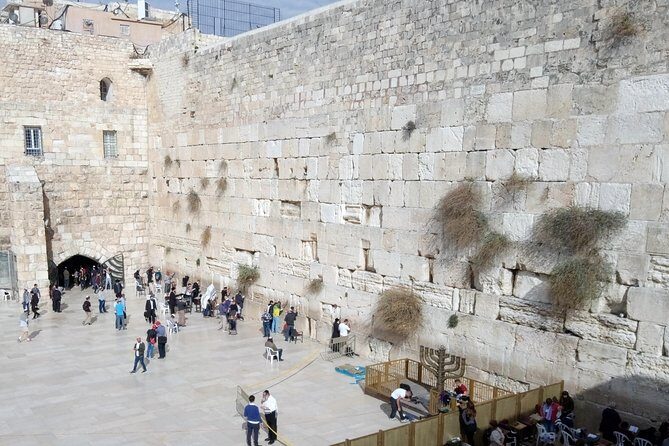
- Western Wall (Kotel): a short stop with big meaning
- The Dead Sea change of pace: float, then (maybe) mud
- What the $220 price gets you (and where you’ll still spend money)
- Dress code and comfort: small details that decide your day
- Who should book this private Jerusalem and Dead Sea day?
- Should you book it?
- FAQ
- What’s the duration of the Jerusalem and Dead Sea private tour?
- Is hotel pickup and drop-off included?
- Is this tour private?
- Are entrance fees included?
- Do I need to pay for food and drinks?
- Is the Dead Sea mud bath included?
- What should I bring for the Dead Sea part?
- Do I need modest dress for Jerusalem sites?
- When do I get confirmation after booking?
- Is free cancellation available?
Key highlights worth caring about
- Private guide time so your questions don’t get lost in the shuffle
- Free pickup and drop-off to remove the biggest hassle of a long day trip
- Old Jerusalem routing that hits Mount of Olives, Gethsemane area, Via Dolorosa, and the Western Wall
- Stop at the Cardo to see the restored Roman Road section in the Old City
- Dead Sea float plus optional mud bath for that hands-on, body-reset moment
- Entrance fees handled so you don’t have surprise costs mid-day
A one-day combo: Jerusalem’s holy sights plus Dead Sea floating
This tour works best for a specific kind of traveler: you want the spiritual and historical anchors of Jerusalem, but you don’t have two full days to split the trip. The day is structured like a highlight reel, but it’s not random. It moves in a logical flow: high viewpoint first, then Old City walking, then down to the Dead Sea for the reset.
The private format matters more than it sounds. In tight, crowded places like the Old City, small timing tweaks can make a huge difference. With a dedicated guide, you’re not stuck waiting for everyone to catch up, and you’re more likely to get the background that helps the sites click.
You should also be aware of the pace. The itinerary hits major stops, but many are brief. If you’re the type who likes to linger—quietly read inscriptions, stare at details, or take long breaks—plan to treat this as a “see it, understand it, and experience it” day rather than a slow spiritual retreat.
You can also read our reviews of more private tours in Tel Aviv


From Mount of Olives to Gethsemane: the day’s first big viewpoint
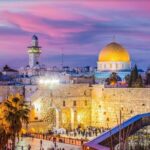
You start up high on Mount of Olives, where the whole city opens up. It’s one of the best places to get your bearings fast. From here, the tour frames the geography that shows up in biblical narratives: the mount separates the Temple Mount area from the Judean Desert to the east, and it’s tied to key New Testament moments, including the ascent into heaven in Acts 1:11 and the tradition of Christ’s return.
After the panoramic viewpoint, you move to the Garden of Gethsemane, described as being at the foot of the Mount of Olives. This is the kind of stop where the atmosphere is part of the point. The tour focuses on the garden’s resonance in Christianity, including the agony and the arrest before the crucifixion. You’ll also see small olive groves on church property, identified as adjacent spots connected with the Gethsemane tradition.
The practical value here is simple: these early stops set the stage. By the time you’re walking Old City streets later, you’re not just hopping between landmarks—you’re understanding the “why here” behind the route.
Mount Zion: King David’s Tomb and the Cenacle area
Next comes Mount Zion, including visits to King David’s Tomb and the Room of Last Supper, also called the Cenacle. For Judaism, the Tomb of King David is described as sacred, even while the tour notes there’s no certainty it’s actually David’s burial site. It points out that the Bible places burial in the City of David at the foot of the Temple Mount.
For Christianity, the Cenacle tradition is why people come. The tour explains it as one of the holiest places because of the last supper association. Even if you don’t use these sites the same way in your own faith, the experience can still land. The setting makes the layers of meaning feel less abstract.
Time-wise, this is the longer stop on the Jerusalem side (about an hour). That’s helpful. It gives you room to slow down a bit—especially because these are enclosed, quieter spaces where you’ll naturally spend more time reading, looking, and absorbing.
Via Dolorosa and the Church of the Holy Sepulchre: where the route turns into a ritual
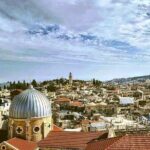
From Mount Zion, the tour moves to the Christian Quarter and the Via Dolorosa. This is the processional route in the Old City tied to the path of Jesus to his crucifixion. The tour’s framing emphasizes its meaning as the sorrowful way and the route associated with the Passion, Death, and Resurrection.
Walk this segment at a human pace. The Old City streets are narrow, and the vibe can feel busy even when you’re not trying to see a crowd. This is also one of the parts where your guide’s timing helps. In one account tied to this kind of private guiding style, people praised how the guide used know-how to avoid typical delays. In plain terms: a good guide helps you keep your momentum so the day doesn’t bog down right when you’re heading toward the biggest stop.
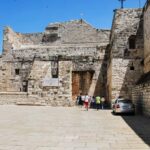
Then it’s to the Church of the Holy Sepulchre. The tour calls it the most sacred site in the world for millions of Christians, tying it to crucifixion, burial, and resurrection. It also mentions Helena’s identification of the Calvary site, using both terms Golgotha (Aramaic) and Calvary (Latin calva, linked to skull imagery).
What I like about having both Via Dolorosa and Holy Sepulchre in one flow is continuity. You don’t jump from viewpoint to random landmark. You follow a route that’s built around an idea—then you arrive at a site that carries enormous religious weight.
The stop is about an hour. That’s enough to see the main areas and not feel like you’re rushing, but it’s still not a “take your time for hours” experience. If your priority is deep study, you may want extra time in Jerusalem on a different day.
The Cardo: the Roman Road section you can actually walk through
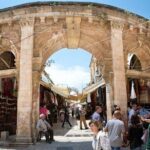
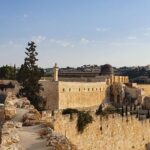
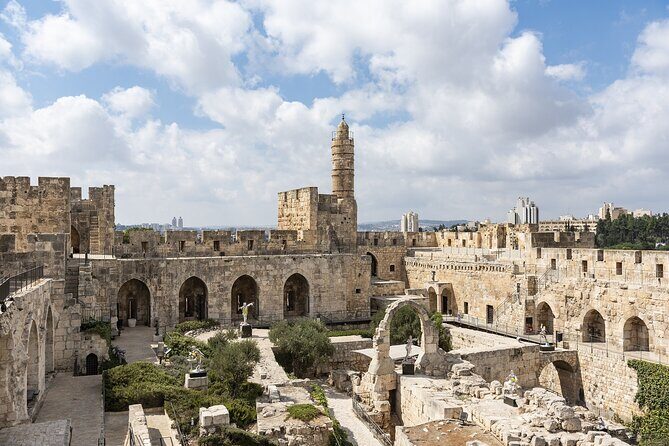
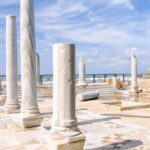
After the heavy-hitting religious stops, the tour shifts gears with a historical walk through the Old City’s streets, including Armenian and Jewish quarters, ending at the restored Cardo—the Roman Road.
This is one of those stops that can surprise people. It’s not as famous in travel marketing as the Western Wall or Holy Sepulchre, but it gives you a different Jerusalem angle: the city as an ancient crossroads with Roman-era urban planning. The tour notes the southern part uncovered in the Jewish Quarter was built during Emperor Justinian’s reign (527–565), linking earlier parts of the Roman northern street.
The practical takeaway: it helps balance the day. After walking through sacred spaces, your brain gets a chance to switch modes. You start seeing stone, scale, and city structure rather than only theology and tradition.
Time is about 30 minutes here. It’s perfect for a quick but meaningful hit, especially when the day is otherwise packed.
Western Wall (Kotel): a short stop with big meaning
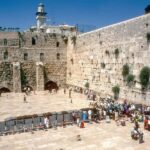
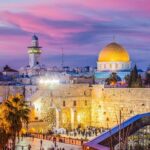
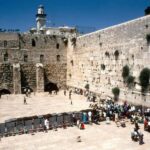
Then you reach the Western Wall, also called the Kotel. The tour explains it as an ancient limestone wall segment near the Temple Mount. The key point for prayer is the restriction: because entry to the Temple Mount comes with limitations, the Western Wall is described as the holiest place where Jews are permitted to pray, while the Foundation Stone is behind it.
This is where you’ll notice the contrast between “seeing a landmark” and “being part of a living religious site.” Even with a short stop (about 30 minutes), the atmosphere can make the time feel longer. People often come for prayer; even if you’re there for observation, you’ll likely feel the focus.
If you’re visiting with a group of different faiths or with mixed comfort levels around religious spaces, this is still a good stop. It’s clearly defined, and the meaning is straightforward.
The Dead Sea change of pace: float, then (maybe) mud
After Jerusalem, the tour shifts from stone and crowds to open air: a drive to the Dead Sea region. The tour describes the Dead Sea as the Sea of Salt, located in the Jordan Rift Valley between Jordan and the West Bank, and notes it’s the lowest place on earth. The biggest draw is the high salt density that lets you float on an aquamarine surface.
Then comes the hands-on part: you relax at a Dead Sea resort shore area, float, and have the chance to cover yourself with mineral-rich, therapeutic Dead Sea mud. The itinerary lists the mud bath as optional, so you can choose what fits your comfort level. The stop is about two hours, which is just right. Long enough to enjoy the float without feeling like you’re constantly rushing, and short enough to keep the day from dragging.
A gentle warning: salt and mud can be intense on skin and eyes, so bring the practical stuff listed for the tour—towel, sun glasses, sun screen, and a hat. And if you plan to do the mud, bring extra attention to rinsing afterward. The tour suggests these basics because they make the Dead Sea part actually enjoyable instead of just memorable.
What the $220 price gets you (and where you’ll still spend money)
At $220 per person, the value is mostly in the structure: you’re paying for the private guiding, the full-day routing, and the fact that you don’t have to coordinate transportation yourself. The tour includes hotel pickup and drop-off, an air-conditioned vehicle, and a government licensed professional tour guide. It also states all entrance fees are included.
That’s the big win for many people. If you tried to piece this together independently, you’d likely spend time on transport and tickets—and spend mental energy you don’t get back.
The trade-off is also clear: food and drinks are not included, plus personal expenses are on you. So you’ll want a plan for lunch or snacks. Since you’ll be walking and under sun for parts of the day, pack water and easy calories if you can, or budget for purchases.
For value-focused travelers, this price tends to make the most sense when you’re traveling as a couple, family group, or small group where private guiding is worth it. If you’re solo and fine with public transport, you might find cheaper options, but you’d also give up a lot of convenience.
Dress code and comfort: small details that decide your day
This tour specifically recommends comfortable walking shoes, hat, towel, sun glasses, and sun screen. It also calls for modest dress and head covering for visiting holy sites in Jerusalem.
That’s not just cultural etiquette. It affects the ease of your day. If you arrive underdressed, you may spend time sorting coverings or feeling uncomfortable in sacred spaces. If you arrive prepared, you’ll spend that time looking at what you came to see.
Also consider the walking reality. Even though each stop is relatively short, the Old City can add up—stairs, uneven stone, and a lot of time on your feet. The Dead Sea resort area also involves time in sun and moving around the shoreline. Comfortable shoes and a tote for water and towels go a long way.
Who should book this private Jerusalem and Dead Sea day?
I’d book this tour if:
- You want Jerusalem’s top religious and historical anchors in one day.
- You prefer a private guide so you can ask questions and keep your day moving.
- You’d rather spend the time at the Dead Sea doing the fun part—floating and optional mud—instead of planning transport and entrances.
I’d think twice if:
- You want lots of quiet time inside sites.
- You dislike long days with short windows at each stop.
- You’re hoping for a slow, no-pressure pace rather than a structured highlight day.
This is a great fit for first-timers to Israel or for people with a limited schedule. It also works well for families, since having a guide handle timing and transitions can reduce friction.
Should you book it?
Yes—if your priority is efficiency without losing meaning. The tour’s value is the combo: Old Jerusalem morning focus, a guided route that connects major sites, and then a genuine body-and-mind break at the Dead Sea with floating and mud.
I’d book this especially if free pickup, entrance fees handled, and a private guide are important to you. Just come ready for a packed day: wear your comfiest shoes, bring what the sun and mud require, and accept that you’re getting depth in explanations even when you don’t get hours in every room.
FAQ
What’s the duration of the Jerusalem and Dead Sea private tour?
The duration is listed as approximately 8 to 11 hours.
Is hotel pickup and drop-off included?
Yes. Free hotel pickup and drop-off are included.
Is this tour private?
Yes. Only your group will participate.
Are entrance fees included?
Yes. Entrance fees are included, and the itinerary indicates admission tickets are free for the listed stops.
Do I need to pay for food and drinks?
Food and drinks are not included, and you’ll need to plan for your own meals and refreshments.
Is the Dead Sea mud bath included?
The chance to cover yourself with Dead Sea mud is described as optional.
What should I bring for the Dead Sea part?
The tour recommends a towel, sun glasses, sun screen, and a hat.
Do I need modest dress for Jerusalem sites?
Yes. Modest dress and head covering are required for visiting holy sites in Jerusalem.
When do I get confirmation after booking?
Confirmation is received at the time of booking.
Is free cancellation available?
Free cancellation is available up to 24 hours in advance of the experience start time for a full refund.