REVIEW · TEL AVIV
Caesarea and Haifa Private Tour from Tel Aviv
Book on Viator →Operated by Zelkind Bible Land Tours · Bookable on Viator
Roman ruins and holy gardens, one day. This private tour ties together UNESCO Caesarea, the Haifa hillside viewpoints, and the Baha’i Gardens—plus you get hotel pickup and drop-off so you’re not wrangling buses all day.
I love how the Caesarea stop is paced around the biggest headline sights, from the Roman Theater to King Herod’s Sea Port, so the site actually makes sense. I also really like the way the day finishes with Baha’i Gardens terraces and then Stella Maris, where architecture and local history feel linked rather than random stops.
One thing to plan for: Caesarea National Park entrance fees aren’t included, and you’ll need to follow the dress rule at the Baha’i Gardens (no shorts or sleeveless).
In This Review
- Key Things to Know Before You Go
- A Private Day That Actually Respects Your Time
- Caesarea National Park: Roman Theater to King Herod’s Sea Port
- The one practical snag at Caesarea
- The Aqueduct and the Modern Caesarea Pause
- Haifa on Mount Carmel: Views, Slopes, and a City of Many Communities
- Baha’i Gardens: UNESCO Terraces and Faith-Based Design
- Stella Maris Monastery and the German Colony: Old-World Europe in Haifa
- Price and Value: Is $1,149 for Up to Four a Good Deal?
- Small Practical Notes That Make the Day Smoother
- Who This Tour Is For (and Who Might Prefer Another Format)
- Should You Book the Caesarea and Haifa Private Tour?
- FAQ
- How long is the Caesarea and Haifa private tour from Tel Aviv?
- What time does the tour start?
- Where is pickup offered?
- Is this a private tour?
- What’s included in the price?
- Are Caesarea National Park entrance fees included?
- Is there a dress code?
Key Things to Know Before You Go
- UNESCO Caesarea plus UNESCO Baha’i Gardens in one efficient day
- Private, small-group format (your party only) with a dedicated guide
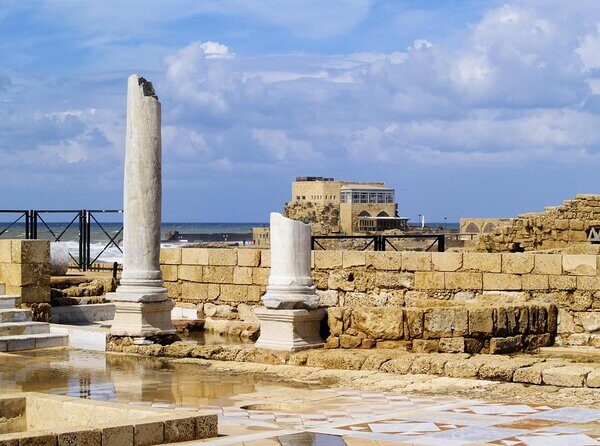
- Roman Theater, aqueduct, medieval walls, and King Herod’s sites at Caesarea
- Haifa viewpoints on Mount Carmel with commentary on languages and religions
- Stella Maris Monastery and the German Colony for a distinct Haifa chapter
- Entrance fees and dress code can affect your day plan
A Private Day That Actually Respects Your Time
This is built for people who want a day out of Tel Aviv without the usual hassle: you’re picked up from your hotel area in Tel Aviv, Herzlyia, or Netanya, then transported in a private vehicle to each stop. Start time is 9:00 am, and the whole outing runs about 6 to 7 hours depending on how the day flows.
Because it’s private, you can ask follow-up questions as you go, not only during a rushed Q&A at the end. That matters a lot on sites like Caesarea, where you’re looking at layers—Roman, medieval, and modern—on the same ground.
And yes, it’s a full day. You’ll see a lot, but it’s still structured so you’re not just passively staring at stones. Your professional art historian guide keeps the “what am I looking at?” question moving forward.
You can also read our reviews of more private tours in Tel Aviv


Caesarea National Park: Roman Theater to King Herod’s Sea Port
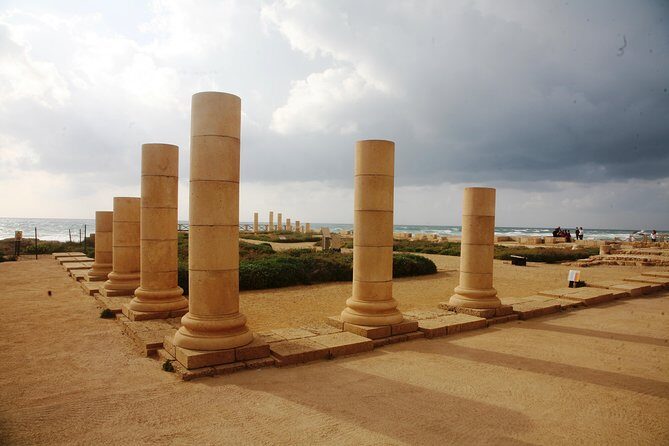
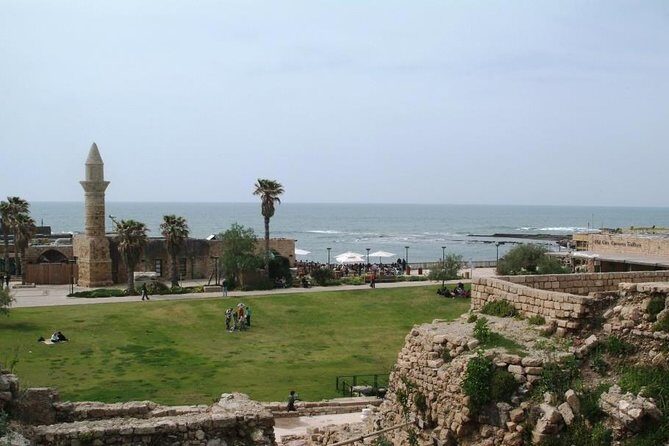
Caesarea is where this tour earns its name. You start with Caesarea National Park, a UNESCO World Heritage Site tied to King Herod’s Roman-era city. The big win here is the way your route follows major Roman landmarks in a logical sequence.
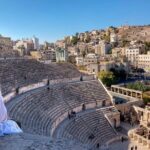
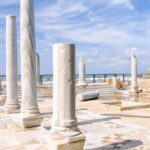
First up is the Roman Theater, described as having more than 3,000 seats. It’s the kind of feature that instantly tells you this wasn’t a small backwater—this was a place designed for crowds and spectacle. Then you move on to the Hippodrome area, and from there you reach the Roman villas and hot baths by strolling down the Hippodrome. Even if you’re not a Roman-history expert, hot baths are a clue you can understand: this was daily life for people with status.
From there, you visit King Herod’s Palace—again, the guide’s job is to help you map the ruins to the story. After that comes King Herod’s Sea Port, noted as one of the biggest ports in the world. That’s a mental shift from “temple and theater” to “how this place connected to trade and power.”
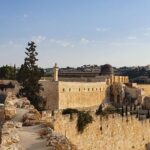
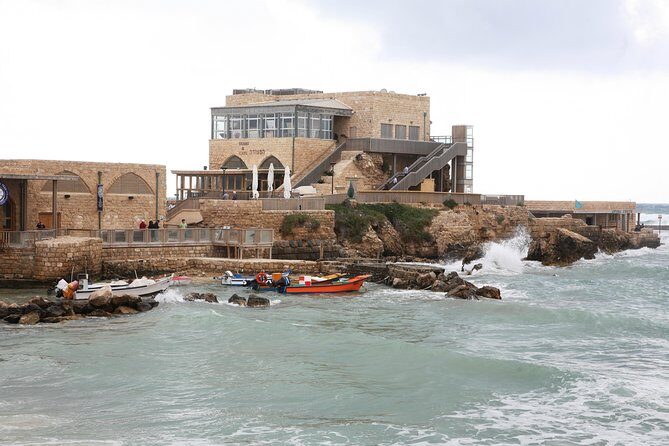
You also see medieval layers at Crusades Citadel and the medieval city walls, including towers and other features of the medieval architecture. It’s not the same kind of wow as the theater, but it adds context: the site didn’t freeze after Rome. People used it, rebuilt it, and adapted it over time.
The one practical snag at Caesarea
Caesarea National Park entrance fees aren’t included. So if you want to avoid surprises, budget for that cost ahead of time. The good news is your route is efficient, so your extra spend doesn’t turn into wasted time.
The Aqueduct and the Modern Caesarea Pause
Caesarea doesn’t only shine in the Roman era. Part of the value of a dedicated guide is that you’re not stuck in a single chapter—you’re shown how parts connect.
One standout stop is the perfectly preserved Roman Aqueduct. Aqueducts are one of those “how did they do that?” inventions. When you see it in place, it becomes obvious why Roman cities cared about water systems so much.
Then you get a look at modern Caesarea, including the Ralli Art Museum complex. This is a smart inclusion, even if you’re not planning to do a full museum day. It helps you understand that you’re in a living region, not just a closed-off archaeological park.
The main trade-off is time. The Caesarea portion is about 2 hours, which is enough for the big sights, but not enough to linger for museum-level reading in every corner. If you’re the kind of traveler who wants to absorb every inscription, you might feel a little rushed. If you like a guided hit list with meaning attached, you’ll feel right at home.
Haifa on Mount Carmel: Views, Slopes, and a City of Many Communities
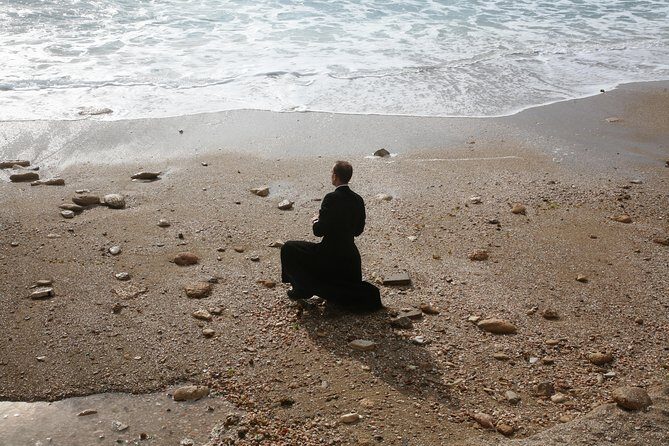
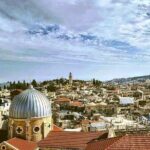
After Caesarea, you head toward Haifa along the Northern Coast, then down the slopes of Mount Carmel toward the sea. Haifa is built on layers of geography, and your guide’s commentary is meant to explain how the city’s mix of languages and religions has shaped life and neighborhoods.
This portion includes time to enjoy viewpoints, usually with a key stop at Carmel Mount for the best angles. One of the practical reasons a guide helps here: it’s not only where the view is, but why that view matters. You’re looking at how the city spreads along the slopes—so the terrain is part of the story.
The itinerary lists about 2 hours for Haifa. That’s enough time to get your bearings, take in the sea-side outlook, and still keep the day from dragging. The drawback is you’ll likely move at a pace faster than if you were doing Haifa on your own with coffee stops every block. But that’s the deal with a packed day that also includes two major UNESCO sites.
Baha’i Gardens: UNESCO Terraces and Faith-Based Design
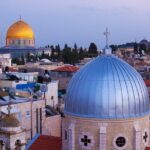
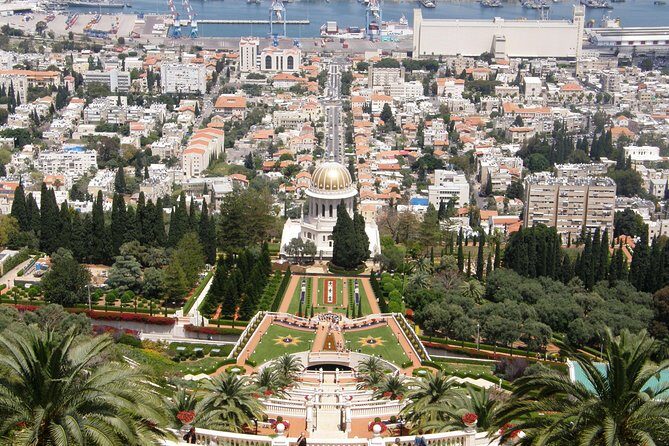
Next comes the Baha’i Gardens, also a UNESCO World Heritage Site. This is the calm contrast to all the stone-and-time travel of Caesarea. Expect an intentional stroll through landscaped terraces paired with explanation of the faith and its place in Haifa.
The tour includes about 30 minutes here, and it’s set up for exactly what the Gardens do best: views from the top. If you like architecture that’s meant to be walked through—steps, geometry, sightlines—you’ll get a lot out of the time you have.
One very important note: there’s a dress rule. The tour info says no shorts or sleeveless are admitted at the Baha’i Gardens. Plan your outfit accordingly. It’s not about being fancy. It’s about avoiding last-minute discomfort when you’re already trying to enjoy the view.
Stella Maris Monastery and the German Colony: Old-World Europe in Haifa
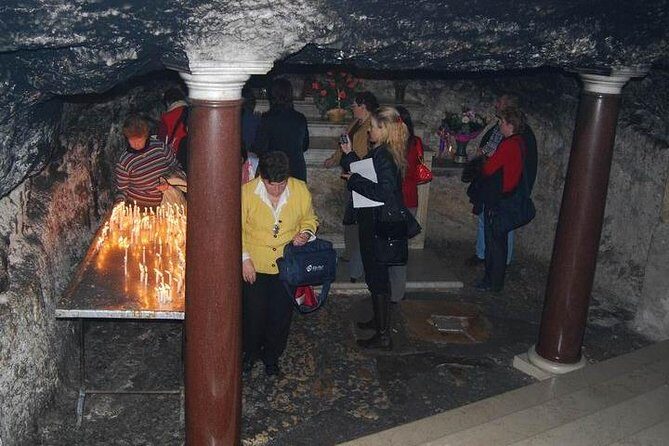
Your final major cultural stops are Stella Maris Monastery and the German Colony. Stella Maris is the famous Carmelite Church, located in an area tied to early German settlers.
Here’s what makes this portion special: the architecture is described as looking like it was brought from Old World Europe. That’s a memorable mental image, and it helps you notice what would otherwise feel like just another church stop. You’re also given a historical framing—how Jewish and Arab involvement connects to early Christian foundations, as your guide explains the story behind the site.
Stella Maris is allotted about 30 minutes. Right after that, you go to the German Colony, a preserved 19th-century settlement with a role in Haifa’s revival story about 150 years ago. Think of it as a short guided walk through a period neighborhood, not a long museum crawl.
The day ends back with drop-off at your starting point. It’s a relief when a tour doesn’t leave you stranded at the wrong side of town. You return to familiar ground without negotiating.
Price and Value: Is $1,149 for Up to Four a Good Deal?
At $1,149 per group (up to 4), you’re not paying for a cheap checklist. You’re paying for comfort, time, and interpretation—especially because this isn’t just a sightseeing circuit. It includes guided context across multiple major sites.
What you’re getting that you’d have to piece together yourself otherwise:
- Private transport from your hotel area (Tel Aviv, Herzlyia, or Netanya)
- A dedicated guide, including a professional art historian guide
- Hotel pickup and drop-off
- A schedule that hits UNESCO sites and major landmarks within a single day
If you split the cost among four people, the price per person becomes more reasonable. If you’re traveling as a couple or small family, it can still feel fair because you’re buying back your time. Without a private guide, you’d likely spend extra time figuring out routes, ticket logistics, and how to connect the stories between sites like Caesarea and Haifa.
Two cost items to factor in: Caesarea National Park entrance fees aren’t included, and you’ll cover food and drinks. The tour gives you structure, but it doesn’t provide lunch. If you budget for that, the overall value stays strong.
Small Practical Notes That Make the Day Smoother
A private tour runs on one thing: not getting slowed down by avoidable problems. Here are the practical reminders that matter most for this specific itinerary.
First, wear clothes that fit the Baha’i Gardens dress rule—no shorts or sleeveless. It’s the one schedule-related friction point called out clearly.
Second, plan for a walking-and-strolling day. The itinerary mentions strolling at several points, including through the Hippodrome area to reach the Roman villas and hot baths. Comfortable shoes aren’t optional.
Third, since food and drinks aren’t included, don’t rely on hunger sneaking up on you mid-morning. If you’re the type who likes a snack break, you might want to have a plan before you start.
Finally, bring patience for the fact that this day packs big names into limited time blocks: Caesarea 2 hours, Haifa 2 hours, then Gardens and Stella Maris in shorter windows. That’s why the guide matters—your time turns into understanding instead of just “I saw it.”
Who This Tour Is For (and Who Might Prefer Another Format)
This tour is ideal if you want:
- A private format for your group only
- Strong guidance connecting ruins to stories
- A one-day sweep of Caesarea + Haifa + the Baha’i Gardens
- Architecture, religion, and history shown together rather than separately
It may not be ideal if you’re hoping for a slow-paced, hours-long museum day in one place. The Caesarea park time and the Gardens time are intentionally limited. You’ll see the key highlights, but you won’t have the kind of open-ended browsing time you’d get on a longer stay.
That said, for many visitors, this is exactly the right way to do these destinations in a single day—especially if you’re basing in Tel Aviv and want maximum payoff.
Should You Book the Caesarea and Haifa Private Tour?
Yes—if you value guided context and want to hit major UNESCO sites without stress, this is a solid choice. The combination is smart: Roman Caesarea gives you the history-heavy start, Haifa adds geography and viewpoints, the Baha’i Gardens bring design and faith into focus, and Stella Maris plus the German Colony adds a different slice of Haifa’s identity.
I’d skip it (or consider a slower alternative) if you don’t like tight schedules or you know you’ll want extra time in the park or museums. Also, if dress rules are a hassle for your group, sort your outfits before day-of so you don’t lose momentum.
FAQ
How long is the Caesarea and Haifa private tour from Tel Aviv?
The tour runs about 6 to 7 hours.
What time does the tour start?
The start time is 9:00 am.
Where is pickup offered?
Pickup is offered from Tel Aviv, Herzlyia, or Netanya.
Is this a private tour?
Yes. It’s a private tour, and only your group participates.
What’s included in the price?
The tour includes private transportation, hotel pickup and drop-off, a driver/guide, and a professional art historian guide.
Are Caesarea National Park entrance fees included?
No. Caesarea National Park entrance fees are not included.
Is there a dress code?
Yes. No shorts or sleeveless are admitted at the Baha’i Gardens.