REVIEW · TEL AVIV
Jerusalem Old City Private Tour, from Tel Aviv
Book on Viator →Operated by AvrahamTours · Bookable on Viator
Jerusalem has a way of moving fast. One day here pulls you through centuries at once. This full-day tour runs from Tel Aviv with pickup and drop-off, then you hit the city’s big religious landmarks—Jewish, Christian, and Muslim—plus a local bazaar and modern political sights.
What I like most is how the day is built for real understanding, not just checklists. I especially enjoy the mix of sweeping viewpoints at Mount Scopus and then the tight walking route inside the Old City quarters, where you can connect the stories to the actual streets. I also like the practical pacing: you’re in a private car and then with a guide in Jerusalem, which helps you cover a lot without feeling totally rushed.
One thing to consider: this is a full-day outing with a moderate walking component through multiple quarters, so if you’re sensitive to getting around for hours, plan accordingly.
In This Review
- Key points before you go
- From Tel Aviv to Jerusalem, with the day already handled
- Mount Scopus views: the best “setup” stop
- Mount of Olives to the Old City: religion, perspective, and descent
- Western Wall and the Herod-era trace
- Dome of the Rock: seeing without stepping inside
- Via Dolorosa and the 14 Stations: walking the Christian story
- Broad Wall and the First Temple period connection
- Jewish Quarter walk: Cardo, roofs, and the urban feel
- Muslim Quarter: bazaar time and a natural lunch window
- Christian Quarter and the Church of the Holy Sepulcher
- Old City to modern Jerusalem: Kneset and government buildings
- Lunch break: plan for what you’ll pay
- About the guide: what you’re really paying for
- Price and logistics: does $925 feel fair?
- Who should book this Jerusalem Old City tour?
- Should you book this tour?
- FAQ
- FAQ
- What time does the tour start?
- How long is the Jerusalem Old City private tour?
- Is this tour private?
- How many people is the group limited to?
- Does the tour include hotel pickup and drop-off in Tel Aviv?
- Is food included?
- Does the tour visit the Dome of the Rock interior?
- Are there any sites with free admission listed on the schedule?
- Are service animals allowed?
- Can I cancel for a full refund?
Key points before you go
- Hotel pickup and drop-off from Tel Aviv saves time and stress on a long travel day.
- Mount Scopus first gives you context with wide views before you enter the Old City.
- Old City route across all three quarters helps you see how the city’s religious layers sit side-by-side.
- Western Wall plus the Via Dolorosa and Holy Sepulcher hits the major Christian and Jewish sites in one loop.
- Drive-past political landmarks (Kneset, Government Offices, Supreme Court) adds a modern Jerusalem angle.
- Lunch is on your own at an Old City restaurant, so budget for food and drinks.
From Tel Aviv to Jerusalem, with the day already handled
The tour is designed around the toughest part of visiting Jerusalem from Tel Aviv: logistics. You start with a hotel pickup in Tel Aviv and travel to Jerusalem in a private car with a driver. That matters because Jerusalem’s traffic and security lines can turn a day into a scramble.
You also get a guide working with you in Jerusalem, which helps the stops connect. Instead of seeing isolated sights, you get the story stitched together: why this city matters, how different communities shaped it, and what you’re looking at when you arrive at the holy places.
At the end of the day, you return the same way, with drop-off back at your hotel. The total time is about 9 hours, starting at 9:00 am, so it’s a real day trip, not a quick hit.
You can also read our reviews of more city tours in Tel Aviv

Mount Scopus views: the best “setup” stop
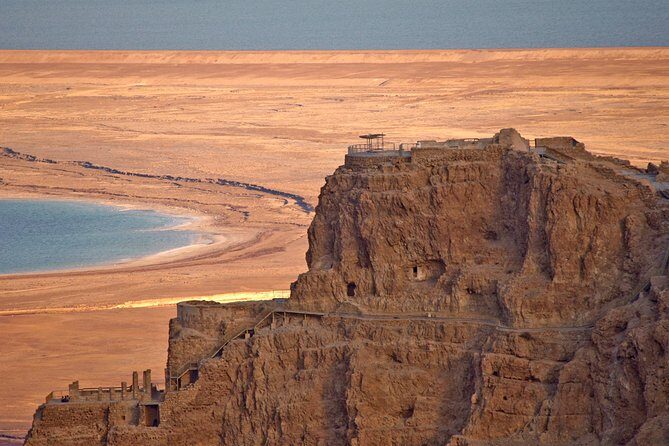
The day starts with Mount Scopus, with sweeping views over the Judea Desert. This is a smart opener because it gives you a sense of geography before you start walking through history.
When you’re later in the Old City, it’s easier to understand how Jerusalem sits in its wider setting. Even if you’re not a map person, you’ll likely find that one look from Mount Scopus helps you orient yourself fast.
The schedule gives you a short, focused block there (as part of the early routing), and then you move on to the next big theme of the day: Jerusalem’s religious history—Jewish, Christian, and Muslim—and how the city’s importance became global.
Mount of Olives to the Old City: religion, perspective, and descent
After Mount Scopus, the tour continues to the Mount of Olives. This is where the day’s tone shifts from “views and orientation” to “why Jerusalem sits at the center of three major faiths.”
Then comes the move into the Old City. That’s a key moment. The architecture and street layout change quickly, and the tour structure helps you not just arrive, but understand what you’re about to see.
If you’ve ever felt overwhelmed at the Old City—like you’re surrounded by signs, prayers, churches, and entrances all at once—having a guided path is a big advantage. You’ll know what you’re looking at and why it matters before you walk into each quarter.
Western Wall and the Herod-era trace
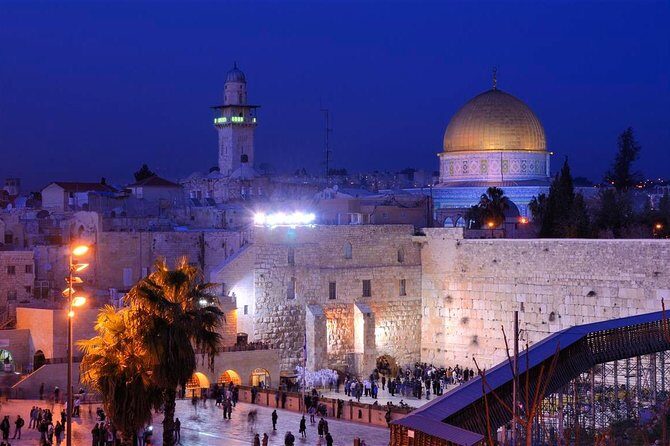
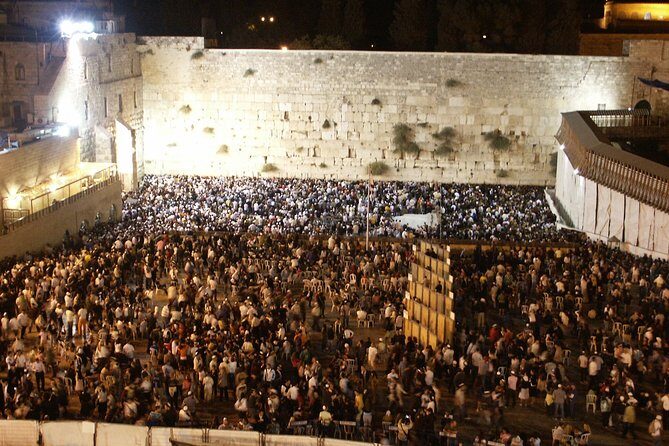
Your first Old City stop is the Western Wall area. You’ll learn about how the wall relates to the Jewish heritage of Jerusalem, and you’ll also get the specific explanation that the Broad Wall and nearby structures reflect older periods.
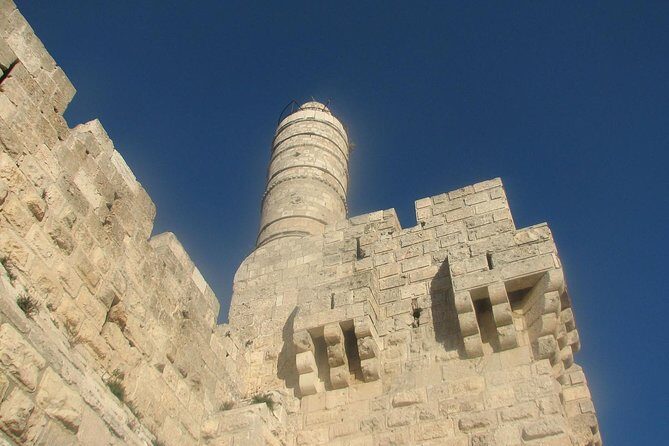
The itinerary also highlights the historical angle around the Western Wall. One stop describes the Western Wall itself as the only remaining walk built by King Herod. That detail is more than trivia—it helps you connect the site to a specific time and ruler, not just a general “ancient Jerusalem” feeling.
Practically, this is the moment in the day where people often slow down. It’s also where the tour mentions how visitors leave folded prayers between the stones. If you want the sites to feel active and lived-in rather than like museum props, this is a good point in the itinerary for that.
Dome of the Rock: seeing without stepping inside
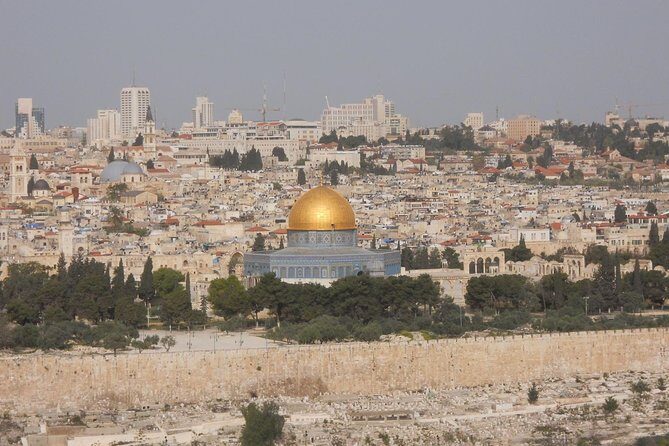
Next is a viewing stop for the Dome of the Rock, with the note that you’ll look over it without visiting the place. This is a good balance for a full-day route: you still get the visual anchor of Islamic Jerusalem, and you don’t burn time trying to fit in an additional interior visit.
The timing is short, so it works as a transition. You’re not lingering for hours, but you’re not skipping it either. It’s the kind of stop that helps the day feel like all three traditions are present, not treated like a quick side note.
You can also read our reviews of more private tours in Tel Aviv





Via Dolorosa and the 14 Stations: walking the Christian story
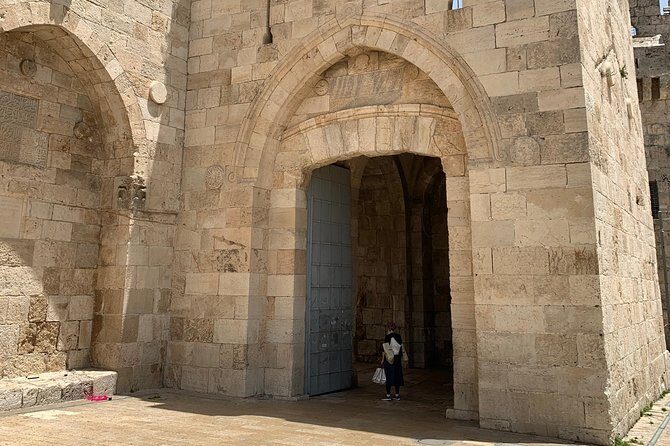
Then the tour moves to the Way of the Cross (Via Dolorosa), focused on the route tied to the last walk from the path to Golgotha. The itinerary references the 14 Stations of the Cross, and it gives you time to take in that progression along the way.
This stop is one of the most emotionally loaded parts of the day for many visitors. Even if you know the story already, seeing it in physical space changes the feel. The streets become part of the narrative.
One practical consideration: this is still part of a longer day, so you’ll want comfortable walking shoes and a bit of patience for the pacing. The itinerary gives generous time for each Old City quarter afterward, so this is more about absorbing the route than racing down it.
Broad Wall and the First Temple period connection
After the Via Dolorosa segment, you’ll visit the Broad Wall, described as part of the walk of the city of Jerusalem from the first Temple period. This is where the tour’s historical layering really shows.
Instead of treating the Old City as a single era, you’re nudged to think in layers: different periods, different walls and routes, and different ways people used the same space across time.
If you like when guides connect big dates to something you can physically point to, this is the kind of stop that delivers.
Jewish Quarter walk: Cardo, roofs, and the urban feel
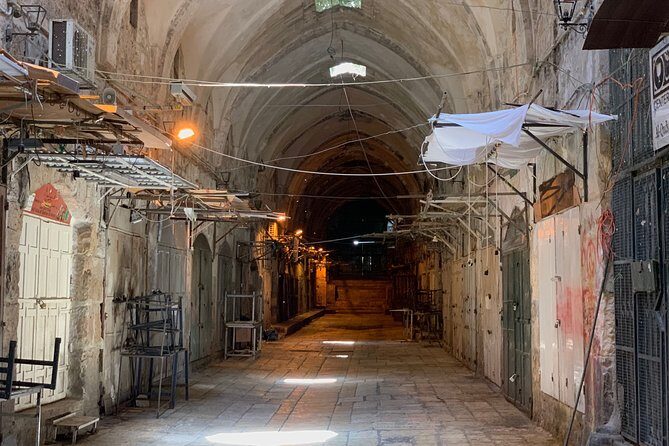
Next is the Jewish Quarter, where you’ll walk and see the Byzantine Cardo, the Broad Wall, the roofs, and get back toward the Western Wall area within the Old City route.
This quarter walk is valuable because it’s not only about one landmark. You get the texture of the Old City—how neighborhoods look and how the routes move through space. Seeing the Cardo helps because it’s a named corridor tied to a specific historical context, and it gives the quarter more meaning than a list of buildings.
The allotted time (around 45 minutes) is enough to move with the group, hear the explanations, and still take in the feel of the area without it becoming a long endurance test.
Muslim Quarter: bazaar time and a natural lunch window
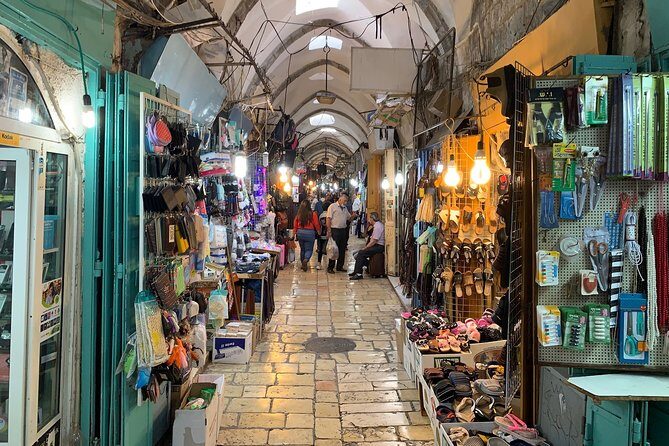
Then you head into the Muslim Quarter. The tour includes time to enjoy the bazaar here, with the schedule also placing lunch around this block.
This is one of the best parts of the day to mix practical and personal time. You can browse for souvenirs without it feeling like a detour. And since lunch is in the Old City area, you’re not traveling back out of the center just to eat.
One important detail: food and drinks aren’t included, and lunch is described as at an Old City restaurant where you pay on your own. So it’s smart to treat this as part of your budgeting. The upside is you can pick what feels right for you in that moment.
Christian Quarter and the Church of the Holy Sepulcher
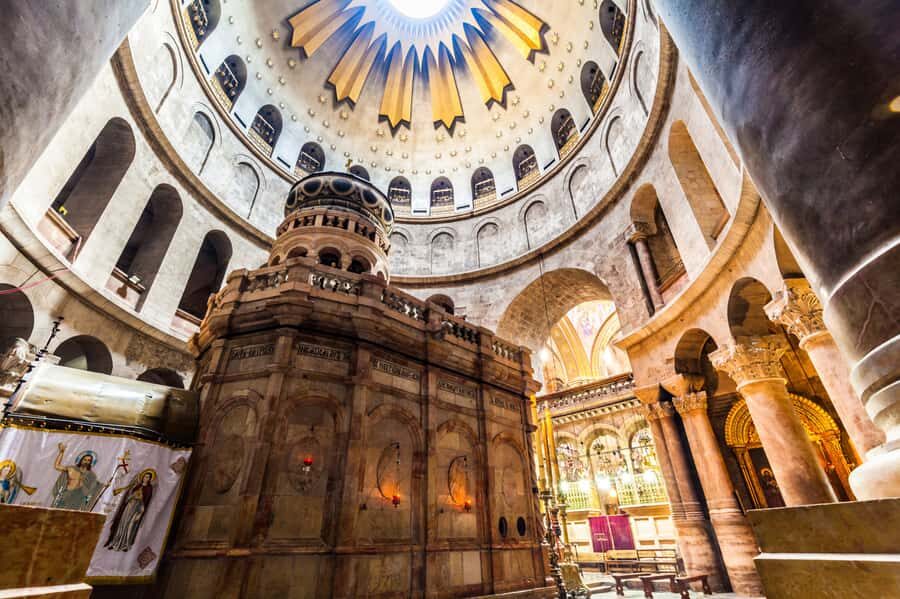
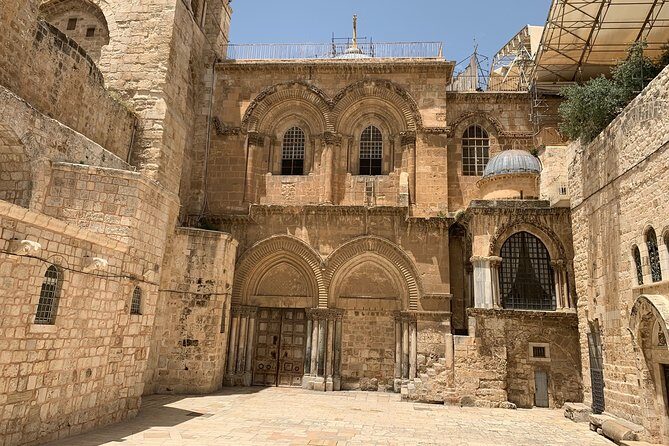
After the bazaar time, you move to the Christian Quarter. The itinerary includes walking through part of the Via Dolorosa and then visiting the Church of the Holy Sepulcher.
This is one of the major anchors of Christian pilgrimage, and the tour frames it around the places of Jesus’ crucifixion, burial, and resurrection. The key word here is “visit”: this stop is meant for experiencing the core site, not just passing by.
The time allocation is about 1 hour 30 minutes. That’s meaningful. It gives room for the emotional weight of the location and for you to take in what’s happening around you.
Old City to modern Jerusalem: Kneset and government buildings
After the holy sites and quarters, the tour shifts to modern Jerusalem. You’ll drive past political landmarks like the Kneset, Government Offices, and the Supreme Court.
You’re not walking around these buildings as a primary stop, but the drive-past matters. It reminds you Jerusalem is not frozen in time. It’s a functioning city with today’s institutions operating right beside the ancient layers.
For me, this is the part that keeps the day from becoming only religious tourism. You come away with a stronger sense that the city is both sacred and political—often at the same time.
Lunch break: plan for what you’ll pay
Lunch happens during the Old City portion, at an Old City restaurant, and it’s own expense. That’s the only meal you need to think about for this tour.
So here’s how I’d handle it: set a realistic budget for food and drinks, and don’t treat lunch as something you’ll quickly grab outside the area. The tour schedule places it inside the day’s core routing, so you’ll want to be ready to eat where you are.
If you’re picky about timing, you’ll also likely appreciate the way the itinerary uses lunch as a natural break between quarters.
About the guide: what you’re really paying for
The price for this tour is $925 per group for up to 4 people, which means the “unit cost” per person drops if you’re traveling as a small group. But the more important value piece is what you’re buying: a driver, a guide, and a structured route that tries to cover Jerusalem’s major sites in one day without you needing to plan the whole route yourself.
Also, the reviews connected to this operator and its guiding style highlight Avraham and his approach. People note his ability to explain history in a way that makes the sites feel more meaningful, and they mention his patience with questions. That kind of guide makes a big difference in Jerusalem, where people often have competing interests—holy sites, history, photo time, and how the quarters connect.
In plain terms: you’re not just paying to be transported. You’re paying to make the day make sense.
Price and logistics: does $925 feel fair?
Let’s talk value honestly.
For a private, hotel-pickup day trip from Tel Aviv, with a dedicated driver and guided time in Jerusalem, $925 per group is not a budget option. But if you’re traveling as two to four people, it becomes more reasonable, because the cost covers the group together.
Where you really feel the value is in reduced friction: you don’t need to arrange your own ride, you don’t need to stitch together a route across major sites, and you get a paced itinerary that moves through multiple areas efficiently.
If you’re a solo traveler, you’ll likely feel the price more strongly. If you’re two or more people, the group pricing makes this kind of full-day route much more attractive.
Who should book this Jerusalem Old City tour?
I think this tour is a good fit if you want:
- A full-day structure that includes Jewish, Christian, and Muslim heritage sites in one loop.
- Hotel pickup and drop-off from Tel Aviv to avoid a complicated day.
- A guide who can connect the dots between viewpoints, quarters, and key holy sites.
- A mix of Old City walking and a quick modern Jerusalem snapshot with the Kneset and government areas.
It’s also a strong choice when time is tight—like when you have one day and you want to see a lot without building the plan yourself.
If you hate long days, or you want a slower pace with lots of free time to wander on your own, this may feel packed.
Should you book this tour?
If you’re traveling with up to 4 people, and you want Jerusalem to feel organized, meaningful, and efficient, I’d say it’s worth serious consideration. The mix of stops—from Mount Scopus to the Western Wall, through the Via Dolorosa, and into the Church of the Holy Sepulcher, plus bazaar time and a modern Jerusalem drive-past—gives you a full picture without leaving you stuck on logistics.
If your budget is tight, or you’d rather spend more time in just one area, you might choose a shorter or more focused option. But for a first-time day trip that covers the essentials, this one makes practical sense.
FAQ
FAQ
What time does the tour start?
The tour starts at 9:00 am.
How long is the Jerusalem Old City private tour?
It lasts about 9 hours.
Is this tour private?
Yes. It’s listed as a private tour/activity, and only your group participates.
How many people is the group limited to?
Pricing is for a group of up to 4 people.
Does the tour include hotel pickup and drop-off in Tel Aviv?
Yes. Hotel pickup and drop-off in Tel Aviv are included.
Is food included?
No. Food and drinks are not included. Lunch is at an Old City restaurant for your own expense.
Does the tour visit the Dome of the Rock interior?
No. You’ll look over the Dome of the Rock without visiting.
Are there any sites with free admission listed on the schedule?
The itinerary notes free admission for stops such as the Western Wall, the Dome of the Rock, Via Dolorosa, Broad Wall, and the quarter visits.
Are service animals allowed?
Yes. Service animals are allowed.
Can I cancel for a full refund?
Yes. Free cancellation is available up to 24 hours in advance for a full refund.