REVIEW · JERUSALEM
Jerusalem and the Dead Sea
Book on Viator →Operated by Hands on Israel · Bookable on Viator
One day, two very different sacred worlds. This private full-day tour strings together a guided look at Jerusalem’s Old City, including the Western Wall and Rooftop Ramparts, then drives you down into the desert for a real Dead Sea float and mud session.
I like how practical it feels, with door-to-door hotel transfers and included admissions so you’re not juggling tickets all day. One heads-up: food and drinks aren’t included, and you’ll be walking in the Old City and at Ein Gedi, so plan for a steady pace.
In This Review
- Key moments that make the day work
- How the Jerusalem-to-Dead-Sea schedule really feels
- Mount Scopus National Botanical Garden: the calm start above Jerusalem
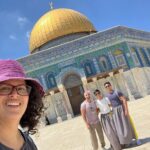
- Old City walking with Rooftop Ramparts and the Western Wall
- The Cardo: a Byzantine-era main street you can still feel
- New City drive-by: Knesset, High Court of Justice, and Israeli Museum
- Ein Gedi Oasis: the desert cool-down with waterfall views
- Dead Sea floating and mud: the “lowest point” payoff
- Price and value for up to 5 people
- Who this private day fits best (and who should reconsider)
- The guide effect: why the history comes together
- Should you book this Jerusalem and Dead Sea private day?
- FAQ
- What time does the tour start?
- How long is the Jerusalem and Dead Sea private excursion?
- Is this a private tour or a shared tour?
- How many people are in a group?
- Do you get hotel pickup and drop-off?
- Which stops are included during the day?
- Are admission tickets included?
- Is food and drink included?
- Is there a mobile ticket?
- Can I cancel for a full refund?
Key moments that make the day work

- Rooftop Ramparts over four Old City quarters: a unique way to connect rooftops to streets and religious sites.
- Cardo walk with Byzantine-era context: you’ll follow the main thoroughfare that helped shape Jerusalem’s old layout.
- Sephardic synagogue stops: four synagogues along the route add depth beyond the big-name sights.
- Mount Scopus botanical garden viewpoints: a calm start above the city near the Hebrew University area.
- Ein Gedi Oasis waterfall walk: a short, refreshing nature break in the desert.
- Dead Sea floating plus mud time: entrance fees are covered, and you’ll finish with that surreal “I’m weightless” moment.
How the Jerusalem-to-Dead-Sea schedule really feels

This is a long-but-doable day built around contrast. You start high and close to the city with views from Mount Scopus. Then you shift into Jerusalem’s layered Old City on foot. After that, you trade stone streets for desert scenery as you head toward the Dead Sea region.
Timing matters because the “big” walking parts are front-loaded. The Old City portion is paced as a guided stroll with structured stops, not a free-for-all. Then you get a nature walk at Ein Gedi, followed by your Dead Sea time. The whole day runs about 6 to 8 hours, starting at 8:00 am, which is early enough to beat some of the busiest hours around the Old City.
The private setup helps you stay focused. You’re picked up from your hotel and brought back, and you’ll travel in a private vehicle with a local driver and guide. It’s built for a small group (up to 5), so you get a more direct experience than you’d get on a big bus tour.
One more detail I appreciate: this tour uses a mobile ticket, so you’re not hunting for paper passes at multiple checkpoints.
You can also read our reviews of more tours and experiences in Jerusalem.
Mount Scopus National Botanical Garden: the calm start above Jerusalem
The day begins at Mount Scopus National Botanical Garden, right near the Hebrew University area, with a view over Jerusalem. It’s a strong opener because it gives you orientation before you start threading through narrow streets.
You’ll spend about 30 minutes here. That’s not meant to turn into a botanical field trip. Instead, it’s a quick hit of greenery and a high vantage point that helps everything later make more sense. If you’ve ever felt lost in Jerusalem, this is the antidote: you’re literally getting your bearings from above.
What I like about this stop is the pacing. After the drive, you’re not immediately dropped into crowds. You get a short, scenic reset. And since the garden admission is listed as free in the tour plan, it’s one less “what do I pay for?” moment.
A consideration: this is a viewpoint start, so you’ll likely feel the sun and wind even during the cooler morning hours. If you’re the type who gets cold easily, bring a light layer. If you run warm, cap + sunscreen will save your afternoon.
Old City walking with Rooftop Ramparts and the Western Wall
Next comes the Jerusalem part people dream about, but this one has a smart twist: you’ll do the Rooftop Ramparts tour as you move toward the Western Wall.
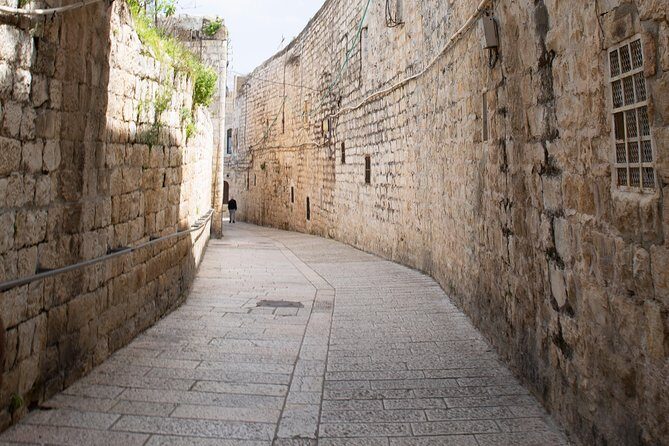
Rooftop routes are not just a scenic novelty. They’re a way to understand how Jerusalem grew and how people moved. At street level, you see doorways and small lanes. From above, you see connections—where old buildings sit, how quarters relate, and why certain spots feel so close even when the streets look like they should be miles apart.
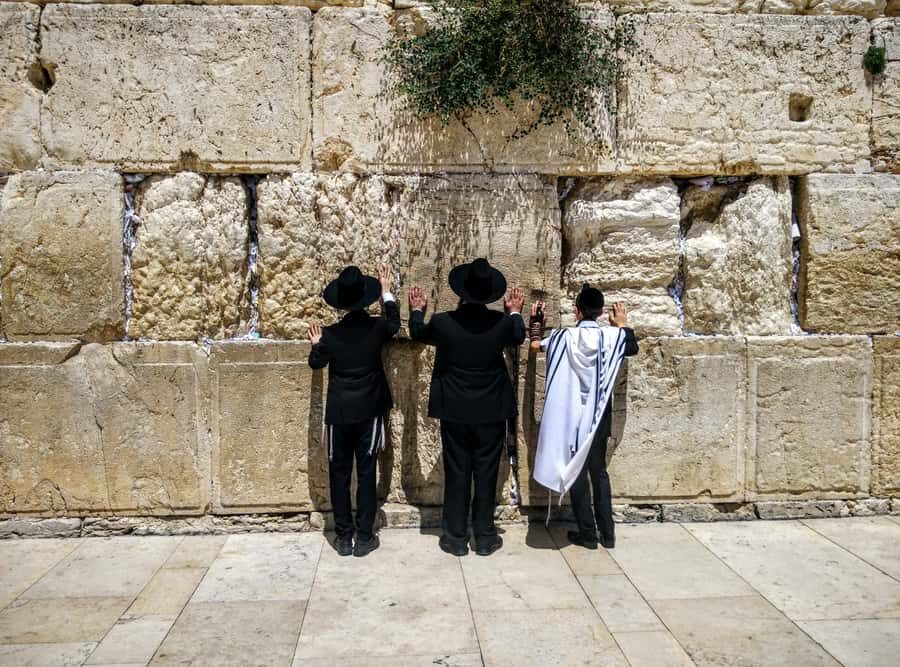
You’ll walk through the four quarters of the Old City, using the rooftops to connect the story as you go. Then you continue down into street-level passages that bring you right toward the holiest focal point on the route: the Western Wall.
The Cardo: a Byzantine-era main street you can still feel
After the rooftop segment, the guide brings you into the Cardo, described here as the main thoroughfare of Byzantine Jerusalem. This is where I like the tour’s structure. Cardo-level streets can feel like “just walking,” unless someone gives you the map in their head. A good local guide turns it from a corridor into a timeline.
You’ll also stop at four famous Sephardic synagogues along the way. Those pauses matter because they slow the pace and add texture. You’re not only ticking off landmarks; you’re getting a sense of how Jewish life has occupied and re-occupied the city over centuries.
One practical note: Old City walking means uneven surfaces, steps, and narrow turns. Comfortable shoes are not optional. Also, be prepared for crowds near the major sites, even on guided days.
New City drive-by: Knesset, High Court of Justice, and Israeli Museum

Between Old City stone and desert road, you get a drive through the new city. In a private car, this section is quick and informative without stealing the day from the main sights.
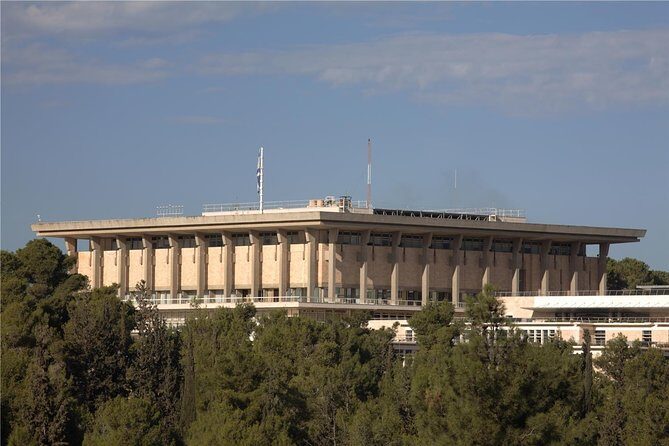
From the vehicle, you pass major landmarks such as the High Court of Justice, the Israeli Museum, and the Israeli Parliament (Knesset). You don’t linger here, and that’s fine. The point is contrast. Jerusalem’s past feels heavy in the Old City. The modern institutions remind you the city is still alive—politically, culturally, and daily.
If you’re new to Jerusalem, this drive helps you place what you’re seeing. If you’ve been before, it’s still useful because it links the modern city’s big civic landmarks to the old city’s religious center.
If you’re hoping for museum time at the Israeli Museum, this tour won’t be that day. You’re passing key sites, not entering everything. That’s part of why you can fit Ein Gedi and the Dead Sea too.



Ein Gedi Oasis: the desert cool-down with waterfall views
After Jerusalem, the scenery changes fast. You head into the desert toward Ein Gedi, where the tour includes a short nature walk in the oasis.
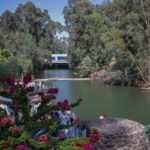
Ein Gedi is described as a freshwater desert oasis with natural waterfalls. That’s exactly what makes it a great mid-day break. It breaks the rhythm after Old City walking and makes the Dead Sea finish feel less like a one-note day.
You’ll have about 1 hour here. That’s usually enough time to enjoy the walking path and take in the water views without turning it into an exhausting hike. If you prefer light nature time rather than long trails, this is the right length.
Consideration: because it’s nature and outdoors, conditions can matter. You’ll want sun protection and water (the tour doesn’t list water being provided). Even if the trail isn’t long, the heat can make it feel longer.
Also, keep an eye on footwear. The walk is described as a nature walk, not a city stroll. Choose shoes that work on uneven ground.
Dead Sea floating and mud: the “lowest point” payoff
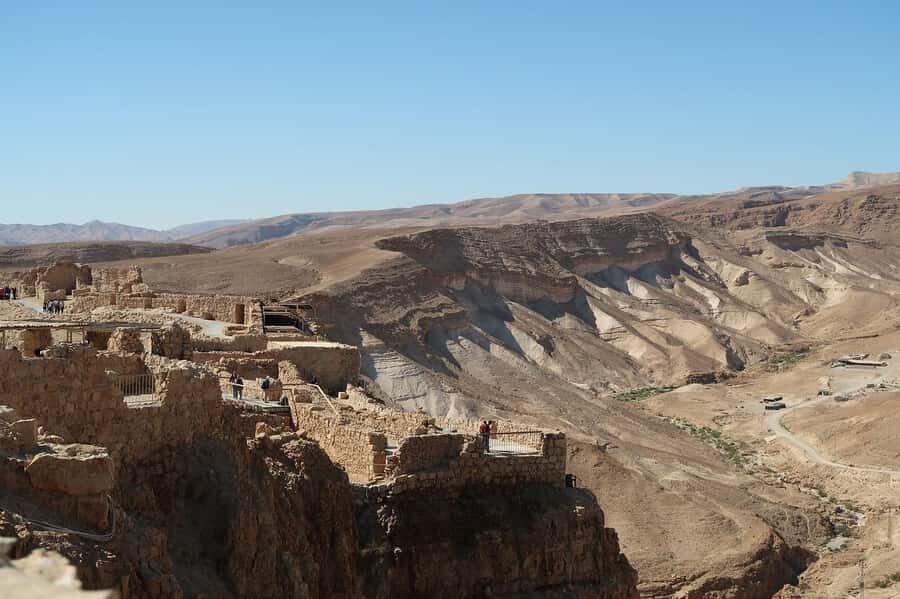
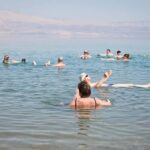
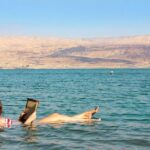
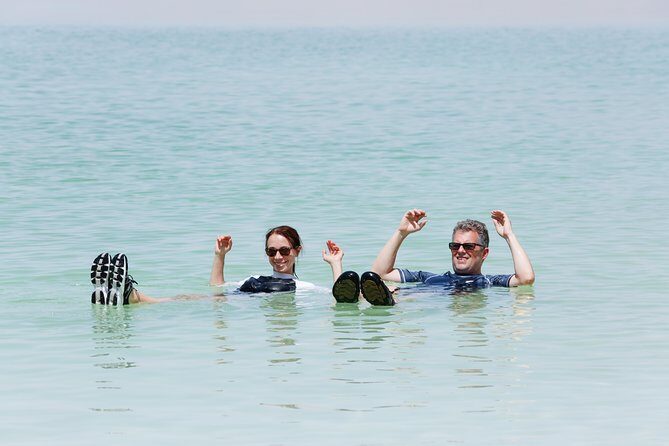
Then comes the main event for many people: the Dead Sea region. You’ll descend toward what’s described as the lowest spot on the planet, then you’ll have time to float and finish with being covered in mud at the Dead Sea.
The key value here is that entrance fees are included, which matters more than it sounds. Dead Sea visits often add up quickly once you start layering in access fees. Here, your tour plan explicitly includes entry.
You’ll have about 2 hours for this part. That’s a realistic window for the usual flow: get oriented, float, then enjoy the mud coating time. If you want to take photos, you can, but the tour notes that souvenir photos aren’t included and can be purchased.
A couple of practical thoughts for your comfort:
- Plan for the fact that mud will happen. Wear clothing you don’t mind getting dirty.
- Expect a slippery environment around any water area. Take your time on steps and edges.
- If you have sensitive skin or eyes, protect yourself and be cautious with water contact.
The Dead Sea is one of those experiences that people describe in simple terms because the feeling is hard to explain until you’re there. It’s not just about “seeing” it. It’s about the moment your body stops behaving normally in the water.
Price and value for up to 5 people
The price is $1,700 per group (up to 5). That’s where value depends on how many people share the booking.
Here’s the simple math:
- If you book with 5 people, it comes out to about $340 per person.
- If you book as 2, it’s about $850 per person.
- For 1 traveler, it’s the full $1,700.
So it’s a strong deal when you’re traveling as a small family or a group of friends. It’s less of a bargain if you’re solo and comparing to cheaper shared tours.
What you’re getting for the money is the private structure: local driver & guide, hotel pickup and drop-off, and round trip private transfer. On top of that, the tour plan includes admission fees for the Dead Sea, and the other listed entries are noted as free in the schedule.
What’s not included is just as important: food and drinks. That means you should budget for lunch on the day. Also, souvenir photos are available to purchase, which is normal for attractions like this.
If you want a day that feels efficient—no waiting around on public transport, no hunting for tickets, and no time lost to confusion—this price starts to look fair quickly.
Who this private day fits best (and who should reconsider)

This is a great match if you:
- Want a guided, structured Old City experience rather than wandering with a loose plan.
- Like the idea of a two-part day: Jerusalem’s holy sights plus a very different natural experience at the Dead Sea.
- Travel with family or friends and can hit that up to 5 group size sweet spot.
It may not be ideal if you:
- Want a lot of free time to explore on your own in the Old City. This tour is guided and paced, with structured stops.
- Prefer not to walk much. You’ll be on foot during the Old City section and during Ein Gedi’s nature walk.
Also, the tour says most travelers can participate. That’s reassuring, but it doesn’t change the reality that Jerusalem’s old streets and steps are part of the experience.
The guide effect: why the history comes together
A day like this can go two ways. Either you see places and hear facts, or you connect the places into one story.
From prior experiences with Hands on Israel, the guide Shachar Gel has been described as a walking Wikipedia, with the ability to connect ancient and current Israel into an ongoing explanation. That’s exactly the kind of guide you want here. Rooftop Ramparts, the Cardo, and the Western Wall all benefit when someone can turn movement through space into understanding across time.
Even if you’re not a “history person,” you’ll likely appreciate the clarity when you’re standing in front of sites that have meant different things to different communities over centuries.
The same review feedback also points to customer service that goes above standard. For a full-day private tour, that matters because it reduces stress. You’re more likely to stay on schedule and keep the day smooth.
Should you book this Jerusalem and Dead Sea private day?
I’d book this if you want a complete day package: Old City highlights with Rooftop Ramparts, a desert oasis walk at Ein Gedi, and then the Dead Sea float and mud with entrance covered. The private, door-to-door format is a big deal here, because Jerusalem can eat time if you’re moving on your own.
I’d pause if you’re traveling solo and the group price doesn’t match your budget. Also think twice if food convenience is important to you; since food and drinks aren’t included, you’ll need to plan your own lunch.
If you can split the cost with 3–5 people, this becomes one of those rare days where the logistics are handled and the experiences are actually different from each other.
FAQ
What time does the tour start?
The start time is 8:00 am.
How long is the Jerusalem and Dead Sea private excursion?
It runs about 6 to 8 hours.
Is this a private tour or a shared tour?
It’s a private tour/activity, meaning only your group participates.
How many people are in a group?
The group can be up to 5 people.
Do you get hotel pickup and drop-off?
Yes. Hotel pick up and drop off and round trip private transfer are included.
Which stops are included during the day?
The tour includes Mount Scopus National Botanical Garden, the Old City of Jerusalem with the Rooftop Ramparts and Western Wall area, a drive through New City highlights (including High Court of Justice, Israeli Museum, and Knesset), Ein Gedi Oasis, and the Dead Sea region.
Are admission tickets included?
Admission tickets are included for the Dead Sea (entrance fees included). The schedule also lists admissions for the other stops as free.
Is food and drink included?
No. Food and drinks are not included.
Is there a mobile ticket?
Yes, the tour includes a mobile ticket.
Can I cancel for a full refund?
Yes. Free cancellation is offered up to 24 hours in advance for a full refund.