REVIEW · JERUSALEM
Caesarea, Haifa, Acre and Rosh Hanikra Tour from Jerusalem
Book on Viator →Operated by Click Tours · Bookable on Viator
Waking up early is part of the deal. I love how this day ties together two UNESCO stops with dramatic coastline scenery, and I love that entrance fees are included so you’re not constantly paying on the spot. It’s a smart way to see a lot of Israel’s layers without renting a car or fighting traffic.
One thing to plan for: this is a very long day, starting at 5:40am, and the group logistics (plus bus seating) can feel like the trade-off for doing so much in one run. If you’re picky about comfort, bring patience—or cushions.
Key reasons this tour works well
- UNESCO sights in one outing without extra planning
- Air-conditioned coach for long Mediterranean stretches
- Included entry tickets at major sites so your budget stays steady
- Rosh Hanikra grotto experience near the Lebanese border, with time to explore
- Acre’s Old City plus the Citadel, including Crusader and Mandate-era remnants
- Small-ish group size (up to 40) which helps keep the day moving
In This Review
- A Long, Scenic North-Coast Day from Jerusalem
- Price and What You Get for $69 (Entrance Fees Included)
- Morning Logistics: 5:40am Start, Tel Aviv Joining, Coach Comfort
- Caesarea National Park: Herod’s Roman Power in Stone
- Haifa’s Baha’i Gardens: 19 Terraces and a Quick, Worth-It Stop
- Rosh Hanikra Grotto Descent: Cable Car Views and Limestone Caverns
- Acre Old City: Crusader-Era Streets in One Hour
- Citadel of Acre: Crusader Remains, Turkish Imprisonment, British Gallows
- The Best Parts: Guides, Pacing, and What to Prioritize
- Who This Tour Fits Best (And Who Should Skip It)
- Tips to Make This Day Feel Worth It
- Should You Book This Caesarea–Haifa–Acre Tour?
- FAQ
- What time does the tour start?
- How long is the tour?
- Are entrance fees included?
- Is food provided?
- What is the minimum age?
- Can I cancel and get a refund?
A Long, Scenic North-Coast Day from Jerusalem
This is the kind of tour that turns one early morning into a full “greatest hits” sweep of northern Israel. You’ll head from Jerusalem up along the Mediterranean, aiming for Caesarea, Haifa, the Rosh Hanikra area, and finally Acre. The big idea is simple: swap independent driving for an organized route, so you can focus on the sites and the views.
A big plus for practical travelers is the air-conditioned coach. That matters in Israel’s spring or summer when you can feel heat building fast, especially between stops. The day is built around walking at each attraction, with time to breathe between them.
The other practical detail: you start at 5:40am, and the tour is listed as about 12 hours. In real life, that often means you’ll be tired later in the day. If you like relaxed travel, schedule something light after you get back.
Price and What You Get for $69 (Entrance Fees Included)

For $69, you’re not just buying a ride. You’re getting a professional guide, hotel pickup and drop-off in selected cities, and an air-conditioned vehicle—plus entrance fees are included for the paid sites. That’s the part I like best from a value angle: it reduces the “surprise add-ons” feeling.
Here’s how it breaks down conceptually:
- Caesarea National Park has an included admission.
- Rosh Hanikra has parts that are free and parts that are included depending on the activity time slot.
- The Citadel of Acre is included.
On tours like this, entrance fees can quietly add up when you’re bouncing between multiple historic sites. Folding them into the price makes budgeting easier and keeps the day smoother because you’re not hunting for tickets while others wait.
What you still need to budget for is basic life stuff: food and drinks. You also should have your own travel insurance, since it’s not included.
You can also read our reviews of more tours and experiences in Jerusalem.
Morning Logistics: 5:40am Start, Tel Aviv Joining, Coach Comfort

The start time is 5:40am, and the meeting point approach is set up so that people in Jerusalem may join from Tel Aviv. That means the pickup isn’t necessarily a straight-through ride with no coordination points. Plan for some “waiting and shuffling” early in the day, because a coach run has to match multiple hotel schedules.
Group size is capped at 40, which is decent for this kind of sweep. You’ll usually be able to hear your guide and regroup without feeling like you’re in a stadium crowd.
Now the human factor: bus comfort. One review noted seats were awkward to get in and out of. That doesn’t mean the tour is unusable, but it is a real consideration. If you’re tall, bring a small travel neck pillow or wear comfortable shoes—your body will thank you when you get back on the road.
Tip: eat before pickup if you can. Since food isn’t included, waiting until mid-tour can mean you’re hungry and out in the sun.
Caesarea National Park: Herod’s Roman Power in Stone
Caesarea National Park is where the day gets instantly visual. You’ll drive north from Jerusalem and arrive at a place built under Herod, named after Caesar. Even with ruins, the intention shows: this was a wealthy Roman coastal city, with architecture meant to impress.
You get about an hour, plus admission is included. In that time, I’d focus your attention on the big anchors:
- the remains of gateways and walls
- traces of a moat
- rooms and structural pieces that show how the city functioned
- the Roman amphitheater, which still gets used for performances by Israeli and international artists
Next to the amphitheater, you’ll also see part of what was once a hippodrome. That detail helps you understand Caesarea wasn’t just a pretty harbor stop—it was built for entertainment and big public moments.
One drawback to remember: an amphitheater ruin is great for photos, but it can be hot and bright. If you’re sensitive to sun, wear a hat and bring water. Your guide can point out what’s worth seeing first, so you don’t spend your hour wandering in the wrong direction.
Haifa’s Baha’i Gardens: 19 Terraces and a Quick, Worth-It Stop
Next comes Haifa, with a stop at the Bahá’i Shrine and gardens. This portion is short—about 20 minutes—and it’s listed as admission free. That’s good news for your schedule: you’re not losing time to ticket lines, and you get a taste of a site that people travel across the world to see.
What you’ll notice fast is the layout. The gardens are terraced—19 terraces—and they cascade down toward Haifa. The design is intentional: each level is planned as part of one overall view, not a bunch of separate garden rooms. Even if you only have a short window, you can still understand the idea of the place.
What might be a consideration: with only 20 minutes, you won’t have time to linger like you would on an independent visit. So if you love gardens and slow walking, keep your expectations for this stop as a “high-impact visit,” not a full afternoon.
Quick practical note: this is a religious and contemplative setting. Keep your voice low and dress respectfully—your time there will go smoother.
Rosh Hanikra Grotto Descent: Cable Car Views and Limestone Caverns
Rosh Hanikra is the northern edge of the story. It’s described as the most northern point along Israel’s Mediterranean coast, and the site’s biggest draw is what waves do to rock over time.
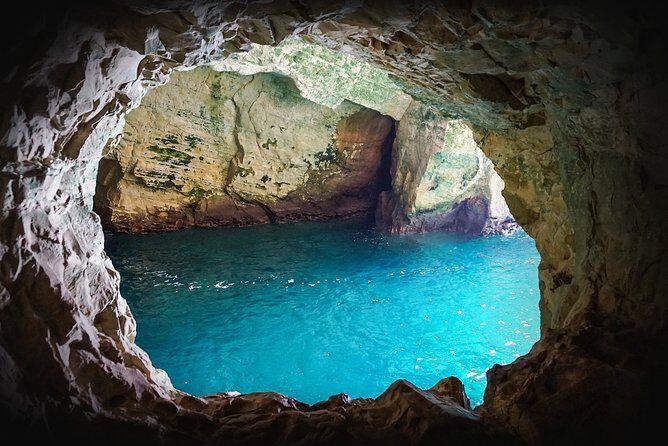
You’ll spend about an hour at Rosh Hanikra, and the part labeled here is admission free. The highlight is the cable car descent into limestone grottoes formed by years of wave impact. Even if you’re not a geology nerd, you’ll feel the scale—this is a network of caverns and openings shaped by constant pounding at the coastline.
After that, the schedule gives additional time at the Grottos around the Lebanese border area, with admission included and about 40 minutes. In practice, this means you’re not just doing a quick ride—you get time to look around and take in the coastline position relative to the border direction.
A heads-up for your comfort: grottoes can be cooler than the surface, but they can also be slippery and windy near openings. Wear shoes with solid grip and keep an eye on where you’re stepping.
If you’re traveling with older folks or anyone who needs steadier footing, this is the one segment where I’d judge the pace. You don’t have to rush, but you do need to move through walkways and paths.




Acre Old City: Crusader-Era Streets in One Hour

Then you head to Acre (Akko), where you’ll get about one hour exploring the Old City. Admission here is listed as free, which helps you spend your time actually seeing rather than waiting.
Acre’s Old City is a place where different eras stack on top of each other. In a short visit, I find it helps to pick a few “anchors” instead of trying to see every alley. Let your guide orient you quickly, then focus on the parts that match the story you’re being told: ports, fortifications, and the medieval trade-and-war rhythm that shaped the city.
Because your time is limited, don’t try to do Acre like it’s a standalone half-day. Think of it as a guided taste—enough to understand why people come back for longer.
Citadel of Acre: Crusader Remains, Turkish Imprisonment, British Gallows
If Acre’s Old City sets the mood, the Citadel of Acre sharpens the focus. You’ll spend about an hour here, and admission is included.
What makes this stop especially heavy is that you’re not just looking at old stones—you’re looking at reminders of conflict and punishment across different regimes. The key parts described in the route include:
- Crusader remains
- a prison used under Turkish rule
- gallows used under the British Mandate, tied to hanging Jews who violated British law restricting immigration to Palestine after World War II
That combination can feel intense. If you’re sensitive to grim topics, you might want to take short breaks for air and look for your own pace. A good guide helps because they’ll explain context without turning it into a trivia contest.
Still, even if the subject matter isn’t your favorite, this is a place where history feels less abstract. You can see how one structure served multiple political eras, each with its own rules of power.
The Best Parts: Guides, Pacing, and What to Prioritize
The tour’s strongest asset is the professional guide. Some groups are led by a guide named Daniel, who was praised for being both well-prepared and personable. The driver is often part of what makes the day work too; in one highlight, Bilal was mentioned as great behind the wheel. When you’re spending a full day on a coach, that teamwork shows.
So how should you prioritize your attention during the day?
- In Caesarea, prioritize the amphitheater and major structural remains.
- In Haifa, treat it like a quick orientation to the terraced design.
- In Rosh Hanikra, prioritize the cable car descent and then spend the extra time at the grotto walkways.
- In Acre, pick your pace: learn the story of the streets, then let the Citadel hit you with the heavier parts.
If you’re the type who loves photos, this tour gives lots of “easy wins”—coastline views, terraced gardens, and big ancient structures. Just don’t let the phone hog your time when your guide is showing you what matters.
Who This Tour Fits Best (And Who Should Skip It)
This tour is a good fit if you want:
- a guided way to see multiple major sites in one day
- entrance fees included, so budgeting is straightforward
- north-coast variety: Roman ruins, a major spiritual site, sea grottoes, and medieval city remains
It may not be the best fit if you:
- hate long early mornings and late days
- have trouble with getting in and out of bus seats or tight coach arrangements
- need lots of free time at each site to wander on your own
The route is also more appealing if you like history that comes in layers: Roman power at Caesarea, then later coastal and crusader-era stories in Acre, with the modern geography of Israel’s coastline and borderlands highlighted at Rosh Hanikra.
Tips to Make This Day Feel Worth It
A tour like this succeeds or fails based on how you prepare for the day, not just what you see.
Bring:
- comfortable walking shoes with grip for grotto areas
- a hat and sunscreen for outdoor segments
- water, since food and drinks aren’t included
- a small snack for the early start if pickup leaves you hungry
Plan to:
- keep your expectations for Haifa short and focused (20 minutes is just enough for the big idea)
- take your time at the Citadel of Acre—don’t treat it like a quick photo stop
- stay aware of pacing. You’re on a coach, so the schedule is the schedule.
If you want the day to feel smooth, be ready when the group needs to move. That sounds obvious, but small delays ripple across a full-day tour.
Should You Book This Caesarea–Haifa–Acre Tour?
If you want a value-forward, guided north-coast day with several major sites and included entrances, I’d say it’s worth booking. The route does what it promises: it strings together big-name locations with minimal hassle, and you’re not stuck paying separately at every stop.
But book with eyes open. The early start and long hours are real. Bus comfort is one of the trade-offs, and the day can run later than you’d expect based on the schedule alone. If you’re the type who hates being rushed, this might feel long. If you can handle a packed itinerary, you’ll come away with a strong sense of how Israel’s coast changed over centuries.
If you’re traveling with someone who wants a slower pace, you may prefer splitting the trip into separate visits (Caesarea + Haifa one day, Acre another). For a single, efficient day with a guide, this one makes a lot of sense.
FAQ
What time does the tour start?
The tour start time is 5:40am.
How long is the tour?
The duration is listed as 12 hours (approx.).
Are entrance fees included?
Yes. Admission fees are included for the listed paid stops, and some stops are marked as free.
Is food provided?
No. Food and drinks are not included.
What is the minimum age?
The minimum starting age is 4 years old.
Can I cancel and get a refund?
Yes. You can cancel for free up to 24 hours in advance for a full refund. If you cancel within 24 hours of the start time, the amount paid isn’t refunded.