REVIEW · JERUSALEM
Caesarea, Acre & Rosh Hanikra Day Trip from Jerusalem
Book on Viator →Operated by Bein Harim Ltd · Bookable on Viator
Roman ruins, sea caves, and medieval tunnels, all in one day. What makes this trip work is the mix: Caesarea’s Roman-era port ruins, the Bahá’í Gardens on Mount Carmel, and then that big, cinematic shift to limestone grottoes and Acre’s underground Crusader world. You get a fast look at northern Israel with a guide who helps you connect the dots.
I especially like the guided walking time at Caesarea, where the 1st-century Roman theater feels less like a random site and more like a real place people once gathered. I also like that the day includes both big landmarks and smaller moments, like the viewpoints over Haifa and the dramatic cable-car access to Rosh Hanikra.
The main drawback to plan around is the pace. This is a 12-hour “four-stop” style day, so you’ll have a lot of movement, early mornings, and fewer chances to linger.
In This Review
- Key things that make this day trip special
- A Day That Hits Four Very Different Eras
- Early Morning Jerusalem Pickup: Getting on the Bus by 6:00 AM
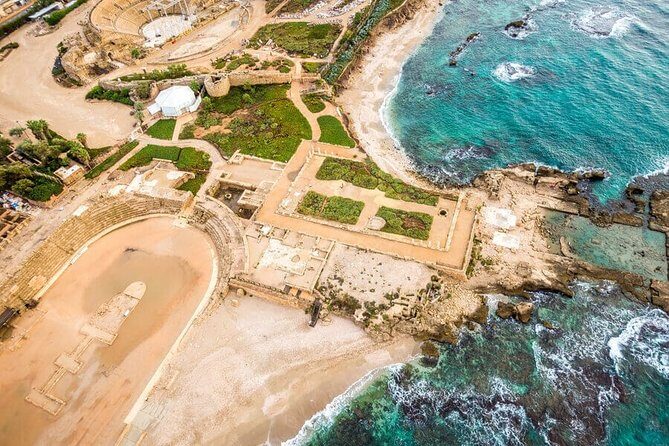
- Caesarea National Park and the Roman Theater: Herod’s Port City
- Haifa’s Bahá’í Gardens: Terraces, Gardens, and a Golden Dome
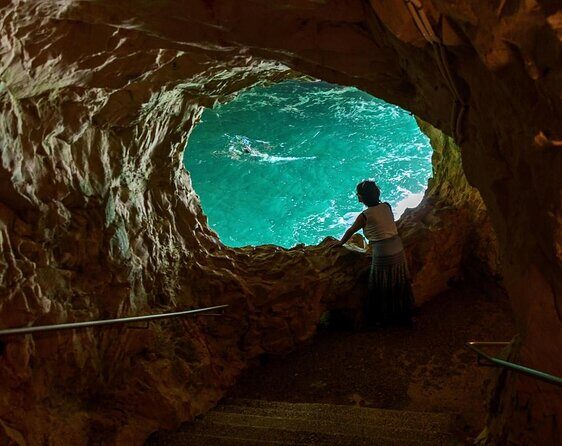
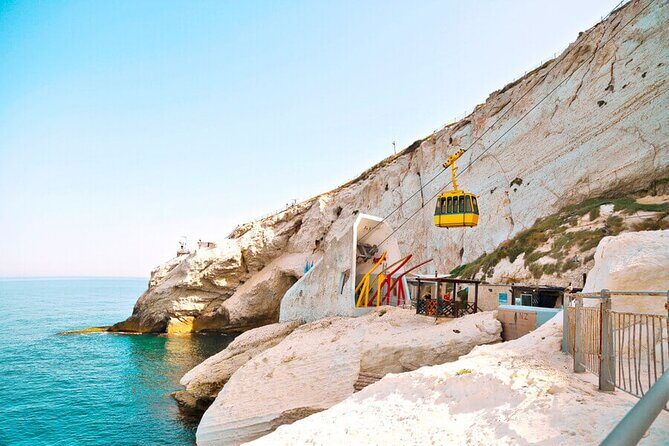
- Rosh Hanikra Grottoes: Chalk Sea Caves with Cable Car Access
- Acre Above and Below: The Crusader Underground City
- How the Tour’s Time Budget Really Feels
- Price and Value: What $139 Buys You
- Tips to Make This Day Trip Feel Less Like a Sprint
- Should You Book This Tour?
- FAQ
- What is the duration of the Caesarea, Acre & Rosh Hanikra day trip?
- What time does the tour start?
- Is hotel pickup and drop-off included?
- What’s included in the tour price?
- Are food and drinks included?
- Which sites are part of the day?
- Is the Bahá’í Gardens admission free?
- How do you access Rosh Hanikra?
- Is this tour suitable for children?
- What is the maximum group size?
- Is there free cancellation?
Key things that make this day trip special
- Caesarea National Park + Roman theater: a strong first stop with ruins you can actually walk through
- Mount Carmel tiered views: Haifa’s gardens plus wide panoramas from the slope
- Rosh Hanikra by cable car: sea-carved chalk caves you can reach without specialized gear
- Acre beneath street level: a Crusader underground city with real, enclosed spaces
- A full north-Israel sweep: ancient ports, a religious landmark, and coastal geography in one route
- Small-group feel: up to 40 people, which helps the day stay organized
A Day That Hits Four Very Different Eras
This tour is basically a guided “north Israel highlights” sprint. You start near the Roman world of Caesarea, move up to Haifa’s religious and scenic heights, then head to the Mediterranean coast for the geologic drama of Rosh Hanikra. Finally, Acre brings you back into medieval layers—streets above, tunnels below.
If you like travel days where the guide gives you context fast, you’ll enjoy this. It’s also a good choice if you’re short on time in Jerusalem and still want a serious history and scenery mix.
A few more Jerusalem tours and experiences worth a look

Early Morning Jerusalem Pickup: Getting on the Bus by 6:00 AM
The departure is early—6:00 AM, with pickup from your Jerusalem hotel. The operator uses an air-conditioned coach, and you get round-trip service, which is a big value add because you don’t have to sort trains, buses, or transfers on your own.
That said, you should expect the day to feel structured. In the real world, early pickups sometimes run late, and a few people have described a roundabout transfer process early on. The good news: once you’re moving with the group, most of the schedule tends to click.
My advice: set your alarm with a buffer, keep your morning essentials in a small day bag, and don’t plan anything immediately after the tour ends.
Caesarea National Park and the Roman Theater: Herod’s Port City
Caesarea is the kind of place that changes how you see the Roman period. You’re not just looking at distant ruins—you’re walking through an ancient port city with archaeological remains that connect to trade, power, and public life.
The morning time here includes Caesarea National Park and a separate stop for the Roman theater. The theater is a key moment: it’s from the 1st century AD, and seeing it in context helps it feel less like a prop and more like a real civic engine. Even if you’re not a “Roman nerd,” a theater teaches you a lot about how entertainment and politics sat side by side.
What to watch for
- The way the area preserves the sense of a coastal city, not an inland set
- How the theater’s scale makes the ruins feel human—this wasn’t empty stone back then
- Photo breaks, because you’ll want a few angles before the group moves on
A consideration
Caesarea is walkable, but it’s still outdoors. If you’re traveling in hot months, start hydrating early. The tour recommends comfortable walking shoes and water, and you’ll feel that advice right away.
Haifa’s Bahá’í Gardens: Terraces, Gardens, and a Golden Dome
Haifa’s Bahá’í Gardens are one of those stops that appeals even if you usually rush past religious sites. The gardens are laid out in 19 terraces climbing the slope, with paths and landscaped areas that make it easy to slow down just enough to enjoy the view.
You get a short visit window—around 20 minutes—and that’s usually enough to:
- get your bearings on the slope
- take in the manicured terraces
- look across Haifa, the Galilee Hills, and the Mediterranean Sea from the height
One standout you’ll likely notice quickly is the gold-domed Shrine of the Báb, described as the final resting place of the prophet in the Bahá’í faith. From a distance, that dome becomes a visual anchor for the whole landscape of terraces.
The value here
This stop isn’t only about gardens. It’s about elevation and perspective. You’re seeing how Haifa works as a layered city, and you get a viewpoint that you can’t easily get elsewhere in the area in a short time.
A consideration
Because your time is limited, plan on moving efficiently: wear good shoes, keep your phone battery charged, and choose two or three “must-get” viewpoints rather than trying to cover every terrace corner.
Rosh Hanikra Grottoes: Chalk Sea Caves with Cable Car Access
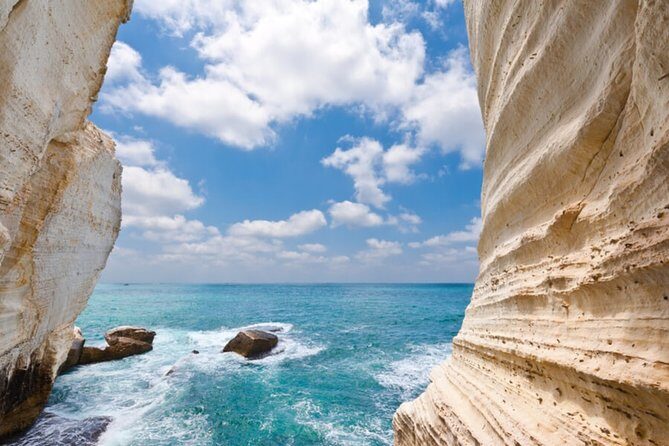
Then the day pivots. Rosh Hanikra is coastal geology turned into a tourist experience—and it’s genuinely one of the most striking parts of the route.
The grottoes form cavernous tunnels created by sea activity against soft chalk rock. That detail matters because it explains why the caves have that light, eroded look and why the openings feel carved rather than built.
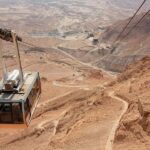
You ascend by cable car to reach the area, which is a practical win. Long ago, the grottoes were only accessible by sea or experienced diving, but now you can get there without special training.
You also get a viewpoint that includes watching the Lebanese border from Rosh Hanikra. That adds another layer to the trip: you’re not only seeing nature, you’re seeing where the coastline sits in the region.
What to expect inside
You’ll have time to explore the grottoes (about 40 minutes). The caves are a mix of enclosed space and open sightlines to the sea openings. If weather is poor or lighting is weak, you may find the caves feel less dramatic on the inside. If you have control over your date, aim for a day with decent visibility.
A consideration
This is still a walking stop inside/outside a cave setting. I’d treat it like a moderate walking segment: wear shoes with grip, keep an eye on footing, and don’t assume the cave areas will be dry underfoot.


Acre Above and Below: The Crusader Underground City
Acre—also called Akko—is one of the oldest cities in the world, and the tour gives you a rare angle: you see parts above today’s street level and you also get into the subterranean Crusader city.
The included time at Acre focuses on two parts:
- time in the city area (around 1 hour)
- the underground Crusader city, described as a complex world of tunnels and halls built medieval times and hidden for centuries under rubble
That underground portion is the reason this stop feels different from a typical old-town wander. You’re moving through spaces that were literally covered and preserved under later layers. It’s not just history on a sign; it’s history with air, echoes, and tight navigation.
How to enjoy it
- Watch your pace in the underground areas. It’s easy to move too fast because the route can feel like a maze.
- Take a few moments when you reach open pockets. Underground spaces often shift the temperature and acoustics.
- If you care about medieval architecture, this is the place to pay attention.
A consideration
This day is already packed, so you won’t get a multi-hour deep dive. Acre can feel like a whole vacation on its own, so here you’re mainly getting the core highlights—especially the underground city experience.
How the Tour’s Time Budget Really Feels
The itinerary is structured so you see a lot of geography: coastal port ruins, mountain terraces, sea caves, and a historic city with underground tunnels. The tradeoff is that each stop is a “featured segment,” not a slow museum day.
From a practical standpoint, that means:
- Caesarea gets enough time to understand it, not enough time to fully wander every corner
- Haifa’s gardens work best if you treat them like a short scenic session with a clear plan
- Rosh Hanikra is a ticketed nature walk plus cable car, so you’ll feel it physically
- Acre is timed to hit the key old-city and underground moments, then move on
If you’re the type who hates being rushed, this could feel tight. If you’re the type who likes a well-led highlights loop, it can feel satisfying.
One more realistic point: the day starts early and includes walking. Several people have noted it can be hot and requires energy. Bring a small bottle of water, and wear clothing you can handle outdoors for hours.
Price and Value: What $139 Buys You
At $139 per person, you’re paying for more than entry tickets. The value is the combination of:
- round-trip hotel pickup and drop-off in Jerusalem
- a professional guide doing the heavy lifting on context
- air-conditioned transportation
- entrance fees included across the main stops
The big budgeting point is what’s not included: food and drinks. That means you should plan on at least one paid meal during the day, or money set aside for snacks and water refills.
Is it worth it? If you’d otherwise spend hours figuring out intercity logistics, it often is. You’re also compressing four major sites into one guided day, which is a solid use of time if your schedule is tight.
If you prefer independent travel and you’re comfortable driving yourself around, you might compare costs. But if you want a guided route with transportation handled, this price typically lands in the “fair for what you get” zone.
Tips to Make This Day Trip Feel Less Like a Sprint
Here are the practical moves I’d make before you go:
- Wear shoes you can walk in for hours. This tour is more walking than you might expect from the stop list.
- Bring water even if you think you’ll buy it later. Start with hydration.
- Use your morning snack plan. Because food and drinks aren’t included, don’t arrive hungry and stressed.
- Charge devices before you leave Jerusalem. You’ll want photos at Caesarea, Haifa, and Rosh Hanikra.
- Pick a “main goal” for the day. For example: Roman ruins in Caesarea, caves in Rosh Hanikra, or the underground city in Acre. It helps you enjoy the time you have.
And one note on the human factor: guide quality matters on a day like this. Praise has gone to guides such as Dorit, Daniel, Jacob, and Dan Porges for making history feel clear and keeping the group learning, even during a long day.
Should You Book This Tour?
I’d book this if you want a high-impact northern Israel day without spending your time on transit planning. It’s especially strong for you if you like Roman sites plus coastal nature plus medieval underground spaces in one sweep.
I’d think twice if:
- you hate early starts and prefer late, slow travel days
- you know you’ll struggle with lots of walking and short stop times
- you’re sensitive to schedule hiccups, since some people have reported pickup and transfer confusion at the start
If you go with the right expectations—this is a guided highlights day, not a relaxed day—then you’re likely to come away with multiple “wow” moments, plus a better sense of how Israel’s coastline shaped its history.
FAQ
What is the duration of the Caesarea, Acre & Rosh Hanikra day trip?
The trip runs about 12 hours.
What time does the tour start?
Pickup begins at 6:00 AM.
Is hotel pickup and drop-off included?
Yes. Round-trip hotel transport is included.
What’s included in the tour price?
You get a professional guide, an air-conditioned coach, and entrance fees.
Are food and drinks included?
No. Food and drinks are not included.
Which sites are part of the day?
You’ll visit Caesarea National Park (including the Roman theater), Haifa’s Bahá’í Gardens, Rosh Hanikra grottoes, and Acre, including the underground Crusader city.
Is the Bahá’í Gardens admission free?
The Bahá’í Gardens visit is listed as admission free.
How do you access Rosh Hanikra?
You ascend to the summit by cable car, and then explore the grottoes.
Is this tour suitable for children?
It is not suitable for children under 4.
What is the maximum group size?
The group is capped at 40 travelers.
Is there free cancellation?
Yes. You can cancel up to 24 hours in advance for a full refund.