REVIEW · TEL AVIV
Tel Aviv: Masada National Park and Dead Sea Excursion
Book on GetYourGuide →Operated by Click Tours . · Bookable on GetYourGuide
Masada and the Dead Sea in one day sounds like a promise. What you actually get is a full route down below sea level, then back up to Herod’s fortress for big views. I love how the day blends Masada and a true Dead Sea swim with Qumran in between, and I also like the way the English guide keeps everything clear and grounded for first-timers. The one real drawback: food isn’t included, so plan on buying or packing water and snacks if you don’t want the day to feel tighter than it should.
You’ll ride from Tel Aviv in an air-conditioned vehicle, then watch the world change as you descend into the Biblical wilderness. Along the way, you’ll stop for classic sights like Jericho in the distance, and you’ll get context that makes the desert feel less vague. When guides go in-depth like Norbert (mentioned in past feedback), the explanations click fast and you stop wondering what you’re looking at.
By the time you reach Masada, you’re already primed for scale—hot rock, huge drop-offs, and that famous Rift Valley view. And yes, you’ll hear about the Snake Path, but you’ll do the practical way up instead, using the cable car. Just bring comfortable shoes and swimwear, because you’ll walk more than you expect and you’ll want to get in the water.
Key highlights you’ll care about
- Cable car access to Masada without the long Snake Path climb
- Panoramic views over the Dead Sea and toward the Rift Valley
- Ein Gedi stop for a green pause with waterfalls
- Qumran pass-by to connect the caves to the Dead Sea Scrolls story
- Dead Sea float time right where the salt is thickest
In This Review
- Tel Aviv to the Dead Sea: Watching Elevation Change in Real Time
- Desert Stops, Jericho Views, and the Inn of the Good Samaritan
- Dead Sea Shores and Float Time: What “Therapeutic” Feels Like
- Masada by Cable Car: Herod’s Fortress Without the Snake Path
- Ein Gedi Oasis and David’s Hideout: The Green Break in the Day
- Qumran and the Dead Sea Scrolls: Caves You Can Actually Picture
- Price and Value: Is $1,604 Worth a One-Day Route?
- Who This Tour Suits Best (and Who Might Feel Rushed)
- Should You Book This Tel Aviv to Masada and Dead Sea Excursion?
- FAQ
- What’s included in the tour price?
- Do I need to pay for food during the day?
- Is swimming in the Dead Sea included?
- What should I bring?
- Where does the tour meet in Tel Aviv?
- How long is the excursion?
Tel Aviv to the Dead Sea: Watching Elevation Change in Real Time
This tour is built around a simple idea: get you from Tel Aviv down into the lowest place on earth, then back up for Masada’s fortress views. You start at the Dan Tel Aviv Hotel on HaYarkon St 99, then head south through the Judean Hills toward the Dead Sea.
As you descend, the air and feel of the surroundings shift quickly. That matters because you’re not just checking boxes—you’re seeing why this region has been a crossroads for thousands of years. Your guide points out what you’re passing and why it shows up so often in Bible-era geography.
Most people underestimate how “real” the elevation difference feels until they’re in it. You’ll feel it in the drive rhythm and in the way stops are spaced out for comfort. If you’re the type who hates rushing, this flow helps: you travel, you stop, you look, you learn, you continue.
The drive also sets you up for the day’s best moments. By the time you reach the salt-encrusted shores, you’ll already understand you’re in a zone that sits below sea level and behaves differently than normal coastlines.
Desert Stops, Jericho Views, and the Inn of the Good Samaritan
One of the strengths here is that the day doesn’t just go straight from A to B. You pass through desert regions associated with Biblical stories, and your guide explains what you’re seeing as you go.
There are two things you’ll likely remember from this stretch. First, you’ll watch for the Inn of the Good Samaritan as a recognizable landmark in the route. Second, you’ll get a chance to admire the desert stretching out in front of you—big, dry, and surprisingly “structured” in how the terrain opens up.
Jericho shows up as well, and you’ll see it in the distance. That distant view is valuable because it helps you understand how people could have moved through this area and how locations were connected before modern roads made everything feel close.
You’ll also learn how the desert setting ties into the history of the region, not just as scenery but as part of the story. I like this approach because it turns random roadside moments into something you can actually place in your head.
If you’re prone to getting carsick, take it easy with reading and screens early on, since the route is scenic but the driving stays focused on getting you to your timing windows.
You can also read our reviews of more tours and experiences in Tel Aviv.

Dead Sea Shores and Float Time: What “Therapeutic” Feels Like
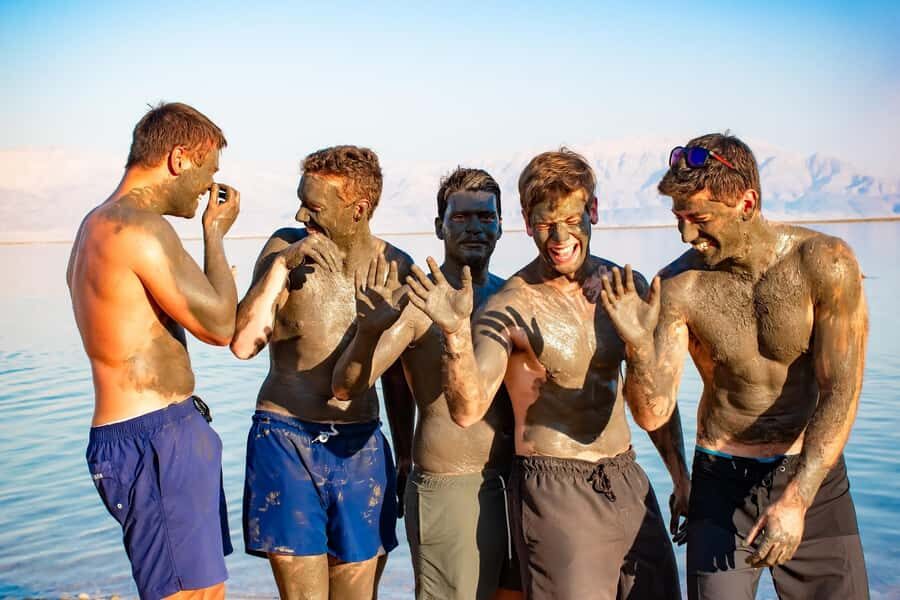
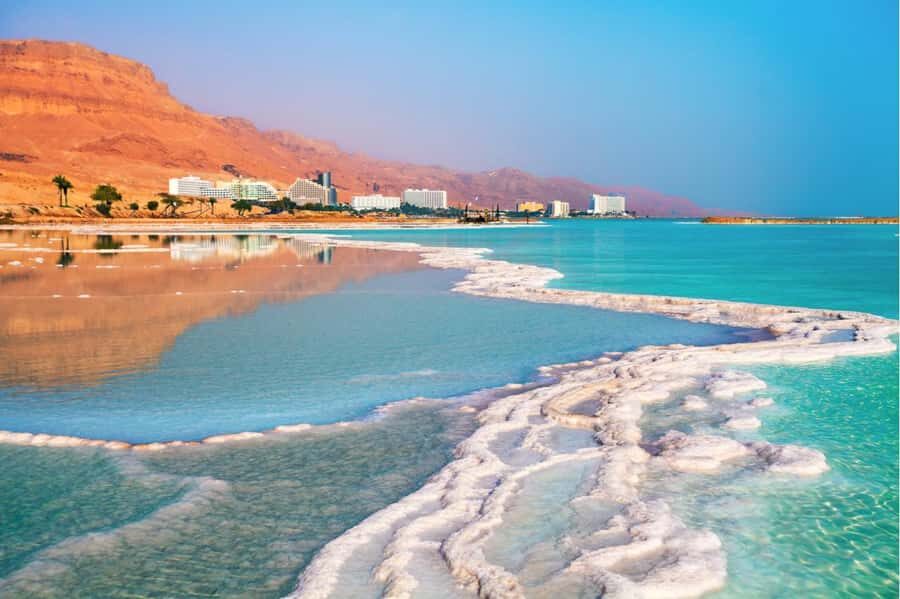
When you arrive at the Dead Sea, you’ll immediately notice the salt-encrusted shores. Then the plan is simple: you follow the coastline toward Masada and later you return to the water for the famous float.
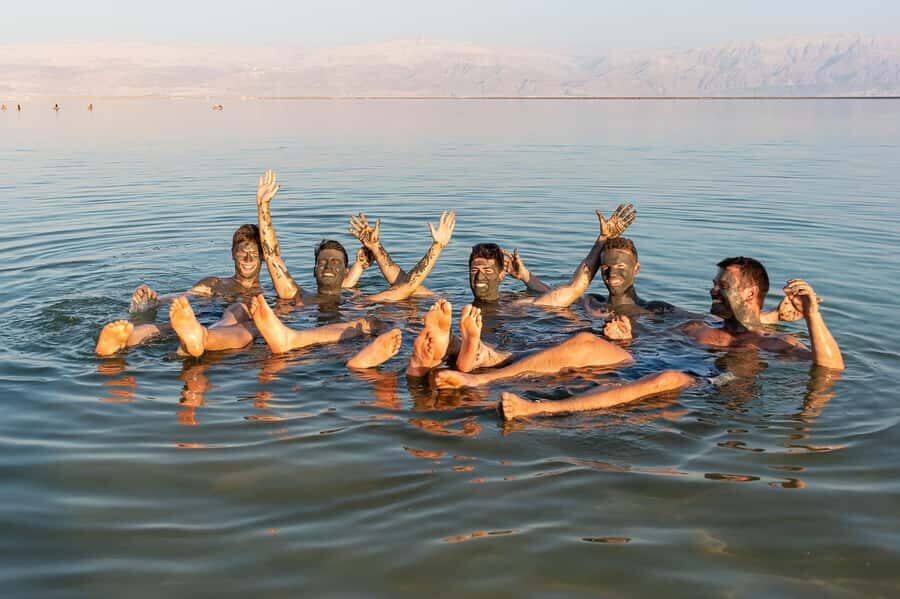
This is where you’ll feel the difference the most. The Dead Sea is known for its salt-rich waters and the way they allow you to float, which is why the sea has been called therapeutic. You’re not just standing near it—you’ll actually swim and float as a core part of the day.
And there’s a reason this stop is near the start and near the end. Seeing the coastline first helps you understand what you’re traveling toward. Coming back gives you the payoff: the relaxation moment after walking, climbing, and driving.
You’ll also hear that the Dead Sea was once a contender for the Seven Wonders of the World. Whether you care about the politics of awards or not, it’s a quick way to frame why people still treat this place like it’s special. It is: it’s one of the few destinations where the main activity isn’t a view, it’s the water itself.
Practical tip: the salt can be slippery and stingy if you don’t rinse off. Bring a plan for where you’ll change into swimwear and how you’ll handle wet gear after. This tour explicitly asks for swimwear, and you’ll want to follow that advice.
Masada by Cable Car: Herod’s Fortress Without the Snake Path
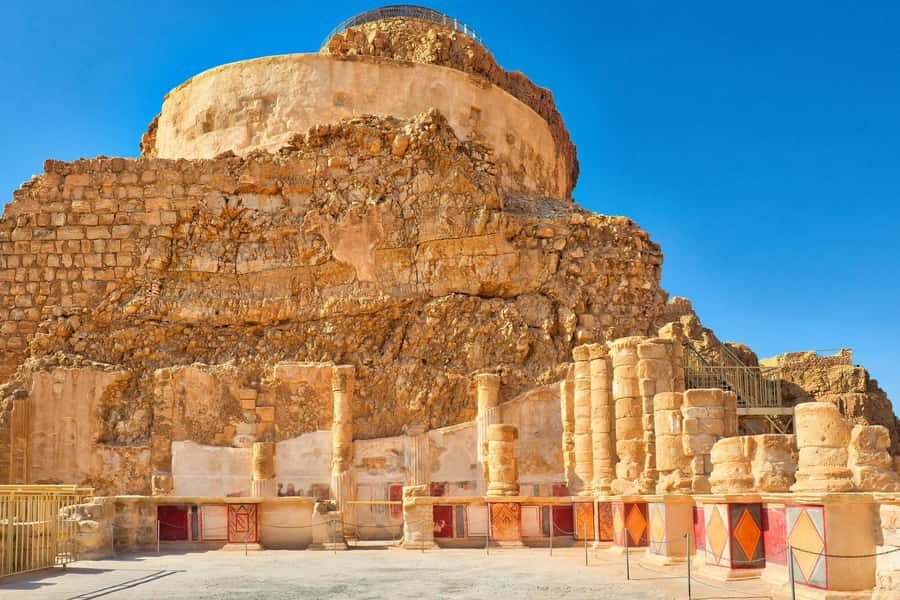
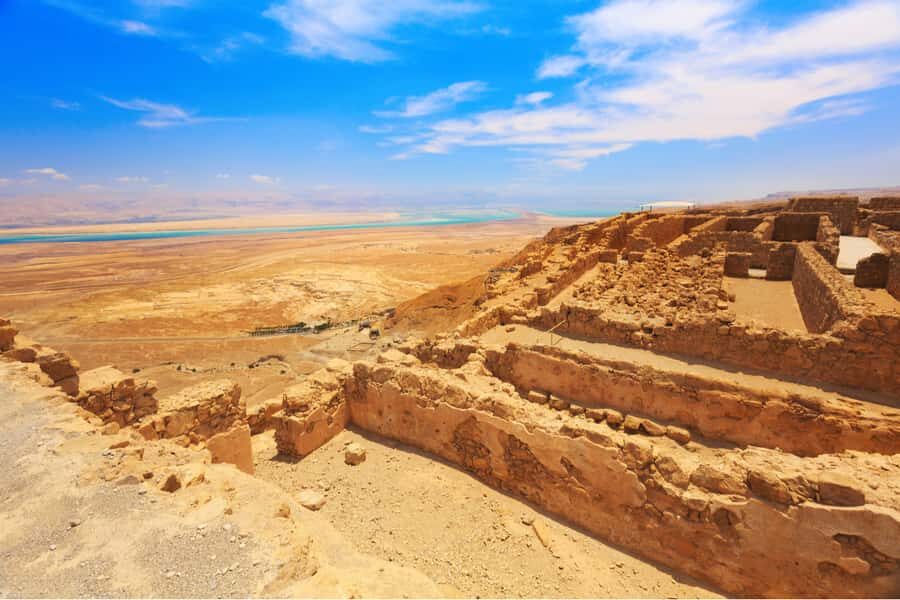
Masada is the kind of site where distance and time both matter. It’s not just a ruin on a hill; it’s a place built to control the view and defend position. When you reach the Dead Sea area and move toward Masada, your next move is up—via cable car.
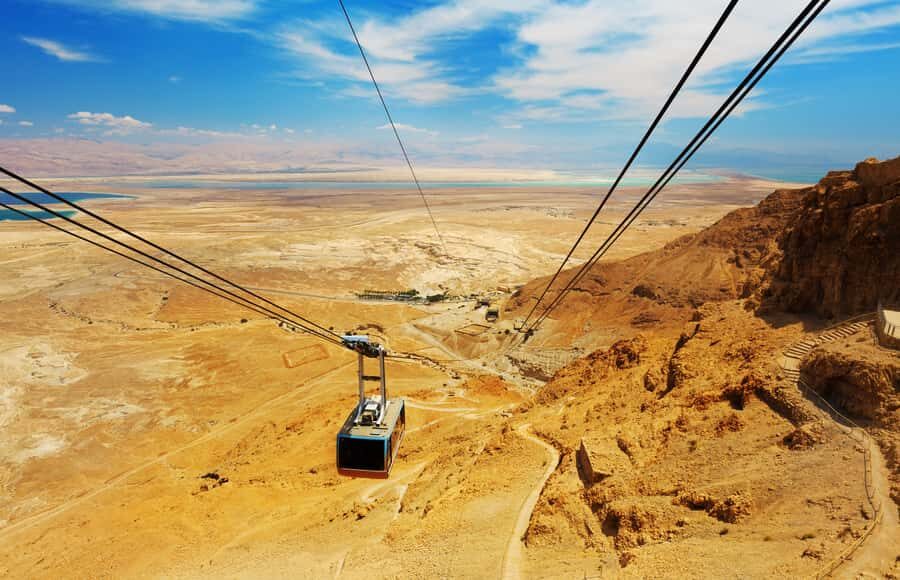
It’s important to know that climbing the Snake Path isn’t part of this experience. The Romans did it 2000 years ago, but today you get a convenient cable car to reach the top of the mountain plateau. I like this because it respects the reality of time and energy on a one-day itinerary.
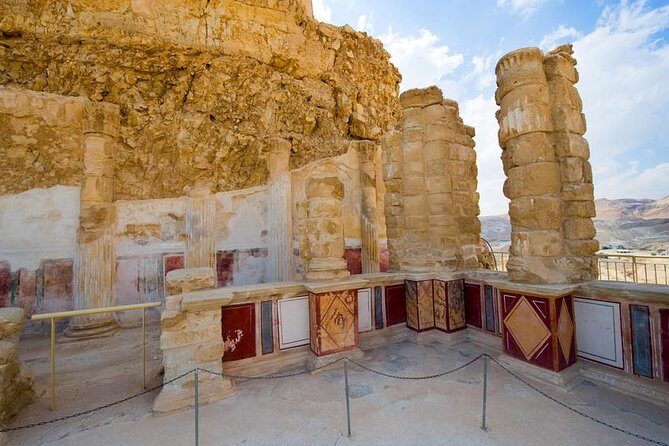
Once you’re up there, the story comes into focus. You’ll learn how King Herod built a fortified palace at Masada, including details like a swimming pool and even a synagogue. That combination is a reminder that this wasn’t only a military outpost; it was also a place of status and comfort by the standards of its era.
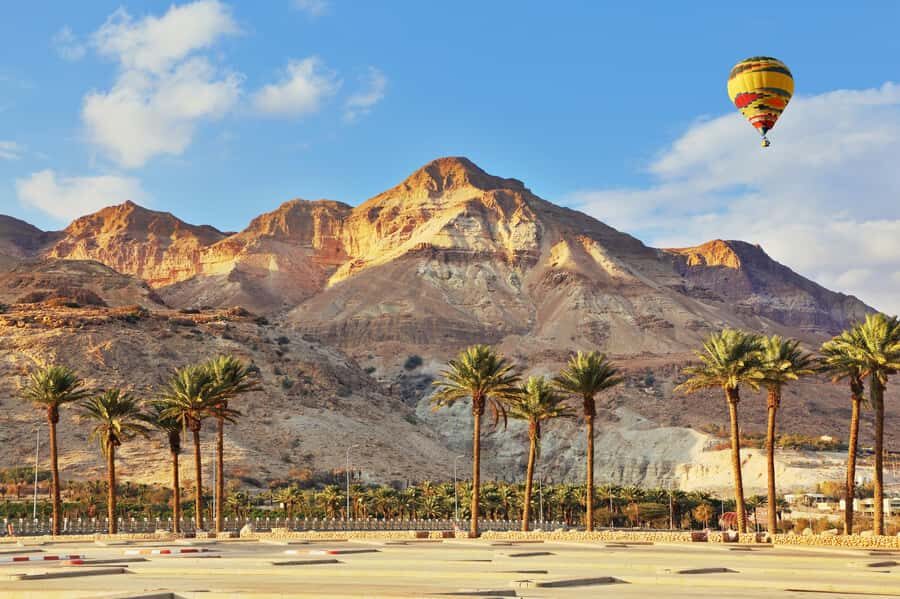
You’ll also get panoramic views of the Dead Sea and the Rift Valley area toward Qumran. This is one of those moments where a guide’s explanations matter, because the terrain can look confusing until someone connects the dots. When the view makes sense, the site feels bigger than its walls.
One more practical note: the top of Masada can feel exposed, and you’ll likely do more standing and walking than you expect. Wear shoes that don’t slip on rocky ground, and don’t plan on being “done” quickly just because you think you’re only going up for photos.
Ein Gedi Oasis and David’s Hideout: The Green Break in the Day
After Masada, the tour heads back down and continues through the region toward Qumran. One of the most interesting stops in the middle is Ein Gedi, an oasis area known for lush foliage and gorgeous waterfalls.
This is a great contrast moment. You spend most of the day in desert and near-barren terrain, then Ein Gedi shows up like a reminder that water changes everything. Even if you don’t spend ages here, the shift is memorable because it feels like a different world.
Ein Gedi is also associated with David hiding from King Saul. That detail matters because it adds a human layer to the scenery. You’re not just looking at plants and water—you’re seeing why a place like this would have mattered in older survival stories.
From a pacing perspective, Ein Gedi works as a reset. You’ve done Masada’s high-point effort, and then the day softens into a more natural setting. If you’re traveling with anyone who gets bored of ruins, this stop helps keep the day balanced.
Bring a little patience if the stop feels short. This is a one-day tour, so the goal is to give you meaningful stops without turning your day into a marathon.
Qumran and the Dead Sea Scrolls: Caves You Can Actually Picture

Qumran comes next as the tour passes by the area where the Dead Sea Scrolls were discovered in hillside caves. Even without going deep into every academic detail, this stop connects the dots between geography and a discovery that changed how people think about that period.
What I like about this approach is that Qumran becomes easier to imagine. Caves don’t feel abstract when you’ve already been moving through desert terrain and looking at cliffs and slopes. The earlier stops prepare your brain for how this place likely looked in context.
You’ll learn about the 2000-year-old Dead Sea scrolls and why Qumran is tied so closely to them. This makes the site feel like more than a name you’ve heard; it becomes a physical location you can place.
Also, Qumran’s proximity to the broader Dead Sea region is a big part of the value here. You’re not hopping between random far-off points; you’re staying inside one connected system of places that share terrain, climate, and history.
If you’re the type who likes to leave with at least one clear takeaway, focus on the connection: hillside caves in a desert setting led to discoveries that kept shaping scholarship and understanding of the time.
Price and Value: Is $1,604 Worth a One-Day Route?
At $1,604 per person, this tour isn’t “cheap.” But it’s also not just a car ride and a couple photos. You’re paying for a professional English guide, an air-conditioned vehicle, cable car access to Masada, and entrance fees.
For one day, that can be good value if you want to avoid logistics stress. Masada plus the Dead Sea plus Qumran is a lot to coordinate on your own, especially when you also want guided context for sites that can feel confusing if you’re just reading labels.
The price also covers time efficiency. In a single day, the cable car and included entries mean you spend your energy on the experience, not on ticket lines and figuring out routing.
The big thing to watch is what isn’t included. Food and drinks are not included, and you’ll need to budget for that. If you’re the sort of person who likes a relaxed lunch with water and snacks sorted, you’ll feel better if you plan ahead rather than assuming food will appear.
There’s also insurance not included, so if you’re thinking about coverage, handle that separately. The tour’s strength is site access and interpretation, not insurance.
So, is it worth it? For many people, yes—especially if you want a guided, efficient route through Masada, the Dead Sea, Ein Gedi, and Qumran without turning your day into a DIY puzzle.
Who This Tour Suits Best (and Who Might Feel Rushed)

This tour fits best if you like a guided “greatest hits” day that still includes meaningful context. You’ll appreciate it if you enjoy Biblical-era geography, want to see desert viewpoints with explanations, and you’re genuinely excited to float in the Dead Sea.
It’s also a strong match for people who want the Masada experience without the physical burden of the Snake Path climb. The cable car option makes it more accessible for a wider range of fitness levels, while still giving you the big payoff at the plateau.
If you hate group schedules or need lots of free time wandering, this could feel like you’re on a timeline. It’s one day, and the day packs in multiple signature stops.
And if swimming is a non-negotiable for you, don’t forget the basics: bring swimwear. The plan assumes you’ll use the Dead Sea water time, and it’s the reason many people book this exact route.
Should You Book This Tel Aviv to Masada and Dead Sea Excursion?
If you want one day that delivers a real Dead Sea float plus Masada’s views plus Qumran’s scrolls context, I’d say it’s a smart pick. The mix of cable car convenience, guided explanations, and multiple high-impact stops makes the price easier to justify than it first looks.
Book it if:
- You want a structured day with a professional English guide.
- You’re excited to swim and float in the salt-rich Dead Sea.
- You prefer practical access to Masada rather than a hike up the Snake Path.
- You don’t want to manage route logistics across the desert on your own.
Skip it if:
- You’re traveling on a tight budget and want food to be included.
- You need a slow pace with lots of independent wandering.
- You don’t care much about guided context and just want minimal stops.
For most first-time visitors who want maximum payoff in a single day, this one is hard to beat. Just plan for food, bring swimwear, and give yourself room to enjoy the transitions—the desert-to-water-to-fortress rhythm is the whole point.
FAQ
What’s included in the tour price?
The tour includes a professional guide, an air-conditioned vehicle, the cable car up to Masada, and entrance fees.
Do I need to pay for food during the day?
Food and drinks are not included, so you’ll want to budget for meals or bring your own snacks and water.
Is swimming in the Dead Sea included?
Yes. The tour includes time at the Dead Sea where you can enjoy a swim and float in the salt-rich waters.
What should I bring?
Bring comfortable shoes and swimwear.
Where does the tour meet in Tel Aviv?
The meeting point is the Dan Tel Aviv Hotel, HaYarkon St 99, Tel Aviv-Yafo, Israel.
How long is the excursion?
The duration is 1 day. The tour uses an English live tour guide.