REVIEW · TEL AVIV
Old and New Jerusalem Day Trip from Tel Aviv
Book on Viator →Operated by Bein Harim Ltd · Bookable on Viator
Jerusalem hits you fast. This full-day trip strings together Old City icons like the Western Wall and Church of the Holy Sepulchre, then brings you to Yad Vashem and the Hall of Names memorial. I also like the early start plus hotel pickup/drop-off, so you’re not hunting buses while your feet are already gearing up for stone streets. The one drawback to plan for: the day runs on a tight schedule, so time for wandering, shopping, or lingering is limited.
My best advice is to treat this as a guided walk first, with museums second. In the glowing reviews, names like Amir Call Or, Itamar Buk, Eyal, Dima, Salomon, and Udi come up often, and when the guide clicks, the whole day feels sharper and easier to follow.
In This Review
- Key takeaways before you go
- Old and New Jerusalem Day Trip from Tel Aviv: what you’re really buying for $95
- Mount Scopus National Botanical Garden: your warm-up with a wide view
- Mount of Olives and Kidron Valley: Gethsemane, Church of All Nations, and the Old City skyline
- Zion Gate into Jerusalem’s quarters: walking the seams of the Old City
- Western Wall and Via Dolorosa (Stations 5–14): powerful stops, tight timing
- The “market maze” moment: Muslim Quarter and the bazaars
- Yad Vashem in New Jerusalem: artifacts, testimonies, and the Hall of Names
- When the Holocaust Museum is closed: Mt. Zion and the Gethsemane church swap
- Time management and group pace: where experiences can feel perfect or rushed
- Dress code, ages, and practical boundaries you should know
- Should you book this Old and New Jerusalem day trip?
Key takeaways before you go

- Old City quarters, not just postcard stops: Jewish, Christian, Armenian, and Muslim areas get real-time context as you walk.
- Mount of Olives views early in the day: you’ll see the Old City walled skyline before the crowds and heat peak.
- Via Dolorosa segment focus (Stations 5–14): it’s a targeted route, not a full marathon of all stations.
- Yad Vashem’s Hall of Names is the emotional anchor: the memorial format makes the tragedy feel personal, not abstract.
- Group pace means limited shopping and pick-your-own lunch: a few reviews call out rushing or forced food options.
- Guide quality varies: most praise deep storytelling, but a small number of reviews mention thin commentary or time mismanagement.
Old and New Jerusalem Day Trip from Tel Aviv: what you’re really buying for $95
At $95 per person, you’re paying for three big things: transport, a guide, and entry fees. That matters here because Jerusalem’s Old City is difficult to navigate on your own, and most of the stops require you to be in the right place at the right time. Also, many Old City components are walk-through areas with free admission, which helps you feel your money go toward real guidance instead of ticket costs.
This is a 10-hour day trip built around a coach ride of about 1.5 hours each way. You’ll leave early (start time listed as 7:15 am) and you’ll come back to Tel Aviv in the evening. Reviews include experiences that started around 6:30 and finished close to 5 pm, so assume you’ll be up early and dressed for a full day.
You’ll travel in an air-conditioned vehicle with a guide and use a mobile ticket. Group size is capped at 40 travelers, so you get the comfort of a small coach group, not the chaos of a city bus, but it still moves as one unit.
A few more Tel Aviv tours and experiences worth a look


Mount Scopus National Botanical Garden: your warm-up with a wide view
Before you start threading through the Old City streets, you get a first look from Mount Scopus National Botanical Garden. The stop is short (about 30 minutes) and admission is free, but the value is in the orientation.
From here, you get a broader sense of the walled Old City’s position. That makes later moments—like standing at viewpoints on the Mount of Olives—feel connected, not random. If you’re the type who needs context before you commit your camera to 800 photos, this is a good mental setup.
A practical tip: treat this as a “stand, look, listen” moment. Don’t plan to do errands here. You’re building a map in your head for what comes next.
Mount of Olives and Kidron Valley: Gethsemane, Church of All Nations, and the Old City skyline
The early highlight is the drive up the Mount of Olives. You’ll get “spectacular views” over the walled Old City, including the golden Dome of the Rock at the Temple Mount. This is the kind of view that helps you understand why this area is so charged in religious history.
Then you move along the Kidron Valley, passing the Garden of Gethsemane, the Dormition Abbey, and the Church of All Nations. Even if you don’t lock in every religious name, the sequence matters. It shows you how the geography lines up with the stories people associate with this terrain.
The smart way to handle this section: keep your expectations realistic. You’re seeing key places and hearing context, but you’re not doing long stops at every single site. If you want maximum time for quiet contemplation, you’ll feel the day’s pace here.
Zion Gate into Jerusalem’s quarters: walking the seams of the Old City
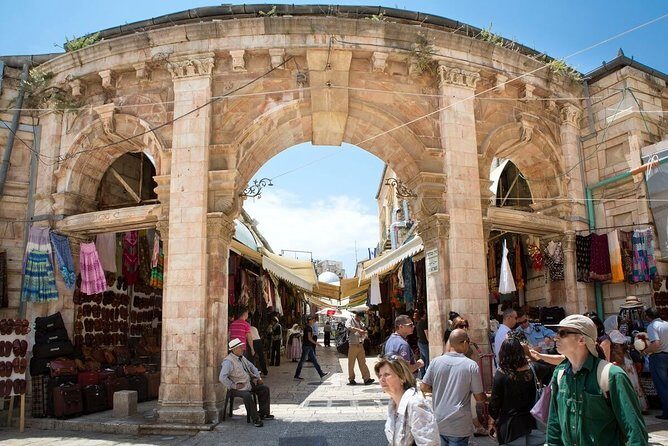
One of the best parts of this tour is that you don’t just bounce between icons. You enter the Old City through Zion Gate and then work your way through different quarters and major thoroughfares.
You’ll spend time in the Armenian Quarter and then onto the Jewish Quarter. There’s also a stop for the Byzantine Cardo, the old main street during Byzantine times. That’s a subtle win: it turns the Old City from a collection of attractions into a place with layered streets and eras.
When you reach the Jewish Quarter (about 40 minutes), you’re also positioned to understand why the area feels dense, lived-in, and full of history. It’s not just “here’s a wall,” it’s “here’s how the neighborhood shaped daily life.”
A quick heads-up: you’ll be moving as a group through narrow areas and busy streets. This is one of those tours where your comfort depends on staying close and keeping an eye out for the meeting point.
Western Wall and Via Dolorosa (Stations 5–14): powerful stops, tight timing
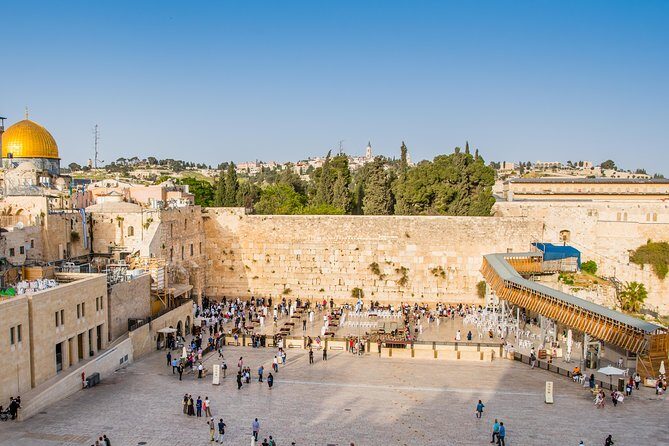
The Western Wall (Wailing Wall) stop gives you time to visit and see the thousands of Jewish worshippers who gather there. The scheduled visit time is about 20 minutes, which sounds short—yet it’s often enough to feel the place and understand its role as a living site.
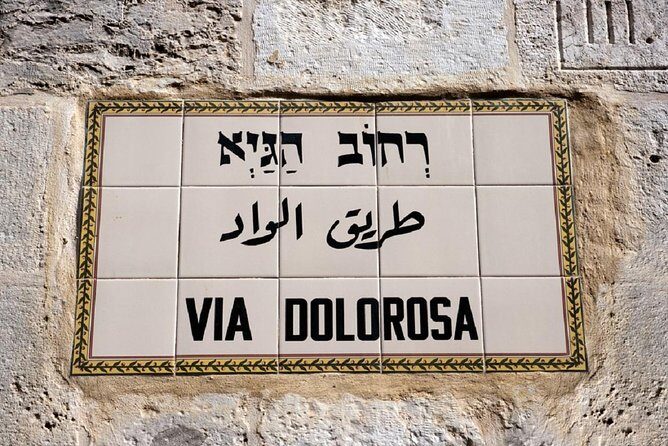
After that, you enter the Christian quarter to follow the route connected to Jesus’ crucifixion, including the Via Dolorosa route for Stations 5–14. Expect a guided walk through selected Stations of the Cross segments, about 30 minutes.
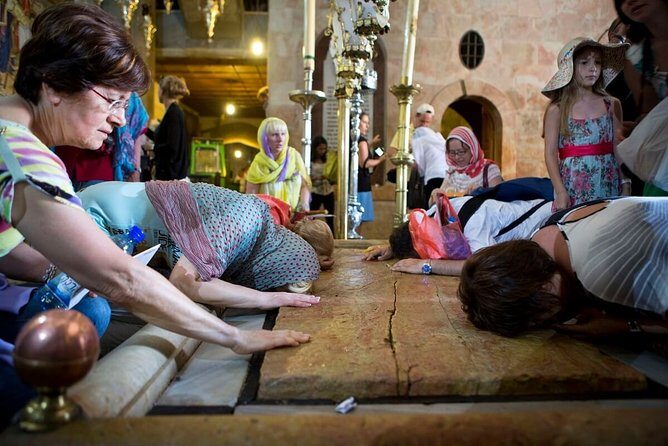
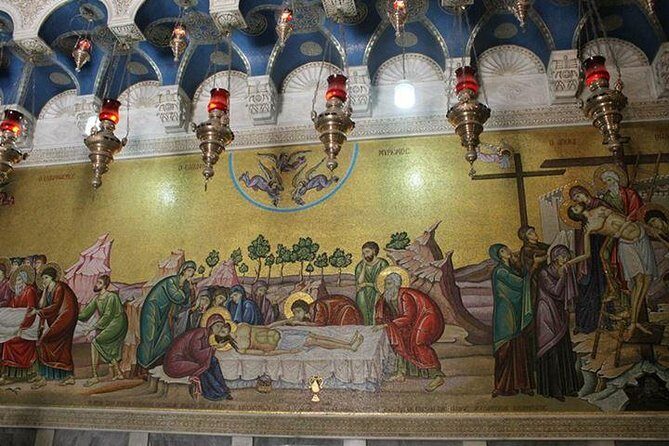
Then comes Church of the Holy Sepulchre (about 30 minutes). This is one of those places where the building matters as much as the specific spot. The tour’s value is that you’re not wandering through it blind. Your guide helps you connect what you’re seeing with why it’s remembered.
Still, here’s the trade-off: several reviews mention feeling rushed and not having much time to shop or linger. This doesn’t mean the places aren’t worth it. It means the day is built to fit in a lot of heavy material, and your “free time” is limited.



The “market maze” moment: Muslim Quarter and the bazaars
After the major Christian landmarks, you’ll head into the Muslim Quarter with time to see the lively bazaar area. The scheduled time is about 30 minutes.
This stop is useful because it gives you a break from the most sacred sites and shows the Old City as an everyday place. It also helps prevent the day from becoming only solemn moments. You get textures, sights, and the sense of commerce that keeps the quarters from feeling like museums.
If you’re someone who likes to wander, you may feel tempted to break away here. This tour keeps you together, and that’s the practical reason: getting separated in the Old City can cause delays that ripple across the schedule.
Yad Vashem in New Jerusalem: artifacts, testimonies, and the Hall of Names
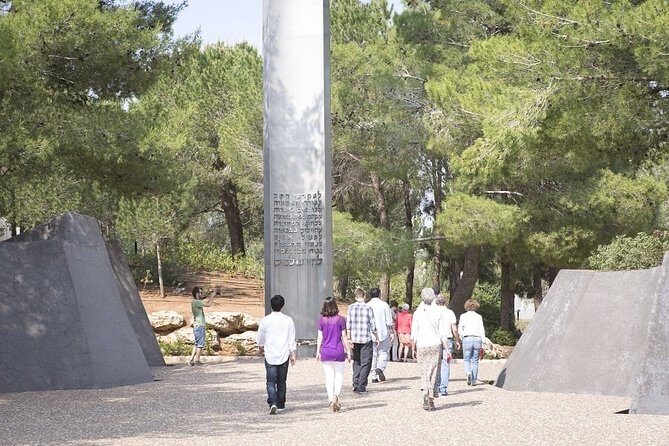
The emotional heavyweight of the day is Yad Vashem – The World Holocaust Remembrance Center. You’ll arrive in modern Jerusalem after the Old City walk, and you’ll spend about 1 hour 30 minutes inside. Admission is part of the package.
This museum is built around personal stories, artifacts, survivor testimonies, and memorial spaces. The highlight is the Hall of Names, where biographies of victims are recorded. That format does something important: it turns history into individual lives, not just statistics.
A key practical note: the tour requires a moderate dress code for places of worship and selected museums. Knees and shoulders covered for both men and women. No shorts. This isn’t optional if you want to avoid denied entry.
How much time feels like enough? One review specifically called out that an hour may feel too short to absorb Yad Vashem at a comfortable pace. If you’re the type who needs time to read slowly, treat the scheduled time as the floor, not a guarantee.
When the Holocaust Museum is closed: Mt. Zion and the Gethsemane church swap
The tour has a clear contingency plan: Yad Vashem is closed on Fridays, Saturdays, and Jewish holidays. On those days, your visit is replaced with a tour of Mount Zion and the Gethsemane church.
This matters because if you care most about the Hall of Names experience, you should time your trip for a day when the museum is open. If your trip happens during a closure window, you’ll still see major sites, but the emotional focus shifts away from Yad Vashem’s memorial structure.
Time management and group pace: where experiences can feel perfect or rushed
The core of this tour is simple: guide-led movement through a dense area, plus one major museum stop. That’s efficient. It also means you don’t get to design the day yourself.
Some reviews describe issues like limited time for shopping, fixed lunch choices, and not enough time at certain key moments. Other reviews praise guides for keeping the group moving, telling stories well, and pacing breaks so people don’t overheat.
So the honest takeaway is this: you’re buying structure. If you want a “meander as long as I want” style of travel, this may frustrate you. If you want to make sure you hit the major anchors in one day with a guide, you’ll likely feel satisfied—especially with a strong guide.
Bilingual narration can also shape your experience. One review mentioned English and Spanish being used sentence-by-sentence. Another described English with French. If you’re sensitive to repeated narration, that’s worth keeping in mind.
Dress code, ages, and practical boundaries you should know
This tour includes stops in places of worship and a museum, and the dress rules are straightforward: cover knees and shoulders. Shorts can get you turned away, so pack appropriately if you’re traveling in warmer months.
There are also age boundaries based on Yad Vashem access rules. Entrance to Yad Vashem is not permitted for children under 10, and the tour is noted as not suitable for children under 4. If you’re traveling with kids, double-check what you plan to do the rest of the day, because the tour’s museum focus impacts who can participate.
Food isn’t included unless specified. Since some reviews mention group restaurants, don’t assume you’ll have free rein for meals in the Old City. If you have dietary needs, plan for the fact that your lunch options may be set by the schedule.
Should you book this Old and New Jerusalem day trip?
Book it if:
- You want a guided one-day overview of the Old City’s major Jewish and Christian sites plus the Holocaust memorial museum in New Jerusalem.
- You like having context as you walk, especially in places where it’s easy to feel lost without a guide.
- You’re okay with limited time for shopping and lingering in exchange for covering more ground.
Skip it (or choose a different format) if:
- You hate tight schedules and would rather spend half a day slowly reading and revisiting fewer sites.
- You know you’ll struggle with group walking through narrow quarters.
- You’re traveling mainly for Yad Vashem, and your dates might fall on a closure day.
My final take: this is the kind of day trip that can feel deeply moving and surprisingly well organized—especially when you get a guide who tells the stories clearly. If you show up early, dress for the sites, and accept the pacing, you’ll get a full sweep of Jerusalem’s sacred geography and its modern remembrance.