REVIEW · TEL AVIV
Caesarea, Rosh Hanikra and Acre Day Trip from Tel Aviv
Book on Viator →Operated by Bein Harim Ltd · Bookable on Viator
Four ports and caves in one day.
This is a fast-moving North Coast sampler that strings together Caesarea ruins, Haifa’s Baha’i Gardens, the sea-carved grottos of Rosh Hanikra, and Acre’s underground Crusader layers, all with hotel pickup and an air-conditioned coach.
I especially like the variety of what you see: Roman theater and harbor engineering in Caesarea, sweeping views from Haifa, and the cable-car-and-caverns moment at Rosh Hanikra. I also like that the day is guided end-to-end, with entrance fees included so you can spend less time hunting tickets.
One thing to plan for: it’s a long, packed schedule (about 10 hours), and some stops are more of a scenic overview than a long sit-down visit.
In This Review
- Key Highlights to Know Before You Go
- Why This Day Trip Works: Ports With Different Eras
- Getting There Comfortably: The Coach, the Timing, and the Crowd
- Caesarea National Park: Herod’s Harbor and the Roman Amphitheater
- Haifa’s Baha’i Gardens: A Short Visit With Big Photo Views
- Rosh Hanikra Grottos: Cable Car Up, Sea Caves Down
- Acre’s Old City: Underground Crusader Tunnels and the Market Time
- Guides Make or Break a Packed Day
- What to Pack for a 10-Hour Day (No, You Can’t Do It With Flip-Flops)
- Price and Value: Is $120 Worth It?
- Who Should Book This Trip, and Who Might Skip It
- Quick Self-Check: Should You Book This Tour?
- FAQ
- What does the tour price include?
- How long is the day trip and when does it start?
- Is food or drinks included?
- Are there any tickets you need to bring on the day?
- Is the cable car to Rosh Hanikra included?
- How much time do you get at the Baha’i Gardens?
- Is this tour suitable for children?
Key Highlights to Know Before You Go
- Hotel pickup and drop-off: you start at 7:15 am and the day runs with group logistics handled for you.
- Caesarea National Park + Roman amphitheater: you get both the harbor-area remains and the 1st-century theater stop.
- Haifa Baha’i Gardens viewed from above: short time on-site makes the most sense if you want photos and skyline views.
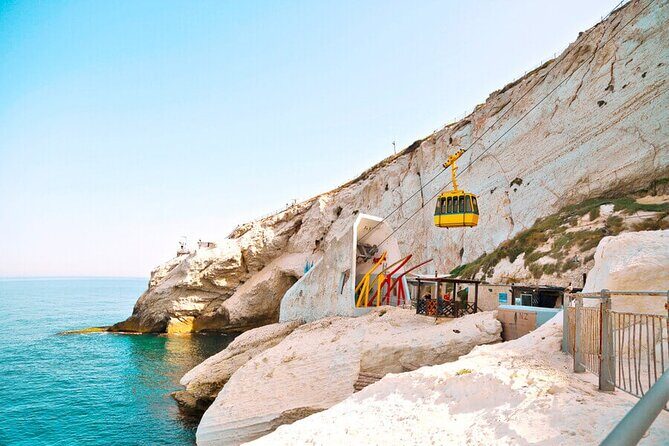
- Rosh Hanikra cable car plus grottos: white cliffs meet turquoise water, plus a view toward the Lebanese border area.
- Acre’s UNESCO-listed Old City layers: the Underground Crusader City is included, with time in the Old City Market afterward.
- Smallish group for a big day: max 40 people, which can make the pacing feel easier than you’d expect.
Why This Day Trip Works: Ports With Different Eras
This isn’t a single site day. It’s a pattern: each stop gives you a different version of the same coastal story—trade, empires, faith, and fortifications—stacked on top of each other over centuries.
If you like your travel days active, this fits. You’ll ride north, stop repeatedly, and keep moving through real places where you can still picture ships, armies, and pilgrims using the shoreline.
A few more Tel Aviv tours and experiences worth a look

Getting There Comfortably: The Coach, the Timing, and the Crowd
You’ll start early, with pickup around 7:15 am from a central Tel Aviv location, then head north by air-conditioned coach. That early start matters here because the day is built around hitting multiple areas before traffic and heat can slow everything down.
The group size caps at 40 travelers. That’s big enough for a lively bus atmosphere, but small enough that your guide can actually keep track of everyone.
One practical perk: the bus setup is often described as comfortable, and some departures include wifi and power outlets, which helps if you’re the type who wants your phone charged before you start taking photos.
Caesarea National Park: Herod’s Harbor and the Roman Amphitheater
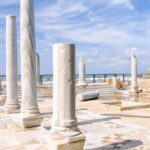
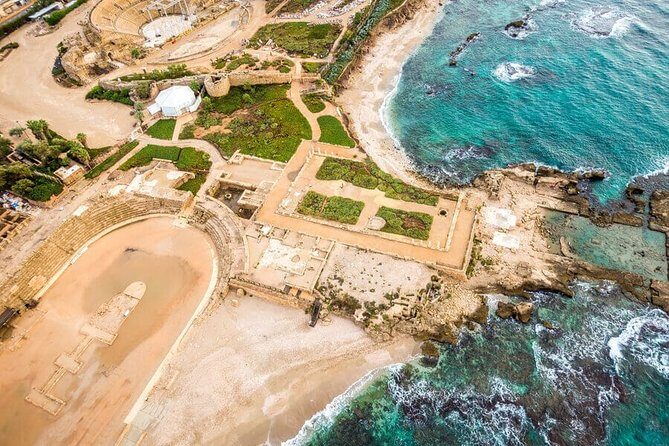
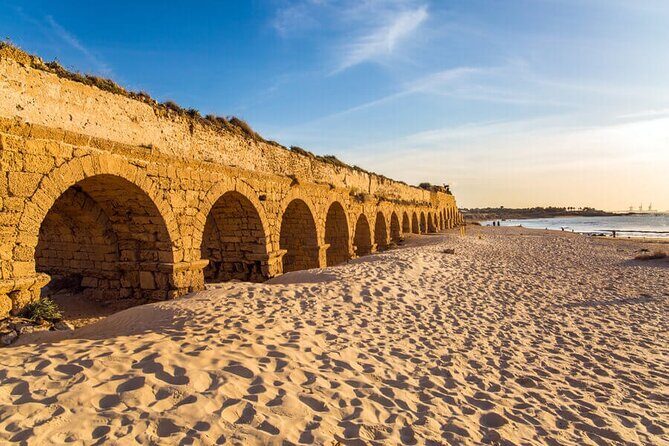
Caesarea is the opening act, and it’s a strong one. You’re looking at the remains of a grand port city associated with Herod the Great, right along the Mediterranean. Even when you’re standing among ruins, it’s easy to understand why empires cared about this stretch of coast.
In the park, plan on about 1 hour at the Caesarea National Park stop, with admission included. You’ll also have a shorter 20-minute stop at the 1st-century Roman amphitheater.
What I like about this stop is how it mixes engineering and spectacle. A theater tells you a city had organized public life and resources for big gatherings. The harbor remains tell you Caesarea was built to move goods and people—this was a working port, not just a place for ceremonies.
Possible drawback: time is tight. If you like to linger and read every sign, you might feel rushed. Still, for a day trip that also includes Haifa, Rosh Hanikra, and Acre, this is a reasonable pace.
Haifa’s Baha’i Gardens: A Short Visit With Big Photo Views
Haifa’s Baha’i Gardens are the spiritual and scenic highlight that gives you a break from ruins. The gardens are known for their terraced layout and for the gold-domed shrine area associated with the faith’s founder, Bab.
Here, your stop is about 20 minutes, and it’s best thought of as an overview. The tour info describes the visit as viewing from the top—so if your goal is a guided walk deep into the gardens, you may be disappointed.
What you’ll likely love: you’ll get the sense of place quickly. The gardens are structured to look impressive from multiple viewpoints, and the timing works well for quick photos and a clear sense of the city’s shape.
Possible consideration: with only around 20 minutes, you have to choose your priorities fast. If you want the best photos, stand where you can see the terrace lines and the shrine area, then move on.
Rosh Hanikra Grottos: Cable Car Up, Sea Caves Down

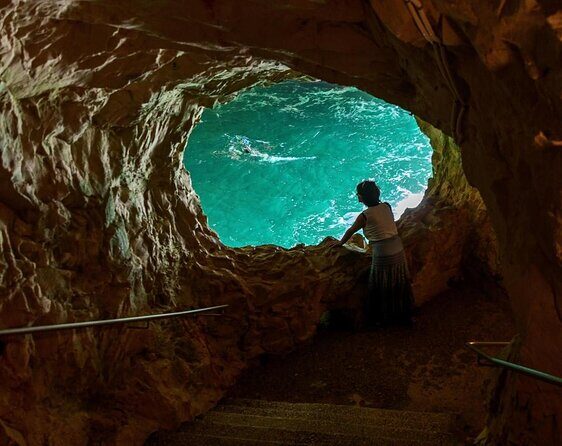
Rosh Hanikra is the day’s wow-factor, mainly because it’s so physical. The sea has carved caverns out of white cliffs, and when the day cooperates, the water color looks almost unreal.
You’ll ride up to the summit by cable car (listed as free in the tour details), then get scenic views that can include the Lebanese border area from the Rosh Hanikra viewpoint. After that, you’ll spend about 40 minutes exploring the grottos, with admission included.
Here’s the practical tip: wear shoes you can walk in confidently on uneven ground. You’re not doing a long hike, but you will be walking through a coastal natural area where footing matters.
Some parts of the grotto experience are also seasonal in feel. If you’re hoping for wildlife sightings like turtles or bats, you can’t count on it, but the protected area makes it a real possibility.
Possible drawback: Rosh Hanikra is weather sensitive. Wind and sea conditions can change how comfortable it feels in the area, so if you’re sensitive to cold or gusts, pack accordingly even in warmer months.

Acre’s Old City: Underground Crusader Tunnels and the Market Time
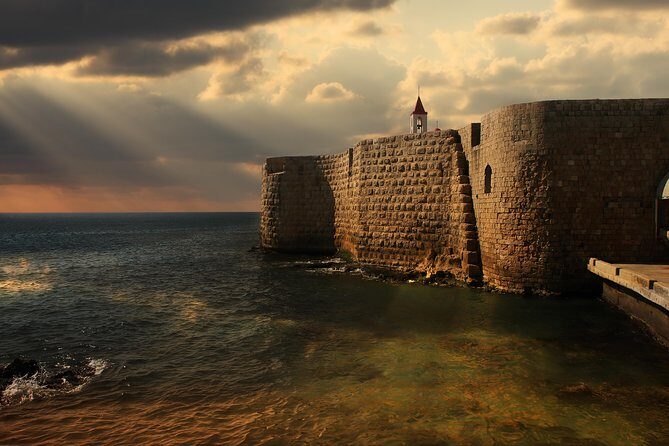
Acre, also spelled Akko, adds a different kind of history—layered and underground. It’s one of those places where you feel the city has always been a gateway point for different rulers.
You’ll have about 1 hour in the Old City area (with admission listed as free for the city time). Then the highlight is the Citadel of Acre stop: the Underground Crusader City and crypt, about 1 hour, with admission included.
This is where the day turns from open-air views to underground depth. The Crusader tunnels used by the Knights of St John are the big draw, and the setting makes the past feel more claustrophobic and real than a stand-alone museum ever will.
After the underground portion, you’ll also have time to stroll around the Old City Market, where you can browse stalls selling spices, herbs, and small souvenirs.
One important consideration: food and optional extras are on you here. The tour doesn’t include meals, and some guests have described pressure around lunch or shop stops during the Acre portion. If your priority is maximizing time for history rather than side trips, keep a clear check on what’s included versus what’s optional, and decide on the spot.
Guides Make or Break a Packed Day
In a day this full, the guide isn’t just “background information.” They are timekeepers, crowd herders, and story-tellers who help you connect the dots.
On this kind of route, I’ve seen strong examples of guide styles in the names you might get assigned, including Aviva, Avi, Aharon, Itamar, Erez, Martin, Isaac, and Ziv. What tends to show up in the best days is a guide who keeps the group moving, explains what you’re seeing without turning it into a lecture, and uses humor to make the long drive feel lighter.
One small note: accents and English phrasing can vary by guide. If you rely on every detail, give the first 30 minutes a little patience while you tune in—then you’ll catch the rhythm.
What to Pack for a 10-Hour Day (No, You Can’t Do It With Flip-Flops)
This is not a “sit and view” day. You’ll combine ruins walking, grotto exploration time, and market strolling. Bring comfortable walking shoes and water. If you run hot, add a light layer too—some people find coastal mornings cooler, and then midday warms up fast.
Also, think about photos. With multiple stops and short time windows, bring a plan: phone battery, a portable charger if you have one, and a quick way to store small items while you move through ruins.
Price and Value: Is $120 Worth It?
At $120 per person for an approx 10-hour tour, you’re paying for four things that add up fast on your own: coordinated transport, a professional guide, multiple entrance fees, and hotel pickup/drop-off.
Let’s translate that into real value for your day:
- Entrance fees are included, which matters here because multiple sites charge.
- You avoid the hassle of stitching together separate tickets and transport for Caesarea, Haifa, Rosh Hanikra, and Acre in one day.
- You save driving time and energy, which is a big deal when you’re trying to see a lot without burning half the day in transit.
The trade-off is that you’re not buying leisurely time at every site. It’s a best-of route. If you want slow museum hours, you’ll want to add separate time on your own later. If you want the main landmarks and you like motion, this price feels in the right zone.
Who Should Book This Trip, and Who Might Skip It
This trip is a good match if:
- You’re visiting Tel Aviv and want a structured day north without renting a car.
- You like coastal history that changes with each stop: Roman, religious, natural, and medieval layers.
- You’re comfortable with a full schedule and short on-site windows.
You might reconsider if:
- You want long guided time inside the Baha’i Gardens. The visit is described as a scenic overview from the top, not a long interior tour.
- You hate optional shopping or lunch detours. Food isn’t included, and there can be extra choices during the Acre segment.
- You need a very low-walking day. This is manageable for most adults, but it does include walking in ruins and uneven outdoor areas.
Quick Self-Check: Should You Book This Tour?
Book it if you want a high-coverage coastal day: Caesarea’s port and Roman theater, Haifa’s terrace views, sea caves at Rosh Hanikra, and underground Crusader space in Acre—without the stress of planning transport between them.
Skip or supplement it if your top priority is one single site and you want time to read every detail at a slower pace. For that style of travel, you’ll be happier doing a smaller, single-region plan later.
FAQ
What does the tour price include?
The price includes hotel pickup and drop-off, a professional guide, transportation in an air-conditioned vehicle, and entrance fees for the listed sites.
How long is the day trip and when does it start?
The trip is about 10 hours, and the start time is listed as 7:15 am.
Is food or drinks included?
No. Food and drinks are not included.
Are there any tickets you need to bring on the day?
You receive a mobile ticket, which helps you manage entry for the stops where admission is included.
Is the cable car to Rosh Hanikra included?
The cable car ride to the summit at Rosh Hanikra is listed as admission ticket free in the tour details.
How much time do you get at the Baha’i Gardens?
The stop at the Baha’i Gardens is listed as about 20 minutes, and it’s described as a viewing from the top.
Is this tour suitable for children?
It is not suitable for children under the age of 4.