REVIEW · TEL AVIV
Highlights of Caesarea, Haifa, Acre and Rosh Hanikra Tour from Tel Aviv
Book on Viator →Operated by Click Tours · Bookable on Viator
Northern Israel can feel like three countries in one day. This full-day trip strings together Caesarea, Haifa, Acre, and Rosh Hanikra—so you see Roman, Crusader, Ottoman/Mandate-era, and modern-day life without juggling rental cars.
I especially like how the day is built around major stops with clear time blocks, and how the guide keeps the story moving across centuries (and in one case even handled English/French for mixed-language groups). One thing to consider: the schedule is packed, so if you like to linger, you may feel slightly rushed at each site.
In This Review
- Key Highlights at a Glance
- A Long North-Coast Loop From Tel Aviv (and Why It Works)
- Caesarea National Park: Herod’s Seaside Power and a Working Roman Amphitheater
- Practical tip
- Haifa’s Baha’i Gardens: Terraces, Color, and a Calm Counterpoint
- Practical tip
- Rosh Hanikra: Cable Car Descent Into Wave-Carved Limestone
- Practical tip
- The Lebanese Border Grottos: Seeing the Edge of the Map
- Practical tip
- Acre’s Old City: Crusader-Era Streets and Layered Coastal Life
- Practical tip
- Citadel of Acre: Crusader Remains, Prison Walls, and the British Mandate
- Practical tip
- How the Day Feels: Timing, Group Size, and Pace
- The Guide Factor: What Makes or Breaks a Multi-Stop Day
- Practical tip
- Food, Water, and Comfort: What’s Not Included
- Price and Value: Is $931 Fair for This Route?
- Who This Tour Suits Best (and Who Might Prefer Another Plan)
- Should You Book This Tour?
- FAQ
- FAQ
- What time does the tour start from Tel Aviv?
- How long is the tour?
- Does the tour include hotel pickup and drop-off?
- Are entrance tickets included?
- Is food included in the price?
- What is the group size?
- Is free cancellation available?
Key Highlights at a Glance
- Caesarea National Park with a Roman amphitheater that’s still used for performances
- Haifa’s Baha’i Gardens with terraces cascading down toward the city
- Rosh Hanikra limestone grottoes reached by cable car, battered by sea waves over time
- Acre Old City followed by the Citadel of Acre and its layered past
- Hotel pickup and drop-off in Tel Aviv plus an air-conditioned vehicle for the long coastal drive
A Long North-Coast Loop From Tel Aviv (and Why It Works)
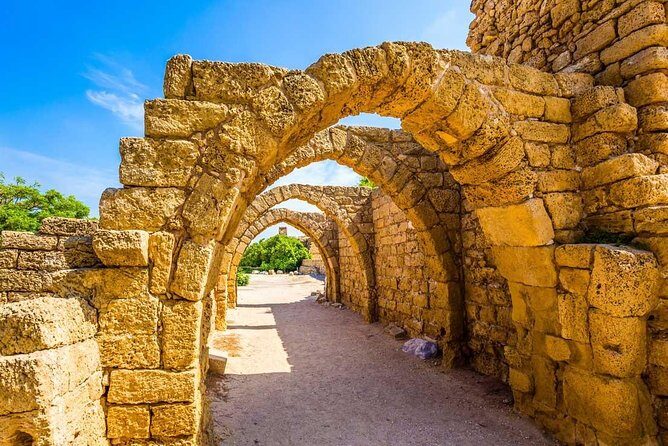
This is a true “coast-to-coast” day plan, built to cover the Mediterranean’s northern stretch without the hassle of planning and backtracking. You start early—6:40 am—with hotel pickup and you’ll return to your hotel after about 10 hours.
The value here isn’t just the number of stops. It’s the order of operations: you move north along the water, then cut back through the big historic anchors on the way home. That makes it easier to understand the coastline as a single connected story rather than separate day trips.
You can also read our reviews of more tours and experiences in Tel Aviv.
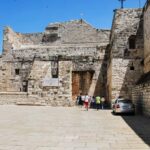

Caesarea National Park: Herod’s Seaside Power and a Working Roman Amphitheater
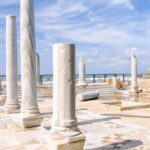
Caesarea is your first big “wow” stop, and it sets the tone for the whole day. This ancient city was constructed under Herod and named after the Roman emperor, Caesar, so you immediately get the feeling of Roman-scale ambition right on the shore.
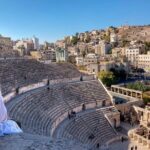
What I like about the site layout is that you’re not just looking at scattered stones. You can see a lot of structure cues—gateways, a moat, and well-preserved walls and rooms—so it feels like a real place that once ran like clockwork. And the star attraction is the Roman amphitheater, still used for performances by Israeli and international artists. Even if you’re not there for a show, that “still alive” detail makes the ruins feel less like a museum and more like a venue frozen in time.
You’ll have about 1 hour here, and entrance is included. That’s enough time to walk the main areas, get oriented, and still come away with a basic understanding of what Caesarea was.
Practical tip
Wear shoes with real grip. You’ll be moving around outdoor archaeological areas, often with uneven ground near the ruins.
Haifa’s Baha’i Gardens: Terraces, Color, and a Calm Counterpoint
After Caesarea, you continue driving north into Haifa for one of Israel’s most visually striking gardens. The Baha’i Shrine and gardens sit on the mountain, and the terraced layout steps down toward the city below—so the view changes with every few minutes you walk.
You’ll spend about 20 minutes at the gardens, and admission is free. That short window is the trade-off. You’ll likely enjoy the main scene and get the feel of the terracing, but you won’t have time for a slow, photo-heavy stroll or to read every sign in detail.
Still, it’s a smart break in the day. After Roman stone and coastal history, the gardens shift the mood. Think of it as a reset before the more dramatic sea-and-fortress stops ahead.
Practical tip
Plan for quick movement. If you’re trying to grab the best angles, arrive at viewpoints early in your time slot rather than at the end.

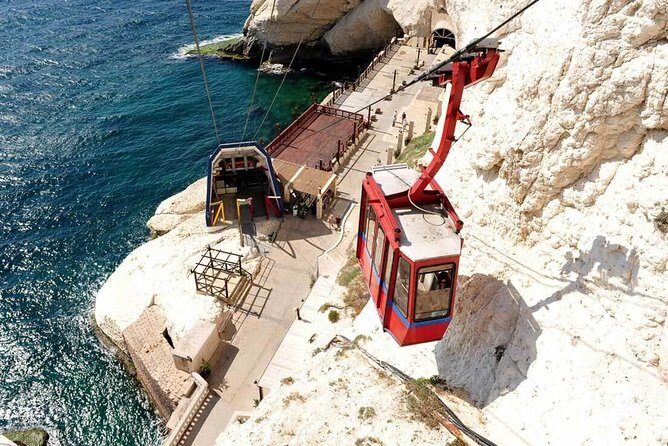
Rosh Hanikra: Cable Car Descent Into Wave-Carved Limestone
Then you hit one of the most dramatic natural sights on the route: Rosh HaNikra, the northernmost point along Israel’s Mediterranean coast. If you’ve ever wanted “geology meets postcard” in the same place, this is it.
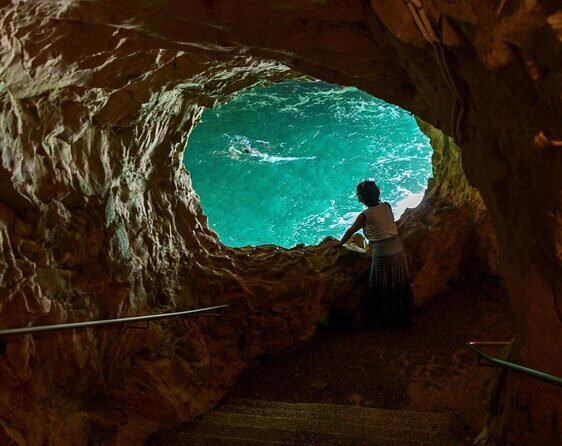
You descend by cable car into limestone grottoes formed by constant wave bombardment against the rocks. The result is a network of sea caves and tunnels that feels sculpted—except it wasn’t carved by people. You’re looking at the ocean doing overtime.
You’ll have about 1 hour here, and that first Rosh Hanikra stop lists free admission. The experience is visual right away, so you don’t have to be an expert to enjoy it.
Practical tip
Bring a light layer. Caves and grotto areas can feel cooler than the bright coastal air outside.
The Lebanese Border Grottos: Seeing the Edge of the Map
Right after Rosh Hanikra, the itinerary includes time at the Lebanese border area and the grotto exploration there. You’ll get about 40 minutes, with admission included for this segment.
Even when you’re focused on the natural caves, this stop adds a different kind of context: you’re literally at the edge of a border region. The point here isn’t political debate; it’s spatial awareness—how close major sites are to shifting lines of control, conflict, and history along this coast.
If you want one short, high-impact segment where the scenery and the geography connect, this is it.
Practical tip
Take a second to pause and look outward (when it’s safe and permitted). The caves are memorable, but the surrounding location is part of why this area matters.
Acre’s Old City: Crusader-Era Streets and Layered Coastal Life
Next comes Acre, one of the region’s best-known historic cities. Here, you’re not just visiting one monument—you’re stepping into an old urban center with centuries stacked on top of each other.
You’ll spend about 1 hour in the Old City, and admission is free. That means the goal isn’t to see everything at an extremely detailed level. Instead, it’s enough time to get your bearings, walk through the key historic feel of the area, and leave with a sense of Acre’s “this is how port cities work” character.
If you like cities where you can connect the dots—trade, religion, walls, ships—Acre delivers. The short time works well after the cave stop because it lets you switch from wide-open scenery back to human-scale streets.
Practical tip
Bring patience for crowds and narrow sidewalks. This kind of historic center can get busy, and your pace depends on where the group is headed.
Citadel of Acre: Crusader Remains, Prison Walls, and the British Mandate
After Acre’s streets, you move to the Citadel of Acre, and this is where the day’s history gets heavier. The citadel area lets you see Crusader remains, plus the prison used under Turkish rule and gallows used under the British Mandate to hang Jews who broke British law limiting Jewish immigration to Palestine after World War II.
I appreciate how this stop doesn’t pretend history is simple. You’re looking at a fortress that changed hands and meanings over time. The same stone surfaces can tell different stories depending on who controlled them.
You’ll have about 1 hour here, and entrance is included. That’s enough time to notice the major remnants and understand why this citadel became such a charged symbol.
Practical tip
If you’re sensitive to difficult historical subjects, mentally prepare for this segment. It’s one of the most intense stops of the day.
How the Day Feels: Timing, Group Size, and Pace
This tour is about movement, not long sits. You’ll travel between sites in an air-conditioned vehicle, and the order keeps you covering distance efficiently.
The cap is listed at 35 travelers, which is a decent group size for a full-day route. Still, one of the biggest real-world considerations is how “fast” the day can feel. Some schedules naturally run like a conveyor belt, especially during popular stops where the group must keep together.
If you like to read every plaque and take your time, you might feel you’re doing a faster pass than you’d like. If you’re more about seeing the big landmarks and getting the context from a guide, this pace can actually be ideal.
A key plus: you don’t have to manage transfers or tickets on your own. Entrance fees are included, and you have hotel pickup and drop-off in Tel Aviv. That’s not glamorous, but it saves real time on a day like this.
The Guide Factor: What Makes or Breaks a Multi-Stop Day
The best moments on a tour like this hinge on the guide. In particular, one guide named Michael A. stood out for being very attentive, polite, and knowledgeable, with an excellent balance of storytelling and organization.
You can also see that language support matters on these routes. One review noted the guide needed to communicate in English and French because of mixed-language passengers. If you care about getting full detail, it’s worth confirming language options at booking.
Practical tip
If you have questions about what you’re looking at, ask early. Once the group moves, it gets harder to stop for extra context without slowing down everyone.
Food, Water, and Comfort: What’s Not Included
Food and drinks aren’t included. That means you need to plan for meals yourself. The schedule does leave room for basic breaks, but it’s still a full day, so don’t wait until you’re starving to figure it out.
I’d do two simple things:
- Bring water (and a small snack if that fits your style).
- Wear layers. The morning start and the mix of outdoor and enclosed spaces can make temperatures feel different hour to hour.
Also, with a route this long, comfort matters. Choose shoes you can wear for multiple walks—especially around the citadel and archaeological areas.
Price and Value: Is $931 Fair for This Route?
At $931, this is not a budget trip. So you’re really paying for three things: convenience, guided interpretation, and included entrance fees with pickup.
The value case is strongest if you want a one-day coverage plan for multiple anchors you’d otherwise have to research and travel between. You’re getting a professional guide, air-conditioned transport, and entrance tickets for key stops like Caesarea and the citadel, plus tickets included for the Rosh Hanikra border grottos segment.
The cost becomes harder to justify if:
- You’d rather spend more time at one place and less time moving.
- You don’t care much about guided history and you’re mostly chasing scenery.
- You’re traveling on a tight schedule where the early start is a strain.
In other words, this pricing fits best if you want the “hit the highlights plus learn what you’re seeing” style of touring.
Who This Tour Suits Best (and Who Might Prefer Another Plan)
This itinerary makes the most sense for you if:
- You want a compact sampler of northern coastal sites in one day.
- You prefer guided context over self-guided research.
- You’d rather handle one early start and one return-to-hotel day than plan multiple logistics.
It might not be ideal if:
- You dislike group pacing and want long, quiet time in each place.
- You’re the type who reads every sign slowly.
- You’d rather focus only on one region—like just Haifa and the gardens, or just Acre’s city history—at a slower tempo.
Should You Book This Tour?
I’d book it if you want to turn a single day into a clear “big picture” tour of Israel’s northern coast—Caesarea’s Roman grandeur, Haifa’s terraced gardens, Rosh Hanikra’s wave-carved grottoes, and Acre’s city-and-fortress history.
I’d hesitate if you’re easily stressed by crowds or want lots of unhurried time per site. The route is efficient, but efficiency can feel tight when you love lingering.
If you do book, go in with the right mindset: this is a day for landmarks and guided context, not deep, slow wandering.
FAQ
FAQ
What time does the tour start from Tel Aviv?
The start time is 6:40 am.
How long is the tour?
The duration is about 10 hours.
Does the tour include hotel pickup and drop-off?
Yes. Hotel pickup and drop-off from Tel Aviv are included.
Are entrance tickets included?
Yes. The tour includes entrance fees for key stops such as Caesarea National Park, Rosh Hanikra border grottos, and the Citadel of Acre.
Is food included in the price?
No. Food and drinks are not included.
What is the group size?
The tour has a maximum of 35 travelers.
Is free cancellation available?
Yes. You can cancel up to 24 hours in advance for a full refund.