REVIEW · TEL AVIV
Jerusalem, Bethlehem & Dead Sea
Book on Viator →Operated by Eliaa tours · Bookable on Viator
Three faiths, one day, and sea salt.
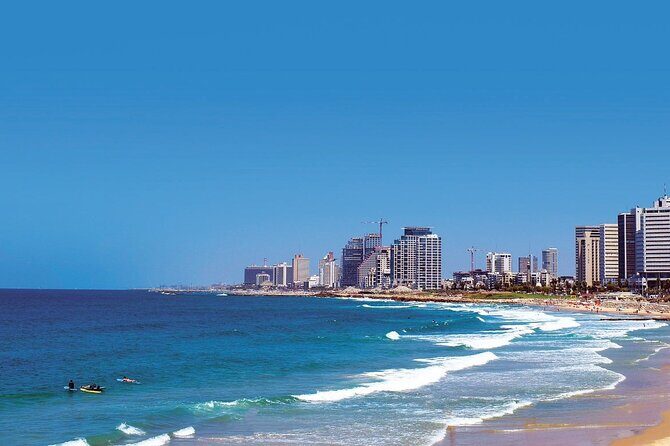
This full-day shared tour strings together the biggest sights in Jerusalem’s Old City and finishes with time at the Dead Sea—and what makes it work is the guide’s straight talk about what you’re seeing, not just where it is. I love how the route is organized by neighborhood in the Old City, so you get a sense of how life and worship have side-by-side for centuries. I also like that the day doesn’t stop at viewpoints: you get both landmark time and real relaxation at the lowest point on earth.
One thing to keep in mind: the schedule is tight, and some sites can be hard to enter or require patience. In particular, entry into the Grotto area in Bethlehem is often tough, and the group may do an overview instead of waiting if lines run long; plus Bethlehem itself may be inaccessible, so the tour can shift to the Jordan River baptism site (Qasr al-Yahud).
In This Review
- Key highlights you’ll care about
- Entering Jerusalem at Jaffa Gate, then walking by neighborhood
- Christian Quarter: Church of the Holy Sepulcher area in a short, guided window
- Muslim Quarter: Temple Mount highlights and the Old City markets
- Via Dolorosa: the Way of the Cross route, especially on Fridays
- Jewish Quarter and the Western Wall stop: quick, but meaningful
- Bethlehem swap: Qasr al-Yahud instead of the Church of the Nativity area
- Dead Sea relaxation: panorama stop, then about two hours at the beach
- What the tour price covers (and why it feels like decent value)
- Time management: the biggest “make or break” for this day
- Who this tour suits best
- Should you book Jerusalem, Bethlehem & Dead Sea?
- FAQ
- Where does the tour depart from?
- How long is the tour?
- How much does it cost?
- Is the tour shared or private?
- What’s included in the price?
- What is not included?
- How much time do you spend at the Dead Sea?
- Is Bethlehem always visited as planned?
- Which Old City gate is used to enter Jerusalem?
- What’s the cancellation rule?
Key highlights you’ll care about
- Start at Jaffa Gate for a smooth Old City entry and easy orientation
- Christian Quarter + major Church of the Holy Sepulcher area without wasting time hunting around
- Temple Mount zone, Al-Aqsa Mosque area, and Old City markets in one focused stretch
- Via Dolorosa timing: on Friday afternoons you may see the procession and Stations of the Cross route
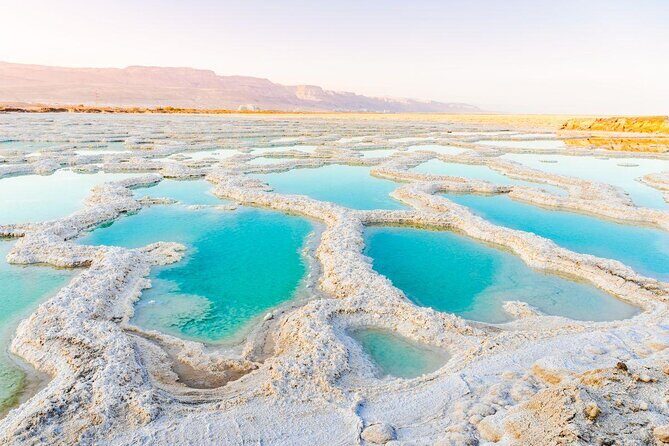
- Dead Sea time (about 2 hours), with a panorama stop before your beach relaxation
Entering Jerusalem at Jaffa Gate, then walking by neighborhood
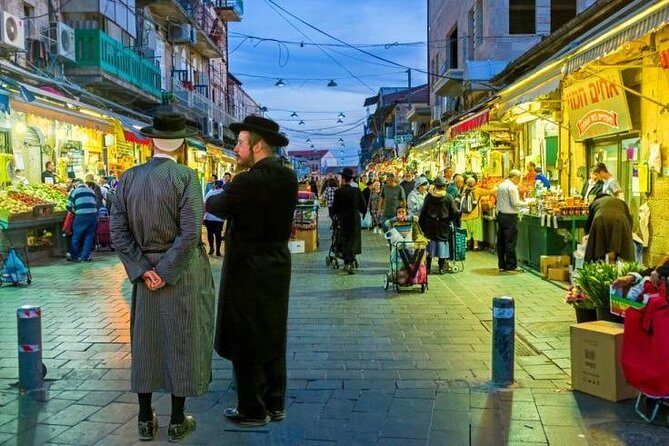
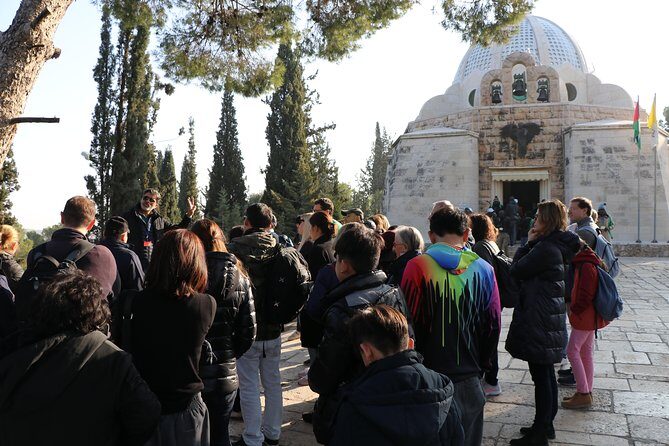
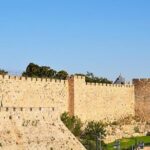
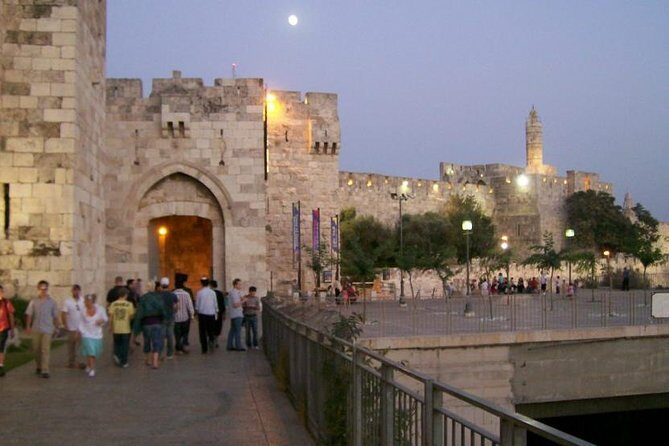
The day kicks off with a guided entry through one of the Old City gates—Jaffa Gate—which is a smart way to avoid the chaos of trying to piece together your own route. Once inside, you’re not wandering randomly. You’re moving neighborhood by neighborhood, which matters in Jerusalem because the feel changes fast as you cross streets.
I like this approach because it helps you understand what you’re seeing. For example, the Christian Quarter doesn’t feel like a museum. It feels like a living religious center with old churches and active lanes. Then the tone shifts again in the Muslim Quarter, where you’ll see key religious landmarks and markets. By the time you reach the Jewish Quarter, the day feels like a story you’re walking through, not just a checklist.
You can also read our reviews of more tours and experiences in Tel Aviv.

Christian Quarter: Church of the Holy Sepulcher area in a short, guided window
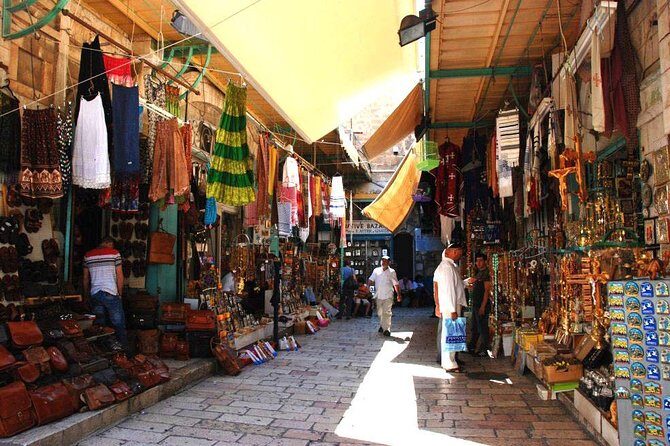
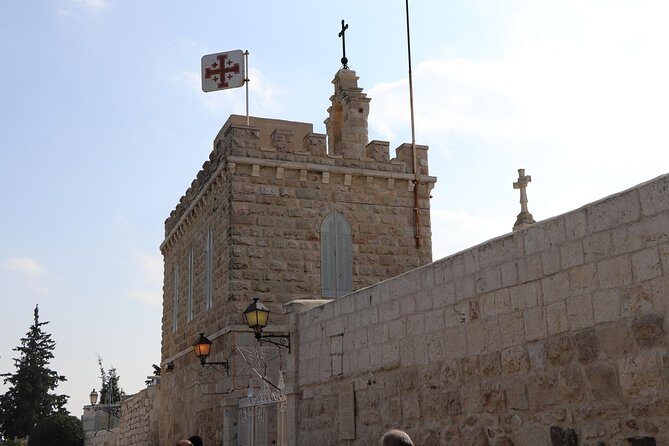
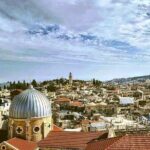
Your first Old City stop is the Christian Quarter, with about 45 minutes and no admission ticket required. This is where the famous Church of the Holy Sepulcher area fits into the route, and your guide’s job is to help you connect the spiritual importance to the street-level layout you can actually see.
In this kind of visit, time is everything. A longer, unstructured crawl can turn into rushing. Here, you get a focused block to understand the area and identify the big landmarks—without it swallowing your whole morning. If you’re the type who wants context in plain language, this is one of the better segments of the day.
Muslim Quarter: Temple Mount highlights and the Old City markets
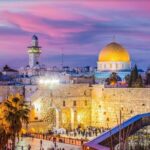
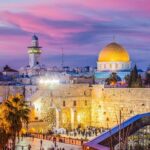
Next comes the Muslim Quarter for about an hour, and this is packed. You’ll be seeing the Temple Mount area, the Al-Aqsa Mosque, key gates like Damascus Gate, and major visual icons such as the Dome of the Rock. Your route also includes three markets—Butchers’ Market, Perfume Market, and Goldsmiths’ Market—plus Church of St. Anne.
What I like here is the balance. You get both religious landmarks and the everyday commercial streets that make the Old City feel real. The markets are not a side note; they’re part of why these neighborhoods still function as neighborhoods rather than set pieces.
One practical note: this stop includes “admission ticket included” in the tour details, so you’ll want to go with the flow on timing and where your group is directed. Also, expect crowds and tight walking lanes—bring patience.
Via Dolorosa: the Way of the Cross route, especially on Fridays
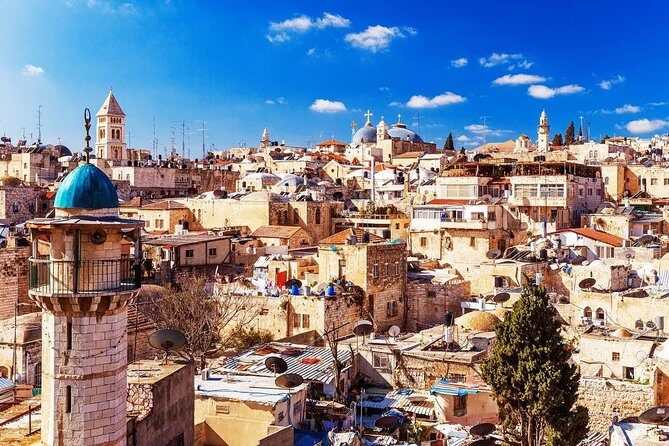
The tour then heads to the Via Dolorosa, the street associated with the Way of the Cross (often called the Way of Sorrows). The time here is short—about 25 minutes—but the setting can be powerful.
The tour description specifically flags that on Friday afternoons, hundreds of Christians may join a procession through the Old City, stopping at the Stations of the Cross along the route. If your schedule lines up, you’ll feel the atmosphere shift from sightseeing to something more ritual and personal.
Even if you don’t experience the full procession, this is still worth doing with a guide because it’s easy to miss meaning when you’re just moving through a crowded lane. In 25 minutes, the guide helps you read the route instead of just passing it.
Jewish Quarter and the Western Wall stop: quick, but meaningful
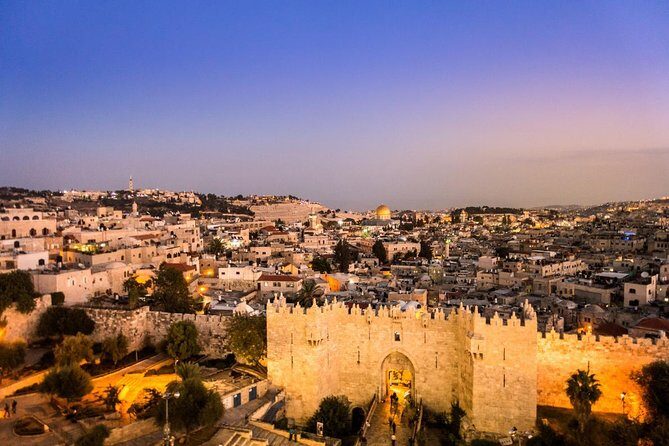
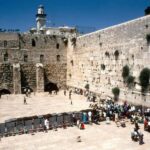
In the Jewish Quarter, you’ll focus on the Western Wall and you also have time tied to the Tower of David Museum area (admission ticket included on this stop). You get about 30 minutes here.
This is one of those stops where the “how” matters. The Western Wall is instantly recognizable, but the surrounding context—what’s nearby, why the area is significant, and how it fits into the Old City’s layout—is the part that can be confusing without direction. With a guide, you get your bearings fast and you can spend your time actually looking rather than re-reading maps every minute.
Because time is limited, I’d treat this as your landmark moment. If you want extra deep museum time, you’ll likely need a separate add-on later.
Bethlehem swap: Qasr al-Yahud instead of the Church of the Nativity area
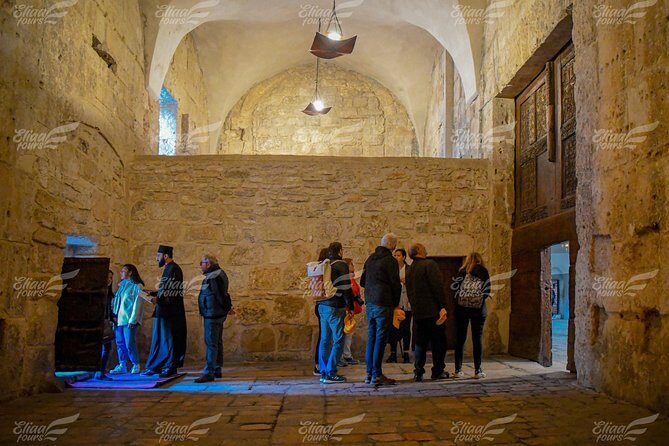
Here’s the key twist. The itinerary includes Bethlehem’s Church of the Nativity stop, but the tour information you’ll receive reflects a reality: Bethlehem can be closed, so the visit may switch to Qasr al-Yahud, described as an official baptism site in the Jordan River Valley in the West Bank.
If you’re expecting the Nativity complex itself, plan for the possibility of a different experience. The plus side is that you still get the Christian-themed sights tied to the Bethlehem story, but the “anchor” location may change.
You’ll still enjoy several Bethlehem-adjacent stops that help the day feel cohesive:
- an olive wood factory
- Manger Square
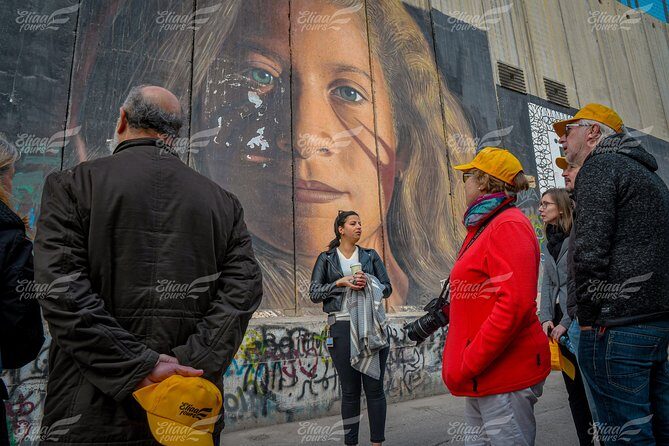
- Banksy art on the Wall of Bethlehem
The tour also notes a real-world challenge: entry into the Grotto area can be too hard at times. When it’s not happening, you may get an overview rather than waiting for long periods (the note says waiting can take almost an hour). For many people, that trade-off is worth it because it protects the rest of your day—especially the Dead Sea time that comes next.
Dead Sea relaxation: panorama stop, then about two hours at the beach
After the Bethlehem-area portion, you head to the Dead Sea for about two hours of relax time. Before you reach the beach, you stop at the Level Sea viewpoint area to take in the panorama.
This part is simple, but it’s also the payoff. The salt-and-mineral experience is different from every other stop on the day because it shifts from walking and looking to feeling and resting. The tour includes “time to soak in mineral-rich waters” and gives you beach time afterward.
One cost you should budget for: the private beach entrance is not included (listed as 35 NIS). If you want the full Dead Sea experience rather than a quick dip, plan to cover that.
What the tour price covers (and why it feels like decent value)
At $99 per person for an approximately 12-hour shared day, this tour has a lot going on for the money—mainly because it packages three major regions into one guided route, rather than forcing you to plan and pay for separate transport and guides.
Here’s what’s included:
- Air-conditioned vehicle
- WiFi on board
- An expert tour guide
And the essentials not included:
- Food & drinks
- Dead Sea private beach entrance (35 NIS)
- Personal travel insurance
I’d call it good value if you want guidance through the Old City’s confusing walking lanes and you don’t want to stitch together multiple half-days. If you’re the type who prefers total freedom and long stays at one site, this may feel a bit scheduled. The group is capped at 55 travelers, which helps keep it from turning into a total mob, but it’s still a shared format.
Time management: the biggest “make or break” for this day
The schedule works because it’s structured. The trade-off is that you won’t linger for hours at one location. For example, you have about 45 minutes in the Christian Quarter, about an hour in the Muslim Quarter, about 25 minutes on the Via Dolorosa segment, about 30 minutes in the Jewish Quarter, about 30 minutes in the Bethlehem-area portion, then around 2 hours at the Dead Sea.
That can be perfect if you want highlights and context. It can frustrate you if you want deep reading time or slow wandering. My practical advice: pick one or two areas you care about most (Western Wall, Temple Mount area, Bethlehem markers, or Dead Sea swim) and let the rest be “guided orientation.”
Who this tour suits best
This is a strong fit if you:
- want a single day that touches Jerusalem’s Old City neighborhoods plus the Dead Sea
- like learning from a guide as you walk (not just standing at monuments)
- would rather have a plan than worry about routing, transport, and timing
- don’t mind that some entrances may be limited and the group may adapt
If you’re traveling with limited mobility or you hate crowd conditions, you should think twice. The tour involves walking through dense areas and getting through busy streets in the Old City.
Should you book Jerusalem, Bethlehem & Dead Sea?
I’d book this if your goal is a guided, high-impact day that gives you the big spiritual and cultural landmarks, without making you do the heavy planning. The combination of Old City neighborhoods (with Western Wall and the Temple Mount/Al-Aqsa/Dome of the Rock area zone), plus a structured Bethlehem-style stop and then an actual Dead Sea relaxation window, is a smart use of limited time.
Skip it or choose a different format if you want slow museum-style pacing or you’re set on a specific Bethlehem entrance with guaranteed access. The tour itself signals that entry to some areas can be difficult, and Bethlehem’s situation can shift.
If you do book, pack for the basics: comfortable shoes, a plan to buy your own food, and the ability to accept changes without stress. That mindset is what makes this day feel smooth.
FAQ
Where does the tour depart from?
The tour offers flexible departures with central meeting points in either Tel Aviv or Jerusalem.
How long is the tour?
The experience runs for about 12 hours.
How much does it cost?
The price is $99 per person.
Is the tour shared or private?
It’s a shared full-day tour with a maximum of 55 travelers.
What’s included in the price?
Included items are an air-conditioned vehicle, WiFi on board, and an expert tour guide.
What is not included?
Not included: food & drinks, entrance to a private Dead Sea beach (35 NIS), and personal travel insurance.
How much time do you spend at the Dead Sea?
You get about 2 hours at the Dead Sea.
Is Bethlehem always visited as planned?
The information provided notes that Bethlehem may be closed, and the tour then goes to Qasr al-Yahud in the Jordan River Valley instead.
Which Old City gate is used to enter Jerusalem?
Jaffa Gate is used as the main tourist entry point.
What’s the cancellation rule?
Free cancellation is available up to 24 hours in advance for a full refund, based on local time. The experience also requires good weather; if it’s canceled for poor weather, you’ll be offered a different date or a full refund.