REVIEW · TEL AVIV
Jerusalem and Dead Sea Trip from Tel Aviv
Book on Viator →Operated by Click Tours · Bookable on Viator
Jerusalem by morning, Dead Sea by afternoon. This full-day trip strings together classic Old City stops with a real chance to float in the Dead Sea. I like that the plan is guided and paced for the big photo-and-story moments, and I also like the value angle: entrance fees are included. The main drawback is physical pace—there’s a walking route in the Old City, so it may not feel great if you get winded easily.
I’ve seen how much difference the guide can make on a day like this. Names like Eyal, Aaron, and Yoav come up for a reason: they keep the day moving with clear explanations and good energy. At the same time, group size can affect comfort in tight lanes (there’s a maximum of 40), and time in the Old City is scheduled, so you should treat this as a highlights loop rather than a custom deep visit.
In This Review
- Key things I’d plan around
- 6:40 am pickup to Old City lanes: how the day really feels
- Mount Scopus National Botanical Garden: the best first look at Jerusalem
- Zion Gate into the Old City: how the highlights loop works
- The Cardo and the Jewish Quarter: ancient street, short stop, big meaning
- Western Wall (Kotel): prayer notes, Herod-era support, and real atmosphere
- Christian Quarter, Via Dolorosa, and the Church of the Holy Sepulchre
- Muslim Quarter bazaar time and the schedule reality around Al Aqsa
- Harei Yehuda and the Judean Hills: a breather between cities
- Dead Sea float at a private beach: what to do with your 90 minutes
- Price and value: what $95 covers (and what you’ll still pay for)
- Guide quality and group-size tips for a smoother day
- Should you book this Jerusalem and Dead Sea day trip?
- FAQ
- What time is the tour pickup in Tel Aviv?
- How long is the Jerusalem and Dead Sea trip?
- Is hotel pickup and drop-off included?
- Are entrance fees included in the price?
- Is food and drinks included?
- What about insurance?
- How big is the group?
- Will I receive a ticket on my phone?
- Can I cancel for a full refund?
Key things I’d plan around

- Early 6:40 am start from Tel Aviv means you’ll cover more than just one city zone
- Old City highlights by foot: Zion Gate, Cardo, Western Wall, and the main Christian sites
- Temple Mount views from Mount Scopus for a first-arrival sense of scale
- Private Dead Sea beach time to actually float, not just drive past
- Entrance fees included so you’re not hunting tickets all day
- Schedule reality: the Old City is time-boxed, so must-dos like Al Aqsa need extra planning
6:40 am pickup to Old City lanes: how the day really feels
This tour runs for about 11 hours, with pickup in the Tel Aviv area starting at 6:40 am. That early start matters. Jerusalem sights are easiest before crowds fully stack up, and the Dead Sea stretch works better when you don’t arrive late in the day.
Transport is handled in an air-conditioned vehicle, and the day is organized as a smooth back-and-forth: Jerusalem in the morning, Dead Sea in the afternoon, back to your hotel after. One practical note: the transfer part toward the Dead Sea may sometimes involve a driver-only segment, and your vehicle could change. You don’t need to stress about it, but it’s good to know it’s not always the exact same vehicle the whole time.
The group size is capped at 40, which is large enough for logistics but small enough that a guide can still herd everyone through key stops. Still, if you’re sensitive to noise or you want more one-on-one, aim to position yourself near the front during the walking portions.
You can also read our reviews of more tours and experiences in Tel Aviv.

Mount Scopus National Botanical Garden: the best first look at Jerusalem
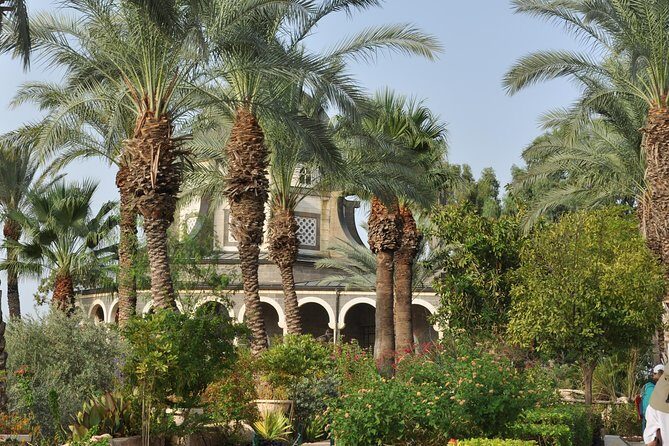
Your day starts with a panoramic look from Mount Scopus National Botanical Garden. This is more than a random scenic stop. It’s your orientation moment: you can see Jerusalem’s skyline and get a mental map for what you’re about to walk through later.
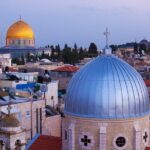
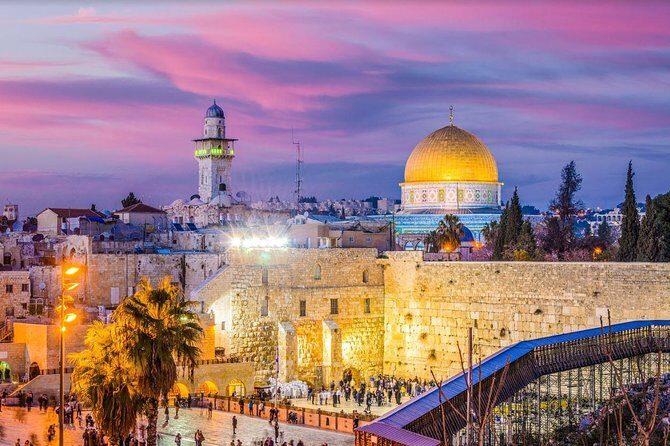
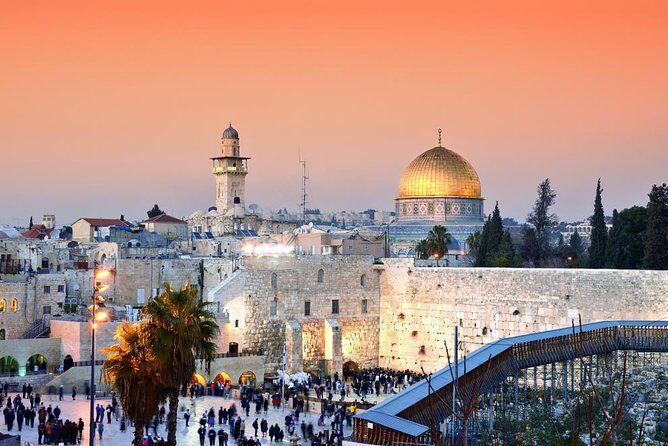
From there, you’ll reach a viewpoint tied to the Temple Mount area, with the golden dome of the Dome of the Rock in the frame. It’s a classic photo moment, but the value is the context. Looking from above helps you understand why different quarters and sacred sites feel so intertwined on the ground.
You’ll also pass in the vicinity of areas like the 3,000-year-old Jewish cemetery that’s visible from the viewpoint area. And as you continue, you’ll get “pass by” glimpses of places like the Garden of Gethsemane, the Church of All Nations, and the Kidron Valley. The bus-view rhythm here is smart: it gives you visual anchors without burning your walking energy too early.
Zion Gate into the Old City: how the highlights loop works
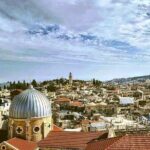
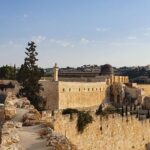
Next comes the Old City, entered through Zion Gate. This is where the day turns from “views” into “walking and looking closely.” You’ll spend about two hours on the core Old City route, with stops and passes through key quarters.
You’ll go past areas like the Armenian Quarter, and then the plan shifts toward the historic spine of the city: the Cardo. The Cardo matters because it’s not just a street—it’s a reminder that this city has been rebuilt layer after layer. When you’re standing there, you’re seeing a pathway that’s been in use for centuries, and the guide’s explanations help it click.
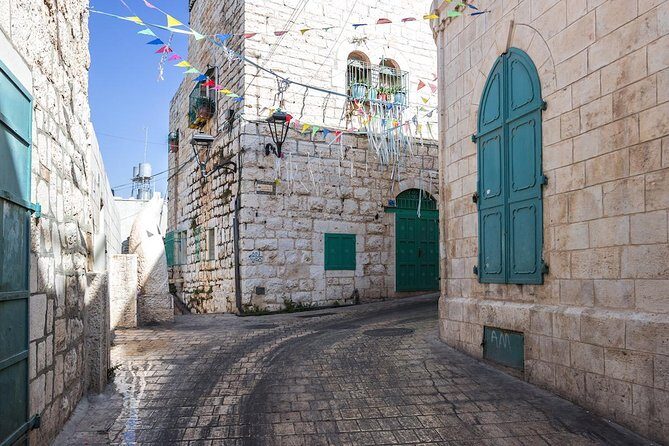
Old City walking is cobblestone, crowds, and turns. That means you’ll want comfortable shoes more than anything else. I’d also bring an extra layer for rain or wind—Jerusalem can surprise you even when the forecast looks fine.
The Cardo and the Jewish Quarter: ancient street, short stop, big meaning
The Cardo stop is quick (about 30 minutes), and that’s intentional. The goal isn’t to linger forever; it’s to hit the places that define the Old City’s feel. You’ll pass through the Jewish Quarter area and see the Byzantine Cardo, described as around 1,500 years old in the context of this route.
This is one of those stops where your brain does double duty. You’re trying to follow the guide’s story, take a few photos, and also process the fact that you’re walking where daily life has played out across eras.
If you’re a history person, this short segment can feel satisfying because the guide connects the dots. If you’re not, it still works because the street setting does most of the teaching for you.
Western Wall (Kotel): prayer notes, Herod-era support, and real atmosphere

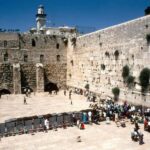
Then you reach the Western Wall, the Kotel, where people have prayed since the Temple period (after 70 CE, when the Temple was destroyed). You’ll have about 20 minutes here.
What I like about this stop is the mix of structure and living tradition. The guide points out the idea of the wall as part of the Temple Mount support area, with reference to King Herod’s building work. Then the experience becomes human: you can join others at the wall and place a prayer note between the stones.
Even if you don’t plan to write a note, it’s worth being there just to feel how the place functions. It’s not a museum vibe. It’s active devotion in a tight public space.

Christian Quarter, Via Dolorosa, and the Church of the Holy Sepulchre
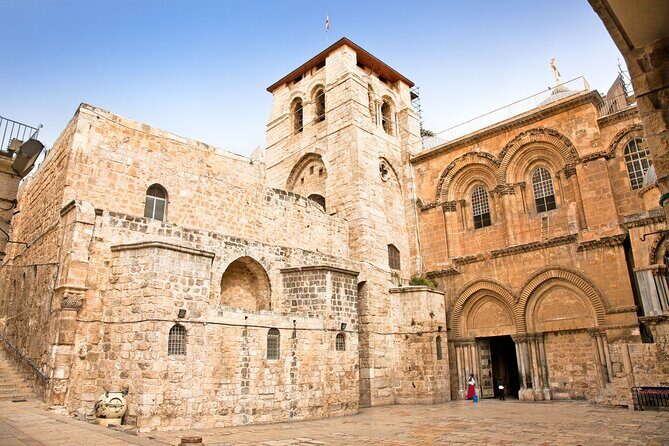
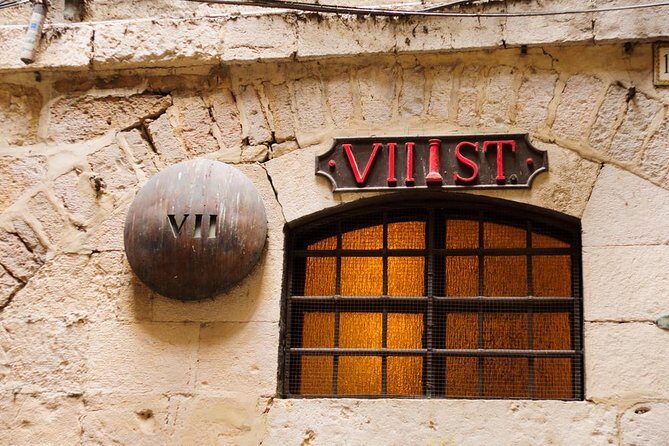
The next part focuses on the Christian Quarter and the sites that orbit the Via Dolorosa route—also known as the Way of the Cross—and then the Church of the Holy Sepulchre.
You’ll spend time in the Christian Quarter area for around 30 minutes, then continue to the Way of the Cross area for about 30 minutes. The wording in the route description points you toward the Church of the Holy Sepulchre area as the setting for that tradition.
Finally, you’ll visit the Church of the Holy Sepulchre for about 30 minutes. This church is tied to the story of the crucifixion and burial tomb, and the stop is designed to give you the key landmarks without turning your day into a crawling marathon.
One practical reality: these sites can be crowded. If you care about photos, plan to take them fast and with respect—then spend your time listening. The guide’s commentary is what helps this area feel more than just “another big church.”
Muslim Quarter bazaar time and the schedule reality around Al Aqsa
The route includes the Muslim Quarter with about 20 minutes there, plus a look at the lively bazaar atmosphere.
Here’s my honest advice: if your personal must-do list includes Al Aqsa Mosque, treat this as a highlights tour, not a guaranteed extended visit. The schedule is time-boxed, and sometimes the route emphasizes what fits within the day. If Al Aqsa is critical to you, I’d bring it up early with your guide so you can understand what’s possible on your particular departure.
In general, the Muslim Quarter slot is useful for sensory context—colors, textures, movement, and the feeling of a working city quarter rather than a preserved set.
Harei Yehuda and the Judean Hills: a breather between cities

After the Old City loop, you’ll travel through the Judean Hills during an extended stretch of about 1 hour 15 minutes. The day moves toward Harei Yehuda as part of this drive, and you may pass Metzoke Dragot along the way.
This is your mental reset. Even if you’re eager to get to the Dead Sea, that highway time matters because it breaks up the concentration of the morning. If it’s raining, this stretch becomes extra helpful. If it’s clear, this is a good moment to look out the window and remind yourself that Israel isn’t one flat postcard.
Dead Sea float at a private beach: what to do with your 90 minutes
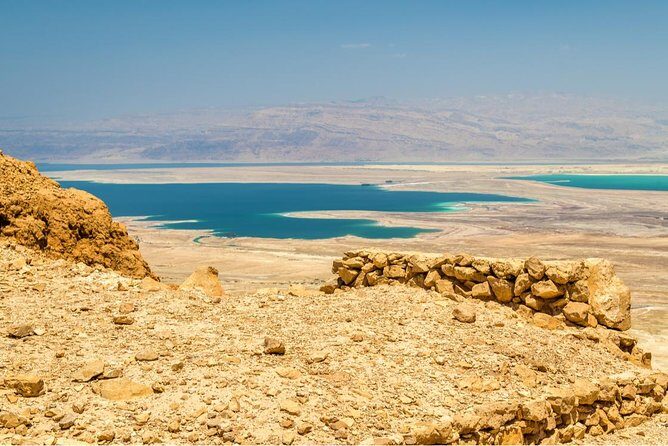
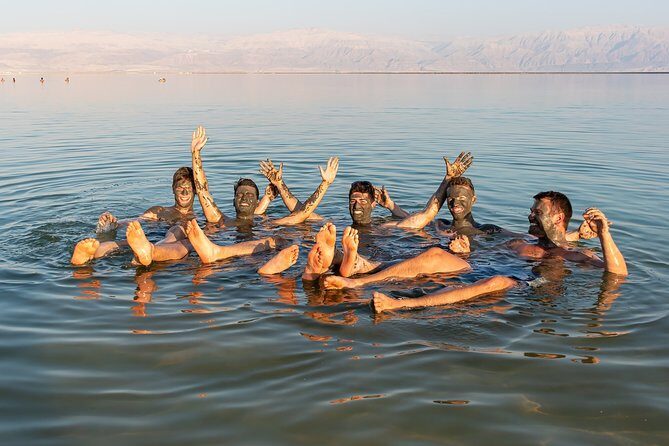
Then you get the payoff: time at the Dead Sea. Your slot here is about 1 hour 30 minutes, and you’re taken to a private beach area for swimming and floating.
This part is simple but you need a plan. Dead Sea water is thick, and floating is the main event. Bring a swimsuit you don’t mind getting salty, and consider simple protective habits like keeping eyes closed near the water and rinsing off after. Sunscreen also helps—sun exposure can feel stronger on an open shore.
Because the time is limited, I’d treat the first few minutes as your warm-up and orientation: get comfortable, float a bit, then switch to “how long can I enjoy this without rushing.” You’re not just visiting; you’re meant to do the thing.
Once your Dead Sea time ends, the tour returns you to your hotel, bringing the day to a close.
Price and value: what $95 covers (and what you’ll still pay for)
At $95, this tour looks budget-friendly on paper, but the real value is what’s included.
You get hotel pickup and drop-off, a professional guide, air-conditioned transport, and all entrance fees included. On a day with multiple sacred sites, entrance costs can add up quickly if you’re booking them separately.
What’s not included is also clear:
- Food and drinks
- Insurance
So you’ll want to budget for lunch or snacks during the day. I’d also carry water, especially since you’ll be walking in warm or warm-acting conditions, and because the itinerary doesn’t include meals.
If you want a “no-think” day where you don’t have to manage ticketing and route planning across Jerusalem plus the Dead Sea, this pricing structure is the point.
Guide quality and group-size tips for a smoother day
This tour’s success depends a lot on the guide and the pace.
From past experiences with guides on this route, names like Eyal, Aaron, and Yoav stand out for being efficient, funny, and organized. That means explanations are clearer, timing feels fair, and you get the sense that you’re spending your time where it matters.
There can be rough edges too. One issue that’s come up is sound level and group size in the Old City—if the group is on the larger side, the guide’s voice can be harder to catch from farther back. Solution: move toward the front during walking portions. Another issue is strict scheduling: if you’re hoping for extra time in one specific corner (like the Muslim Quarter and Al Aqsa area), you may need to adjust expectations.
Weather can also change the vibe. Rain happens, and when it does, cobblestones become slick and indoor crowds can feel tighter. Pack for the day, not for the morning forecast.
Should you book this Jerusalem and Dead Sea day trip?
Book it if you want a guided highlights day that hits the main Jerusalem landmarks and still gives you real time to float in the Dead Sea. The biggest reason to choose it is the mix of entrance fees covered plus transport included, so you’re paying for the experience rather than for a stack of add-ons.
Skip or choose something else if:
- You struggle with walking and get winded quickly, because the Old City portion is not just a quick drive-by.
- Al Aqsa is your top priority and you need a long, flexible time there. This tour is structured as a route, so it may not match a strict agenda.
If you’re flexible, comfortable with a full day, and you like the idea of checking off major sights with a guide explaining what you’re seeing, this is a strong value way to do Jerusalem and the Dead Sea in one go.
FAQ
What time is the tour pickup in Tel Aviv?
Pickup starts at 6:40 am.
How long is the Jerusalem and Dead Sea trip?
It runs for about 11 hours.
Is hotel pickup and drop-off included?
Yes. Hotel pickup and drop-off are included.
Are entrance fees included in the price?
Yes. The tour includes all entrance fees.
Is food and drinks included?
No. Food and drinks are not included.
What about insurance?
Insurance is not included.
How big is the group?
The tour has a maximum of 40 travelers.
Will I receive a ticket on my phone?
Yes, you get a mobile ticket.
Can I cancel for a full refund?
You can cancel for a full refund if you cancel at least 24 hours before the experience start time.