REVIEW · TEL AVIV
Jerusalem, Dead Sea, and Bethlehem from Tel Aviv
Book on Viator →Operated by Tourist Israel · Bookable on Viator
One day, three holy worlds, all in motion. I like the air-conditioned transportation and the chance to see major sites in four Old City quarters without planning a thing. The big drawback is time: the schedule is tight, so lines—especially at Bethlehem—can swallow your sightseeing window.
You start early from central Tel Aviv (6:30 am), which helps you beat some crowds and gives you daylight for the Dead Sea float. This tour runs about 12 hours and uses a mobile ticket, with the order of stops sometimes adjusted for the day. If you want unhurried, sit-down visits, this one will feel rushed.
In This Review
- Key things to know before you go
- Why this Tel Aviv day trip works for a short stay
- 6:30 am start: the Western Wall stop you can actually feel
- Jerusalem’s Old City walk: four quarters, one guided storyline
- Holy Sepulchre: a beautiful, quick taste
- Bethlehem’s Church of the Nativity: the one-stop you should plan for lines
- Dead Sea private beach: buoyant fun with extra fees
- Air-conditioned rides and the “don’t miss the next group” reality
- Price and value: what $109 gets you (and what to budget)
- Who should book this tour—and who should skip it
- Should you book this Jerusalem–Bethlehem–Dead Sea day trip?
- FAQ
- What time does the tour start, and how long is it?
- Where do I meet in Tel Aviv?
- What’s included in the price?
- Is lunch included?
- Do I need to pay anything extra?
- How big is the group?
- How long do I spend at the main Jerusalem and Bethlehem sites?
- Are there luggage limits?
- What if the order of sites changes?
- Is there free cancellation?
Key things to know before you go
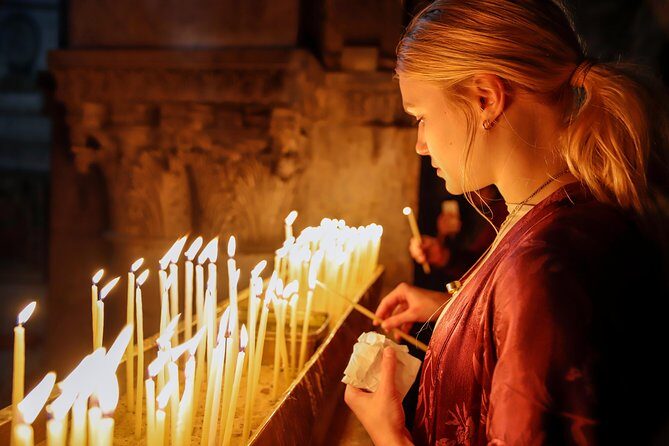
- A packed route with short stops: Western Wall and the Holy Sepulchre are quick hits, not long hangs.
- Old City time is the real anchor: you get about 4 hours to walk the Christian, Jewish, Muslim, and Armenian quarters.
- Bethlehem’s Nativity visit is time-sensitive: the official stop is 1 hour, but queues can matter.
- Dead Sea includes a private beach setup: changing facilities, showers, and a place to eat are there, but beach entry costs extra.
- Guide quality affects the day: with a fast timetable, a slower pace or late start can change everything.
- Group size stays capped: up to 50 travelers, so you’ll be sharing space at the major holy sites.
Why this Tel Aviv day trip works for a short stay
Israel’s religious landmarks aren’t bunched together. Jerusalem, Bethlehem, and the Dead Sea are close enough for a day trip, but only if you accept a “see the essentials” pace. This tour is built for that reality: you’ll ride, listen to commentary, and then move as a group through the biggest stops.
I like the practical flow: you start in Jerusalem’s orbit with the Western Wall, switch to Bethlehem for the Church of the Nativity, then go back to Jerusalem for a structured Old City walk. Ending with the Dead Sea gives you a physical break after lots of walking through streets and stone corridors.
One important mindset shift: this is not a “linger and learn at your own pace” day. It’s a “hit the highlights with context” day. If you’re the type who gets frustrated by lines or moving on before you’re ready, plan for that feeling—or pick a slower, single-city itinerary.
You can also read our reviews of more tours and experiences in Tel Aviv.

6:30 am start: the Western Wall stop you can actually feel
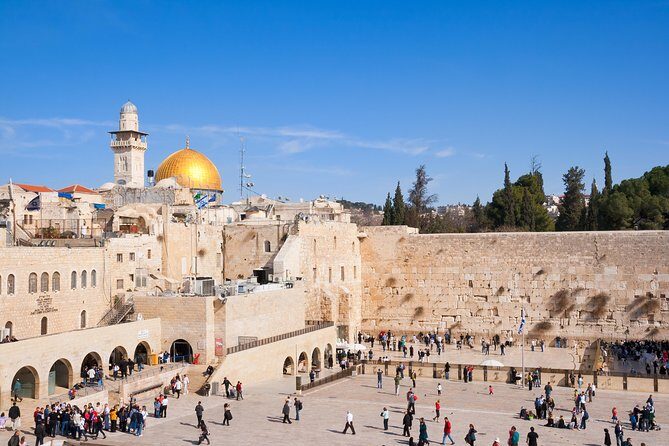
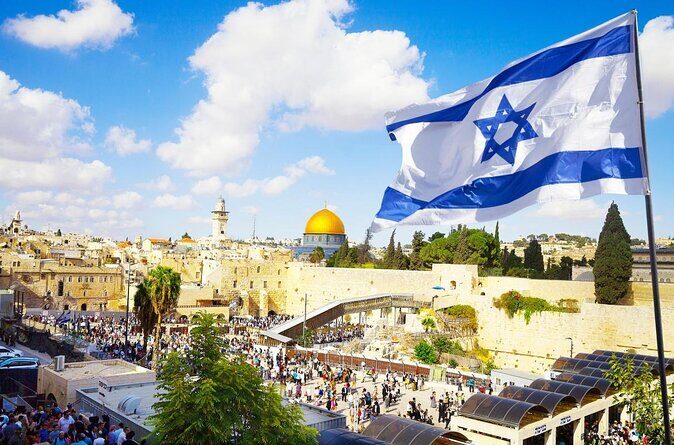
The day begins early at Kaufmann St 2 in Tel Aviv-Yafo. You’ll meet your guide and head out in an air-conditioned vehicle, with onboard commentary to help you keep track of what you’re seeing and why it matters.
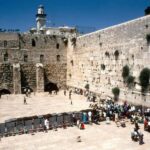
Your first major stop is the Western Wall (Wailing Wall). You get about 20 minutes, and entrance is free. That short window is both the point and the trade-off. You don’t have time for a long, slow experience, but you do get to stand in a place that pulls strong emotion from people of many faiths.
Tip for making the most of 20 minutes: decide ahead what you want to do in that space—prayer wall moments, photos, a quick read of your surroundings, or just quiet time. Then commit. The tour timing means you won’t want to improvise too much.
Jerusalem’s Old City walk: four quarters, one guided storyline
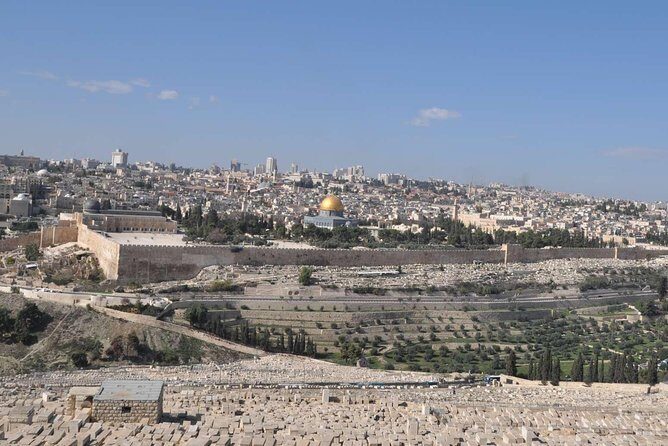
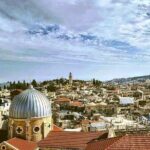
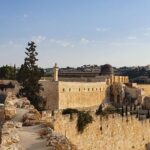
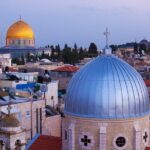
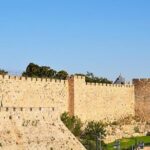
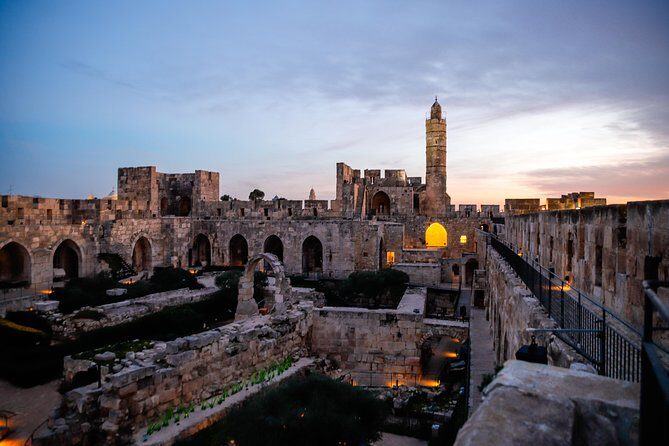
After Bethlehem, you return to Jerusalem for the heart of the day: a guided Old City tour. This is where the time shows up—about 4 hours. Old City Jerusalem is divided into quarters that reflect different religious communities: Christian, Jewish, Muslim, and Armenian.
This quarter structure is useful because it gives your walk a framework. Instead of “random streets and holy buildings,” you’re following a map with a theme: different communities, different histories, and different ways people experience the same walled city.
You’ll cover major pilgrimage terrain, and you’ll also get the kind of orientation that helps you not feel lost. Even if you’ve seen photos before, Jerusalem’s Old City can disorient you fast—especially if you’re trying to read signs while also listening. A guide keeps the day from turning into a stamp-collecting sprint.
What to watch: 4 hours can still feel short when it includes crowd movement and indoor bottlenecks. If you’re hoping to sit down to read every plaque, you may feel rushed. But if you like walking with context, this is the best part of the route.
Holy Sepulchre: a beautiful, quick taste
Later in the Old City segment, the tour includes the Church of the Holy Sepulchre with a shorter stop—about 15 minutes. Entrance is free.
Fifteen minutes can’t do everything people want from this site. It can, however, give you enough time to grasp the scale and atmosphere. The Holy Sepulchre is famous for layered tradition and packed spaces, so even a short visit can still feel like a full stop—because you’re moving through a dense environment, not browsing a museum wing.
My practical advice: treat it like a “first contact.” Focus on orientation, a couple key views, and one or two spiritual moments. If you later want a deeper visit, you’ll already know where to return.
Bethlehem’s Church of the Nativity: the one-stop you should plan for lines
Bethlehem is the most schedule-sensitive part of the day. The Church of the Nativity stop is about 1 hour, entrance is free, and this is the site Christians widely associate with Jesus’ birthplace.
On paper, one hour sounds workable. In practice, lines can expand and pull time away from the inside. The tour duration is fixed, and the group moves on whether you’re done with photos, quick reflections, or slow browsing.
Here’s how to protect your experience:
- Go in knowing you might not get the full “walk, look closely, take time” version.
- Choose a priority: either get inside even if it’s less leisurely, or step back quickly and enjoy the atmosphere without feeling stressed.
Another reality: some days include a brief shop stop in Bethlehem. I’d treat that as a wildcard in your planning. If you don’t want shopping pressure, keep your attention on the church and don’t let the side stop steal your mental energy.
If Bethlehem is your top goal and you want a long, unhurried visit inside the Nativity Church, you should treat this tour as a highlights sampler—not a guaranteed deep visit.
Dead Sea private beach: buoyant fun with extra fees
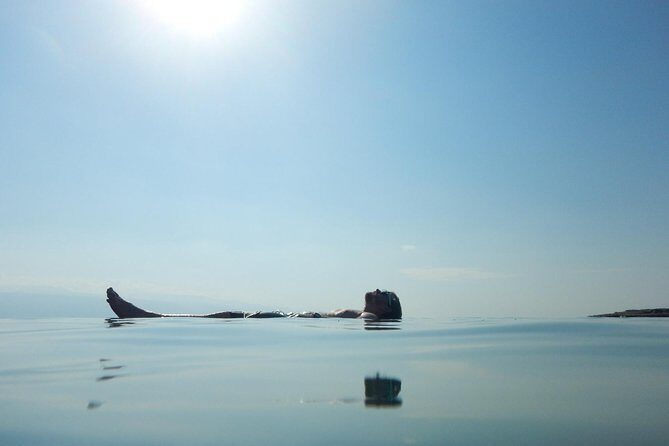
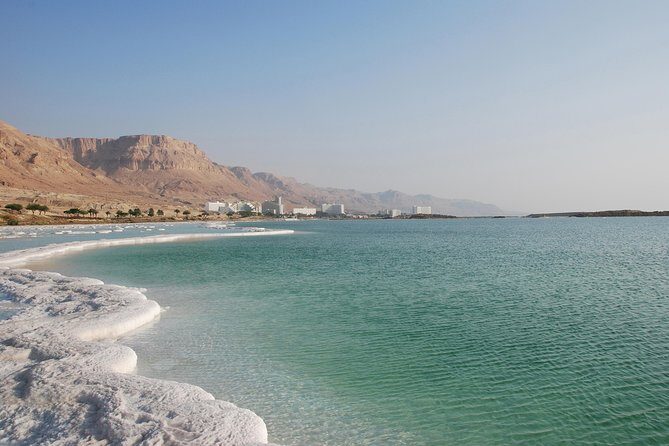
The payoff stop is the Dead Sea. You’ll drive through the Judean Desert on the way in, then spend about 1 hour at a private Dead Sea beach.
This is not just a “stand nearby” moment. You’re set up to swim and float in the salt-saturated water at the planet’s lowest point. The beach area includes changing facilities, a restaurant, and showers. In plain terms: you can actually get in, get out, rinse, and feel human again.
Important cost note: the Dead Sea beach entrance costs 35 NIS and is not included in the tour price. So when you’re budgeting, factor that in. Also budget time for the rinse/shower part; people often forget it until they’re already sticky and salty.
My advice for enjoying this stop without stress:
- Bring what you need for a quick rinse after swimming (or confirm what’s available on-site).
- Keep your expectations simple: floating is the main event.
- Don’t plan on much additional sightseeing during the Dead Sea hour—this is a focused swim stop.
Air-conditioned rides and the “don’t miss the next group” reality
This tour uses air-conditioned vehicles for the long stretches between Tel Aviv, Jerusalem, Bethlehem, and the Dead Sea. That matters in a day like this because you’re otherwise spending a lot of time outdoors in heat and tight spaces.
The schedule is the other key factor. With a maximum group size of 50, you move fairly efficiently—yet you’re still dependent on entry lines, security checks, and the slow-motion physics of crowds. When stops are short, being late isn’t just a minor inconvenience; it can mean you lose the timing window.
Here’s the rule I follow on tours like this: stay close to the front of your group during transitions. If you’re the one always getting “just one more look,” you’ll feel the squeeze fast.
Also, the order of sites might change in some circumstances. That’s normal on a tour day with crowds and logistics. It doesn’t usually ruin the trip, but it does mean you shouldn’t lock in a personal “must be first” plan for every stop.
Price and value: what $109 gets you (and what to budget)
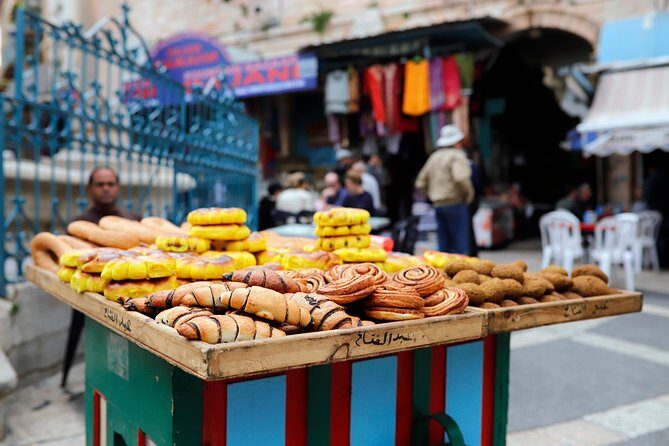
At $109 per person, this tour is built around value through concentration: major holy-site stops in one day, plus guided walking in Jerusalem and guided time in Bethlehem. You’re paying for transportation, guides, and the route design that links far-apart places without requiring your own driving plan.
But not everything is included. Lunch isn’t included, and the Dead Sea beach entry is extra (35 NIS). If you’re coming hungry, or if you want to eat a proper meal instead of grabbing something quick, add lunch money to your budget.
So here’s the real decision math:
- If you want maximum highlights with minimal planning, the price can feel fair.
- If you’re picky about long time inside each church or you want a slow “photograph and wander” day, you may feel the limits and would likely be happier splitting the trip into smaller chunks.
In short: this is good value for a highlight-hungry first-time day in the region. It’s not a deal if your personal style is unhurried.
Who should book this tour—and who should skip it
This fits best if:
- You have limited time and want a structured day across Jerusalem, Bethlehem, and the Dead Sea.
- You like hearing explanations as you walk, rather than figuring everything out alone.
- You’re okay with quick stops and using short time windows wisely.
You might skip it if:
- You need more than about 30 minutes per major site. Some stops are far shorter.
- Bethlehem’s Nativity Church is your must-do, and you want to spend time inside without line pressure.
- You get stressed by fast schedules. When the day moves quickly, you have to move with it.
Guide matters here too. I’ve seen examples of guides who made a tight route feel smooth, like Oded, Hamda, Merona, and Alicia. I’ve also seen problems tied to certain guide issues, including late starts or rushed pacing. With a schedule this compressed, the guide’s pacing really affects your enjoyment.
Should you book this Jerusalem–Bethlehem–Dead Sea day trip?
If it’s your first trip to this part of Israel and you want a single-day overview with guided context, I’d book it—especially if you’re comfortable with short stops and you prioritize the big names over deep immersion. The best reason is simple: you get Jerusalem’s Old City structure and the Dead Sea experience in one coordinated day.
If your top goal is slow time in Bethlehem’s Nativity Church, or if you hate being moved along by crowds and schedule, I’d choose a different plan. In a tight itinerary, the moments you care about most are the ones most affected by lines and timing.
FAQ
What time does the tour start, and how long is it?
The tour starts at 6:30 am and runs about 12 hours.
Where do I meet in Tel Aviv?
The meeting point is Kaufmann St 2, Tel Aviv-Yafo.
What’s included in the price?
You get air-conditioned transportation, guided tours in Jerusalem and Bethlehem, and the main city-site stops listed with admission tickets marked as free.
Is lunch included?
No. Lunch is not included.
Do I need to pay anything extra?
Yes. The Dead Sea private beach entrance fee is 35 NIS and is not included. Also, anything beyond what’s listed (like personal shopping) would be on you.
How big is the group?
This tour has a maximum of 50 travelers.
How long do I spend at the main Jerusalem and Bethlehem sites?
Western Wall is about 20 minutes, the Church of the Nativity in Bethlehem is about 1 hour, Old City Jerusalem is about 4 hours, and the Church of the Holy Sepulchre is about 15 minutes.
Are there luggage limits?
Yes. You can bring up to 1 suitcase and 1 carry-on. Oversized or excessive luggage may have restrictions, so it’s best to ask ahead.
What if the order of sites changes?
The order can change in some circumstances, but the tour covers the same core stops.
Is there free cancellation?
You can cancel for a full refund if you cancel at least 24 hours before the experience start time. If you cancel less than 24 hours before, the amount paid isn’t refunded.