REVIEW · TEL AVIV
Jerusalem and the Dead Sea from Tel Aviv
Book on Viator →Operated by Bein Harim Ltd · Bookable on Viator
Two sacred stops in one long day. This Jerusalem and Dead Sea trip from Tel Aviv strings together the Old City landmarks and real time at the Dead Sea, with a guide on an air-conditioned coach. I also like that you get guided context while you walk the major holy sites, then you finish with hands-on Dead Sea fun.
The trade-off is a long early start plus a fair amount of walking on old stone streets, so it’s not a sit-and-watch kind of day. Dress code matters too: if your clothes don’t cover knees and shoulders, you may get turned away at places of worship.
In This Review
- Key things I’d pencil into your plan
- Why this Tel Aviv day trip works for first-timers
- Getting out early: the 7:15am start and air-conditioned coach
- Mount Scopus to the Kidron Valley: views that put Jerusalem in context
- Walking the Old City route: Jewish Quarter to Western Wall
- The Via Dolorosa and Church of the Holy Sepulchre
- Christian and Muslim quarters: the bazaar feel of a living city
- Dead Sea time at the lowest point on Earth
- What to pack and how not to get turned away
- Value for $133: what is included and what you must budget
- Planning tips for a smooth day (pickup points, timing, and regrouping)
- Should you book this tour?
- FAQ
- What time does the tour start?
- How long is the tour?
- Is hotel pickup and drop-off included?
- What transport is used during the day?
- Which parts of Jerusalem are included?
- How much time do we get at the Dead Sea?
- Is the Dead Sea experience included in the price?
- Are entrance fees included?
- Are food and drinks included?
- Is there a cancellation option?
Key things I’d pencil into your plan

- Mount Scopus first: panoramic Jerusalem views before the day gets busy
- Old City route on foot: Jewish Quarter, Western Wall, Christian Quarter, Via Dolorosa, Holy Sepulchre
- Muslim Quarter bazaar walk: see the market side of Jerusalem, not just monuments
- Dead Sea time is real: about two hours to float and try the mud
- Max 40 people: big enough for energy, small enough to keep the group manageable
- Built for first-timers: a guided day that hits the headline sites efficiently
Why this Tel Aviv day trip works for first-timers
If you’re short on time in Tel Aviv, this day trip is a straightforward way to hit Jerusalem’s big spiritual landmarks and still make it to the Dead Sea for the main event: floating. You’re not stuck in one area all day. You get the religious-city feel in the Old City, then you switch to desert-and-salt relaxation.
What I like most is the pacing choice. The morning is structured with guided walking through Jerusalem’s quarters. Then the afternoon gives you space to breathe in the Dead Sea setting. It’s a good match if you want meaning and sightseeing, but you don’t want to plan logistics across multiple tickets and locations.
You can also read our reviews of more tours and experiences in Tel Aviv.

Getting out early: the 7:15am start and air-conditioned coach
This tour starts at 7:15 am, and it runs about 10 hours total. You’ll be traveling by air-conditioned coach with hotel pickup and drop-off included, which is the easiest way to do this route without wrestling with public transport or rental cars.
One more practical point: even with pickup, the Old City day requires focus. You’ll be moving from site to site, regrouping as a group, and following your guide’s timing. That makes the early start worth it, because you’re beating both the day’s heat and the late-morning crowds.
Also, pack for comfort, not just looks. The tour includes a reasonable amount of walking, and the streets inside the Old City are not the smooth, flat kind. Comfortable shoes are not optional.
Mount Scopus to the Kidron Valley: views that put Jerusalem in context
Before you enter the Old City streets, you get a series of “setup” stops that help the day click into place.
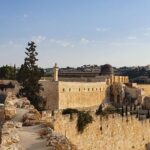
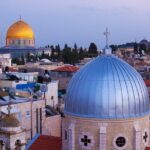
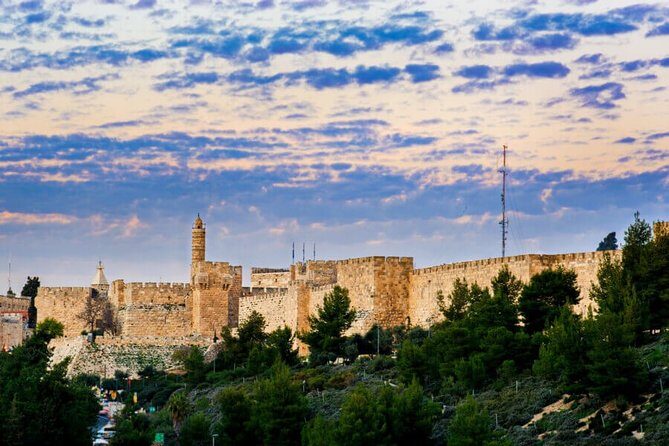
You’ll visit Mount Scopus National Botanical Garden for panoramic views over Jerusalem, and you’ll get sightlines tied to key holy areas. You’ll also get moments where you can see landmarks like the Dome of the Rock and the Temple Mount from outside viewpoints. That outside perspective helps a lot once you’re later walking inside the quarters.
Then you’ll be shown the Garden of Gethsemane and the Church of All Nations, and you’ll pass through the Kidron Valley on the drive. It’s not just scenic. It’s a “map in your head” kind of experience: you start understanding how the city’s spiritual geography connects street level to the bigger hills and valleys.
Walking the Old City route: Jewish Quarter to Western Wall
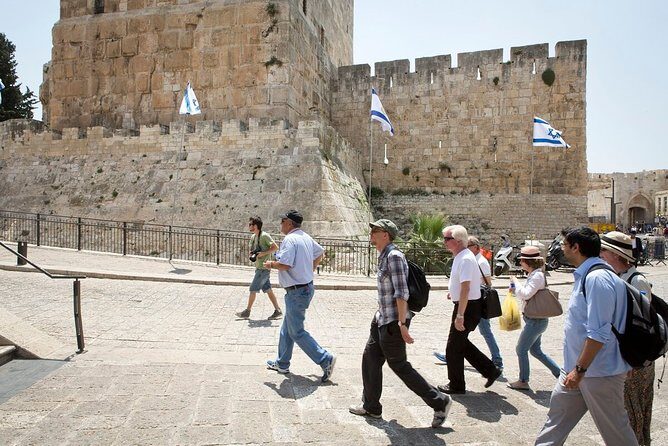
Once you enter the Old City, the atmosphere changes fast. You’re walking through tight lanes where different faith communities live side by side, and the day’s route threads through several quarters.
In the Old City, you’ll spend about two hours walking the streets as your guide points out major landmarks. The route then includes time in the Jewish Quarter, including a walk in the Byzantine Cardo. That’s a nice touch because it’s not only modern signage and modern crowds. It gives you a sense of how long these streets have been used.
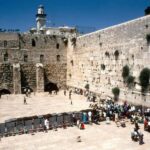
Next comes the Western Wall, where you’ll have around 20 minutes. This is one of those places where timing matters. You want to be there long enough to notice the details and feel the scale, but you also need to keep momentum for the next stops.
If you like structured touring, this section delivers. If you prefer wandering without a schedule, treat the guided stops like anchor points and leave room in your mind to linger visually when you can.
The Via Dolorosa and Church of the Holy Sepulchre
This part of the day is both intense and iconic. You’ll move into the Christian Quarter first, then walk the Way of the Cross (Via Dolorosa), including time at stations along the route. You’ll have about 40 minutes here to explore the stations as you follow the historic pilgrimage storyline.
After that, the route continues to the Church of the Holy Sepulchre, with about 30 minutes inside. This site is one of the most important in Christian tradition, and it’s also famous for being physically busy—crowded areas, layered spaces, and lots of people trying to process what they came for.
Practical advice: stay mentally flexible here. Even with a plan, inside the Holy Sepulchre you’ll likely be sharing space with other visitors. Your best move is to focus on what you can actually see and what you can respect, rather than trying to capture everything at once.

Christian and Muslim quarters: the bazaar feel of a living city

After the Via Dolorosa and Holy Sepulchre, you still have one more Old City window to experience Jerusalem as a functioning place, not only a historical set.
You’ll spend time in the Muslim Quarter (around 30 minutes) and walk through the bazaar. This is where you get more of the daily rhythm: shopping, street life, and the visual mix of architecture and commerce that makes Jerusalem feel real today.
That balance matters. Many big tours focus heavily on monuments. This one includes enough time in multiple quarters that you come away with a fuller sense of how different communities share the same walled city.
Dead Sea time at the lowest point on Earth
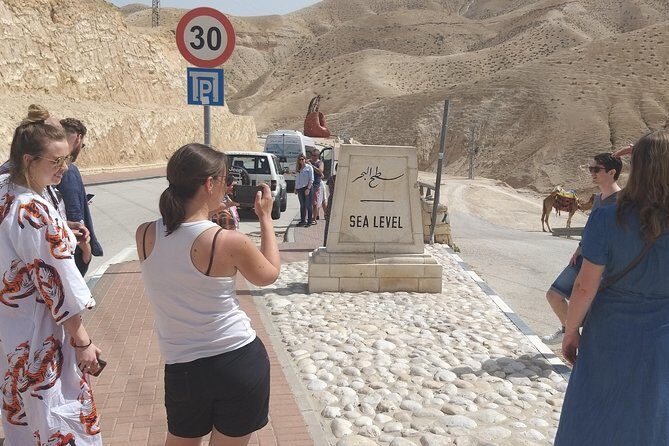
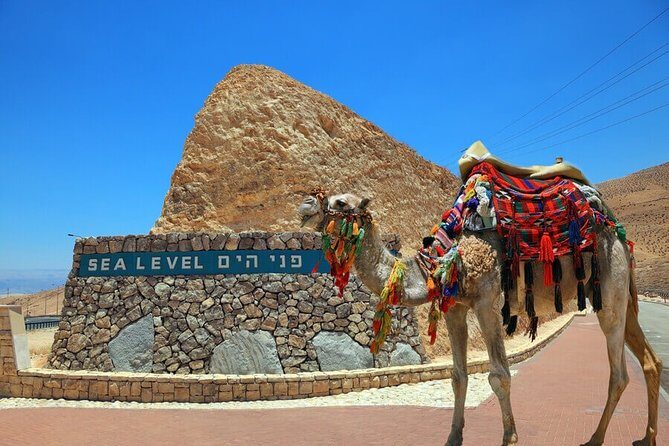
Then the pace changes. You leave Jerusalem and drive toward the Dead Sea, the salt lake located about 400 meters (1,312 feet) below sea level. The scenery shifts into something quieter and harsher, and that contrast hits right after the Old City walking.
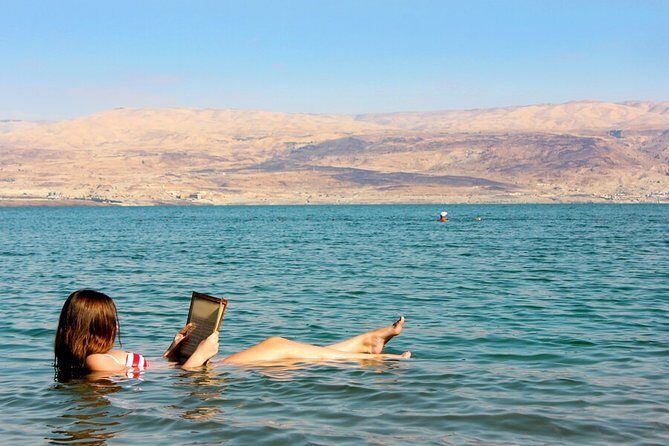
You’ll have about two hours at the Dead Sea for bathing and lounging. This is the chunk you planned for. You’ll have time to float in the salt-rich waters, sunbathe, and—if you want—try a mud bath described as coming from the world’s richest source of natural salts.
A quick reality check: the Dead Sea is not like a pool. It’s salty, and it can be slippery and intense if you’re not ready. But that’s also why it’s unforgettable. Floating there feels weird in the best way—like your body is negotiating with gravity.
What to pack and how not to get turned away
This is one of those tours where your clothing plan affects your day more than you’d think.
You need a moderate dress code to enter places of worship and selected museums. Skip shorts. Make sure your knees and shoulders are covered for both men and women. If you show up underdressed, you risk refused entry, which is the worst way to lose time in a packed schedule.
For the Dead Sea, bring:
- Bathing suit
- Towel
- Hat
- Sun protection
For the walking parts, bring:
- Comfortable walking shoes (Old City streets are not shoe-neutral)
One more practical tip: there are lockers in the changing rooms for the Dead Sea area, and towels can be bought or rented if you forget yours.
Value for $133: what is included and what you must budget
At $133 per person, the value comes from what’s bundled. You’re paying for:
- Hotel pickup and drop-off
- A professional guide
- An air-conditioned vehicle
- Entrance fees
- Dead Sea admission (including the about-two-hours Dead Sea experience)
What’s not included is food and drinks, so you’ll want to budget for meals on your own. The good news is that you can plan this around your energy. You’ll already be spending most of the day in structured blocks, so choosing where to eat can stay simple.
Also note: this tour has a maximum of 40 travelers and is typically booked around 56 days in advance on average. If your dates are fixed, booking early helps you lock in the day you want.
Planning tips for a smooth day (pickup points, timing, and regrouping)
A day this full has a few friction points, so your job is to reduce avoidable surprises.
First, expect a strong “follow the guide” vibe. You’ll move through multiple quarters and sites, and regrouping is part of the schedule. Keep your phone charged, and when your guide explains the meeting spot, treat it as important information—not optional trivia.
Second, understand that the Dead Sea is the payoff, but time there is limited to around two hours. If anything runs behind, it can compress the Dead Sea portion. If you have dinner plans later that evening, I’d keep them flexible.
Finally, pickup and drop-off are included, but your exact pickup point may be practical rather than perfect. If you need a specific door-to-door location, confirm what’s possible before you go.
Should you book this tour?
Book it if you want a guided hit list: Jerusalem’s major Old City sites plus the Dead Sea float and mud experience, all from Tel Aviv, all in one day. It’s ideal for first-timers, people short on time, and anyone who wants structure without having to manage day-of navigation.
Skip it (or choose a gentler option) if you dislike long days, tight schedules, or walking on uneven, crowded streets. Also think twice if your group needs extra time for rest breaks; the route is packed, and the morning-to-dead-sea shift leaves little downtime.
If you’re willing to dress appropriately, wear good shoes, and follow the guide’s meet-up rhythm, this is one of the most efficient ways to do Jerusalem and the Dead Sea in the time most people actually have.
FAQ
What time does the tour start?
The tour starts at 7:15 am.
How long is the tour?
The duration is about 10 hours.
Is hotel pickup and drop-off included?
Yes. Hotel pickup and drop-off are included.
What transport is used during the day?
You travel by air-conditioned coach.
Which parts of Jerusalem are included?
You’ll visit multiple Old City areas, including the Western Wall, the Via Dolorosa, the Church of the Holy Sepulchre, and stops around the Jewish, Christian, and Muslim Quarters.
How much time do we get at the Dead Sea?
You get approximately two hours at the Dead Sea.
Is the Dead Sea experience included in the price?
Yes. Dead Sea time is included, and floating/bathing is part of that visit.
Are entrance fees included?
Yes. Entrance fees are included.
Are food and drinks included?
No. Food and drinks are not included.
Is there a cancellation option?
Yes. You can cancel for free up to 24 hours in advance for a full refund.