REVIEW · SDE BOKER
Ramon Crater Jeep Tour from Mitzpe Ramon
Book on Viator →Operated by Eyal Korin-Ramon crater tours · Bookable on Viator
This crater is best from the inside. On this Ramon Crater Jeep Tour you ride rough 4×4 trails to rare viewpoints, then walk in acacia shade while your guide explains the Negev’s mactesh geology and desert life. The big win for me is the panoramic view from Mt. Gvanim plus the feeling that you’re seeing the crater’s colors and scale up close, not just from a road. One thing to plan for: food and drinks aren’t included, so you’ll want to manage your own water and snacks.
What makes it especially appealing is that it’s run as a private outing with pickup and drop-off around Mitzpe Ramon, and you get a Ministry of Tourism–certified guide. You’ll spend about two hours on the trail mix—mountain roads, riverbeds, and vegetation edges—so the day feels active but not exhausting. Main consideration: it’s weather-dependent, so if conditions are poor, you may be offered another date or a refund.
In This Review
- Key highlights before you go
- Ramon Crater by Jeep: Why a mactesh ride matters
- The 2-hour plan: pickup, private group, and how the time feels
- Stop 1: Ramon Crater and the ride to Mt. Gvanim
- Wadi Zochalim and Wadi Gvanim: desert life you can actually spot
- Driving across the crater: pipeline road and crater geometry
- Beerot campground refreshment and rehabilitated quarries
- The guide experience: Eyal Korin and Noram’s on-the-ground style
- Price and value: $295 per group (up to 6) for two hours
- What to bring for a Negev crater drive
- Who this tour fits best
- Should you book the Ramon Crater Jeep Tour from Mitzpe Ramon?
- FAQ
- How long is the Ramon Crater Jeep Tour?
- Is pickup and drop-off included in the price?
- Is this a private tour?
- What’s included in the tour price?
- Are food and drinks included?
- What’s the minimum age for the tour?
- What happens if the weather is bad?
Key highlights before you go
- Mt. Gvanim 360° observation point inside the crater for serious “wow” factor
- Wadi Zochalim and Wadi Gvanim for reptiles-valley vibes and shaded desert breaks
- Acacia shade stop where your guide turns the desert plants and wildlife into something you can actually spot
- Pipeline road crossing for a different angle on the crater’s shape and colors
- Beerot campground refreshment stop and a look at rehabilitated quarries
- Private group tour (up to 6), with pickup/drop-off from Mitzpe Ramon
Ramon Crater by Jeep: Why a mactesh ride matters
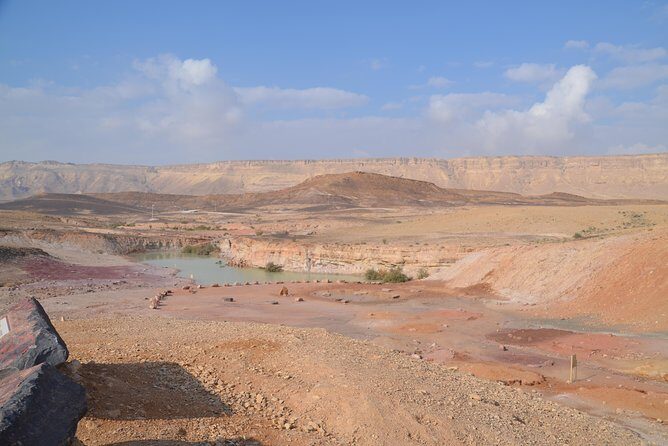
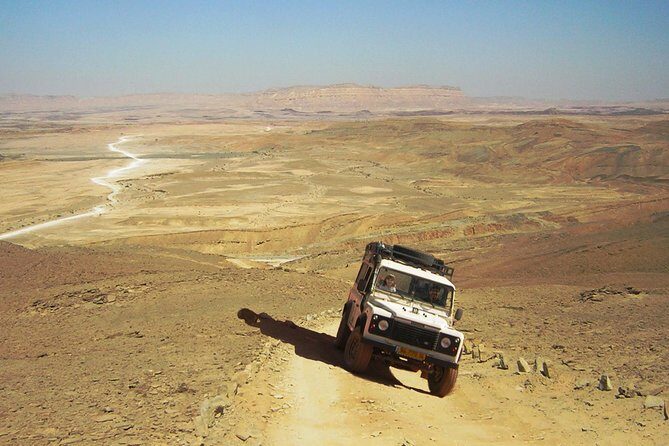
If you’re picturing the Ramon Crater as a single viewpoint, this tour changes the equation. Ramon is a mactesh—a crater-like landform that’s particularly associated with Israel’s Negev Desert. The key idea is simple: you don’t just look at it from above. You drive down into it, then keep moving across rugged trails so the geometry, colors, and layers make sense in motion.
That’s where the experience becomes more than sightseeing. As you descend, climb, and cross different sections of the crater, the terrain keeps giving you new “readings” of the same place. From Mt. Gvanim you get that 360° sense of dimension, but later the crater still surprises you from other angles while you’re driving on crater trails and the pipeline road. It’s one of the few ways to understand Ramon as a full system, not a postcard.
You can also read our reviews of more tours and experiences in Sde Boker.
The 2-hour plan: pickup, private group, and how the time feels
This is a tight, focused outing—about two hours from start to finish. It’s booked as a private tour for your group only (up to 6 people), which usually means you can ask questions, pause for photos, and keep the pace comfortable instead of getting swept along by a crowd.
Pickup and drop-off are included from hotels and locations in Mitzpe Ramon, so you don’t need to fuss with taxis or parking. The tour starts at 4x4Desert – adventure activities in Mitzpe Ramon (Ma’ale Ben Tur St 1) if you’re meeting there instead of taking pickup, and it ends back at the meeting point.
Two practical timing tips:
- Plan for good weather. The tour requires it, and changes can happen if conditions are poor.
- Since it’s only two hours, treat it like the main event. Don’t schedule another “must-do” immediately before or after unless you’ve built in buffer time.
Stop 1: Ramon Crater and the ride to Mt. Gvanim
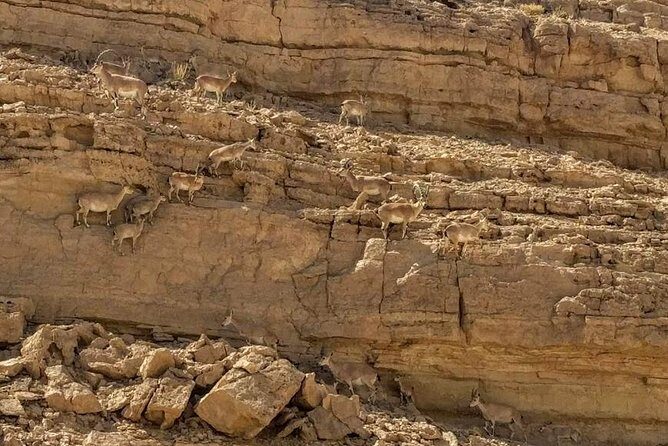
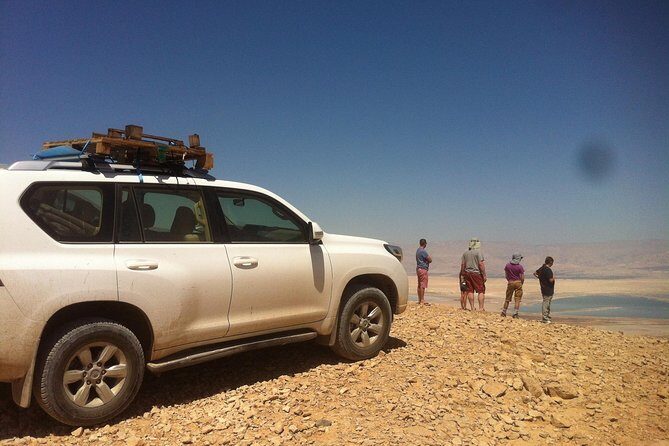
The day’s anchor moment is the crater itself. You’ll start by heading down the road toward the depths of Ramon, then leave the paved route and climb onto a 4×4 trail to the standout observation point at Mt. Gvanim.
This part is where you get the crater’s scale. At Mt. Gvanim, your view is described as panoramic and 360 degrees—meaning you can see the crater’s breadth and the way its interior contours stretch out around you. Even if you’re not a geology nerd, this is the kind of viewpoint that helps your brain organize what you’re looking at: the shapes, the color bands, and the terrain’s overall structure.
What I’d watch for here:
- Photo angles from slightly different spots. The crater’s colors shift with perspective, and a small move changes what you notice.
- Your timing inside the viewpoint area. Don’t rush. Take a minute to orient yourself before you start photographing everything.
One possible drawback: observation points can be exposed, and desert air is unforgiving. If you’re prone to sun or wind discomfort, you’ll want to bring basic protection even though the tour includes shaded breaks later.
Wadi Zochalim and Wadi Gvanim: desert life you can actually spot
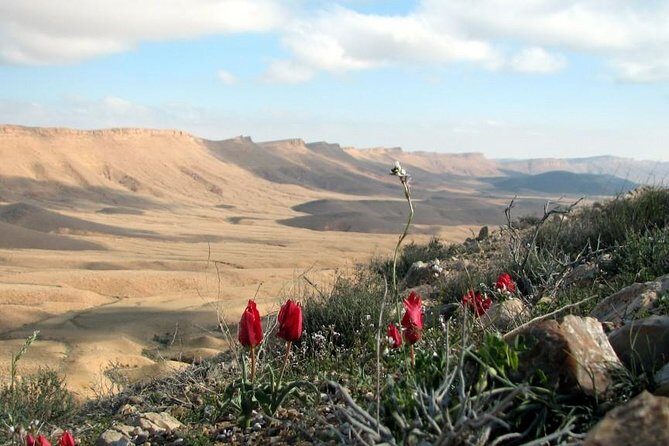
After the main crater overlook, the tour moves into the wadi sections—ravine-like areas where desert life tends to concentrate. You’ll continue driving on 4×4 trails to Wadi Zochalim, also called reptiles valley, then cross over to Wadi Gvanim.
This is a smart change of pace. You go from wide-open crater views into more grounded, “walk-and-look” terrain. Your itinerary includes a stop under acacia trees, which is one of the best reasons to come in person: shade changes how you experience the desert. It makes it possible to slow down, watch, and listen.
From a practical standpoint, this portion is where the guide earns their certification. The whole point isn’t to say the desert is amazing—it’s to help you notice the plants and the kinds of wildlife you might otherwise miss as you drive past. You’ll pass through areas with vegetation, and your guide will help you make sense of what you’re seeing as you go.
What to do during the acacia break:
- Look for movement first, not just “prettiness.” Wildlife spotting in desert areas often comes from catching the tiniest motion.
- Let your guide point out the plants and mineral-stone details you can touch or examine.
If you’re traveling with kids, this is usually the part that feels most like an adventure rather than a viewpoint stop—because it involves watching, learning, and using your senses.
Driving across the crater: pipeline road and crater geometry
One of the coolest ideas in this tour is that it doesn’t treat the crater as a single destination. After the wadi area, the route includes driving across the crater via the pipeline road.
Even without a science lecture, this drive helps you understand the place from a different angle. When you’re moving, you’re not stuck staring at one direction. You see how the crater’s interior sections connect, and how the terrain changes texture and color as you cross it. That “in motion” perspective is what makes the earlier Mt. Gvanim viewpoint feel more complete instead of just impressive.
If you get motion sickness easily, take a steady position in the vehicle and pay attention to where the driver is headed. The itinerary is built for rough trail driving, so it’s not a smooth highway-style ride.

Beerot campground refreshment and rehabilitated quarries
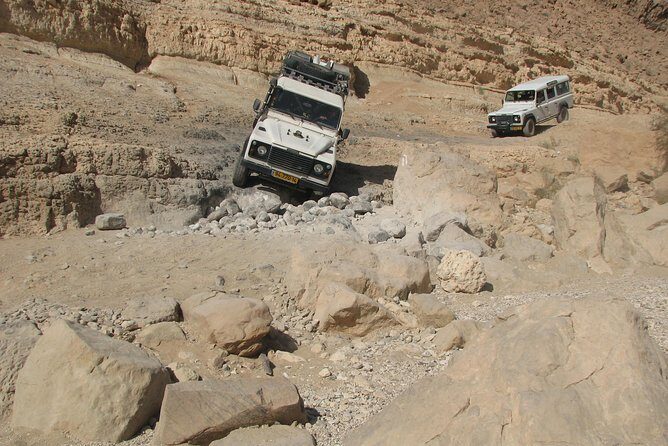
Next comes Beerot campground, listed as a refreshment stop. Even if you’re not eating a full meal, this pause matters. Two hours in the desert on a 4×4 route can be surprisingly active, and having a break helps you reset before the final stretch.
After that, you’ll visit one of the rehabilitated quarries. This is a thoughtful add-on because it shows another side of the region: how mining impacts land, and how the area is being brought back into a safer, more managed form. It’s not just “pretty rocks”—it’s land use and recovery, seen in a way you can compare to what you’ve already experienced in the crater and wadis.
What I like about including rehabilitated quarries is that it keeps the tour balanced. You leave with wonder and with context, and you don’t just get a one-note desert experience.
The guide experience: Eyal Korin and Noram’s on-the-ground style
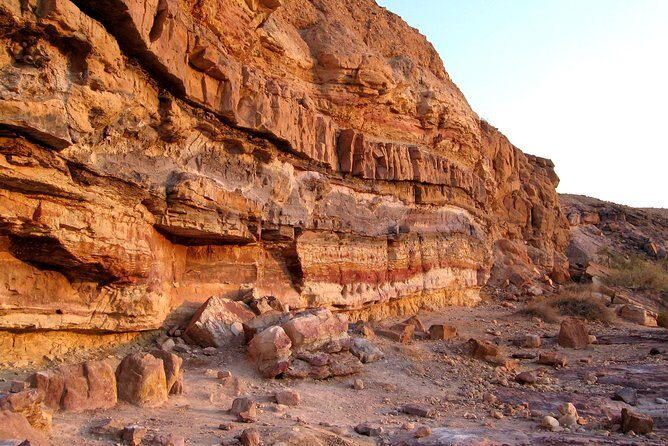
The tour is run with a professional guide certified by the Israeli Ministry of Tourism. In practice, that usually means you get more than directions and basic descriptions. You’ll learn how to read what you’re seeing—from the crater formations to the desert plants and the terrain clues along the drive.
The guiding team includes Eyal Korin-Ramon crater tours, and other guides such as Noram have led tours as well. What’s consistently valued is a combination of smooth driving and a guide who can keep things informative without turning it into a lecture. One of the strongest signals from the guide feedback is that Eyal communicates clearly early in the process and makes the whole setup feel easy, even if you’re not a seasoned desert traveler. Noram is described as especially effective on the drive while sharing useful information along the way.
How to get the most from your guide:
- Ask one question you genuinely care about, like what makes this crater different or what to look for in the wadi.
- Let the guide set the pace for stops. The timing is part of the value.
Price and value: $295 per group (up to 6) for two hours
At $295 per group (up to 6), this tour is priced for groups, not per person in the way some individual excursions are. That changes the math quickly. If you’re traveling as a small family or with a few friends, the cost can feel reasonable compared to paying separate fees for transport, guides, and multi-stop logistics.
Also, the “value” isn’t only about the vehicle. You’re paying for:
- A certified guide (Ministry of Tourism)
- Pickup/drop-off within Mitzpe Ramon
- Private access with enough flexibility for the stops to matter
- A route that includes several distinct terrain types—crater viewpoint, wadi vegetation/wildlife focus, a crater crossing, campground break, and rehabilitated quarry
Food and drinks not being included is the main budget note. But that’s also why the tour stays short and focused—you’re spending your time on the trail and your money on the guiding and driving, not on a long meal schedule.
If you’re solo or a couple, it can still be a great experience, but the price may feel steeper than larger-group bookings. If you can, look for friends or family in the same area to share the group cost.
What to bring for a Negev crater drive
The itinerary doesn’t list a provided meal, and food and drinks aren’t included. So I’d plan like this:
- Bring water and any snacks you like for the refreshment stop window
- Wear closed-toe shoes you’re comfortable getting dusty in
- Bring sun protection since desert stops include open viewpoints
- If you’re sensitive to wind or temperature swings, add a light layer
Because the tour runs only when weather cooperates, check conditions before you leave your hotel. When it’s operating, you’ll spend time outdoors at viewpoints and in wadi areas, so you’ll want to be comfortable the whole time.
Who this tour fits best
This is ideal if you want a crater experience that feels hands-on: part viewpoint, part off-road ride, part learning break. It’s especially good for:
- Families with kids age 2+ (children must be with an adult)
- Small groups who want a private setting and a guide-led pace
- Travelers who prefer action and scenery over long stops
- Anyone staying in Mitzpe Ramon who wants a memorable Negev outing without renting a vehicle
If you’re looking for a relaxed, mostly flat walk and low vehicle movement, this may feel too adventurous. The tour is built around rugged 4×4 trails and crater driving.
Should you book the Ramon Crater Jeep Tour from Mitzpe Ramon?
I think you should book this tour if Ramon Crater is on your “must see” list and you want it from the inside—down trails, across crater sections, and into the wadi areas where desert life becomes easier to spot. The private group format, pickup convenience, and the Mt. Gvanim 360° viewpoint make it a strong value for families and small groups.
You might pause if you’re traveling with very limited flexibility around weather, or if you prefer tours that include meals and a full onboard catering setup. Since food and drinks aren’t included, bring your own basics and you’ll be set.
In the end, this is the kind of trip where the driving route is part of the story, not just the transport.
FAQ
How long is the Ramon Crater Jeep Tour?
The tour lasts about 2 hours.
Is pickup and drop-off included in the price?
Yes. Pickup and drop-off are included from hotels and locations in Mitzpe Ramon.
Is this a private tour?
Yes. It’s private, and only your group participates (up to 6 people).
What’s included in the tour price?
Included are pickup/drop-off and a professional guide certified by the Israeli Ministry of Tourism.
Are food and drinks included?
No. Food and drinks are not included, though there is a refreshment stop at Beerot campground.
What’s the minimum age for the tour?
The minimum age is 2 years, and children must be accompanied by an adult.
What happens if the weather is bad?
This experience requires good weather. If it’s canceled due to poor weather, you’ll be offered a different date or a full refund.