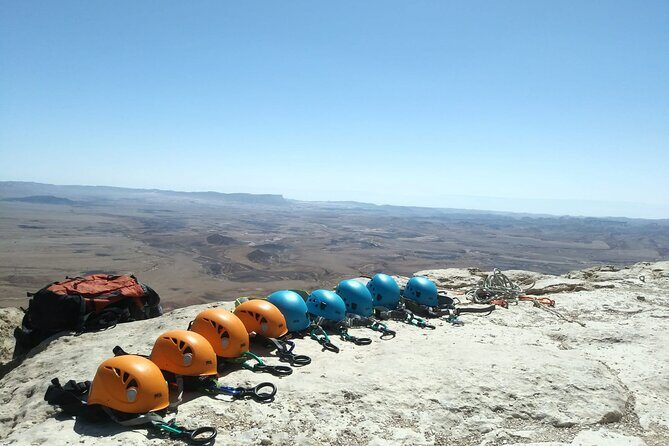
Ramon Crater tells time in rock. This private Ramon Crater tour from Mitzpe Ramon is a smart way to see highlights of the world’s largest makhtesh without needing a geology degree. You’ll drive to the key spots, including off-road viewpoints, to take in exposed rock layers and the dry riverbeds that make this crater so easy to read.
Two things I really like: the off-road access gives you deeper crater angles than the quick drive-by experience, and the guide’s storytelling makes the million-year geology feel clear, not clinical. In one example, the guide Boaz was praised for being especially enthusiastic and able to bring the crater to life with energy.
One consideration: it’s about 2 hours, so you’re going to leave with a strong sense of the place, not a long hike or a full-on field study. Also, since you’ll go off road, expect some uneven travel—worth keeping in mind if you prefer smooth surfaces.
In This Review
- Key highlights you’ll care about
- Why Ramon Crater is a makhtesh (and why that matters)
- The private format: you get a tour, not a bus ride
- Getting from Mitzpe Ramon to the crater: it’s part of the story
- Stop 1 at Ramon Crater: viewpoints, dry channels, and exposed layers
- What you might miss with only one main stop
- Geology for non-geeks: how the million-year story stays understandable
- Desert fauna and flora clues: nature, but in a dry key
- Timing the experience: 2 hours that move at a good pace
- Price and value: what $150 per person really buys
- Who should book this Ramon Crater private tour?
- Should you book Ramon Crater with Desert-Prime?
- FAQ
- Where does the Ramon Crater tour start and end?
- How long is the Ramon Crater tour?
- How much does the Ramon Crater private tour cost?
- Is hotel pickup included?
- Is the admission ticket included for Ramon Crater?
- What days and hours does the tour run?
- Is it a private tour?
Key highlights you’ll care about
- World’s largest makhtesh, seen from multiple crater angles
- Off-road routes for more intimate views than standard stops
- Colorful dry riverbeds and panoramic vista points
- Private tour from Mitzpe Ramon with hotel pickup and drop-off
- Admission ticket for the main stop is free
- Guide energy matters; Boaz was specifically noted for it
Why Ramon Crater is a makhtesh (and why that matters)
“Makhtesh” isn’t just a fancy name. It describes a particular crater shape found in Israel, with steep walls and a bowl-like interior. Ramon Crater, also known as Mitzpe Ramon’s Ramon Crater, is recognized as the world’s largest makhtesh. That title matters because it explains why the views feel so big even before anyone starts talking geology.
What you’re really looking at on this tour is how the crater exposes layers of rock like a natural cross-section. The exposed strata help you understand not just what happened, but the order things happened in. Even if you normally skip science talks, the crater’s geometry does half the job for you: it’s built to make you look closer.
This tour is designed for that moment—when “huh, that’s different” turns into “okay, I get it.” Your guide takes you to geologic hotspots and then connects the visuals to the crater’s creation.
You can also read our reviews of more tours and experiences in Sde Boker.
The private format: you get a tour, not a bus ride
This is a private tour, meaning your group is the only group doing the drive and stops. That changes the vibe immediately. You can ask questions as you go. You’re not stuck waiting for strangers to catch up, and you’re not doing a one-size-fits-all stop schedule.
You also get hotel pickup and drop-off included, so your day starts with less friction. Starting and ending back at Mitzpe Ramon keeps things simple and keeps you from losing time on extra transfers.
The private pacing is especially useful in places like Ramon Crater, where one viewpoint can teach you more than several distant ones. With only your group, the guide can slow down when something is worth it—and speed up when you’ve already seen what you need.
Getting from Mitzpe Ramon to the crater: it’s part of the story
You begin at Mitzpe Ramon, Israel, and you’ll spend the time moving between the crater’s key areas. That drive isn’t just transport. It’s where you learn the history of the crater and why you’re visiting certain hotspots in a specific order.
The tour’s structure is built around cause and effect: you go to the spots that help explain the crater’s creation, and you move toward the places that show the clearest rock layers and natural features. In plain terms, the car ride acts like an introduction chapter before the main scenery.
It helps you because the crater is visually dramatic but can still feel confusing if you only see it from one angle. The approach here nudges you toward a logical way of looking—so by the time you hit the stop itself, you’re not staring at random rocks. You’re reading them.
Stop 1 at Ramon Crater: viewpoints, dry channels, and exposed layers
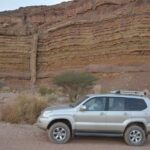
The heart of the experience is Stop 1: Ramon Crater. This is where you get that million-year story feel, because the exposed geological layers show the passage of time in rock form.
You’ll also get a focus on desert features that aren’t just scenery. The tour highlights colorful dry riverbeds—channels cut by water long ago, now quiet and dry. Even without being a geology buff, those dry beds are easy to understand because they point out where water once flowed and where the terrain shaped itself.
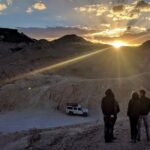
Then there are the panoramic vista points. Those viewpoints matter because they give your brain a “big picture” reference. Up close, you can see details in the rocks. From a distance, you can understand how the crater walls and interior relate. That combination—detail plus overview—is why the tour works.
You’ll also go off road as part of the crater exploration. That typically means you’re getting closer to meaningful angles, not just looking from a standard roadside pull-off. In a place where perspective is everything, off-road access is a real upgrade.
What you might miss with only one main stop
Because the tour is about 2 hours and revolves around that main stop, it’s not a long multi-hike day. If you’re hoping to spend hours walking through the crater, this probably won’t match that expectation. Think of it as an efficient, well-guided highlight circuit rather than a day-long expedition.


Geology for non-geeks: how the million-year story stays understandable
One of the most practical parts of this tour is that you don’t need to be a geology buff. The goal isn’t a lecture packed with technical jargon. Instead, the guide’s job is to translate what you’re seeing into something you can actually picture.
The key is the exposed rock layers. When you stand where layers are visible, it becomes easier to understand sequence. Older layers and newer layers sit next to each other, like pages in a book—just written in stone.
Then the guide connects that with the crater’s history as you drive to geologic hotspots. That “move-and-explain” style matters because it keeps you oriented. You’re not left alone in the crater trying to guess what you’re looking at.
The net effect: by the time you’ve visited the crater points, you’re not just impressed. You can explain it to a friend in simple terms—what the crater is, why the layers matter, and why the dry riverbeds are part of the story.
Desert fauna and flora clues: nature, but in a dry key
Ramon Crater isn’t only rocks. The description also points to desert fauna and flora. That matters because desert life is often small, subtle, and adapted to harsh conditions. When you know what to look for, the crater feels more alive.
You’ll have moments to notice those clues as part of the stop. Even if you can’t name species on the spot, you’ll likely come away with a better sense of how this environment works. Desert ecosystems are shaped by dryness, temperature swings, and limited water—so features that look lifeless often include signs of survival strategies.
This is a good fit if you like travel that mixes scenery with meaning. The scenery is the draw, but the nature angle keeps it from becoming only a visual geology show.
Timing the experience: 2 hours that move at a good pace
This tour runs for about 2 hours. That length is long enough to feel you’ve seen multiple crater angles and learned the basics. It’s also short enough that you can still plan the rest of your day in southern Israel without feeling trapped.
Because there’s a main stop at Ramon Crater and time for driving between hotspots, the schedule likely follows a clear rhythm: move, look, listen, then move again. That’s efficient. It also means you’ll want to be ready to pay attention when you stop—those moments are the value.
If you’re the type who likes slow sightseeing and lingering for photos, you’ll still probably enjoy it, but you may wish you had extra time. Off-road touring and viewpoint stops add value quickly, and the guide keeps things moving so you don’t end up with a long, tiring sit-around.
Price and value: what $150 per person really buys
The price is $150.00 per person for a private tour, with hotel pickup and drop-off included. On the surface, that’s not cheap. But it’s not just paying for a map and a conversation. You’re paying for a private driver-guide, the ability to go off road for more meaningful angles, and the time to take you through the crater highlights in about two hours.
Also, admission ticket is listed as free for the main stop. That helps the price feel more reasonable because you’re not adding another big line item once you arrive.
There are also group discounts, which can make a big difference if you’re traveling with friends or family. If you can team up with others, the $150 per person can feel much more like a fair share of a private vehicle rather than a premium solo activity.
One more value note: mobile ticket and private format reduce friction. You show up, get in the vehicle, and focus on the crater.
Who should book this Ramon Crater private tour?
This tour fits best if you:
- Want crater highlights without turning your day into a full hiking project
- Enjoy scenery with an explanation you can actually follow
- Prefer private pacing and the ability to ask questions
- Are visiting the Mitzpe Ramon area and want one standout nature/rocks experience
It’s also a solid choice if you’re not a geology person. The crater’s exposed layers and the guide’s hotspot route are set up to make the visuals legible.
If you’re someone who only likes long, detailed walking excursions, you might find 2 hours too brief. But if you want a strong, well-structured sampler of the world’s largest makhtesh, this is a practical way to do it.
Should you book Ramon Crater with Desert-Prime?
I’d book it if you want an efficient private crater experience that mixes panoramic views, dry riverbed features, and an easy-to-follow geology story. The combination of off-road access plus a guide who can explain what you’re seeing (Boaz was specifically praised for enthusiasm) makes this more than a drive-by.
I’d think twice if you’re chasing lots of hiking time or want a longer, slower exploration. This is designed to hit the key moments well, not to turn the day into an all-day trek.
If Ramon Crater is high on your list, this tour is a good way to get there with less guesswork and more meaning.
FAQ
Where does the Ramon Crater tour start and end?
The tour starts in Mitzpe Ramon, Israel and ends back at the meeting point.
How long is the Ramon Crater tour?
It’s listed as about 2 hours.
How much does the Ramon Crater private tour cost?
The price is $150.00 per person.
Is hotel pickup included?
Pickup is offered, and the tour includes hotel pickup and drop-off.
Is the admission ticket included for Ramon Crater?
Admission Ticket is listed as free for the main stop.
What days and hours does the tour run?
The hours listed are Monday through Sunday from 9:00 AM to 1:00 PM, for the date range 03/15/2025 – 03/14/2026.
Is it a private tour?
Yes. It’s private, so only your group participates.