REVIEW · HAIFA
Druzeland – Cultural Private Tour on Mt. Carmel
Book on Viator →Operated by Israel With Fun - Daniel Sigalov · Bookable on Viator
Mt. Carmel tells two stories at once. This private tour in Haifa’s hillside villages uses local Druze guides to explain religion, history, and modern life—plus the connections between the Druze and Jewish people across time. I love how personal the day feels because the guide lives in the villages and speaks fluent English, so the conversations don’t stay textbook. I also like the food rhythm: traditional Druze tea (Marli) early, then knafeh with multiple flavors later. One thing to consider: it’s a full 5 to 8 hour outing and the schedule depends on weather, so plan your day with a little flexibility.
What makes Druzeland stand out isn’t only what you see—it’s how you’re guided through it. You’ll stop in places where people still work and live (old village centers, an olive press, folk medicine), and you’ll get explanations tied to real routines and real beliefs, including the Druze approach to life, death, and reincarnation. The day can also be tailored to your wishes, which is handy if you want more time on culture versus food.
If you want a checkmark-style, speed-through tour, this isn’t that. You’ll be moving between villages and heritage stops, and the day works best if you’re ready for thoughtful, sometimes emotional topics like religion, identity, and community history.
In This Review
- Key things to know before you go
- Druzeland on Mt. Carmel: what this day is really about
- Meeting your guide: Daniel and the value of local credibility
- Stop 1: Isfiya and the art of learning by walking
- Druze Heritage Center: women’s status through real stories
- Stop 3: Daliyat al-Karmel—big village, many mini-experiences
- Optional Stop: Sam Halaby house of colors (when you want art)
- Food stop: knafeh at Knaffeh El Amin (and why it matters)
- The tea and coffee rhythm: small comfort, strong cultural tone
- Private transportation and a practical timeline that respects your day
- Price and value: what you’re paying for (and how to judge it)
- Who this tour is best for
- Practical tips so your day goes smoothly
- Should you book Druzeland on Mt. Carmel?
- FAQ
- How many people is this tour for?
- Where does the tour take place?
- How long is the tour?
- Does the price cover admissions?
- Is pickup available?
- What food and drinks are included?
- Do I get WiFi during the tour?
- Are there any weather requirements?
- Can I cancel for a refund?
- Is it suitable for most travelers?
- Are service animals allowed?
Key things to know before you go
- Private, village-based guides: Daniel (Israel With Fun) or handpicked partners live in the communities you visit.
- Built-in flexibility: You can tailor the tour to match what you care about most.
- Food isn’t an afterthought: Marli tea and a knafeh stop with multiple flavors are part of the core route.
- Heritage stops are practical: You’ll see daily-life sites like an olive press and a herbs/folk medicine center.
- A day-long itinerary with weather timing: Runs about 5 to 8 hours and works best when conditions are good.
- On-time guarantee for cruise days: There’s a back-to-ship on-time promise.
Druzeland on Mt. Carmel: what this day is really about
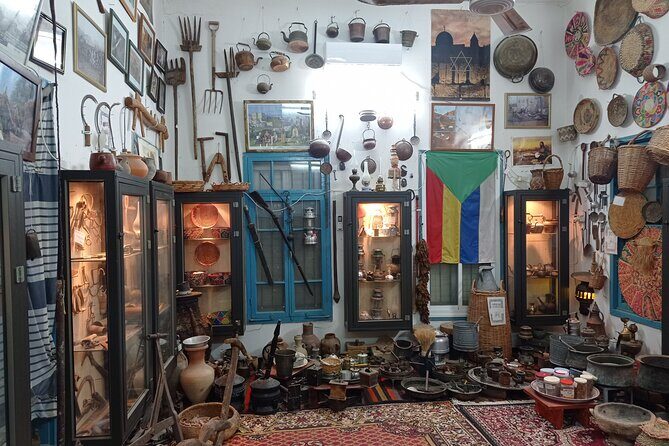
This tour is about the Druze story on the slopes of Mt. Carmel, but it doesn’t treat Druze life as a side topic. You’re led through villages, heritage centers, and everyday places where culture shows up in the details: how people talk about faith, how women’s roles get described, how death and reincarnation fit into the worldview, and how community identity connects to wider regional history.
You also get more than religion talk. The tour description explicitly signals history, geopolitics, cuisine, and even geology. In practice, that means your guide is likely to connect the hillside landscape and ancient layers to present-day life—without turning it into a lecture that ignores the human side.
One of my favorite parts of experiences like this is when the guide’s location matters. Here, the guides you meet are from the villages you’re visiting. Daniel and his handpicked partners aren’t bouncing in and out; they know the rhythms. That usually changes the tone fast: you ask a question, and you don’t just get a polished answer—you get a lived context.
You can also read our reviews of more private tours in Haifa
Meeting your guide: Daniel and the value of local credibility
Daniel is the named guide behind Israel With Fun (Daniel Sigalov). The tour also uses handpicked partners who are professional guides and also live in those villages. That detail matters, because Druze heritage is not something that can be explained well from a distance.
Expect a guide who can move between big-picture themes—connections to Israel and Jewish people in ancient and modern times—and the small realities that make a culture understandable. In the tour flow, that shows up in how you’re taken to specific places (like Isfiya’s olive press and cemetery) and how those stops are explained through local perspective.
The reviews strongly highlight Daniel’s storytelling style and humor. Even when the topic is serious, he’s described as keeping it engaging—so you don’t feel stuck in either a dry history lesson or a purely spiritual talk.
Stop 1: Isfiya and the art of learning by walking
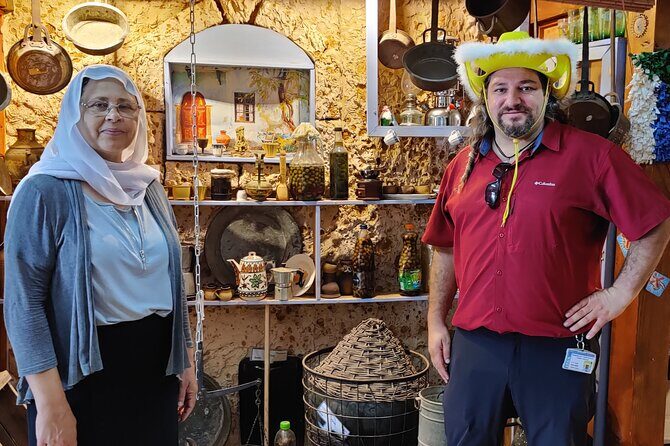
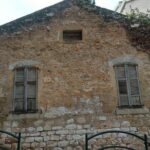
Isfiya is introduced as a cultural mosaic, and the route supports that idea. You spend about 2 hours there, moving through the old village center and into sites that explain Druze life in a grounded way.
Here’s what you can expect:
- Old village center: Your guide uses the layout and spaces to explain culture and everyday life.
- Olive press visit: Not just an object—an entry point into how communities shape work and food traditions.
- Discovery site of two ancient treasures: This is where the tour points to the unique connection between the Druze and Israel, framed with what was found and why it matters.
- Druze cemetery visit: You’ll hear about the Druze approach to life, death, and reincarnation.
That cemetery stop is one of the moments where the tour becomes more than sightseeing. If you’re the type who likes respectful, thoughtful explanations (and you don’t mind deeper conversations), this is a standout portion. If you prefer to keep the day lighter and less reflective, this may feel intense—but it’s also the kind of stop that clarifies why the religion is described as a lived worldview rather than an abstract set of beliefs.
Admission for Isfiya stops is marked as free, so you can treat this as one of the best-value segments of the day.
Druze Heritage Center: women’s status through real stories
After Isfiya, the itinerary shifts into a more structured heritage format at the Druze Heritage Center. You’ll have about 45 minutes here, with admission included.
The center’s focus is powerful and specific: it highlights two sisters who broke the glass ceiling, and it explains Druze life in the past through personal stories—especially around the unique status of women in Druze culture.
This stop works for a simple reason: it gives you a human narrative, not only facts. When a heritage site uses personal stories to address social roles, it helps you understand culture without turning it into stereotypes. You get a sense of how community rules shape daily life, and how identity can include both tradition and change.
If you care about women’s history, social structure, or just the “how people live” angle of a culture, you’ll likely find this time well worth it.
Stop 3: Daliyat al-Karmel—big village, many mini-experiences
Daliyat al-Karmel is described as the biggest Druze village in Israel and also one of the most beautiful. You’ll have about 1 hour 30 minutes there, with admission marked as free for the included visits.
This is where the tour gets hands-on. Instead of only looking, you’ll be guided through places that connect culture to practice:
- Herbs and folk medicine center: A direct link between local knowledge and health traditions.
- House of Oliphant: A named local stop that sounds like art/cultural storytelling tied to the home setting.
- Holy site of Nabi Ibrahim: A religious stop connected to the local faith landscape.
There are also “other surprises,” which is where tours like this can become fun. You’re not stuck in a rigid checklist. Your guide can shape the flow based on what’s most meaningful in the moment and what will fit your group’s pace.
In terms of drawback, this segment may be the hardest to compress if you tend to read everything slowly or you want extra time at one specific place. The tour is designed to cover several points, so you’ll move through multiple environments in one block. If you love variety, that’s a plus.

Optional Stop: Sam Halaby house of colors (when you want art)
If you add it, the Sam Halaby house of colors gives you a creative break from the heritage-and-faith focus. It’s optional and lasts about 45 minutes, with admission noted as free for this stop.
This is described as the super colorful house of an internationally known painter, turned into a museum of colors. If you like art that’s tied to personal history—where a home becomes a gallery—this is a great add-on.
If you’d rather prioritize food or religious heritage sites, skip it. The rest of the route already delivers plenty.
Food stop: knafeh at Knaffeh El Amin (and why it matters)
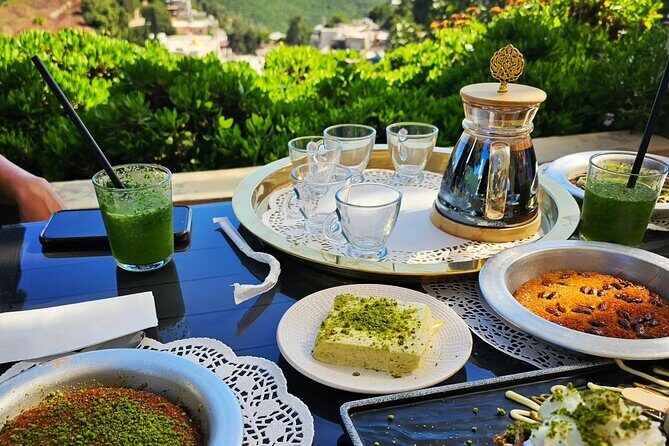
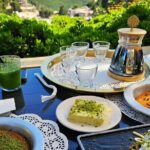
The tour includes a knafeh experience at Knaffeh El Amin for about 40 minutes, with admission included. This isn’t only about eating dessert.
The key details:
- You’ll hear about the ongoing debate among Israelis about the best knafeh.
- The knafeh here comes in the regular version plus five additional flavors.
- You’ll have a view that’s described as breathtaking.
Food works best on cultural tours when it’s treated as a doorway into daily life. Here, the knafeh stop gives you that chance. You taste, you compare flavors, and you finish the day with something that feels celebratory.
If you have dietary restrictions, knafeh is usually adjustable in practice, but the tour data doesn’t spell out allergy options. So it’s smart to message the operator ahead of time with what you can’t eat.
The tea and coffee rhythm: small comfort, strong cultural tone
One of the easiest-to-miss perks on a tour like this is the downtime that helps you absorb everything. You get coffee and/or tea, and the tour specifically calls out traditional Druze tea (Marli).
That matters because the day includes heavier topics (religion, death, reincarnation, community history). Taking a break for warm tea helps the stories land without fatigue. Plus, sharing tea is often a cultural act—not just a beverage—so it fits the day’s theme better than, say, a standard soft drink stop.
Private transportation and a practical timeline that respects your day
This is a private tour, meaning only your group participates. That’s a big advantage if you want questions answered without competing with others.
You also get:
- an air-conditioned vehicle
- bottled water
- WiFi on board
- pickup offered (for most travelers this helps a lot)
The duration is listed as about 5 to 8 hours, and travel time is included. In the real world, that makes a difference with Haifa-area routes where distances can take time and weather can affect how long stops feel.
There’s also a back-to-ship on-time guarantee, which matters if you’re doing this on a cruise day. Even if you’re not on a ship, it’s a sign the operator takes timing seriously.
Price and value: what you’re paying for (and how to judge it)
The price is $895 per group, up to 10 people. So the value depends on your group size.
- If you fill the group (10 people), it’s about $89.50 per person.
- If you’re a small party, the per-person cost rises quickly.
What you’re buying at this price is not just transport. You’re paying for a guided, private, village-to-village route with local guides who live in the communities, licensed touristic vehicles, and included admissions at key stops (Druze Heritage Center and the knafeh stop). You also get bottled water plus the tea/coffee service.
The tour can be tailor-made, which is where private tours earn their keep. If you’re the type who wants more time at Isfiya’s olive press and cemetery, or you’d rather focus more on the women’s stories at the heritage center, you’ll often get more out of that flexibility than a fixed group tour.
Lunch is listed as not included, and the description notes Druze hospitality as the lunch experience. That means it’s not a simple “lunch is included” situation on paper. I’d treat lunch as an add-on you’ll either pay for separately or confirm at booking.
Who this tour is best for
This fits best if you:
- want a culture-first day that includes faith, identity, and human stories
- enjoy guided conversation and questions
- like pairing history and politics with food and daily-life sites
- prefer a private format where the guide can adapt to your pace
It may be less ideal if you want only surface-level sightseeing or if you get uncomfortable with religious and identity topics.
Practical tips so your day goes smoothly
- Bring layers. Haifa-area weather can shift, and the tour requires good weather to run.
- Plan for a full day. 5 to 8 hours is enough time to feel like you’ve really visited, not just checked boxes.
- If you’re adding the house of colors, decide ahead of time based on your group’s energy. It’s a meaningful extra stop at 45 minutes.
- If food is a concern (allergies or preferences), ask before you go since the knafeh flavors are a highlighted part of the experience.
Should you book Druzeland on Mt. Carmel?
If your ideal day in Haifa includes village culture, guided storytelling, and a real taste of local food, this is a strong choice. The biggest selling points are the local guides who live in the villages and the way the day blends heritage with daily-life stops like the olive press and folk medicine center. The knafeh stop and Marli tea are not “just included snacks.” They help frame the day so you remember it as a full experience, not a list of attractions.
I’d say book it if you want meaning with your sightseeing and you don’t mind talking about religion and identity in a respectful, guided way. Skip it only if you want a short, easy outing or you’re not comfortable with deeper cultural topics.
FAQ
How many people is this tour for?
It’s a private tour for your group only, with up to 10 people mentioned for the group price.
Where does the tour take place?
The tour is based in Haifa, Israel, and visits Druze villages on Mt. Carmel.
How long is the tour?
The duration is approximately 5 to 8 hours, with travel time included.
Does the price cover admissions?
Some admissions are included (the Druze Heritage Center and the knafeh stop), while other stops like parts of the Isfiya visit and Daliyat al-Karmel are listed as free. The optional house of colors is also listed as free.
Is pickup available?
Yes, pickup is offered.
What food and drinks are included?
Bottled water is included, and there is coffee and/or tea, including traditional Druze tea (Marli). Lunch is listed as not included, but Druze hospitality as the lunch experience is mentioned, so confirm what you’ll be offered.
Do I get WiFi during the tour?
Yes, WiFi is provided on board.
Are there any weather requirements?
The experience requires good weather. If it’s canceled due to poor weather, you’ll be offered a different date or a full refund.
Can I cancel for a refund?
Free cancellation is available. A full refund is offered if you cancel at least 24 hours before the experience’s start time.
Is it suitable for most travelers?
The tour states that most travelers can participate.
Are service animals allowed?
Yes, service animals are allowed.